
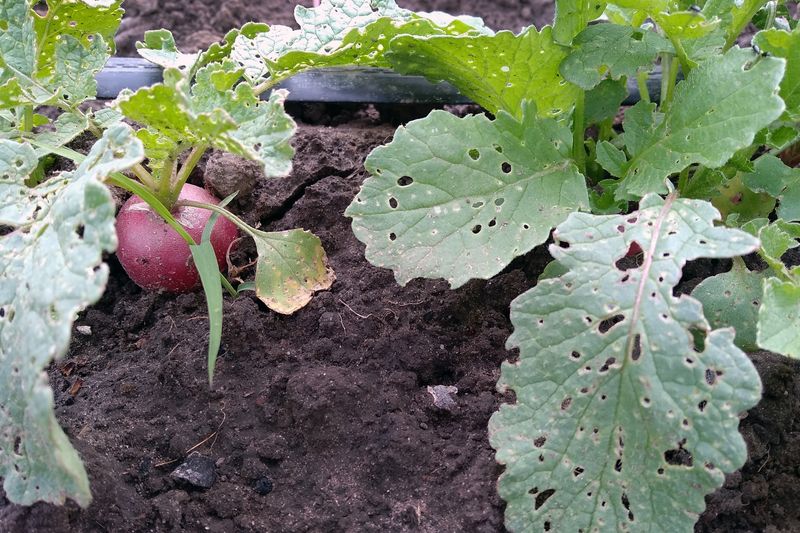
You walk out to the garden in November and the kale looks like it was hit with a tiny hole punch. Flea beetles are one possible cause, and a row cover is one tool that may help protect the leaves that are still clean.
Before you cover anything, though, a little detective work can save you time and keep you from trapping a problem under the fabric. Here is how to check, what to do next, and what a cover can and cannot do.
Small, round holes suggest flea beetles—but do not confirm them
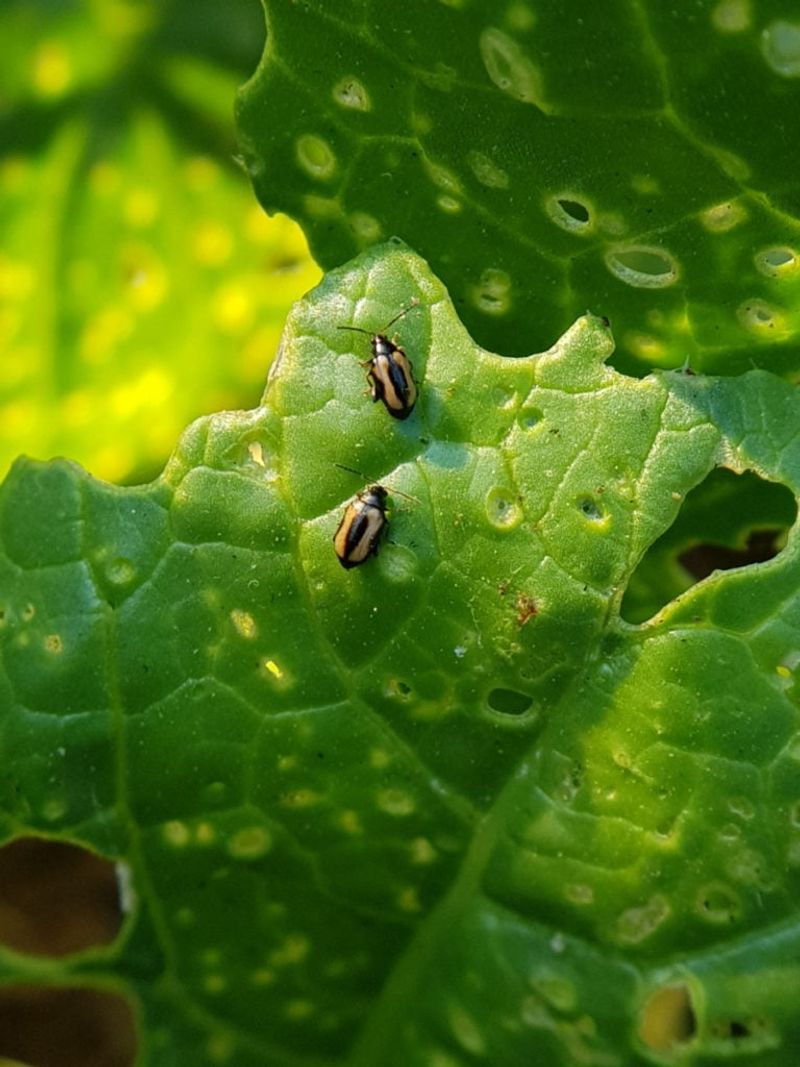
Adult flea beetles chew on leaves, and they often leave behind small, round holes that look like someone peppered the kale with a pin. Utah State Extension describes them as tiny insects that jump when disturbed and that attack brassicas, a plant family that includes kale.
Still, holes alone do not name the culprit. Other pests can chew small openings, and a hole tells you nothing about whether the damage happened last week or last month.
Old holes stay on a leaf for good, so a ragged plant in November may simply be carrying damage from earlier in the season.
Flea beetle is also a label that covers many species, and their habits differ. UMass Extension notes that life cycles and timing vary by species and region.
Think of flea beetles as a strong suspect you need to check out, not a confirmed verdict. The next step is to look closely at the plants themselves.
Inspect the leaves and growing point for other pests
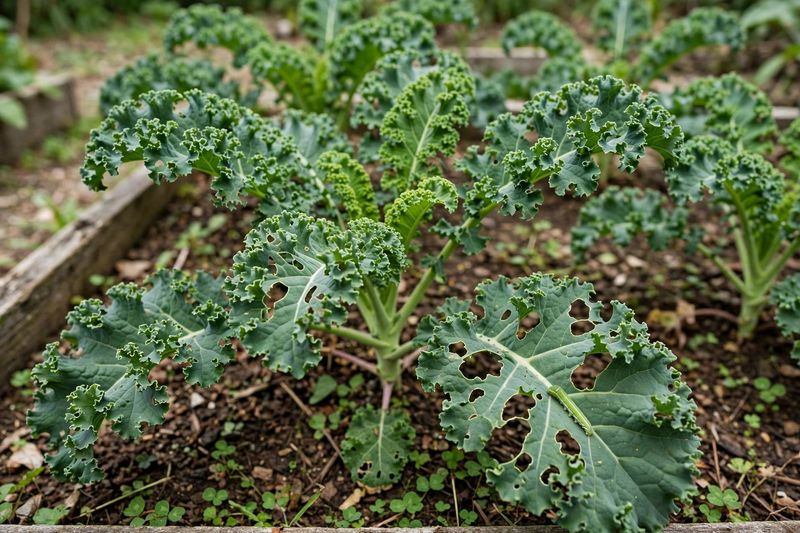
Grab a cup of coffee and spend ten minutes with the kale. Lift each leaf and check both the top and the underside, then peek into the center where new leaves unfold.
Tap a plant gently and watch for tiny dark beetles that hop away like fleas.
The shape of the damage gives clues. A Clemson Extension guide on identifying common brassica insect pests separates small, round flea beetle holes from caterpillar feeding, which tends to be irregular with smooth edges.
Large chewed patches or ragged leaf margins point away from flea beetles.
Caterpillars deserve a real search. Cabbageworms and loopers feed on kale too, as the UMass home garden guide explains.
Look for green larvae blending in along the veins, and for dark droppings on the leaves.
Write down what you find. Beetles, caterpillars, or nothing at all each lead to a different next move.
November timing depends on location and growing history
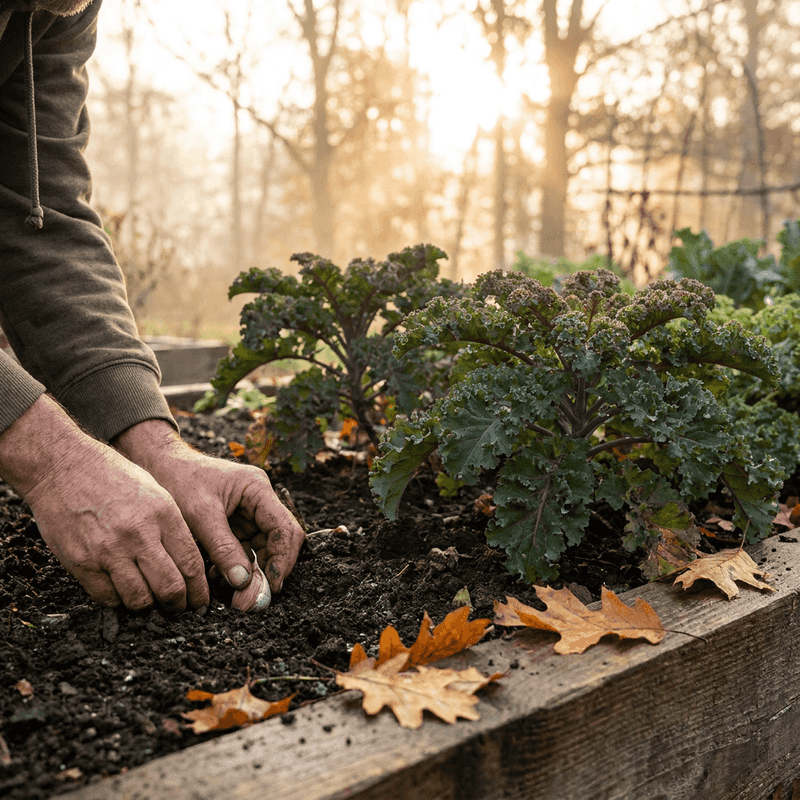
November means very different things in different parts of the South. A garden near the Gulf Coast may still feel like early fall, while one in north Georgia may already be seeing frost.
The month by itself cannot tell you whether beetles are still feeding on your kale.
Planting history matters as well. UGA Extension lists kale as a Georgia fall crop and recommends planting it earlier, in August.
That is one local example, not a rule for every state, but it shows why your own planting date and local calendar count.
Flea beetle timing is also local. UMass Extension describes brassica flea beetles leaving fields to overwinter around mid-September in its own region, and that schedule should not be copied onto Florida or Texas.
UF/IFAS describes southern flea beetle species with more generations than northern ones, though those species are not necessarily the ones chewing your kale.
Your best evidence is what you actually find on the plants this week.
A row cover can block pests but cannot guarantee control
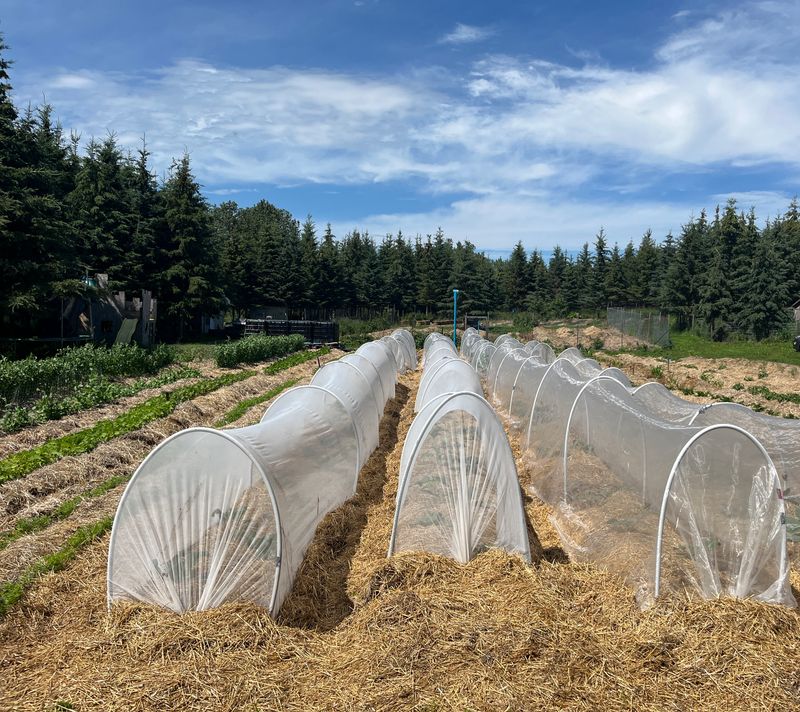
A row cover works by physical exclusion. The fabric sits between the plants and the insects, so it does the most good when it goes on before flea beetles find the crop.
Cornell Cooperative Extension points out that covers work best where the pest is not already established.
Several things can defeat a cover. Beetles or other pests may already be sitting on the plants when you close it up.
Some can emerge from soil or plant debris beneath the fabric, and others slip in through gaps along the edges.
That risk is real. University of Kentucky Entomology notes that flea beetles trapped under a cover can cause extensive damage.
A cover also cannot mend what has already happened. Those holes stay put, though a good cover may protect the new leaves still growing.
Treat it as a preventive barrier, not a cure.
Clear pests before sealing the cover
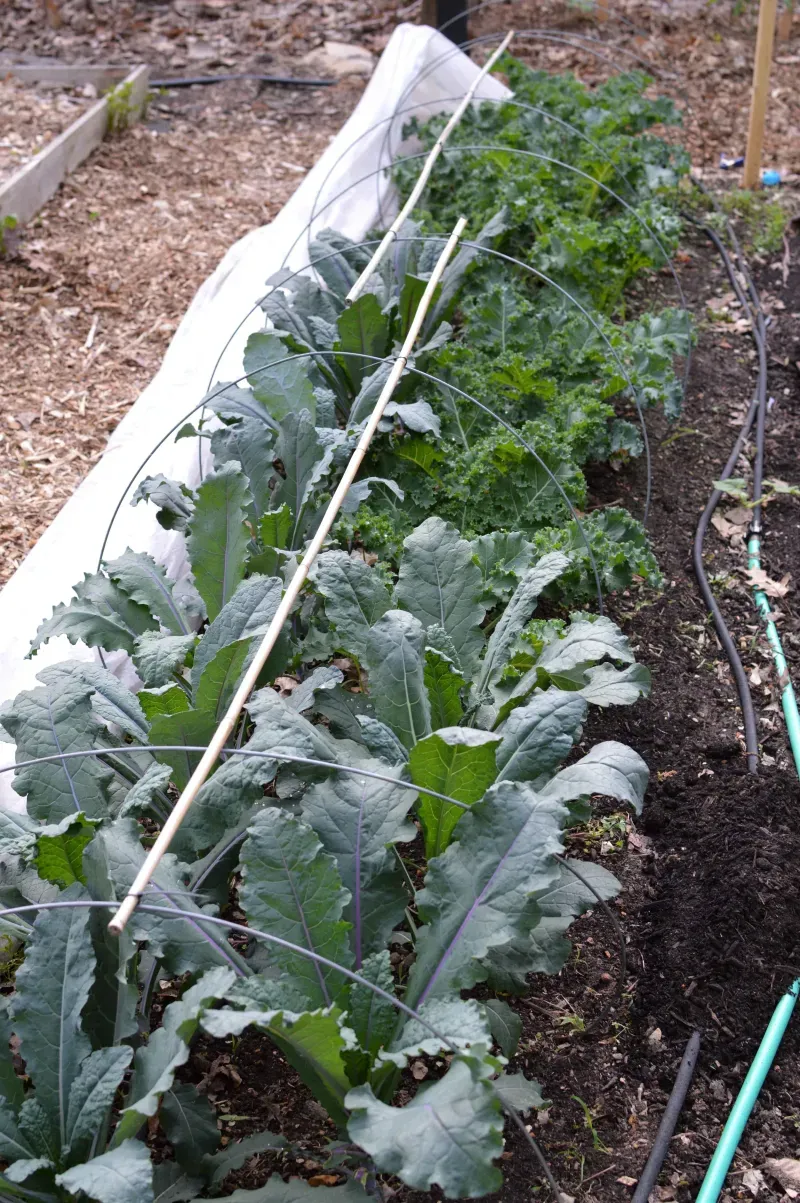
Right before the fabric goes on, take one more careful look. Check the leaves and the center of each plant, and pick off any beetles or caterpillars you see.
Drop them into soapy water, or crush them, so they do not climb back.
Sealing pests inside is a bad trade. Under a cover, insects keep chewing, and Cornell warns they may multiply quickly because natural enemies cannot get in.
The Kentucky flea beetle guide also stresses that trapped beetles can do serious harm.
Flea beetles are quick, so hand picking will not catch every one. If numbers seem high, ask your local Extension office what fits your situation.
Any pesticide choice should follow current local guidance and the product label for kale and the target pest.
Beds where brassicas grew recently may hide beetles in the soil. Cornell notes that crop rotation can lower the chance of beetles emerging under a cover, though it carries no guarantee.
Secure every edge and keep monitoring the kale
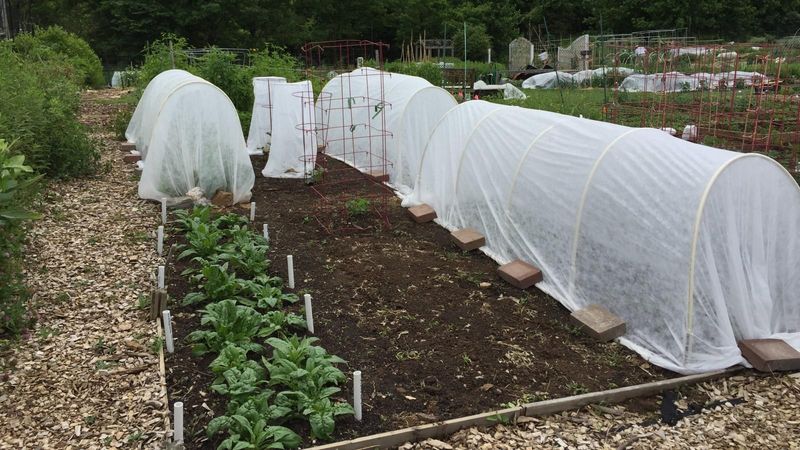
Choose a lightweight floating row cover or fine insect netting. Utah State Extension advises securing every edge to the ground, closing gaps, and repairing any holes.
Soil, boards, or landscape staples all work for anchoring.
Whenever you open the cover to harvest or weed, close it again completely. A corner left loose for a weekend is an open door for beetles.
Keep watching what is happening underneath. Covers can change temperature and moisture, which is why Cornell recommends monitoring the plants.
UF/IFAS discusses row cover warming and removal timing for heat-sensitive crops, but that advice is not a set schedule for kale, so let what you see under the fabric guide you.
Look for new holes, damp leaves, or fresh pests. Inspect, clear pests, cover securely, and monitor.
A tight edge matters more than any fancy fabric.