
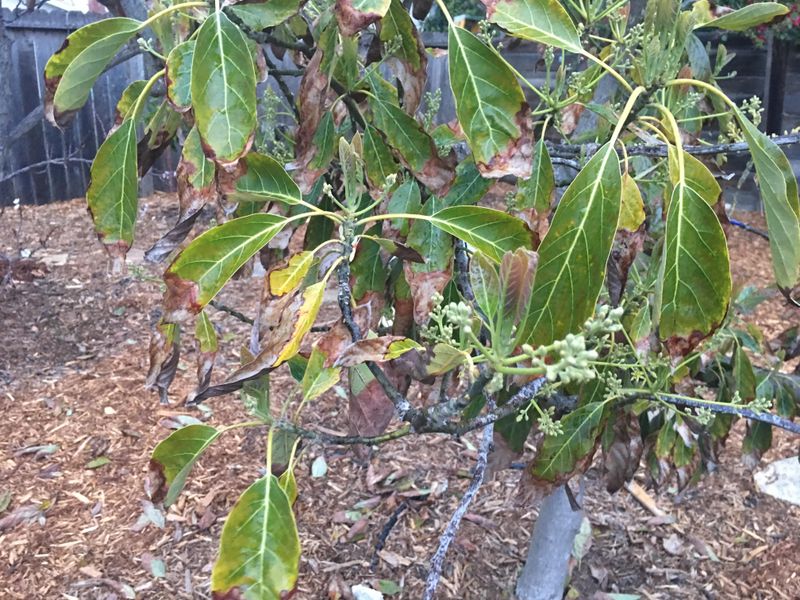
Brown, crispy tips on avocado leaves can make a healthy-looking tree seem suddenly unwell. In California, one possible cause is salt that builds up in the soil where the roots live.
Salt can come from several places, and your hose water is only one thing to check. Here is how to investigate before you change how you water.
Brown tips can signal salt stress, but they do not prove it
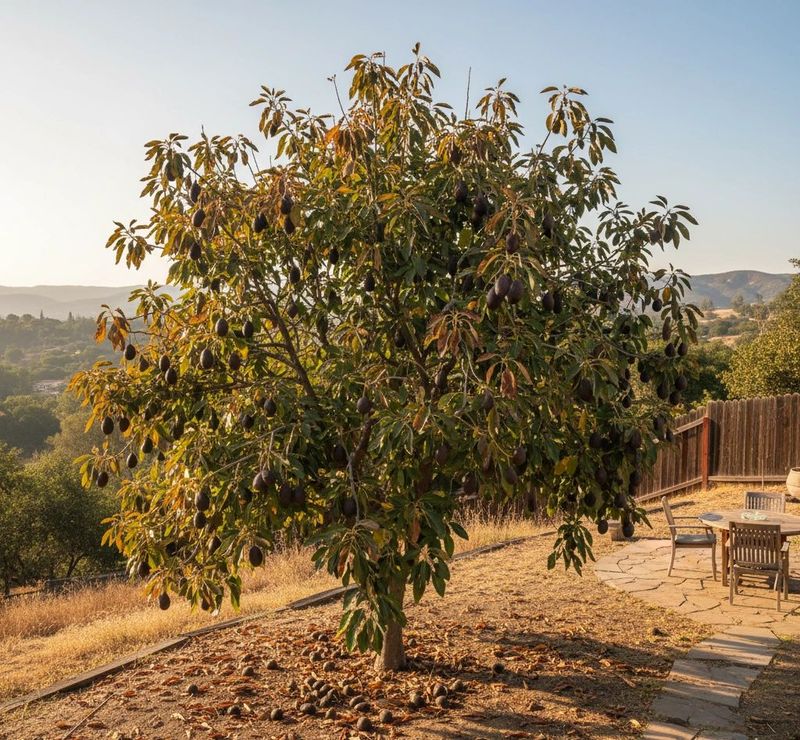
Walk up to a mature avocado tree and you may notice leaves with dry, tan to brown tips and edges while the rest of the leaf stays green. Growers often call this tip burn.
In severe cases the affected leaves can drop, which thins the canopy and worries a lot of homeowners.
Salt injury is a plausible explanation. UC Master Gardeners in San Luis Obispo County describe tip burn on leaf tips and edges and link it to salts from irrigation water, fertilizer, manure or compost that build up when watering is too shallow or rain is too light to wash them down.
Still, the look of the leaf cannot tell you the cause. UC drought guidance for avocado notes that salt problems and water stress can both show up as burned leaf tissue.
Two trees on the same street can brown for entirely different reasons.
So treat the browning as a clue. The practical approach is to look at your watering habits, your fertilizer routine, and your water quality first.
Only after that does it make sense to change how much water your tree gets, because extra water in the wrong spot can create bigger root problems than a few brown tips ever would.
How dry periods can leave salts in the root zone
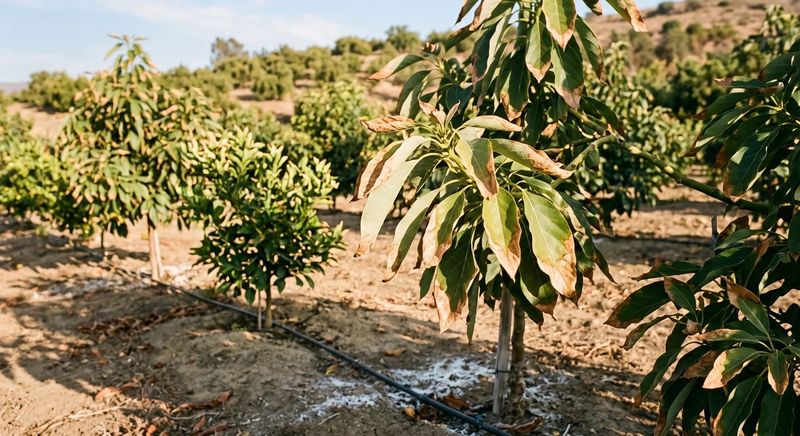
Every time you irrigate, you add a small amount of dissolved minerals along with the water. The tree takes up the water, and much of the salt stays behind in the soil.
If nothing pushes that salt deeper than the roots, it slowly concentrates.
California’s long dry stretches make this more likely. UC guidance on avocado and water explains that low rainfall can leave irrigation salts insufficiently leached from the root zone.
Light, frequent sprinkling tends to wet only the top of the soil, which keeps salts near the roots.
Irrigation water is not the only source. Fertilizers, manure, compost and other soil amendments carry salts too, and coastal yards can also get salt from ocean spray.
A recent UC Extension article on leaching points out that avocados and many coastal crops are affected by salt.
Here is the catch. Dry conditions let salts accumulate, but they do not show that your hose water is salty or responsible.
Water quality differs from one California water agency to the next, and wells differ from city supplies. A yard heavy on fertilizer and compost may have a salt source that never came out of the faucet.
For general background, UC IPM’s salinity page lists these varied sources.
Other stresses can also brown avocado leaf edges
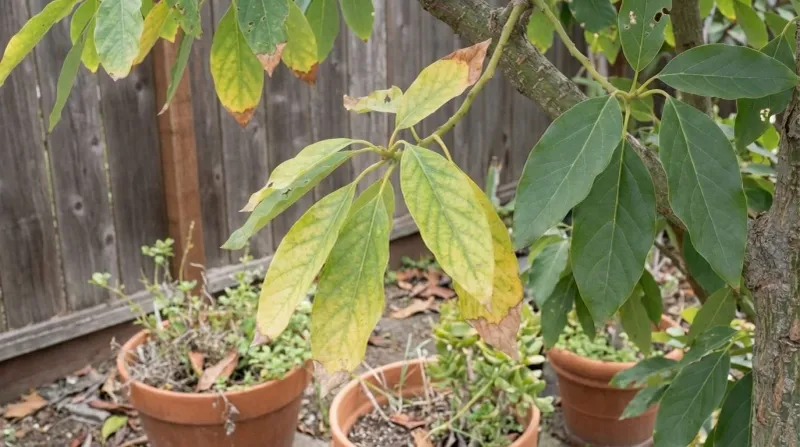
Leaf edges brown for many reasons, and salt is only one of them. Too little water is a common look-alike.
Hot spells, wind, and long gaps between irrigations can scorch leaves in a way that resembles salt burn, and UC guidance on avocado and water lists inadequate watering and overfertilizing among the contributors.
Fertilizer deserves a second look. Heavy feeding, or amendments applied close to the trunk, adds salts to the same soil your roots depend on.
Disease and root trouble can also cause leaf decline, so it helps to check the roots and soil before you settle on one answer.
Even within salt injury, the signs can differ. A UC diagnostic reference associates chloride with tip and marginal burn, sometimes with yellowing between the veins.
Sodium may instead cause distinct dead spots on the leaf. That difference is a hint, not proof.
Because the clues overlap, a leaf analysis can help confirm suspected ion toxicity. UC IPM also advises testing, since drought and other problems can mimic salt damage.
Check water quality and the root zone before flushing
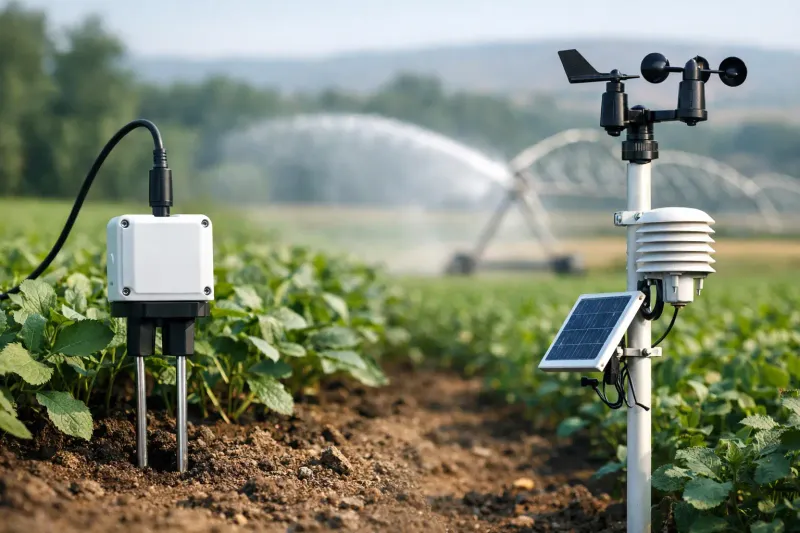
Before you flush anything, gather some facts. The easiest first step is to contact your water provider and ask for its latest water-quality results, especially salinity and specific ions such as chloride and sodium.
UC IPM suggests this route for domestic water.
If you use a well, rainwater storage, or a mix of sources, consider having your irrigation water tested by a lab. A soil test for salinity can show whether salts are actually building up around the roots.
Texas A&M AgriLife likewise recommends testing water for total salinity and harmful salts when avocado leaf edges burn.
Results can help separate water-related salts from other causes, like fertilizer or compost. They also keep you from blaming the hose when the real issue is something else.
Let your provider’s report or your test findings guide the next step. You may see general landscape guidelines, such as water below about 1,000 mg/L total dissolved solids, but those are broad landscape figures.
They are not a firm cutoff for whether your avocado will burn. Use them as context, and ask a local UC Master Gardener or farm advisor if the numbers confuse you.
Leach salts only when the soil can drain
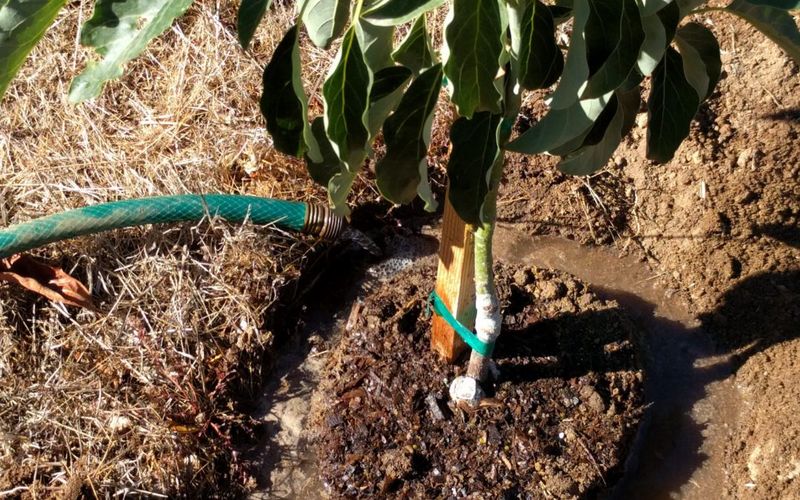
Leaching means moving salts down and out of the root zone with water. It is not rinsing the leaves or giving the soil a quick sprinkle.
The goal is for enough water to pass through the soil that dissolved salts travel below where the roots sit.
If tests or your irrigation history point to salt buildup, and the soil drains well, a thorough irrigation in fall before winter rains may help. A UC Extension discussion on leaching explains that how water moves depends on soil texture and irrigation timing, and UC avocado water guidance covers why leaching matters.
No single time or volume fits every yard. Sandy soil moves water quickly, clay holds it, a slope sends water downhill, and a drip system wets a different area than a sprinkler.
Watch how your own soil responds instead of following a fixed schedule you found online.
Check drainage first. UC IPM notes that poorly drained soil or standing water can lead to root rot, and the California Avocado Commission cautions that avocado roots are sensitive to waterlogging and should not be overirrigated.
If water pools around the trunk or the soil stays soggy, skip the extra irrigation and fix drainage instead. Leaching is a conditional step, and it will not guarantee that browned leaves look healthy again.
Count on winter rain only if it reaches the roots
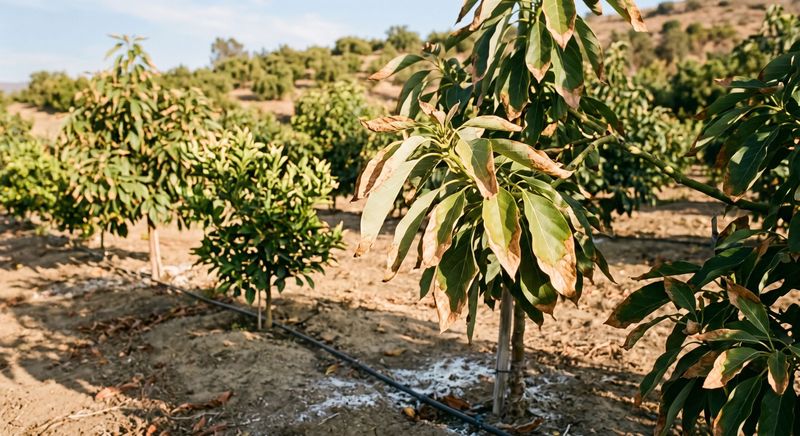
Rain can wash salts out of the root zone, but only when enough water soaks in and moves through it. UC Extension notes that small or poorly timed storms may wet just the surface.
In a dry winter, supplemental irrigation may still be needed.
The opposite problem matters too. In wet or poorly drained soil, extra water raises the risk of waterlogging and root rot, as UC IPM warns.
Dig a small hole after a storm to see how deep the moisture went.
Here is a simple rule: let brown tips prompt an investigation, test before blaming the hose, and leach only when the evidence and the drainage support it. Salt management is mostly about prevention, as UC guidance suggests.
Those brown tips are finished, but the next flush of leaves is the real report card.