
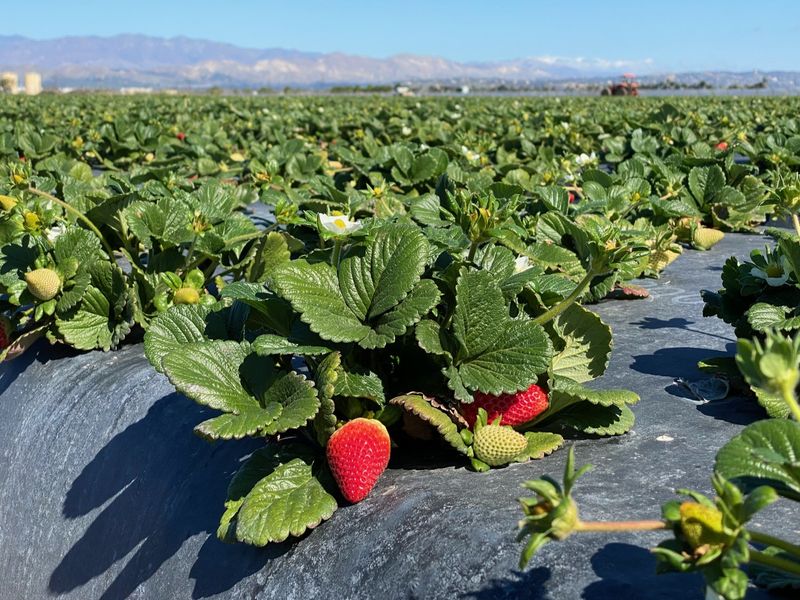
Your strawberry plants look green, full, and healthy, but you cannot find a single flower. That can feel worrying, especially when runners are shooting across the bed.
In many cases the plants are right on schedule, and runner trimming is an optional step that depends on how old the plants are and how you grow them. Here is how to tell what is normal and what deserves a closer look.
A flowerless fall bed may be on schedule
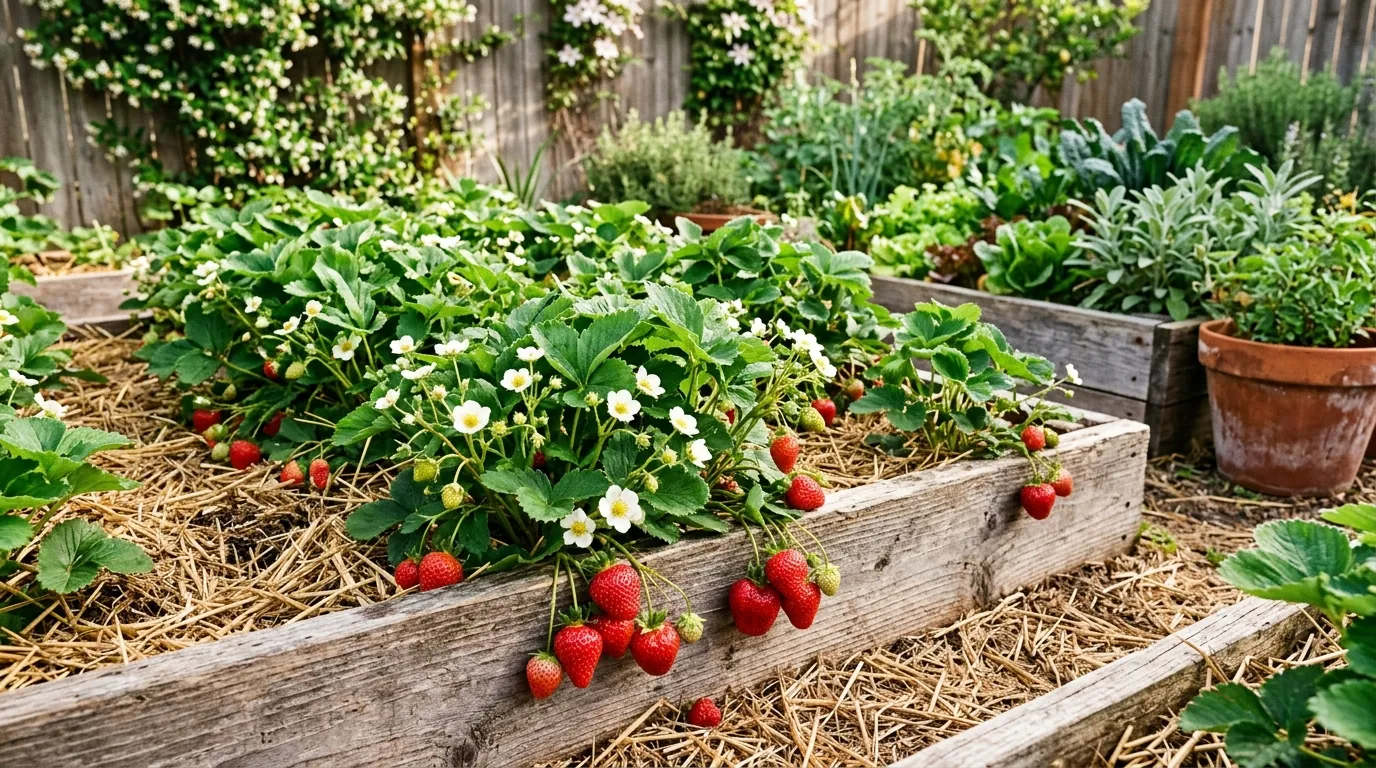
Bare-looking foliage in October or November does not mean your plants have failed. Spring-bearing, or June-bearing, strawberries set their flower buds during the short days of fall and then bloom the following spring, as Texas A&M AgriLife guidance for Austin explains.
The buds form out of sight, so a leafy plant can be doing exactly what it should.
Florida can look different. UF/IFAS says fall-planted strawberries generally begin flowering and fruiting in November, with production coming in cycles that a freeze can interrupt.
So a Florida gardener may see blooms months before a Texas gardener does.
Your own expectations should depend on where you live and which type of strawberry you planted. Check the plant tag or nursery receipt for the cultivar before you decide anything is wrong.
A bloomless bed is a reason to look closer, not a reason to panic.
Runners can compete, but they do not explain every missing bloom
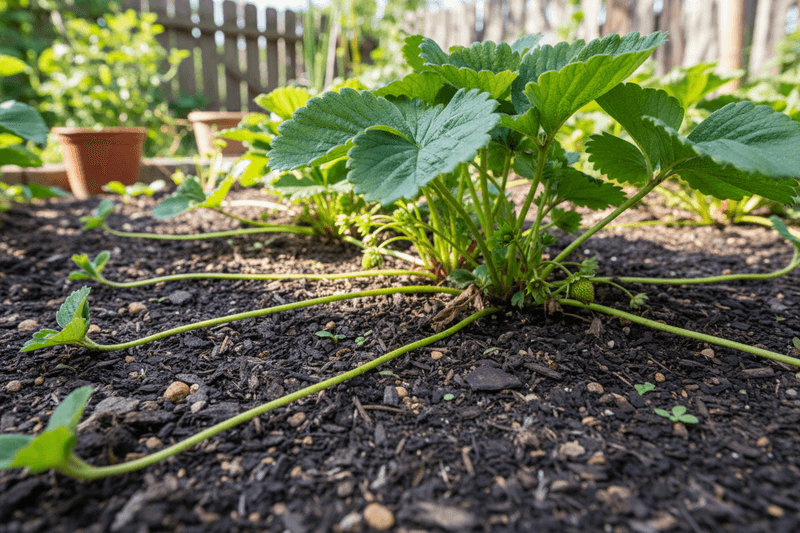
Runners are long, thin stems that creep out from the mother plant and can root to form new daughter plants. They are a normal part of strawberry growth, and nothing about them is harmful in itself.
The question is whether those new plants are something you want right now.
During early growth, runners can compete with the mother plant. NC State Extension notes that fall runners can compete with crown formation and flower-bud development.
Texas A&M AgriLife also recommends removing runners early on to improve yield.
Still, seeing runners does not prove they are the reason you lack flowers. Cultivar, temperature, day length, and how recently you planted all play a part.
Think of trimming as a way to reduce competition, not a switch that makes blooms appear.
Base runner timing on establishment and local planting schedules
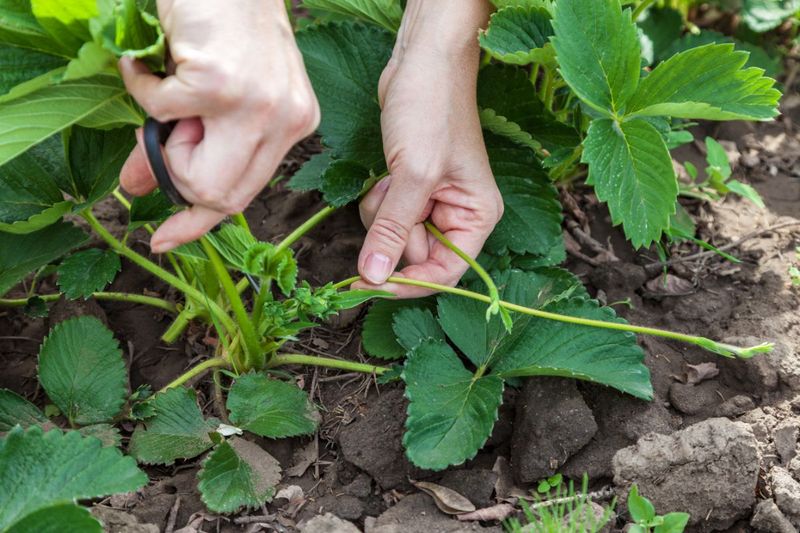
Instead of cutting on a fixed date, count from transplant day. NC State’s advice is to wait roughly three to four weeks after transplanting before the first fall runner removal, then check again around six weeks.
That gives roots time to settle. It is guidance from one state, so treat it as a starting point for your own bed.
Planting calendars differ a lot. UF/IFAS lists September 15 to October 15 for North Florida, September 25 to October 25 for Central Florida, and October 1 through December 1 for South Florida.
A bed planted in early December in South Florida is on a very different clock than one planted in September up north.
In Texas, Austin guidance describes setting plants from mid-September to early November. Use transplant age and your bed system, not the calendar alone, to decide when a snip makes sense.
Choose which runners to keep before you cut
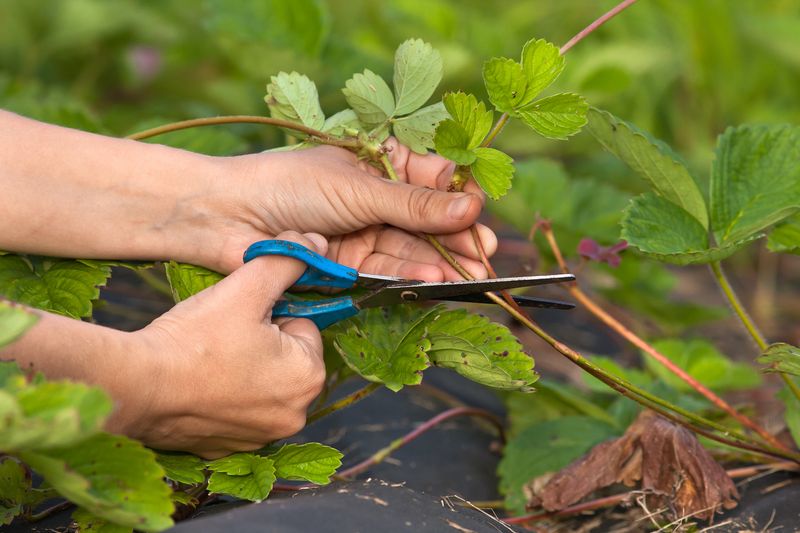
Before you pick up the snips, decide what the bed is for. University of Maryland Extension explains that in a hill system, runners are removed so the mother plant makes more crowns.
In a matted-row system, runners are allowed to root and form daughter plants that fill the row.
For a small home patch, a selective approach works well. Keep the few runners you want for propagating or filling gaps, and cut the rest.
Snip the runner stem a little away from the plant, so you do not nick the crown.
Skip the idea that every runner must go. Runners are not the enemy, and some beds depend on them.
If you are following the early-season timing from NC State Extension, make your first pass after plants have established, then look again a few weeks later.
Check strawberry type, temperature, and fertility before diagnosing a problem
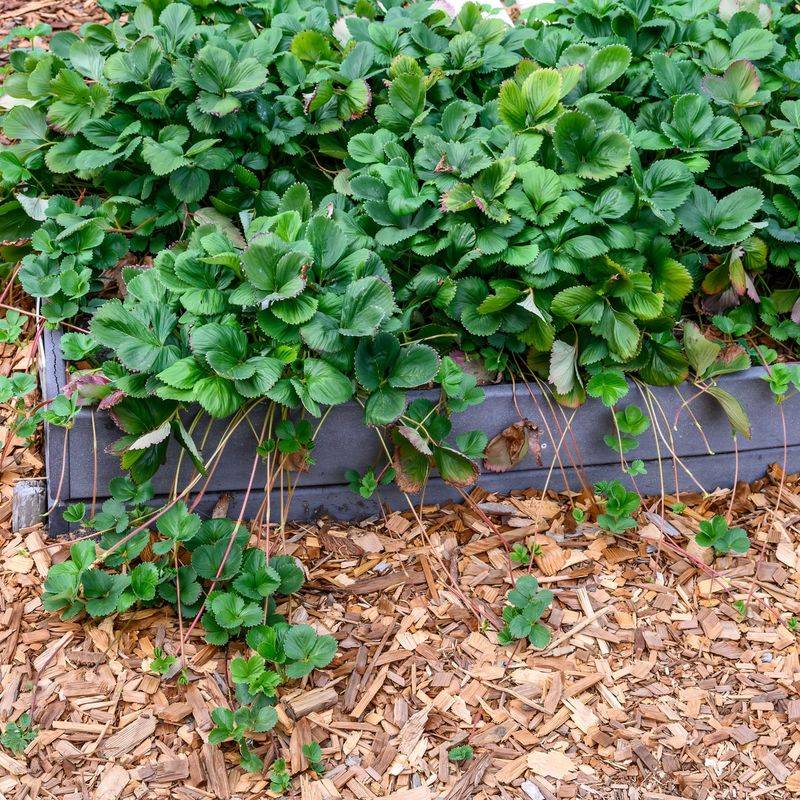
Start with the type of strawberry you have. Spring-bearing varieties set buds in fall for the next spring, while day-neutral varieties can start flowers across different day lengths, though temperature still matters, according to Texas A&M AgriLife.
Warm weather can slow things down. A peer-reviewed review describes temperature and day length as working together to control flowering, with differences between cultivars.
A hot stretch in early fall may hold back blooms on some plants.
Fertility is another possible factor. Too much nitrogen can favor leafy growth and hurt fruit performance, as University of Minnesota Extension describes.
But a lush look alone does not prove it. Get a soil test and ask your local Extension office before adding fertilizer or any bloom booster.
Treat trimming as one step, not a promise of spring berries
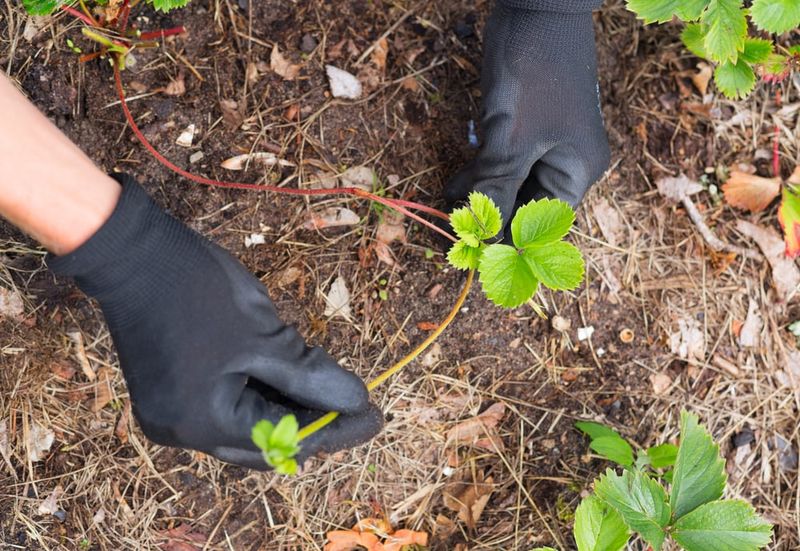
A sensible plan is simple. Once plants are established, remove runners you do not need if your system calls for it, and keep the ones meant for propagation or filling the bed.
That trims competition and supports strong crowns, but it cannot guarantee flowers or a spring crop.
Texas and Florida also run on different schedules. Texas A&M’s home-garden publication points to peak harvest from March to early May.
UF/IFAS treats Florida home strawberries as a fall-planted annual crop with blooms often starting in November. Your neighbor’s bed may be ahead of or behind yours for good reasons.
When in doubt, call your county Extension office with your planting date and cultivar. Patience, a clean snip, and local advice go further than any single cut.