
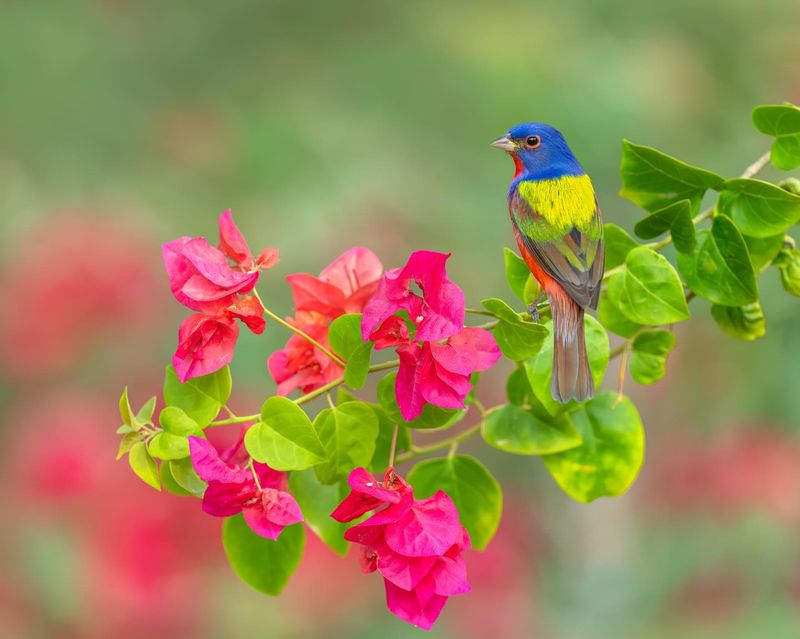
A tiny bird with a blue head, green back, and red belly sometimes shows up in southern Florida yards when the weather cools. Painted buntings look like they were colored by a kid with a full box of crayons.
Not every yard gets a visit, and not every bunting in Florida leaves in spring. Here is how to tell who is who, where to look, and how to make your yard friendlier to wildlife.
Some eastern painted buntings winter in southern Florida
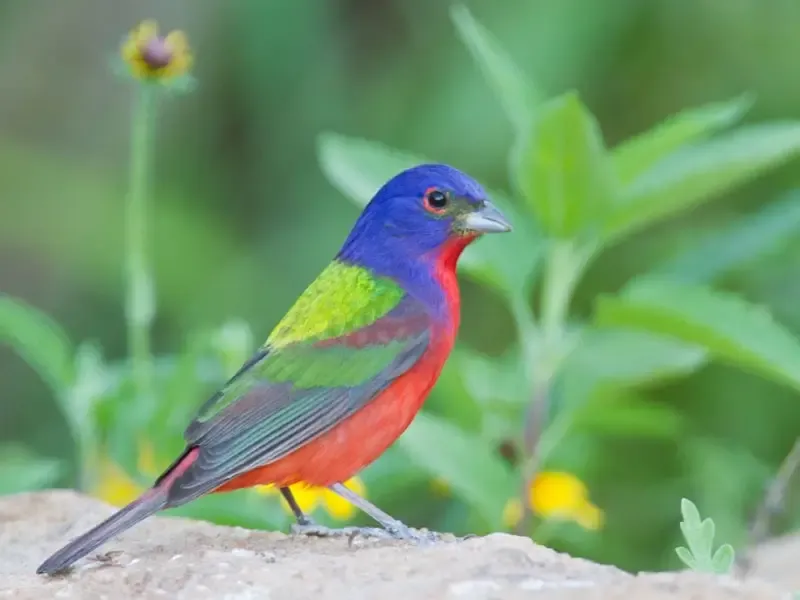
Painted buntings come in two separate populations. The eastern birds breed along the Atlantic Coast from North Carolina into northern Florida, according to American Bird Conservancy.
Many of them spend winter in southern Florida, the Keys, and the Caribbean. The western population breeds inland, including Texas, and winters in Mexico and Central America, so Florida winter-yard advice does not fit those birds.
Florida is unusual because it hosts both breeding and wintering eastern buntings. The state wildlife agency documents nesting in Atlantic coastal counties north of Brevard County, as described in the FWC species profile.
That means the idea that every Florida bunting leaves in spring is not accurate. The ones that leave are the winter visitors heading north to breed.
You may hear that buntings spend roughly half the year in Florida. Treat that as a handy shorthand for some wintering birds, not a fixed calendar.
Arrival and departure dates shift from year to year, as the Audubon field guide range information suggests.
If you garden in Miami-Dade, Broward, Monroe, or nearby counties, keep your eyes open from late fall through early spring. A visit to your particular yard is never guaranteed, but knowing the pattern helps you notice a flash of color when it does happen.
A green bunting may be female or still growing
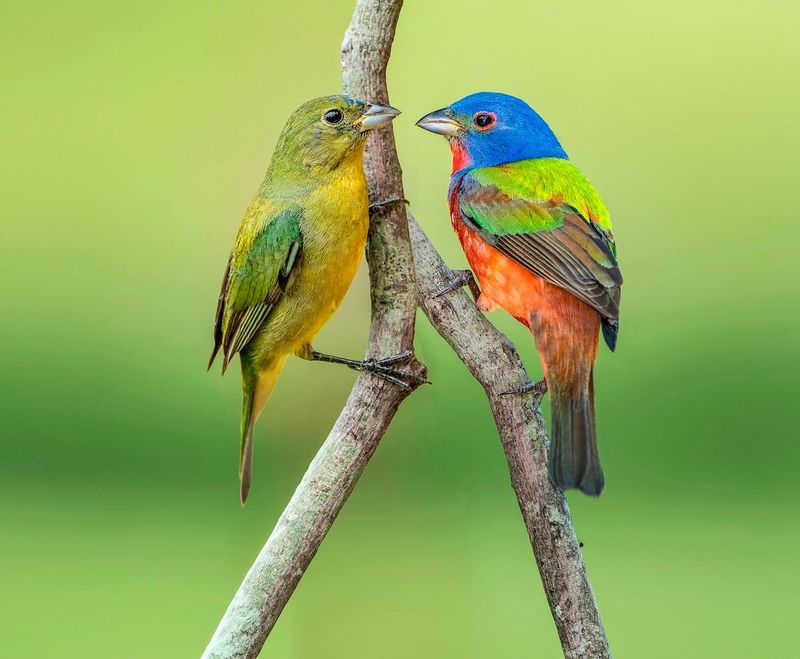
A mature male painted bunting is hard to mistake for anything else. He has a blue head, a green back, and red underparts, a combination described in the Cornell Lab identification guide.
Seen in good light, he looks almost unreal.
Females look completely different. They are mostly yellow-green, with a soft, even tone and no bold patches.
Younger birds share that plain look, so the green bird at your feeder tray is not automatically a female.
Florida wildlife officials say males reach adult plumage at two years old, according to the FWC profile. Until then, some males can look much like females.
Color alone will not tell you a bird’s exact age, so avoid guessing.
To identify a green bird, slow down and check the details. Look for the chunky, small finch-style bill and a plump body.
Note the uniform yellow-green color, with no streaks on the chest. Compare it with other small green birds like vireos or warblers, which tend to have thinner bills and different markings.
Photos help. A few clear shots from different angles let you compare later with a field guide or a birding app.
Look near low brush and semi-open habitat
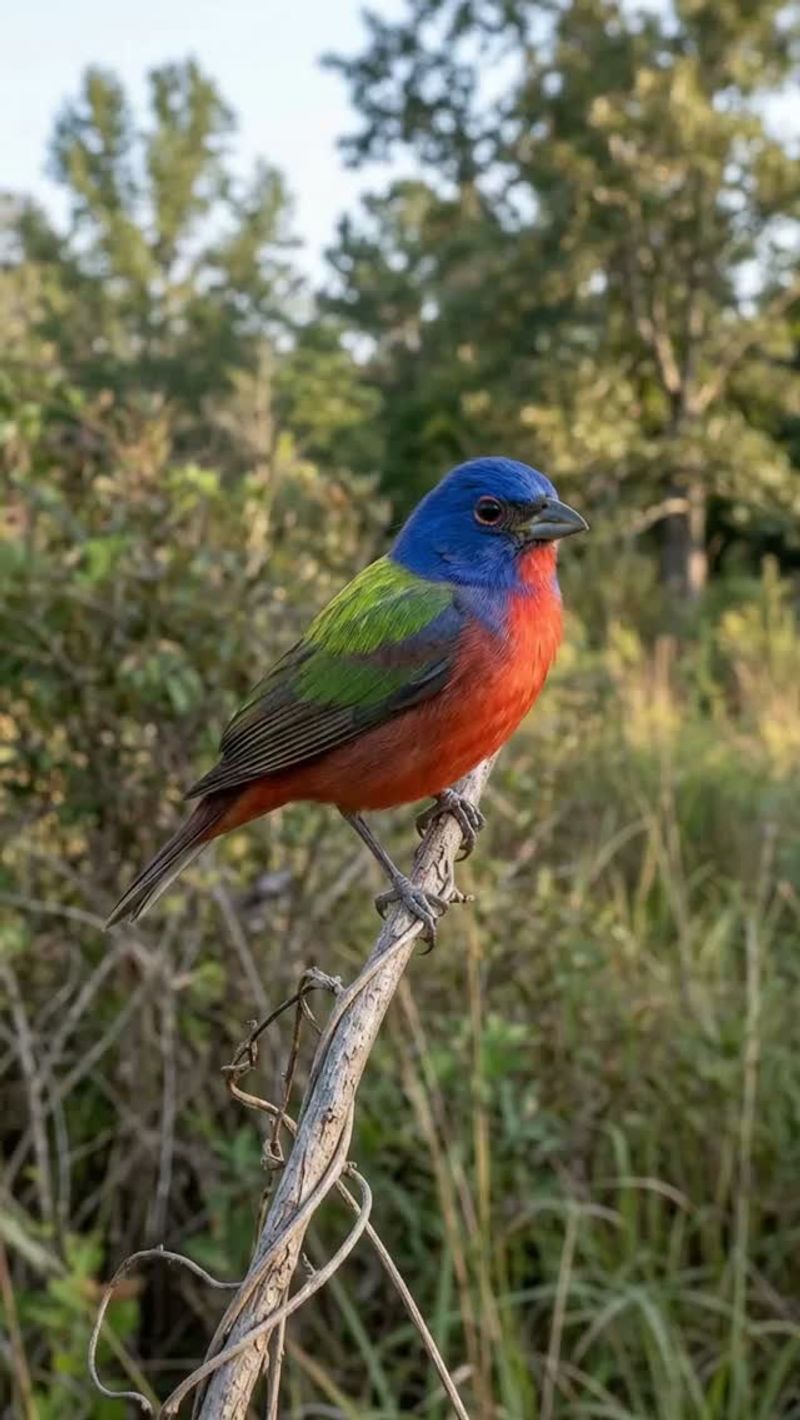
Buntings are secretive and tend to stay near cover. The Audubon field guide describes their habitat as brushy, semi-open areas, and says Florida winter habitat is similar.
They often forage on the ground, picking at seeds in the open and then slipping back into the thicket.
Walk your yard and look for those spots. A tangle of shrubs next to a patch of grass or weedy edge is a good candidate.
A yard that is all mowed turf and a few widely spaced trees offers little of that mix, so a visit there is less likely.
Patience pays off here. Pick a quiet spot, ideally a window or a shaded chair with a view of the brush edge, and watch in the early morning or late afternoon when birds are most active.
Sudden movement sends small birds diving for cover, so sit still and let the yard settle.
Listen as well as look. Soft chip notes from the shrubs can give away a hidden bird before you see it.
Binoculars help you scan the shadowy lower branches without stepping closer.
A feeder can bring a bunting into view, but it is only one option. Checking the brush edge, the ground beneath it, and any nearby weedy patches gives you more chances than staring at a single feeder.
Add cover and natural food for wildlife
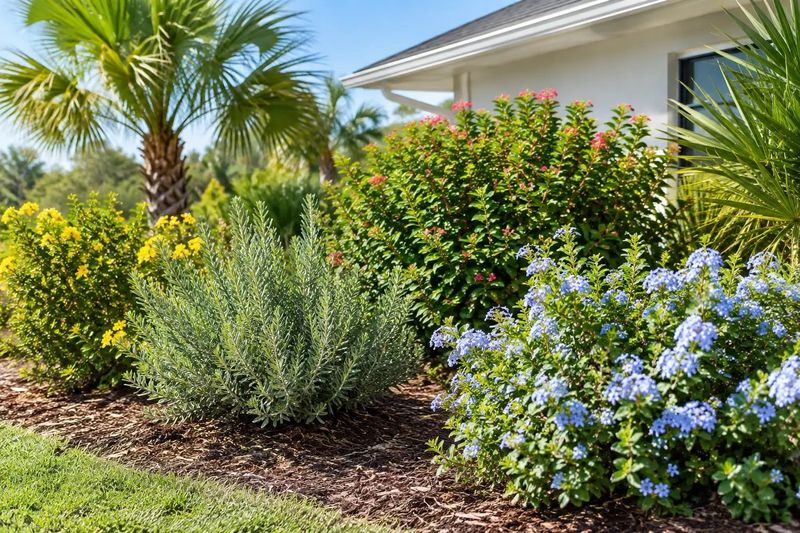
Short turf looks tidy, but it gives small birds little shelter and few seeds. UF/IFAS recommends Florida native plants for wildlife food and habitat, as laid out in its bird-friendly plants guide.
Dense shrubs and seed-bearing grasses are sound choices for general bird habitat. They are not a proven recipe for painted buntings specifically.
Start small. Let one corner of the yard grow into a thicker shrub border instead of clipping it flat.
Leave a strip of native grass uncut so it can go to seed. Keep a few layers of plants, from low grasses to mid-height shrubs, so birds have places to hide.
Florida’s sandy, fast-draining soil favors plants adapted to it. Native species usually need less water and fertilizer once established, which fits a low-maintenance yard.
The UF/IFAS publication on landscaping backyards for wildlife offers wider guidance on food, water, and shelter.
Before you plant, check your county extension office for natives suited to your soil and zone. Skip invasive ornamentals, since they can crowd out useful plants.
These changes help many birds, butterflies, and other wildlife. A bunting may or may not take notice, but a layered, seedy yard gives it a fair chance.
Offer white millet only with feeder safeguards
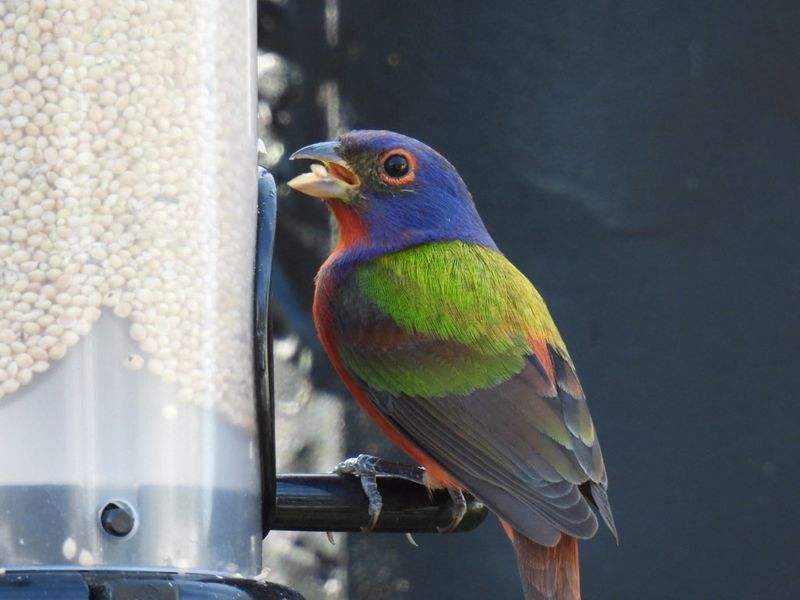
If you want to put out seed, Tropical Audubon Society says painted buntings eat white millet. It is an option that may make your yard more inviting, not a promise.
Food cannot guarantee a visit, and feeding is never essential for the birds.
Feeders come with duties. Audubon advice is to clean feeders about every two weeks and remove wet, moldy, or discarded seed below them.
Florida humidity speeds up spoilage, so check after rainy spells. If you see sick birds, take the feeders down temporarily.
The U.S. Fish & Wildlife Service lists disease, predation, and window collisions as risks tied to feeding.
Place feeders where birds can reach cover quickly, but not so close that a cat can hide right beside them. Keep pet cats indoors if possible.
Windows deserve attention too. The FWS bird-friendly home toolkit recommends bird-visible window treatments, with markers spaced no more than 2 inches apart.
It also advises placing feeders within 3 feet of windows, which limits the speed a bird can build up before hitting glass.
Start with a small amount of seed in a clean feeder, and stop if the upkeep becomes too much. A neglected feeder does more harm than good.
Make the yard welcoming, then watch patiently
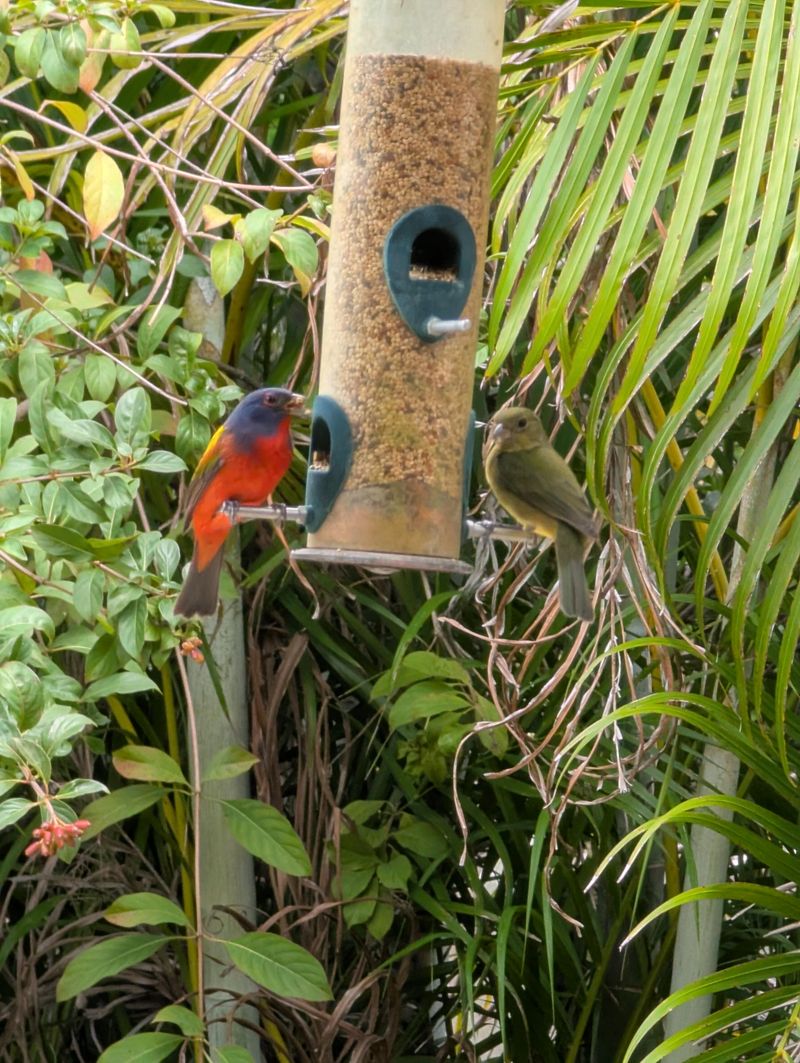
Put cover first. Dense native shrubs and seedy grasses, in line with UF/IFAS guidance, do the most for wildlife overall.
Add seed only if you can keep feeders clean and safe, as the Fish & Wildlife Service cautions.
Then watch through the winter season, and remember the limits. Spring departure applies to winter visitors, while the FWC documents buntings nesting on Florida’s Atlantic coast.
Nothing you plant guarantees a sighting.
Some mornings the best reward is simply a quiet yard and a chance.