
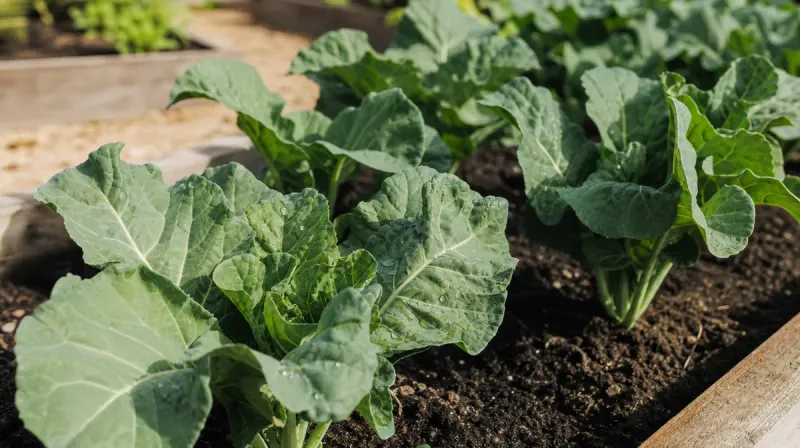
Your collards looked fine yesterday, and now the leaves are hanging limp after a chilly night. It is tempting to shrug and say they will bounce back, or to grab the hose right away.
Both moves can backfire, because wilting has more than one cause. A few quick checks of the plant and the soil will tell you far more than the time of day the droop shows up.
Collards tolerate cold, but drooping still deserves a check
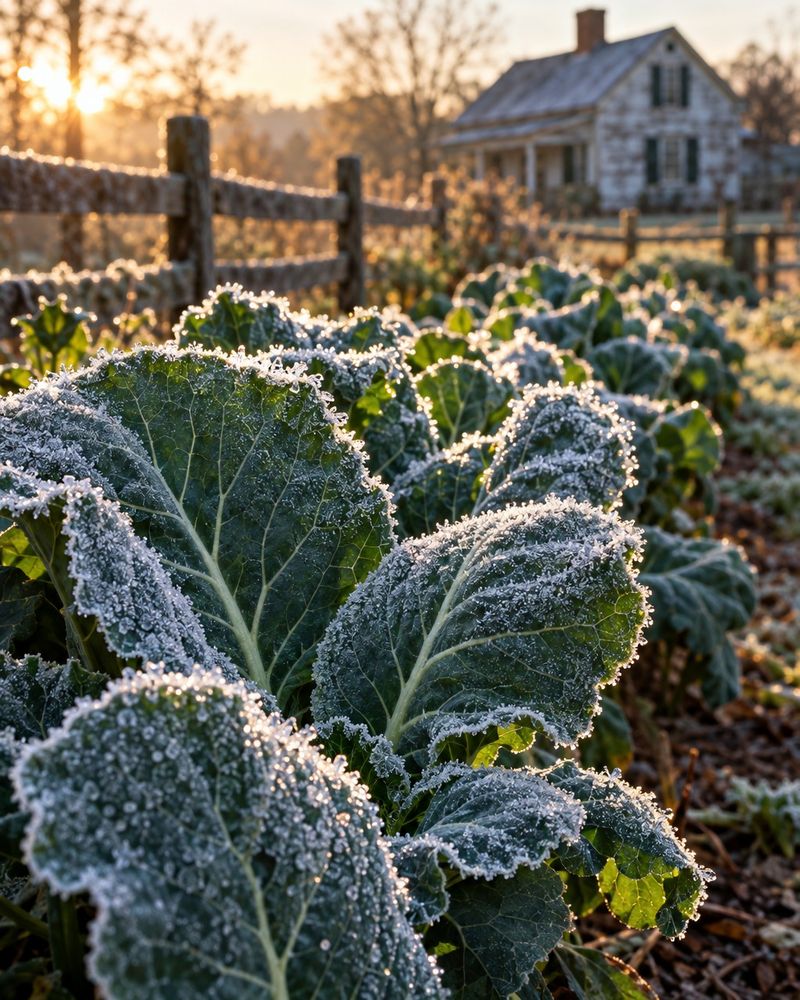
Collards are cool-season crops, and gardeners across the South count on them through winter. North Carolina State Extension notes that they tolerate frost and light freezes.
That toughness is real, but it is not the same as being immune to cold injury.
A chilly night is also not the same as a frost or a freeze. A night in the 40s may not hurt a collard at all, while a hard freeze can.
Iowa State Extension says very hardy cool-season vegetables, collards included, usually take little or only minor damage at about 28 to 26 degrees Fahrenheit. Treat that range as general guidance, since exposure time and plant condition change the outcome.
Cold injury can leave leaves limp, collapsed, or dead.
So a leaf that droops in the afternoon does not prove the plant is unharmed, and it does not prove the cold did the damage. Timing alone cannot settle it.
Look at the leaves for water-soaked or discolored patches, then check the soil around the roots before you decide what to do.
Wilt is a symptom, not a diagnosis
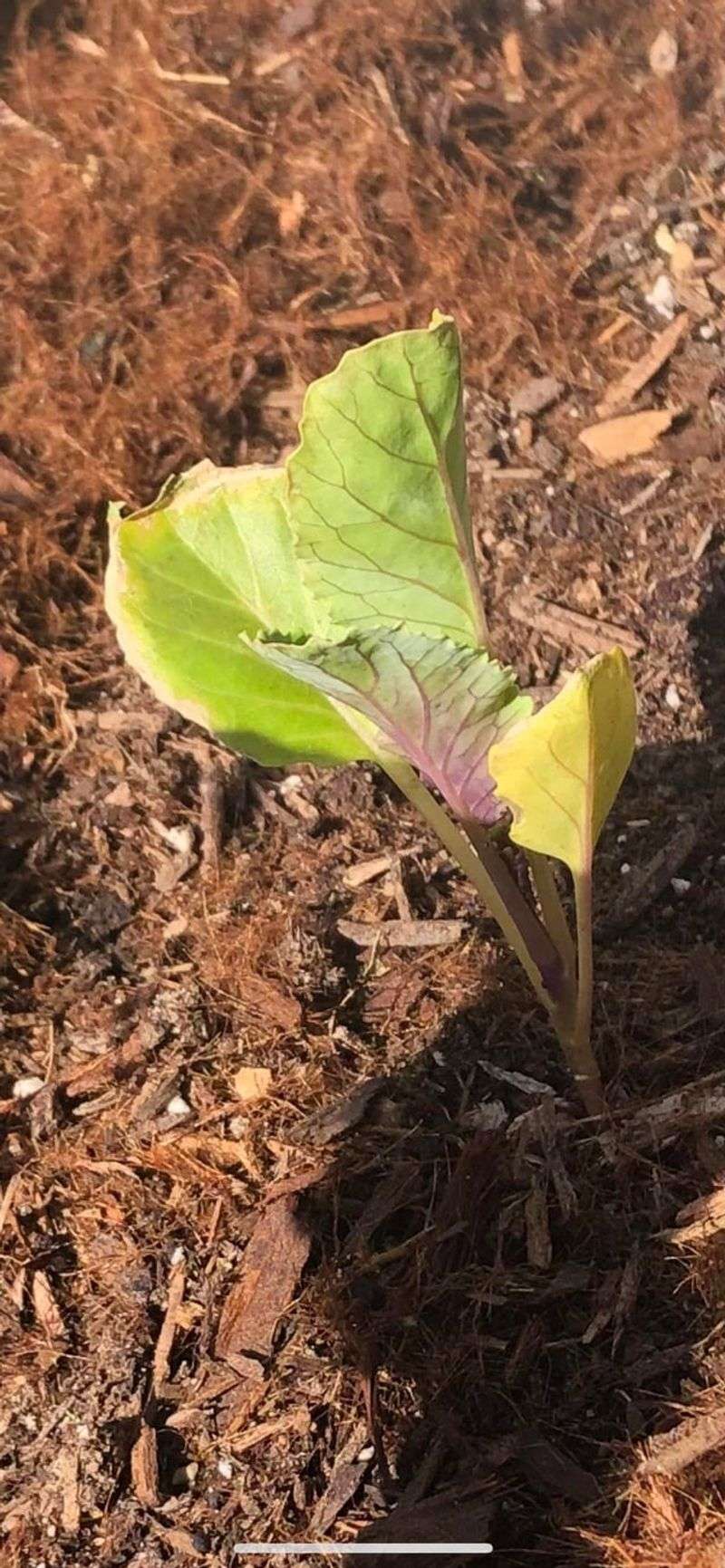
Picture a leaf as a tiny water pump running in reverse. When the leaf loses water faster than the roots can send it up, the leaf goes soft.
University of Maryland Extension explains that this kind of short-lived wilting does not harm a plant in itself.
The trouble is that many different problems create the same limp look. Dry soil leaves roots with nothing to pull up.
Heat or wind can drain leaves faster than even healthy roots can keep up. Cold injury can damage leaf tissue, and poorly drained soil can starve roots of oxygen so they cannot deliver water at all.
Because those causes look alike from the outside, a droopy collard cannot tell you which one you are dealing with. Guessing leads to the classic mistakes of drowning a plant that already sits in wet ground or ignoring one that is parched.
Before you reach for the watering can, gather a few clues. Note the weather over the past few days, how the leaves look, and, most of all, what the soil feels like a few inches down.
How saturated soil can stress roots
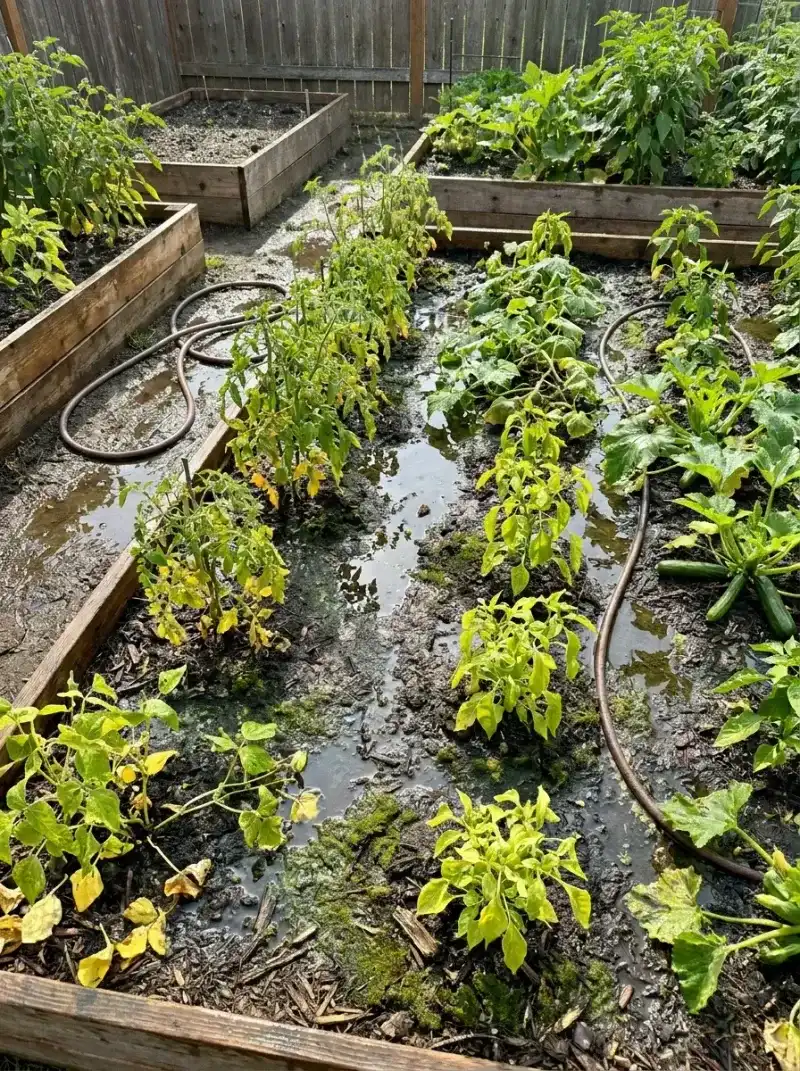
Roots breathe, even though we rarely think about it. Soil holds tiny air pockets that supply oxygen, and when a bed stays saturated, water fills those pockets.
Texas A&M AgriLife Extension describes how excess soil moisture cuts the oxygen available to roots.
Roots that are short on oxygen may not work well, so they can fail to supply enough water to the leaves. The leaves then wilt, even though the ground is soaking wet.
Long stretches of excess moisture can also make plants more open to root diseases.
That last point matters, because waterlogged roots and root rot are not the same thing. Oxygen stress can happen with no disease involved, and a wet bed alone does not confirm a pathogen.
The American Phytopathological Society covers these non-infectious problems in plants. Purdue Extension adds that drought and waterlogging can look much alike above ground, so wet soil plus wilt does not point to just one cause.
Check the soil before you water
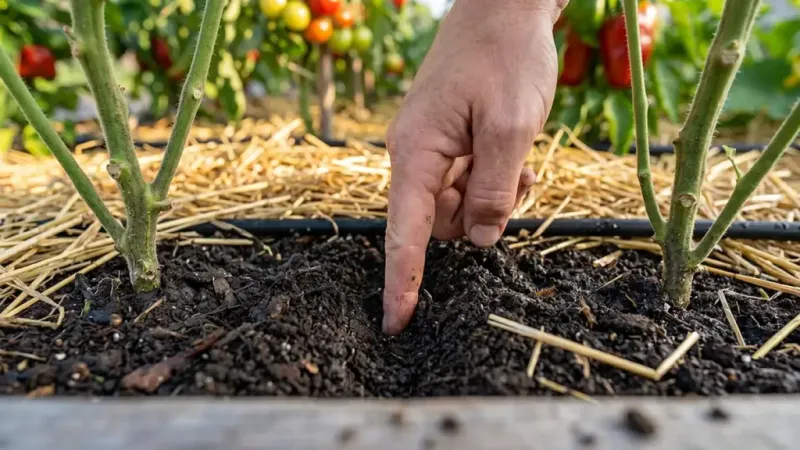
Your finger is the best tool here. Push it a few inches into the soil near the base of the plant, in the area where roots actually grow.
If the soil feels dry and crumbly, the plant may simply need water, and a slow, deep soaking is a reasonable response.
If the soil feels wet, sticky, or muddy, hold off on the hose. Adding more water to saturated ground does not help a droopy plant and may add to the stress.
Also notice what happens after rain or irrigation: puddles that linger for hours or a bed that stays soggy for days are clues about drainage.
Alabama Extension advises growing collards in well-drained soil and keeping it consistently moist but not saturated. Containers need potting mix and drainage holes.
Maryland Extension reminds gardeners that wilt can happen in dry soil too, so the answer is never to skip water for every drooping plant. Let the soil, not the leaves, make the call.
When a bed stays wet, investigate drainage
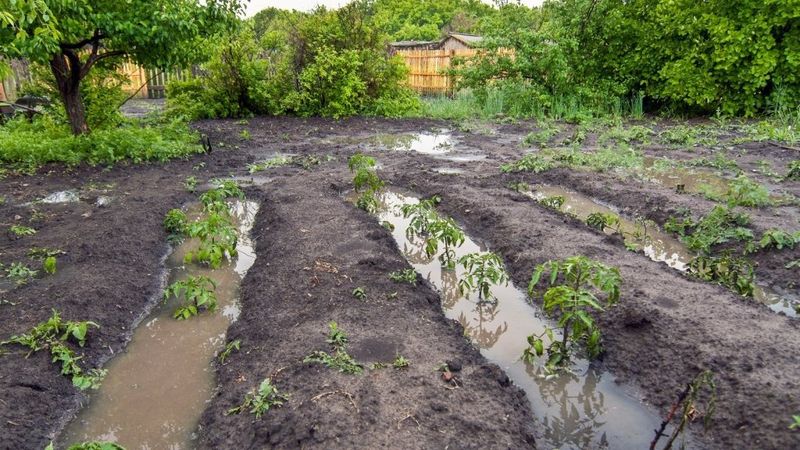
One droopy morning is a puzzle, but a bed that stays wet and keeps producing sad plants is a pattern. If collards keep wilting, turn yellow, or stay small while the soil remains soggy, excess moisture is worth a closer look.
Those signs are clues, not proof, since Purdue Extension notes that drought and waterlogging can show similar symptoms.
Resist the urge to keep watering in hopes of a fix, and avoid naming root rot from leaves alone. Discolored, water-soaked, or mushy roots are associated with too much moisture, as Texas A&M AgriLife Extension describes, but even they do not name a specific disease.
Instead, work on the water. Find where it collects, and ease off irrigation until the root zone dries a bit.
For beds that stay poorly drained, Maryland Extension suggests avoiding those soils or growing in raised beds. A raised bed filled with loose, well-draining soil is a practical Southern fix for heavy clay.
Use the plant and soil—not timing alone—to choose a response
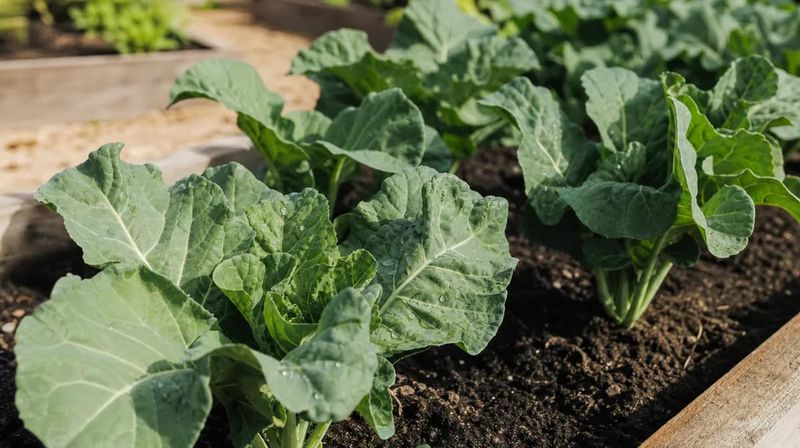
Start with the weather. Collards handle some cold, yet Iowa State Extension makes clear that cold injury is still possible.
Next, look at the leaves for damage, then push a finger into the root zone.
Dry soil calls for a good drink. Wet or saturated soil means no extra water, and a closer look at drainage.
Because Maryland Extension lists several causes of wilting, droop alone cannot say whether a plant is fine or what went wrong.
If the plant keeps struggling, keep gathering clues rather than settling on one story. Frost may sweeten collard flavor, though that is a separate matter from diagnosing limp leaves.
A limp leaf is a question, and the soil usually holds the answer.