

You are used to a soft hoot drifting through the dark, and then one week the yard goes silent. It is easy to wonder if your owl moved away or if something is wrong.
Nesting may explain some quiet spells, but it is only one possibility. Here is what research can and cannot tell you, and how to respond without bothering the bird.
A quiet stretch does not prove an owl has left
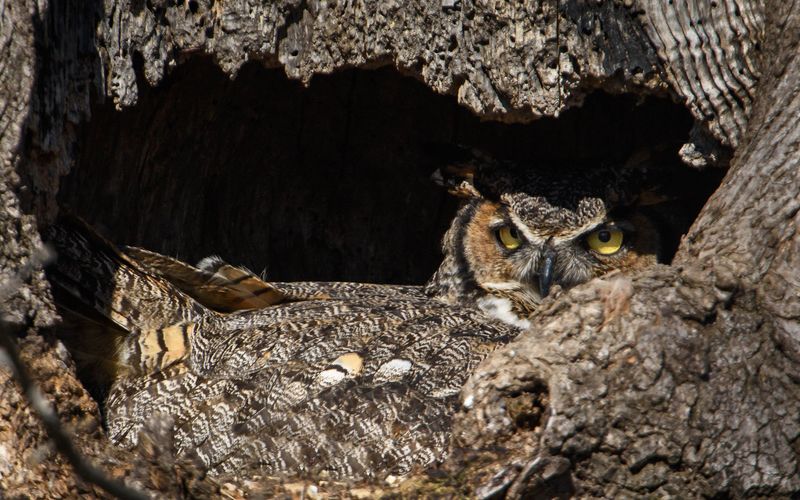
Silence in the yard feels like an answer, but it is really just a gap in what you heard. Owls can be nearby and simply not calling on the nights you happen to be listening.
Researchers who placed recorders in the woods to listen for spotted owls found that territorial calls turned up in only about 26% of recorder-weeks on average. That was at monitored activity centers, where biologists already knew owls lived.
The details are in a 2025 acoustic monitoring study.
That number is not an estimate for suburban yards, and it should not be treated like one. Spotted owls live in forests, and your neighborhood has different noise, lighting, and species.
Still, the finding shows a useful lesson: even a bird that is definitely present can go undetected for many weeks at a stretch.
So there are at least two different things that could be happening. In one, the owl is calling just as often, but you are asleep, the wind is up, a neighbor’s fan is running, or the bird is calling from farther away.
In the other, the owl is truly calling less, which is a change in behavior.
From your bedroom window, you cannot tell those two apart. A quiet stretch does not show that the owl left, and it does not show that something special is going on, such as a nest.
It is an open question, and the best response is patience.
If you want to track it, jot down the date and time whenever you do hear a call. A simple log over a few months gives you a better picture than any single silent week.
Nesting may reduce territorial calls in some spotted owls
Here is the strongest clue behind the nesting idea. In the same acoustic study mentioned above, nesting female spotted owls made territorial calls in fewer weeks than females that were not nesting.
The drop was about 51% in the number of weeks with territorial calls, based on the monitoring data from spotted owl sites.
Notice what that number covers. It describes weeks with territorial calls, not all calls of every kind.
It also describes spotted owls, not every owl that might visit a California yard.
A separate paper adds to the picture. Researchers writing in the Journal of Avian Biology found that breeding spotted owls reduced their territorial behavior.
The authors read this as a possible trade-off, since parents may spend their energy finding food and raising young rather than announcing their territory.
Put together, the two studies make nesting a reasonable explanation for quieter nights in some spotted owls. They do not show a set quiet period that all owls follow, and they cannot explain why your particular yard went still.
Think of it as a good lead rather than a verdict. If a spotted owl lives in your area, such as in a wooded foothill neighborhood, a quieter spell might fit with nesting.
In a typical suburb, a different species, a moved roost, or simple bad listening luck could be just as likely.
California owls do not share one breeding calendar
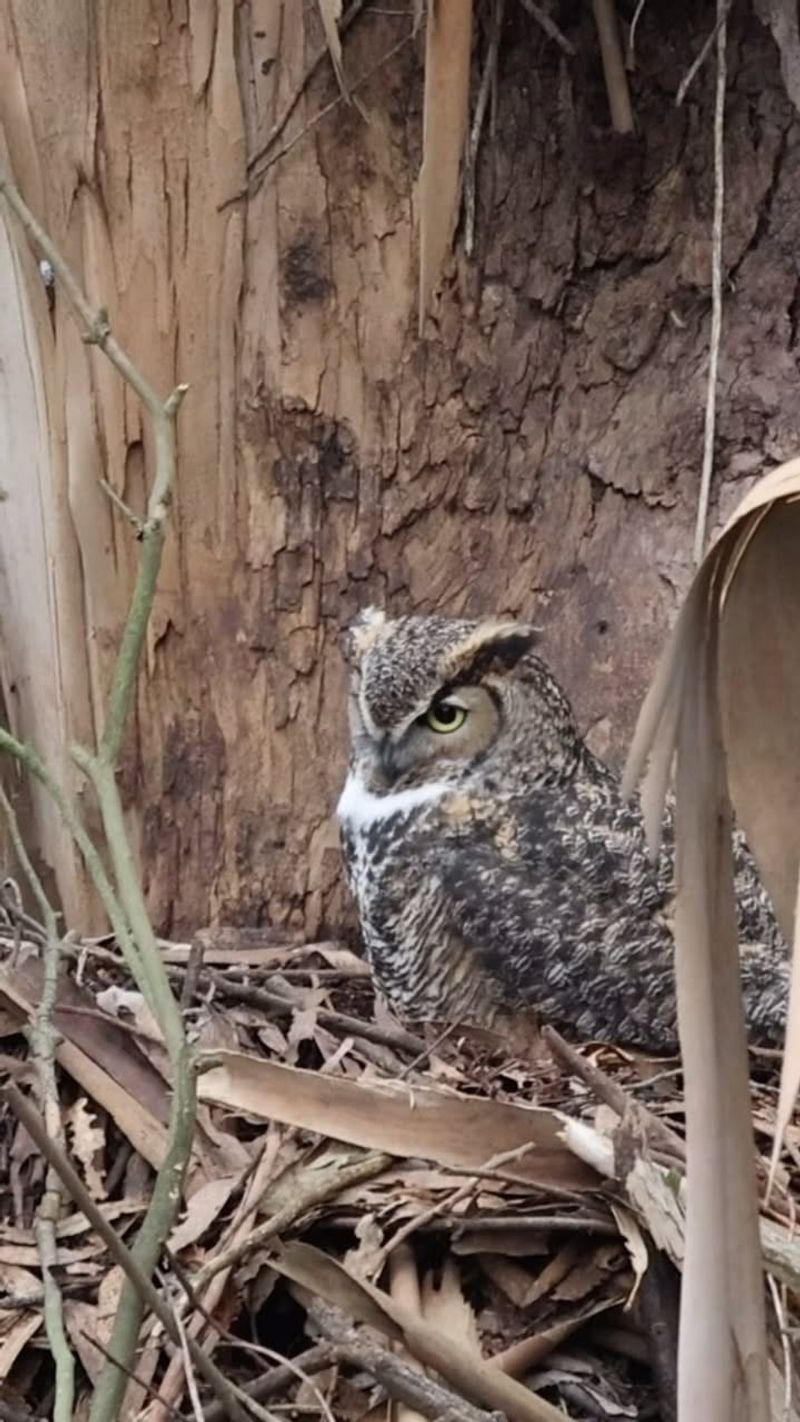
Many people try to match a quiet spell to a season, but owls do not all follow the same schedule. California has several species, and each one has its own habits, plus local differences in weather and food.
Great horned owls make a handy example because they are found widely across the state. The National Park Service describes breeding in the Presidio of San Francisco as running from February through July.
A California species account hosted by the Department of Fish and Wildlife says the birds breed primarily from January through March.
Those two accounts do not match, and that is the point. They describe great horned owls in different contexts, and neither one is a statewide calendar.
Neither covers barn owls, screech-owls, or spotted owls.
For a homeowner, the practical takeaway is to be cautious about two shortcuts. Do not assume the month on your calendar tells you which owl you have.
Do not assume a quiet week in one month means the same thing it would in another.
If you want to know which owl shares your yard, the sound itself is a better starting point than the date. A deep, steady hoot pattern suggests a great horned owl, while a raspy screech suggests a barn owl.
A free sound guide or a local Audubon chapter can help you sort out what you are hearing.
Nesting does not mean every owl sound disappears
A quieter yard is not the same as a silent one. The spotted owl studies measured territorial calls, so they say nothing about whether nesting owls stop all communication.
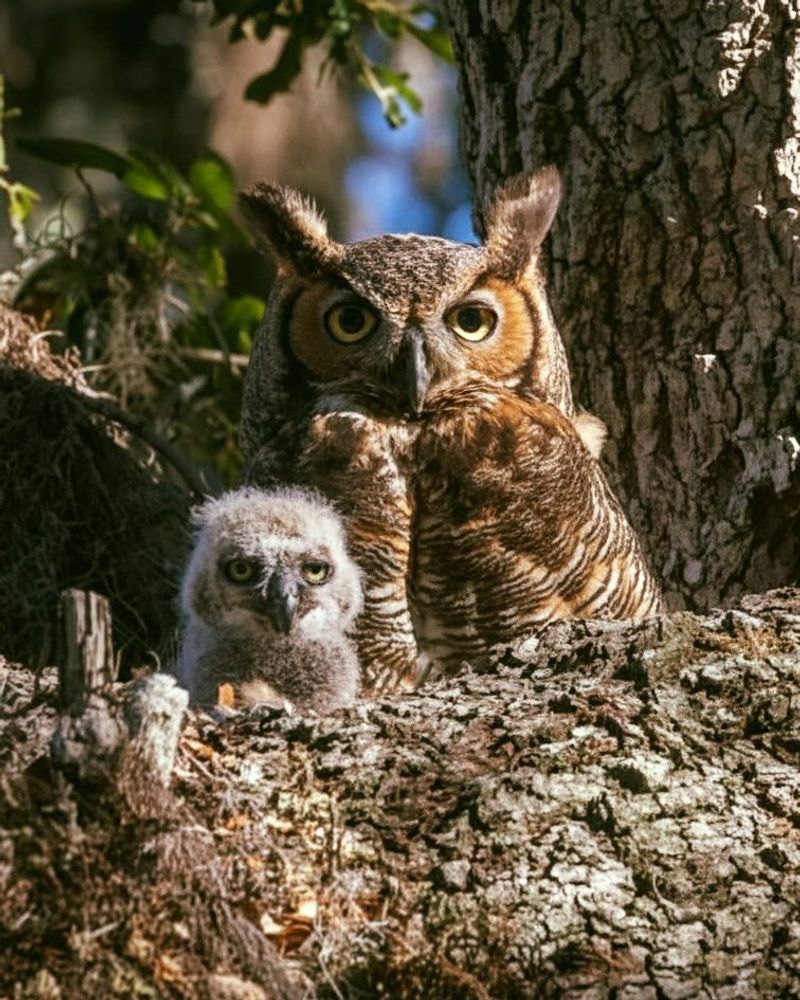
Great horned owls show how varied owl sounds can be. According to the Cornell Lab’s guide to great horned owl sounds, a pair may duet, with one bird answering the other.
Young owls make begging calls when they want food, and adults may scream defensively when something gets too close to a nest.
That means the mix of sounds can shift through the season. The classic territorial hooting might fade while other calls, such as a harsh scream, a soft duet, or a raspy begging cry, show up at odd hours.
Here is a practical example. Say you hear a strange rasping cry from the oak tree in late spring and the usual hooting has stopped.
You might wonder if a nest is nearby, but a single sound cannot confirm that. Begging calls, screams, and duets each fit nesting, but none of them proves it by itself.
The same goes for the reverse. Hearing no unusual sounds does not show that there is no nest either.
The better habit is to listen without drawing conclusions. Note what you hear and when, and leave the guessing about nests to trained observers.
Observe a suspected nest from a distance
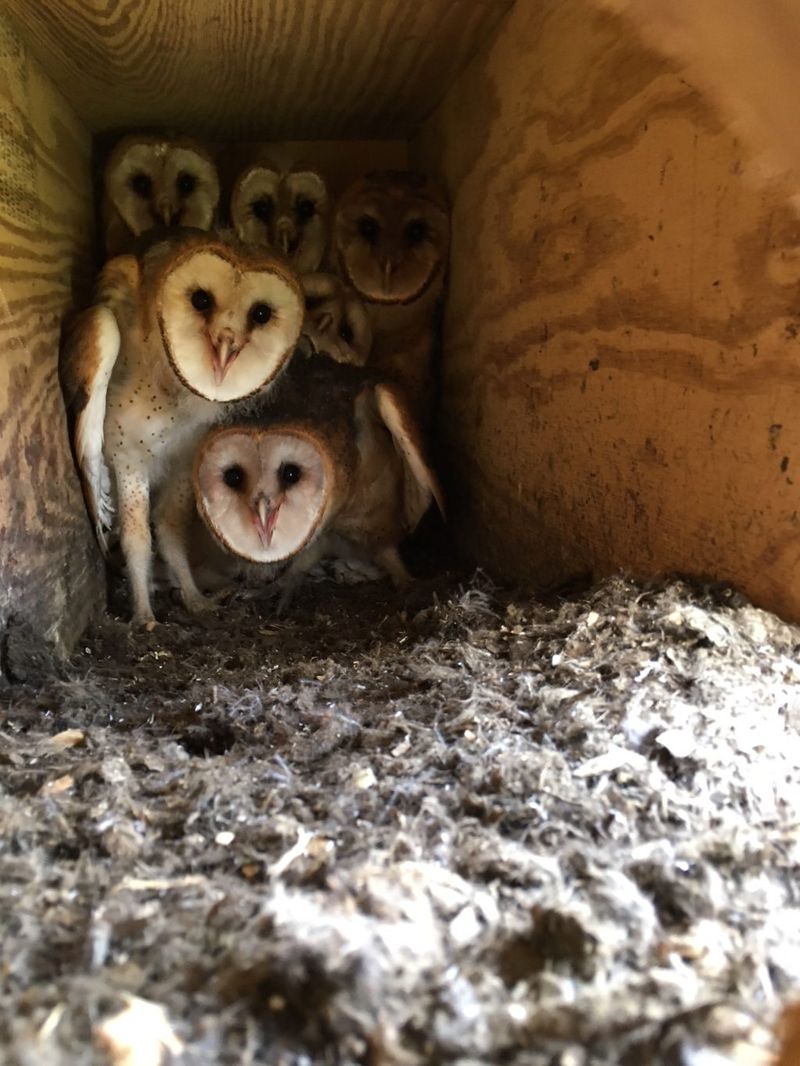
If you think an owl might be nesting nearby, the kindest move is to give it space. Watch from a distance, such as from a window or the far side of the yard, and keep your visits short and quiet.
Do not search the trees to find the nest, and do not try to flush the bird out to confirm it is there. Skip recorded calls too.
Audubon California advises against call playback, especially during breeding season, because it can stress birds that are guarding a nest or raising young.
A few simple habits help. Keep pets indoors at night, and turn off bright outdoor lights if you can.
Hold off on loud tools near large trees until you are sure no birds are using them.
Tree trimming deserves extra care. Nest rules have legal nuance, and the outcome depends on the circumstances.
The U.S. Fish and Wildlife Service explains that consequences can depend on whether birds or eggs are present and whether destroying a nest would result in unpermitted harm.
The safest approach is not to disturb a suspected active nest. If a nest causes a real conflict, such as a branch that threatens your roof, contact an agency or a qualified wildlife professional for advice before you act.
That is also a good time to remember that you may not know a nest exists at all. A quiet owl is not proof of one, so a little caution around big trees costs very little.
Contact a wildlife professional about an owl in distress
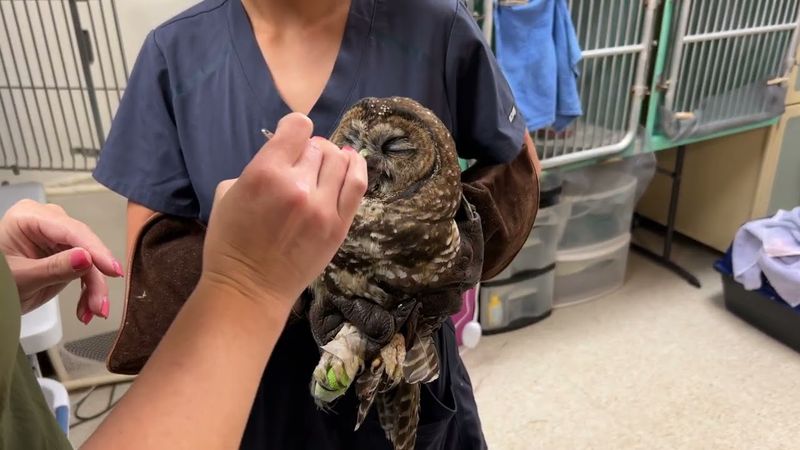
Most quiet nights are just quiet nights. A real problem looks different, such as a bird on the ground that cannot fly, a visible injury, or a young owl that seems truly alone.
If an owl appears sick, injured, or orphaned, the California Department of Fish and Wildlife says to contact a local wildlife rehabilitator or facility. Call them first, describe what you see, and follow their directions.
Do not pick the bird up, move it, or try to relocate it. Owls have strong talons, and handling can hurt both of you.
Keep people and pets away while you wait for guidance.
Silence on its own does not count as distress. A quiet stretch is not a diagnosis, and it does not tell you whether an owl has left, is nesting, or is simply calling when you are not listening.
The best gift for a possible owl neighbor is room. Some of the most interesting wildlife stories in your yard happen where nobody can see them.