
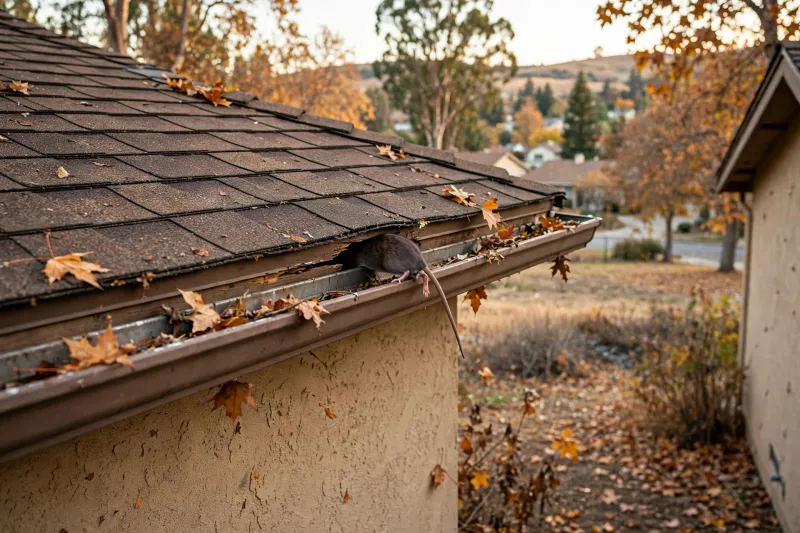
Spotting a rat near the garden can make anyone uneasy. The good news is that fall gives you a handy reason to walk your yard and look closely.
A few quick checks can show whether food, cover, or hiding spots are making your space easy for rats to use. Here is how to look, what to fix, and what to leave alone.
Fall is a useful inspection cue, not proof of an early rat surge
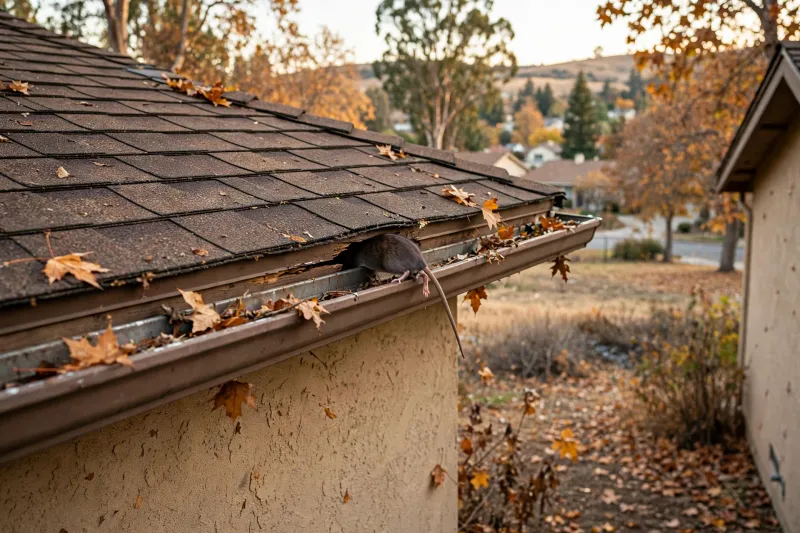
Cooler evenings can make a rat sighting feel like a seasonal warning sign. But UC IPM describes rats as active year-round, and its California guidance does not show that falling nighttime temperatures bring them into yards earlier.
UC IPM also notes that roof rats favor warm climates and coastal areas, so a blanket claim about an early fall rush does not fit what is known.
That does not mean fall is a bad time to pay attention. It is a practical moment to look over the yard while the garden is winding down, fruit is dropping, and you may be tidying beds or stacking firewood for winter.
A short inspection now can catch problems before they grow.
Think of it as a maintenance check rather than an emergency. You are looking for three things: food that rats can reach, cover that lets them move out of sight, and shelter such as a quiet pile or a gap in a wall.
Any of these can make a yard more suitable for rats, though none of them proves why a particular rat showed up.
The next sections walk through the evidence you can check with your own eyes. You will learn which signs matter, how to tell which animal may be involved, and which small changes tend to be worth making.
You do not need to rip out your garden to get started.
Look for signs, and consider which animal left them
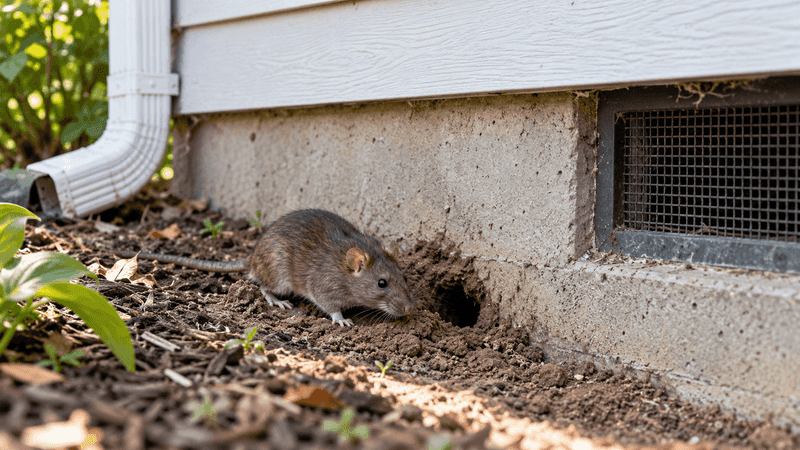
Evidence beats guesswork. UC IPM lists several signs worth checking: droppings near pet food, gnawed or hollowed-out fruit, burrows in the ground, nests tucked into firewood, and rats traveling at night along fences or utility lines.
Walk the yard with a flashlight after dark if you can, and look along the tops of fences and wires.
Fruit trees are a good place to begin. Look under citrus, persimmon, and nut trees for fruit with holes chewed through the rind or scooped out from the inside.
Then check along the base of walls, under sheds, and beside woodpiles for burrow openings or smooth, well-worn paths.
Signs help guide your search, but they do not tell you which feature caused the activity. A rat that eats fallen fruit might also be using a nearby hedge or a neighbor’s property.
Treat each clue as a reason to look closer, not as a verdict on one plant or pile.
It also helps to think about which animal you may be dealing with. California has climbing roof rats, which tend to travel along fences, wires, and branches and may nest up high.
Norway rats are burrowers, so look for tunnels near foundations and under piles. Native woodrats may also live in some areas, and a furry tail can help set a woodrat apart from the mostly hairless, scaly tail of the common pest rats.
If you are unsure, take a clear photo and note where the signs appear. That record will make it easier to choose the right next step, whether that is cleanup, exclusion, or asking a local pest professional.
Food, dense plants, and woodpiles can support different rat behaviors
Different yard features can help rats in different ways. Fallen fruit and nuts are plain food.
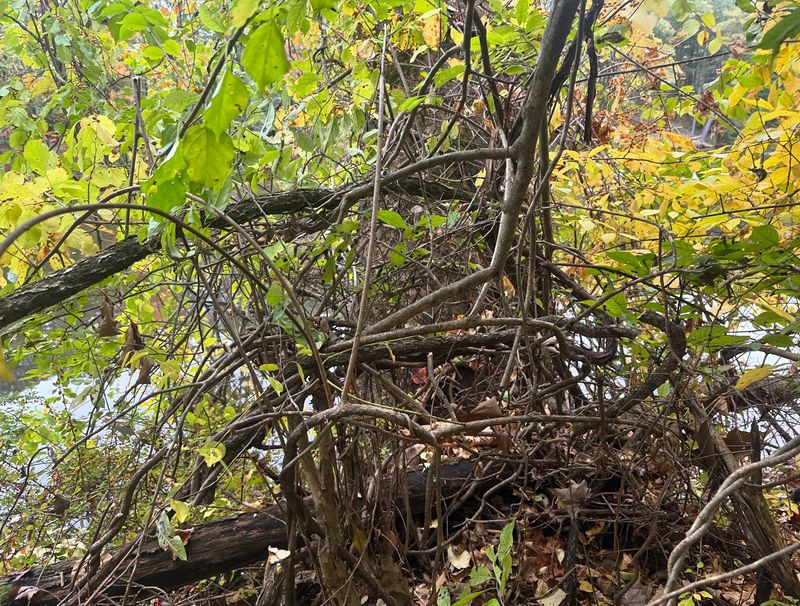
Dense vegetation can give roof rats cover, and climbing plants such as English or Algerian ivy, star jasmine, and honeysuckle can make it easier for them to move along fences and buildings while foraging.
Woodpiles are another spot to check. UC IPM identifies them as places where Norway rats may burrow or nest.
That does not mean every woodpile is infested, and a thick stand of ivy is not automatically a rat home. These features simply create chances, and you can check each one for real signs.
Start with the easiest fix: pick up fallen fruit and nuts regularly, and harvest ripe fruit before it drops when you can. A bucket by the tree makes this a two-minute habit.
Compost bins that take fruit scraps should have tight lids.
Next, thin dense cover where it touches fences, walls, or roofs. Selective trimming opens up the space so you can see the ground and spot trouble early.
You do not need to remove native shrubs or trees, which feed and shelter birds and pollinators. Focus on the thickest tangles and the climbers that bridge the ground to your house.
For firewood, stack it neatly and keep it off the ground when practical. Leave a little room to peek behind and underneath the pile, and check it now and then for nests, burrow openings, or droppings.
A tidy stack is easier to inspect than a jumbled heap.
Reduce accessible food and block routes into the home
Once you have checked the yard, turn to food. Clear garden debris such as piles of spent vegetables and rotting produce.
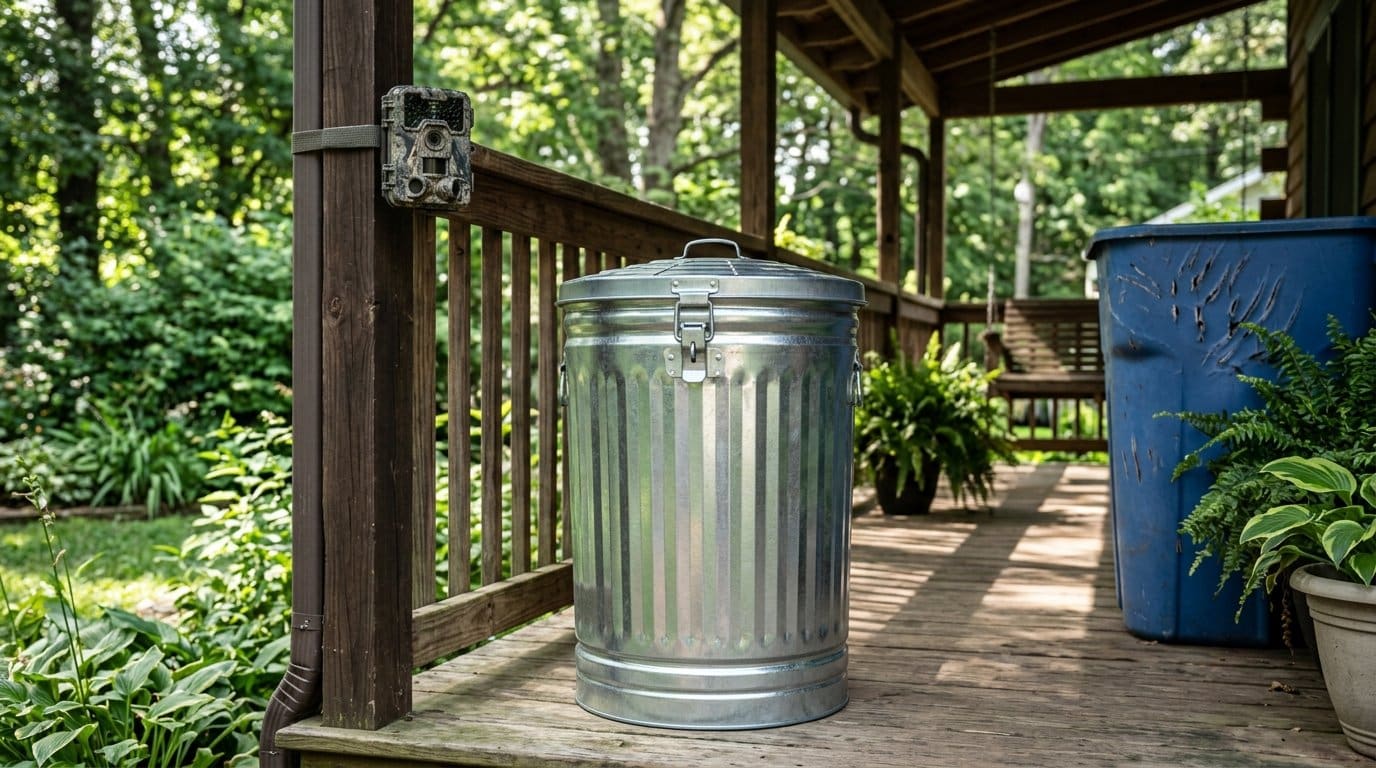
Keep garbage in tightly covered, rodent-resistant containers, and store pet food the same way. Feed pets only what they will finish in one sitting, and bring bowls in at night.
Be careful about plastic. Rats can gnaw through it, so a thin plastic bin is not automatically rodent-proof.
Heavy metal containers with tight lids are a stronger choice for pet food, birdseed, and chicken feed.
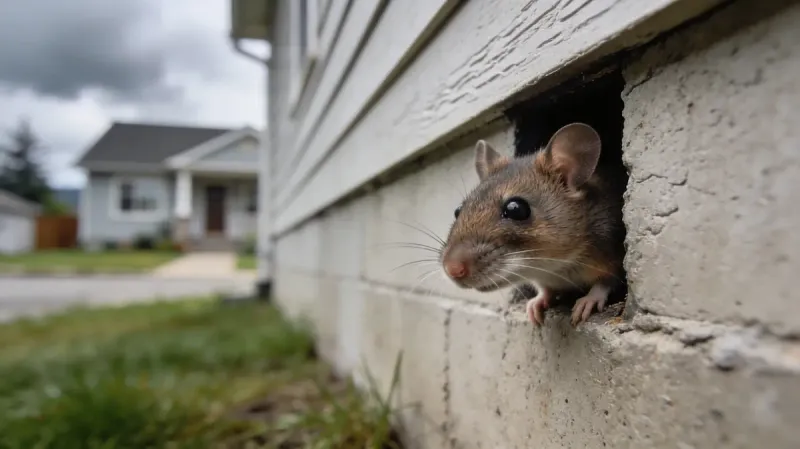
Now look at the house itself. UC IPM recommends sealing openings larger than a quarter inch using gnaw-resistant materials such as sheet metal or hardware cloth.
Walk the exterior and check around pipes, vents, and the foundation. Inspect door gaps and screens, since a worn door sweep or torn screen can be an easy way in.
Remember that roof rats climb, so do not stop at ground level. Look at high spots such as eaves, attic vents, and the places where wires or pipes enter the wall.
A gap that seems out of reach from the ground may not be out of reach for a climber.
Finally, prune branches that touch or hang over the roof and walls. Guidance varies on exact distances, so there is no single magic number.
The goal is simply to break the bridge between a tree or shrub and your home. Keep the trimming targeted, and leave the rest of the plant in place.
None of these steps promises to eliminate rats on its own. Together, they cut down on food and easy entry, which makes your property less convenient to use.
Clean up signs safely and use traps with care
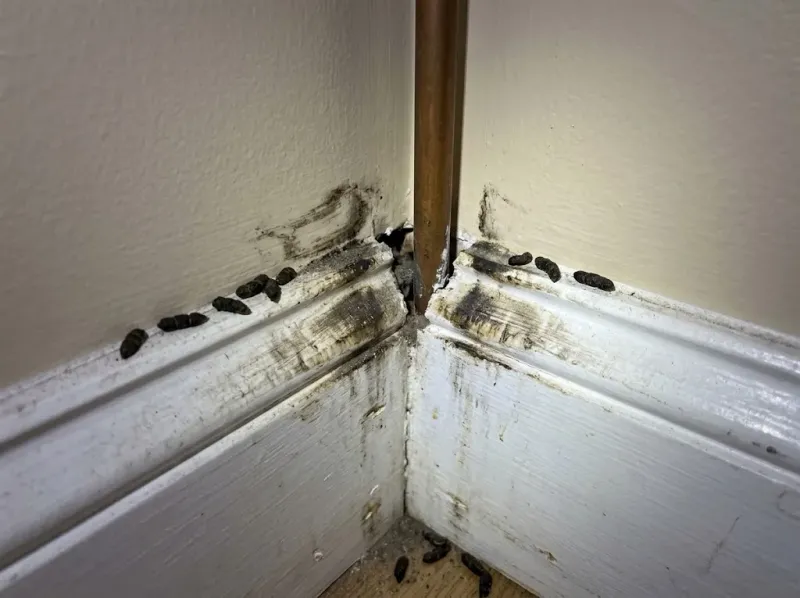
Cleanup needs a little caution. CDPH advises against sweeping or vacuuming possible rodent droppings, urine, or nests, because that can stir up particles into the air.
Instead, wet the material with disinfectant and clean it up following CDPH hantavirus guidance. Wear gloves, and avoid touching contaminated material with bare hands.
Hantavirus comes up often in these conversations, so it helps to keep it in proportion. CDPH emphasizes deer mice as the main concern in California, not the rats most people see in yards.
The careful cleanup steps are still smart for any rodent mess.
If trapping becomes necessary, UC IPM identifies snap traps as effective. Place them according to the type of rat and where you see activity.
Roof rats often travel along elevated routes, while Norway rats tend to follow the ground along walls. Set traps where children and pets cannot reach them, such as inside a protective box or in a closed space.
Skip outdoor glue boards. They can catch nontarget wildlife, including lizards, birds, and other animals that were never the problem.
Rodent baits are a separate matter. California has restrictions on many rodenticides, and the rules change, so do not improvise.
If you consider any product, follow its label and current rules, and read EPA advice on using bait products safely. When in doubt, a licensed pest professional can help you choose a safe approach.
Make a targeted yard check instead of assuming a seasonal cause
A weekend walk-through is enough to start. Look for real evidence, pick up fruit and other accessible food, thin only the densest cover, check around woodpiles, and seal gaps on the house.
Jot down what you find so you can see whether things improve. For more detail, UC IPM’s rat guide covers each step.
Cooling nights do not explain why a rat appeared, and these steps cannot promise to clear every one out. They do make a yard less handy for them.
A garden can be lively and still be well kept.