

You sit down on the patio at dusk, and within minutes your ankles are itching. Florida no-see-ums are tiny, and they can make a nice evening feel short.
Weather may play a part, but it cannot tell you exactly when bites will happen. Here is what is known, what is not, and a few practical steps that can cut down on bites.
When biting activity is more likely—and what weather can’t tell you
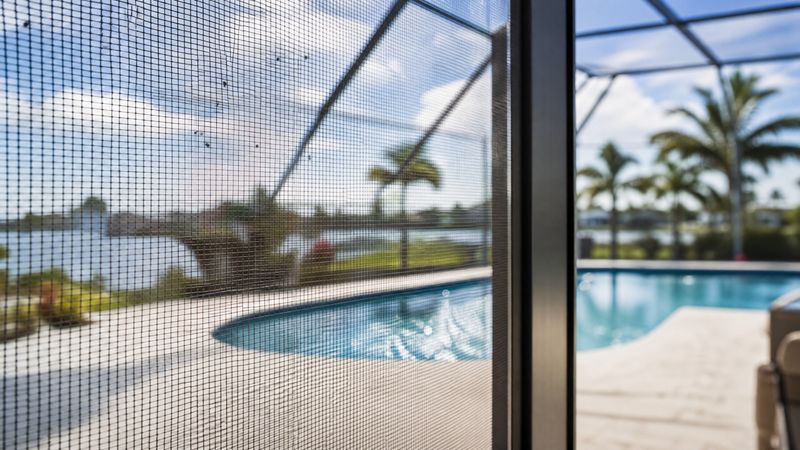
Sunset is the time many Florida homeowners start scratching. UF/IFAS guidance on biting flies says no-see-ums are usually most active around sunrise and sunset, and that even a slight breeze reduces their feeding.
Florida sources also note they can be active year-round, so there is no true off season to count on.
Treat that timing as a broad pattern, not a patio schedule. Activity varies by species and location, and some biting midges feed at other times, including daytime in certain coastal or overcast conditions.
UF/IFAS information on Culicoides also points out that the state has many species, with the greatest variety in northern Florida. Your neighbor two counties over may deal with a different midge on a different calendar.
Calm air is the better-supported piece of the weather story. Low air movement can favor feeding, but a still evening does not prove a swarm is coming.
Humidity is shakier ground, because nobody has found a statewide humidity or temperature number that predicts a patio swarm.
Some research does look at weather and flight. A study of Culicoides in England describes flight as shaped by temperature, humidity, and light, with wind holding flight back.
Work on a different species, C. imicola, found humidity played only a minor role in its flight activity. Those results belong to their own species and settings, so they are not a Florida patio forecast.
A better headline for any Florida evening is simple: still air may be one factor among several. Use the timing and breeze clues as nudges, then build your protection around steps that work no matter what the weather does.
A visible swarm does not always mean biting midges
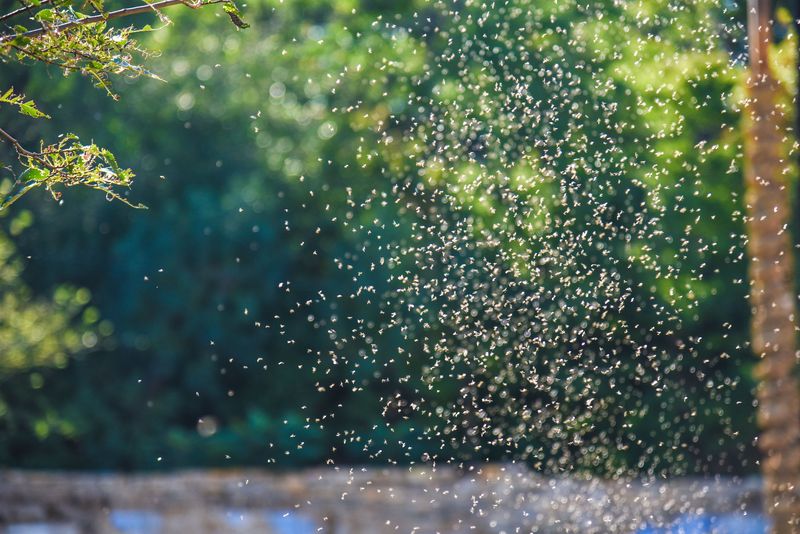
Picture a glowing cloud of tiny insects dancing over the pond behind your house. It looks like trouble, but looks can fool you.
Many people call every small flying insect a midge, and that one word covers very different bugs.
Biting midges, called Culicoides, are the no-see-ums that leave itchy welts. Chironomid midges are a separate group.
According to a UF/IFAS explanation of pond and lake midges, chironomids can form large, conspicuous swarms near lakes and ponds, but they do not bite.
That difference matters for your wallet and your time. A swarm by the water may be a nuisance that stays on the cloud-and-bump-into-your-face level, with no bites at all.
Treating a yard for an insect that does not bite means effort spent on the wrong problem.
Biting midges are usually too small to see well, which is where the name comes from. A good clue is what happens to you.
If you feel stinging or itching bites on exposed skin, often small red spots that show up after the sting, a biting species may be around. If insects just hover and bounce off you without biting, a non-biting species is more likely.
Appearance alone will not settle every case, and you do not need to become a bug expert. UF/IFAS describes Culicoides in detail, and your county Extension office can help identify what you have.
Get the insect identified first, then decide whether any treatment makes sense.
Put airflow across the seating area
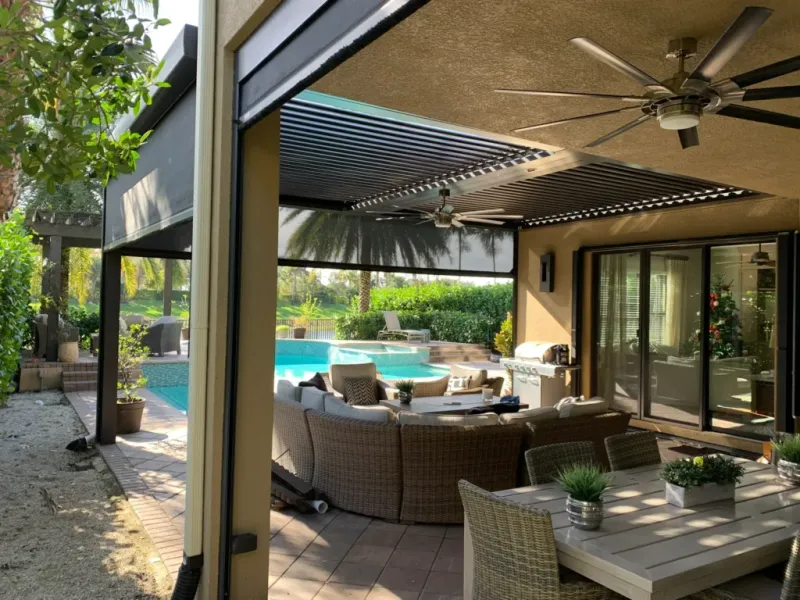
A fan is one of the easiest tools you can plug in. Place it so the air moves across the spot where people actually sit, not off in a corner.
A small oscillating or pedestal fan at seat height often does the job better than a ceiling fan far overhead.
The reason comes from the insects. UF/IFAS says even a slight breeze reduces feeding by no-see-ums.
These bugs are tiny, so moving air makes landing and biting harder for them.
Be realistic about what that means. A fan makes your seating area less inviting.
It does not promise to blow away a swarm or end bites, and some bites may still happen.
A few setup tips help. Aim the fan at ankles and calves as well as at your upper body, since low spots are common targets.
Keep cords safe and dry, and use a fan rated for outdoor or covered use if rain can reach it. If you have two fans, crossing their airflow gives you fewer still pockets.
Think of this as shaping the small space you occupy rather than managing your whole property. You are not trying to fix the whole yard.
You are making the chair you are sitting in a harder place for a midge to feed, and you can combine it with the other steps below.
Check whether screens can exclude biting midges
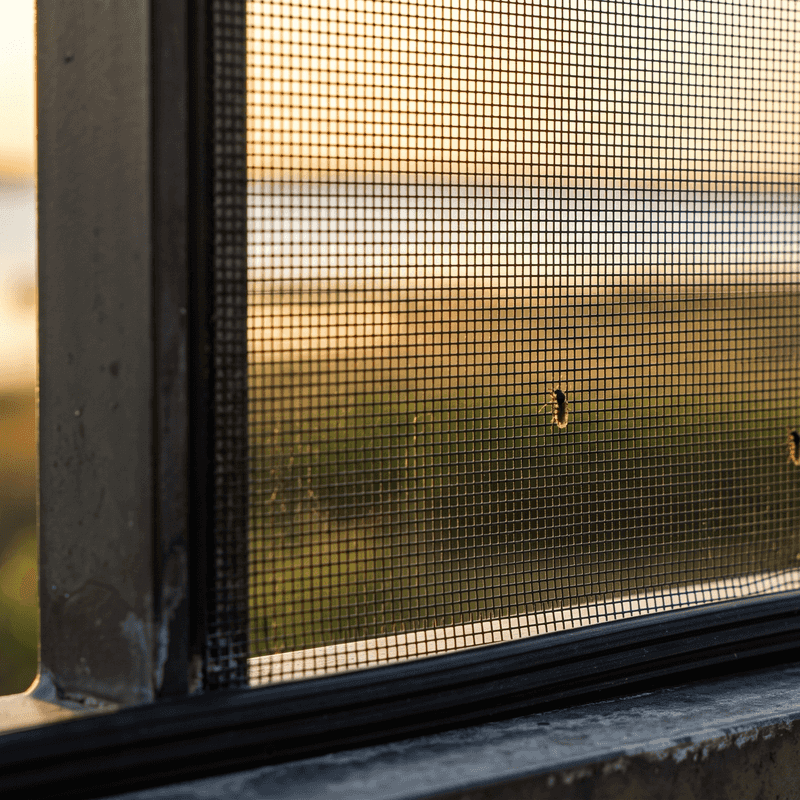
Not all screens are equal, and no-see-ums are the reason. They are small enough that many standard screens let them through.
UF/IFAS notes that ordinary window screens do not exclude no-see-ums, which explains why bites can happen even behind a closed screen.
For keeping them out of a home, CDC guidance recommends 20-by-20 mesh. That means 20 openings per inch in each direction, a much tighter weave than typical screen.
If bites keep showing up indoors, ask a screen supplier about finer mesh for the windows and doors where you notice problems.
Homes and open patios are different situations. A closed window with fine mesh is a controlled opening.
A screened porch or lanai has doors that open, seams, and large areas, and an ordinary screen enclosure does not guarantee protection.
If you have a screened patio and still get bitten, check the mesh type first. Look for gaps near door frames and torn corners as well.
Upgrading the mesh on an enclosure is a bigger project, so get a quote and ask what fits your structure.
Finer mesh can also restrict airflow somewhat, so pairing it with a fan helps. Mesh alone will not solve outdoor exposure, because bites still happen when you step out from behind it.
Think of it as one layer of protection, not the whole plan.
Protect exposed skin with clothing and labeled repellent

Sunset on the patio often means shorts and sandals, which gives midges lots of easy targets. Switching to lightweight long sleeves and pants, where that is comfortable, cuts down the skin they can reach.
CDC guidance lists covering skin with clothing as part of avoiding bites.
For the skin that stays uncovered, pick a repellent carefully. Read the label and look for a product that covers flies, biting flies, or no-see-ums.
CDC says EPA-registered repellents labeled for these pests are effective.
Registration matters because of what it checks. EPA explains how skin-applied repellents are regulated, with safety and effectiveness evaluated when the product is used as labeled.
So follow the directions on the bottle for how much to use and how often to reapply.
A few safety rules are simple. Keep repellent out of your eyes and mouth, and spray your hands first before touching your face if you need coverage there.
Never apply permethrin products to skin, because those are made for use on clothing and gear only and the label spells out how.
Skip the shortcuts. EPA notes that several unregistered products, including some citronella and essential-oil products, have not been evaluated by EPA for effectiveness.
Homemade mixtures and planted citronella are not proven stand-ins for a labeled repellent, so keep them as a nice scent, not as your protection.
A simple yard fix may miss the source
It would be nice if one yard project ended no-see-um bites for good. No one can honestly promise that.
Biting midges breed in many kinds of places, and UF/IFAS lists marshes, mangroves, wet grasslands, treeholes, and pond or puddle edges for different Florida species.
Many of those places are not on your lot. A marsh down the road or a mangrove shoreline can send midges to your patio no matter how tidy your yard is.
Even where the source is close, changing the habitat can be difficult.
That is why emptying buckets and flowerpots, while good for mosquitoes, should not be treated as a guaranteed no-see-um fix. Biting midge larvae may not be in your containers at all.
Mosquito advice and no-see-um advice overlap only in part.
Blanket spraying is not a good default either. UF/IFAS describes control as difficult and recommends contacting the local mosquito-control district.
If any pesticide is used, follow the product label and local guidance.
Your local district knows which species and habitats are around you, so call or check its website for area-specific help. Ask about the season, nearby breeding spots, and what services exist.
Also note that CDC says biting midges can transmit some pathogens, which does not mean there is a current outbreak or risk at your patio. For present local health information, check your county or state health department.
A realistic plan goes in order: put a fan across the seating, check your screening, and cover or treat exposed skin as the label directs. These steps reduce exposure but do not guarantee a bite-free night.
Some evenings you will still go inside early, and that is part of living near Florida water.