
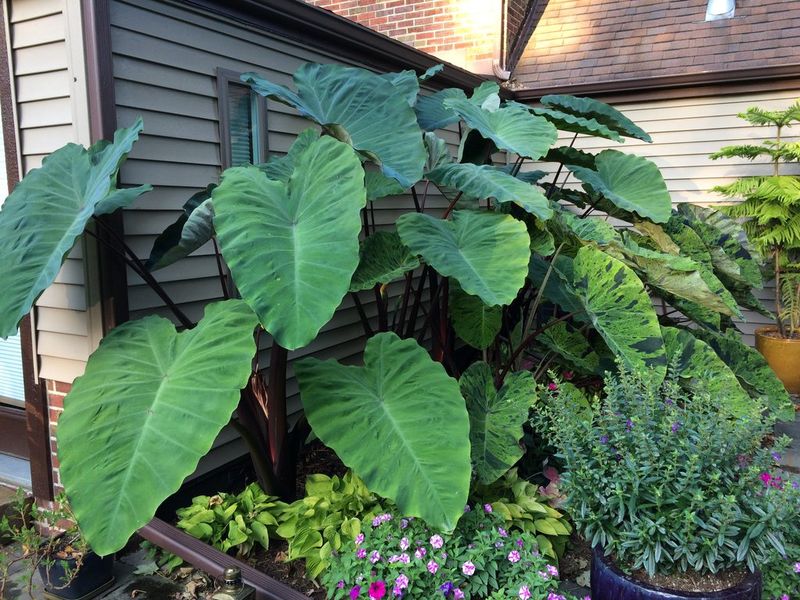
Those giant elephant ear leaves can turn to mush after one cold night, and many gardeners wonder if the plant is gone for good. Often the part underground can still be saved if you know which plant you have and when to dig.
North Carolina is a long state, so a mountain garden and a coastal one do not share the same calendar. Here is how to time it, dig it, and store it so your plant has a real chance to return.
Which elephant ear are you growing?
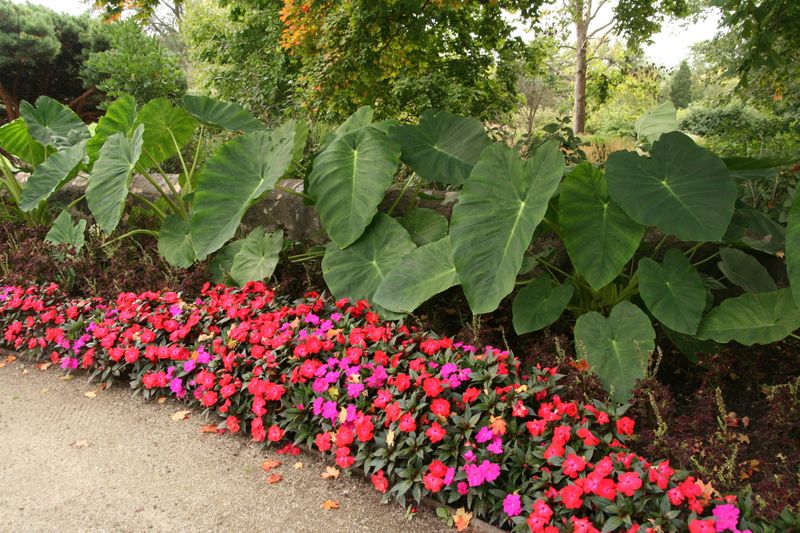
Walk through any garden center and you will see several plants sharing one nickname. Elephant ear can mean Colocasia, Alocasia, or Xanthosoma, and each has its own habits.
Before you pick up a shovel, check the plant tag or compare the leaves, because winter advice is not identical for all three.
NC State Extension describes Colocasia, often called elephant’s-ear, and recommends digging and storing the tuber in areas colder than USDA Zones 7b to 10. That tells you something useful: gardeners in milder spots may not need to lift it every year.
Even so, hardiness depends on the cultivar, the site, and how much shelter the plant gets.
The plant’s underground part is also not the same everywhere. Gardeners say bulb out of habit, but the more accurate words are corm or tuber, depending on the plant.
Wisconsin Extension covers all three genera and shows why care and hardiness vary from one to the next.
So the first job is simple detective work. Find the tag, snap a photo of the leaf shape, and note whether the plant sits in the ground or in a pot.
If you cannot identify it, treat the advice in this article as a starting point, not a promise. Not every plant and not every North Carolina yard needs lifting.
Plan around your local freeze conditions
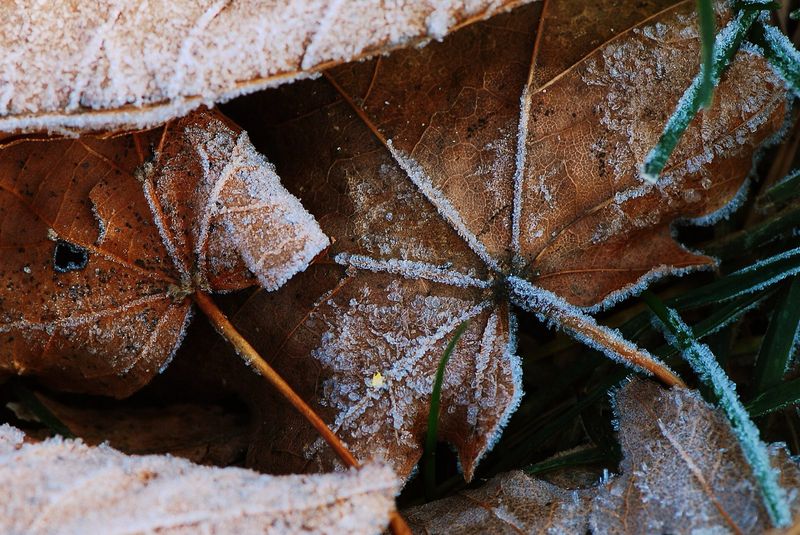
North Carolina stretches from mountain ridges to the Atlantic coast, and the first freeze does not arrive everywhere at once. NC State’s climate guidance on first frost and freeze climatology describes mountain freezes as generally earlier than Piedmont freezes, with the coast often later.
Because of that, a fixed date for the whole state would only mislead you.
A better plan is to look up your own area. The State Climate Office offers a Freeze Date Explorer that shows local averages and past freeze dates.
Check it in early fall, then mark a window on your calendar rather than a single day.
Treat those dates as a planning aid, not a guarantee. Real years swing widely, and a cold snap can come early or a mild fall can run long.
Watch the weekly forecast once October starts.
One more detail matters in your own yard. The explorer counts a freeze as 32 degrees F or below at standard sensor height, but frost can form near the ground when the official reading is a little warmer.
Low spots and open lawns can frost first. If your elephant ears sit in a hollow, they may feel the cold sooner than a nearby weather report suggests.
A light frost can mark the time to dig
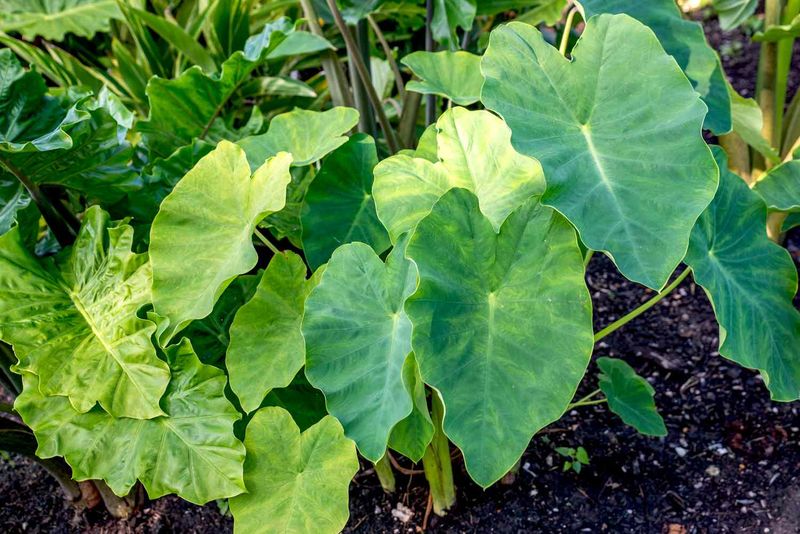
Many gardeners hear dig before the first frost, but that is not a rule for every plant. For the in-ground plants covered by Penn State Extension’s overwintering guidance, the better signal is a light frost that kills the tops.
At that point the leaves collapse, yet the underground part can still be intact.
A hard freeze is a different matter. It can threaten the roots or corm, so you do not want to wait for one.
The practical sequence is to let light frost knock back the foliage, then dig within a few days.
Picture a Piedmont gardener who wakes to blackened leaves after a chilly night. That is the cue to grab a fork that week, not to hope the next night stays mild.
If the forecast shows a hard freeze coming and the leaves are still green, you can plan the dig for just before it arrives.
Keep the scope in mind. Container plants are often handled differently, and some sources suggest lifting them before frost.
Colocasia in a protected, milder site may also come through winter in place. NC State notes that zone and site matter for Colocasia, so match your timing to your plant and your yard.
Dig carefully to protect the underground structure
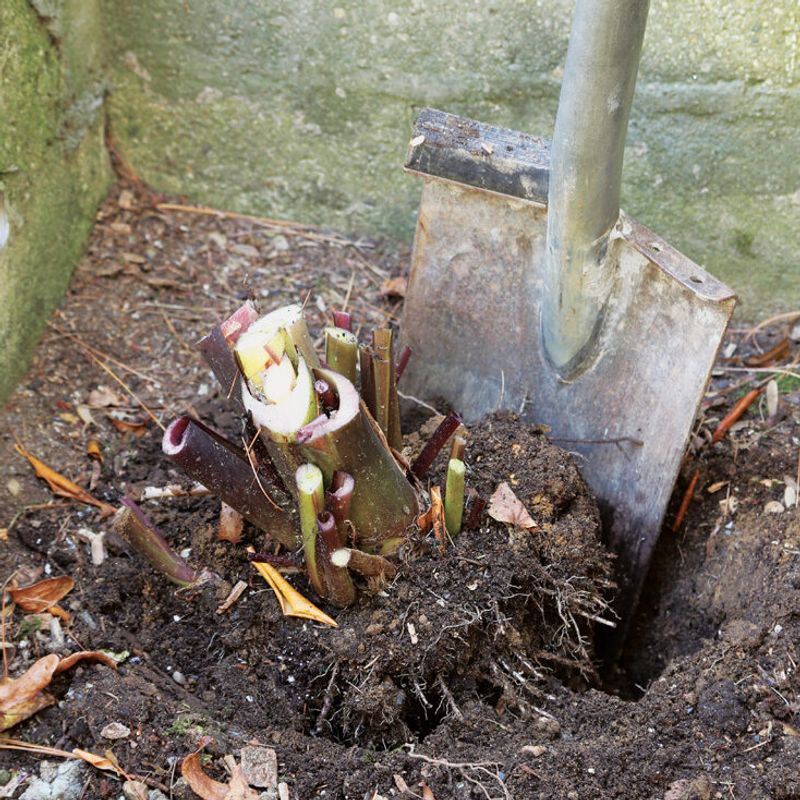
Once the foliage has died back, the digging itself deserves a slow hand. A spade can slice straight through a tuber, so reach for a digging fork instead.
Penn State Extension suggests working several inches away from the base to lower the chance of damage.
Start by cutting the dead stalks down to a few inches so you can see where the plant begins. Push the fork into the soil in a circle around the clump, then rock it gently to loosen the ground.
Lift from underneath and ease the whole mass out rather than yanking on the stems.
Shake off loose soil, but skip the hose for now. Look over each piece and set aside any that are soft, mushy, or cut open.
Firm pieces are the ones worth keeping.
Careful handling gives you good material for storage, and that is all it can do. It cannot guarantee the plant will survive the winter, since rot, cold, and shriveling can still happen later.
Think of this step as protecting your odds. Wear gloves while you work, and set the clumps in a shaded spot while you prepare for drying and storage.
Dry and store it according to the plant-specific advice
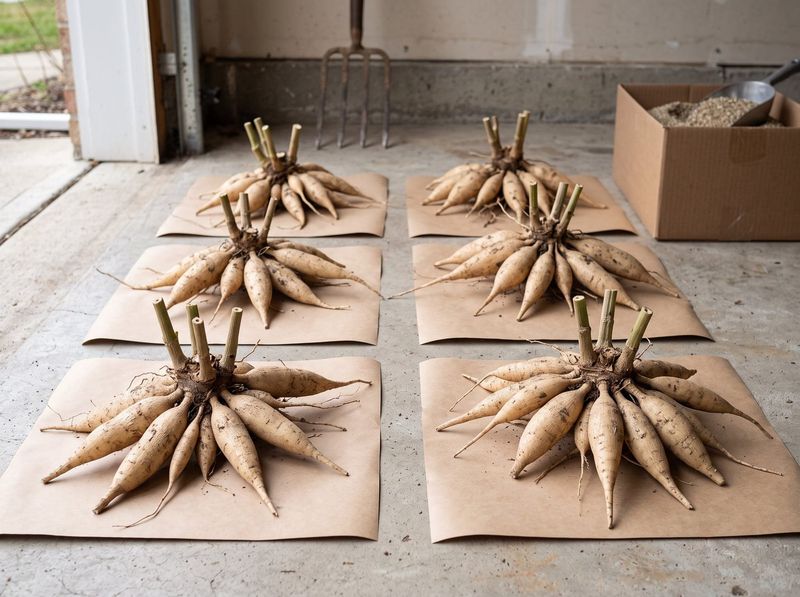
Here is where advice splits, and it is fine to say so plainly. Extension sources do not agree on one curing time or one storage temperature, so avoid mixing them into a single rule for every elephant ear.
Match the advice to your plant and note which source it comes from.
Wisconsin Extension gives general guidance for tender bulbs. It advises curing most of them for 1 to 3 days in a dry, ventilated place, then storing them in a breathable container with a dry packing material.
It gives a general range of 35 to 45 degrees F for tender bulbs.
Iowa State’s advice is specific to elephant’s ear. It says to dry the tubers for 1 to 2 weeks, which is a longer window than Wisconsin’s general advice.
For temperature, NC State’s Colocasia page recommends a cool, dry place that stays above 45 degrees F. A basement corner or an insulated garage that does not freeze may fit, depending on your home.
Whichever route you choose, label the box with the plant name and the date. Peek inside every few weeks.
If a tuber feels soft or smells off, remove it so rot does not spread. If one looks wrinkled and shriveled, the storage spot may be too dry or too warm, so adjust it.
Checking regularly will not guarantee success, but it lets you catch problems while there is still time to act.
Storage can preserve the plant, but cannot promise bigger growth
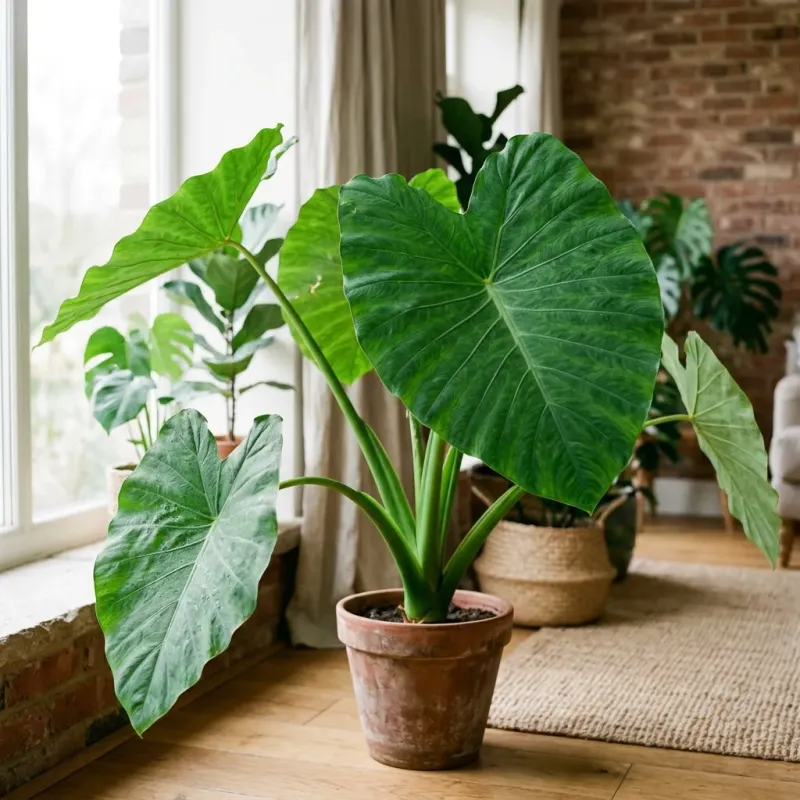
Digging and storing gives your plant a chance to return, and that is a real win. It does not promise the plant will wake up in spring, and it does not make the leaves bigger.
A stored tuber can still rot, dry out, or fail to sprout.
So what shapes size? Extension guidance points to the starting size of the corm or plant, along with water, fertilizer, and growing conditions.
Wisconsin Extension’s elephant ear overview describes these plants as heavy feeders that respond to a rich, moist growing site. A bigger, healthier starting piece generally has more to work with.
The Illinois Extension Alocasia page also ties growth to the plant’s conditions, which fits the same idea. Good light, steady moisture, and regular feeding all play a part once the weather warms.
For next summer, set a modest goal. Keep your largest healthy pieces, replant them after your last frost risk has passed, and give them a good spot.
If they come back strong, you will know the storage worked and the growing conditions helped. If they come back smaller, there are plenty of causes, and storage is just one of them.
Handle elephant ears with care
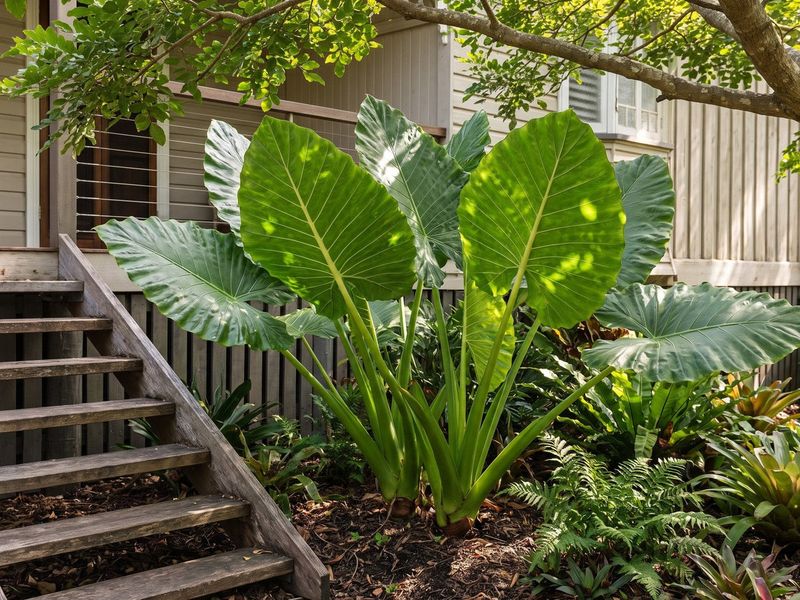
A quick safety note belongs with any dig. NC State Extension notes that Colocasia contains calcium oxalate crystals that can cause irritation if chewed or swallowed.
Alocasia has them too.
Poison Control recommends covering your skin when working with Alocasia and keeping the plant away from children and pets. Gloves and long sleeves are an easy habit during digging and sorting.
Wash your hands afterward, and keep stored tubers in a spot where curious kids and pets cannot reach them.
Do not treat ornamental or unidentified elephant ears as food. Raw plant parts can cause painful mouth and throat irritation, and a garden plant is not a safe guess.
With a few simple precautions, the work stays pleasant. Gloves on, plant identified, and the box out of reach, and you can enjoy the big leaves again next season.