
A cold snap can turn a healthy citrus tree into a worry overnight. Gardeners in Texas and Florida often hear that a trunk wrap is the answer, but the real story is more specific.
A wrap can help protect one part of a young tree, and it works best when you know what it can and cannot do. Here is how to decide whether your lemon or lime tree needs one.
Bark splitting is one possible kind of freeze injury
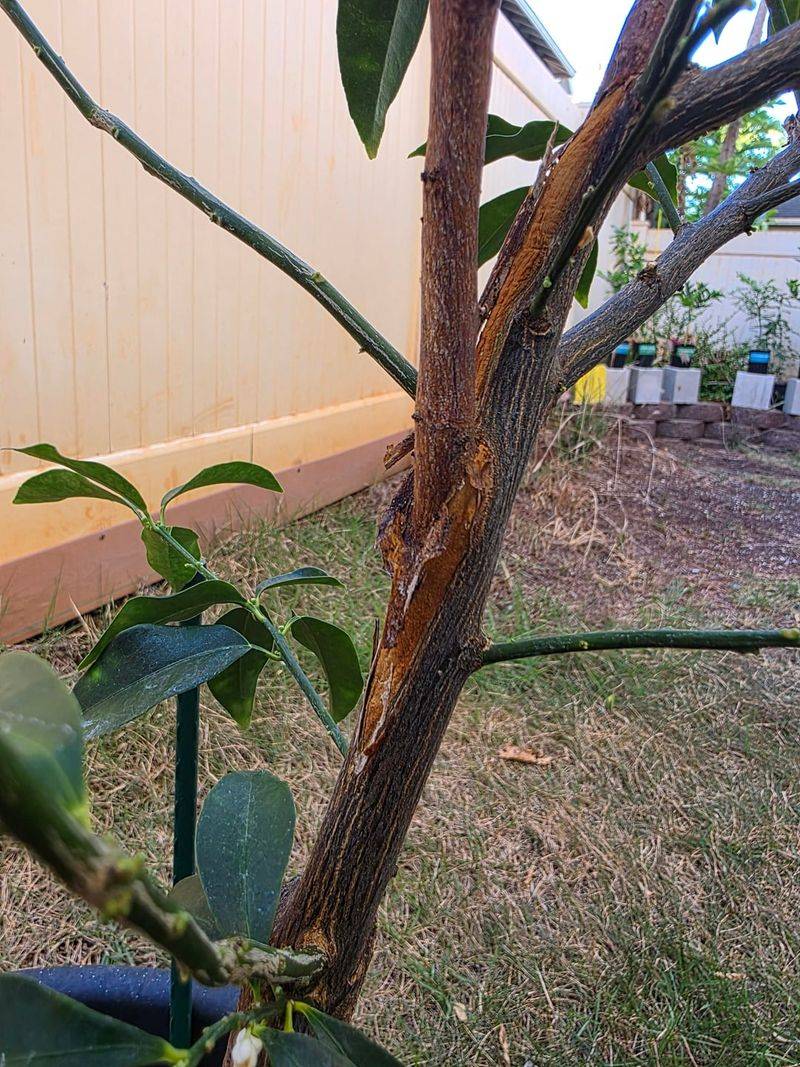
Ice can form inside citrus wood during a hard freeze, and that can split the bark. UF/IFAS freeze damage guidance describes bark splits as a possible result, especially on young trees.
Possible is the key word, though. An unwrapped trunk does not automatically split, and many trees come through a light freeze without it.
The trunk is only one place where cold can hurt. Fruit, leaves, young shoots, limbs, and roots can all be injured, and University of Georgia Extension notes that young trees and fresh growth are the most vulnerable.
A UC IPM overview lists the same range of injury.
So a trunk wrap answers one risk out of several. Before buying supplies, it helps to look at your own tree and your own weather.
Assess the tree and the freeze, not just the forecast low
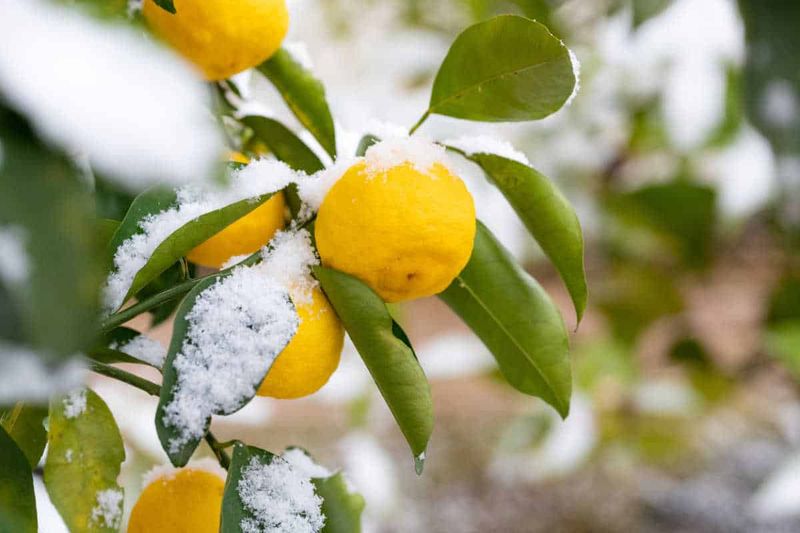
Two freezes with the same low can do very different damage. How long the temperature stays below freezing matters, and so does how gradually the cold arrived.
Texas A&M AgriLife Extension notes that citrus tolerates colder temperatures after gradual acclimation to cooler weather, so a sudden drop after a warm spell is harder on a tree.
Tree age and health count too. Young trees, recently stressed trees, and trees with tender new growth are at more risk.
Variety and rootstock also change how a tree responds.
Lemons and especially limes are relatively cold-sensitive. UF/IFAS lemon guidance gives injury temperatures for lemons, but those numbers apply to specific tissues and conditions.
Other references, such as UC Cooperative Extension in Ventura County, separate varieties and conditions as well. Treat any single cutoff with caution, since UC IPM also stresses that damage depends on the setting.
Use a trunk wrap to target a young tree’s trunk and graft union
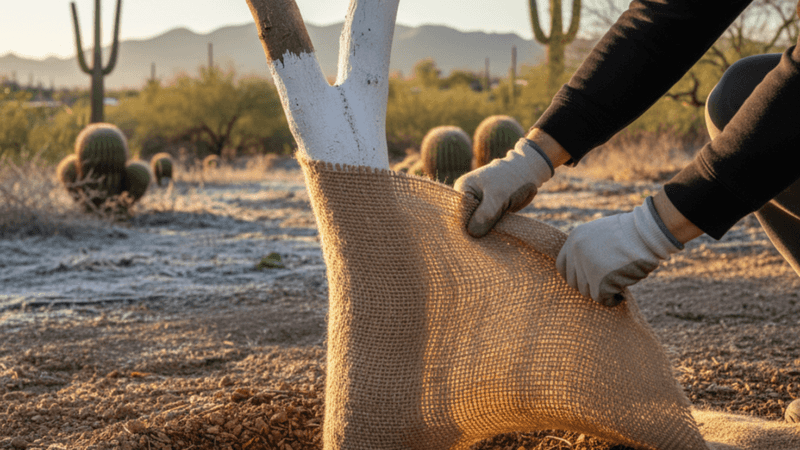
For a young tree, the trunk and graft union are worth special attention. If the graft is killed, the tree may regrow from the rootstock instead of the variety you planted.
A wrap is one possible way to protect that area when local freeze risk warrants it.
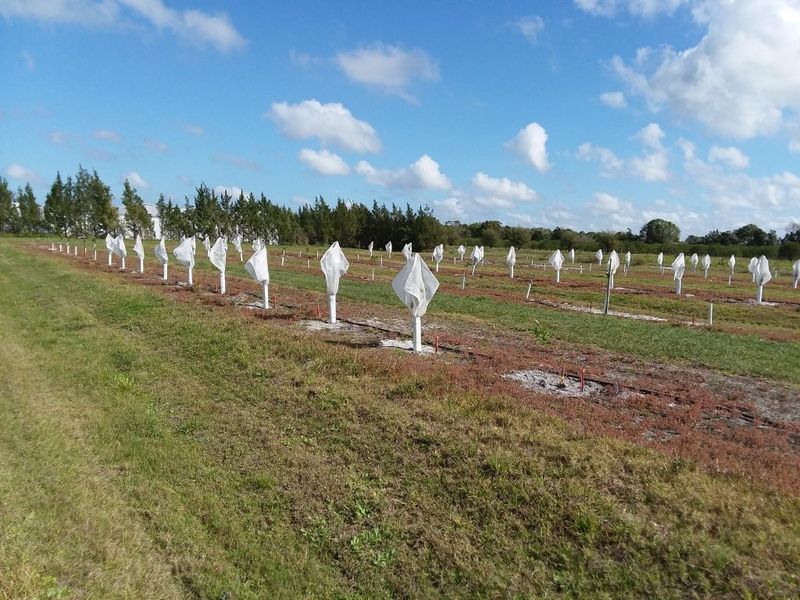
UF/IFAS Extension in St. Lucie County recommends trunk wraps on young citrus, covering up to about 2 feet around the base, to help protect the graft. That measurement comes from that local guidance and is not a universal rule.
The same source says wraps combined with microsprinklers offer more protection than either alone.
A wrap covers only what it touches. As University of Georgia Extension points out, it protects the trunk, not the canopy.
Not every lemon or lime tree needs one, and mature trees in mild areas may do fine without it.
Material and upkeep affect a wrap’s usefulness
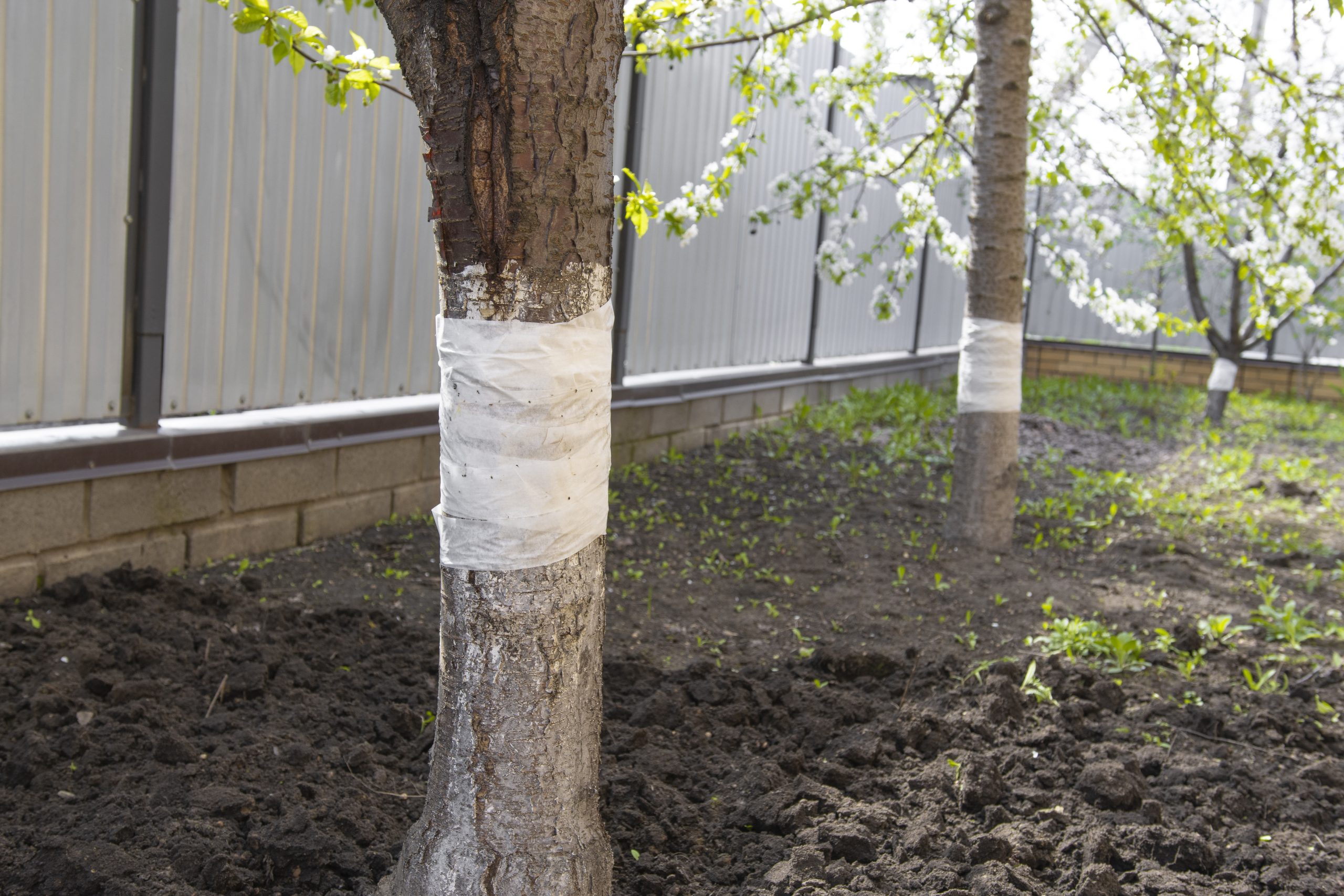
Some wraps insulate well, and some barely help. The UF/IFAS citrus cold protection guide explains that performance depends on insulating properties, and a poorly insulating wrap can fail or even leave temperatures beneath it colder than the surrounding air.
Calling any wrap a fix would be a mistake.
Wraps also need a look now and then. UF/IFAS citrus reset guidance notes that wraps can shelter ants and contribute to insect and disease problems.
Peek under the wrap for pests, damp spots, or bark trouble, and check your local extension office for how long to leave one on in your area.
Keep expectations realistic, too. The leaves, branches, and fruit sit above the wrap, and UGA Extension stresses that a trunk wrap does not protect the canopy.
Choose other cold-weather measures for the parts a wrap cannot protect
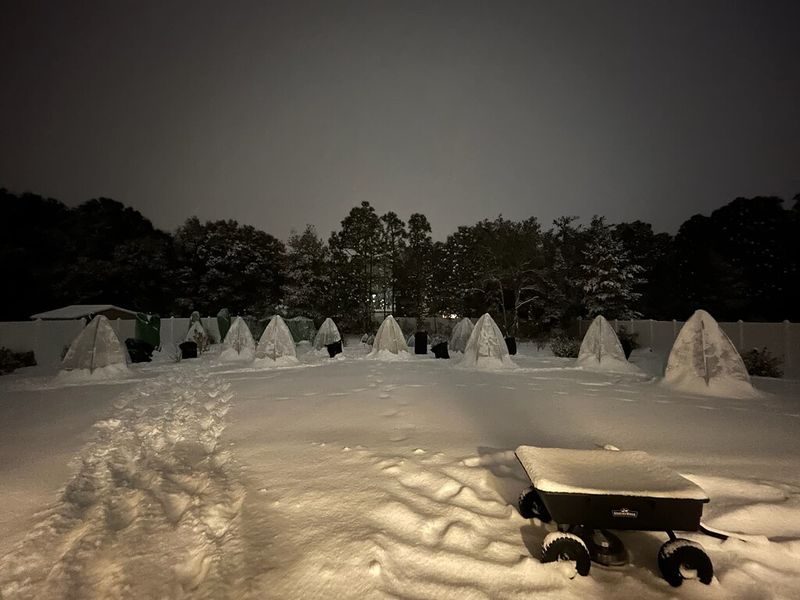
When a frost is forecast, a whole-tree cover is a different tool from a trunk wrap. UF/IFAS Extension in Okaloosa County advises covering the tree with cloth all the way to the ground, then removing it after the cold passes.
Even then, a cover is not assured protection in a hard freeze.
Texas guidance adds site preparation. Texas A&M advises bare, firm soil under and around citrus and thorough watering several days before an expected hard freeze, with covers as extra protection.
That is regional advice, not a guarantee against severe cold.
Soil banking is its own method. Texas A&M describes it as strong protection for young trees, and UF/IFAS discusses it as well.
It is not the same as piling on mulch, and UGA Extension warns against mounding organic matter around the graft because of disease risk. The same source says freeze-protection irrigation must start before temperatures fall below freezing and run continuously through the whole freeze, so it is no casual shortcut.
Protect the tree without expecting a wrap to save next year’s crop
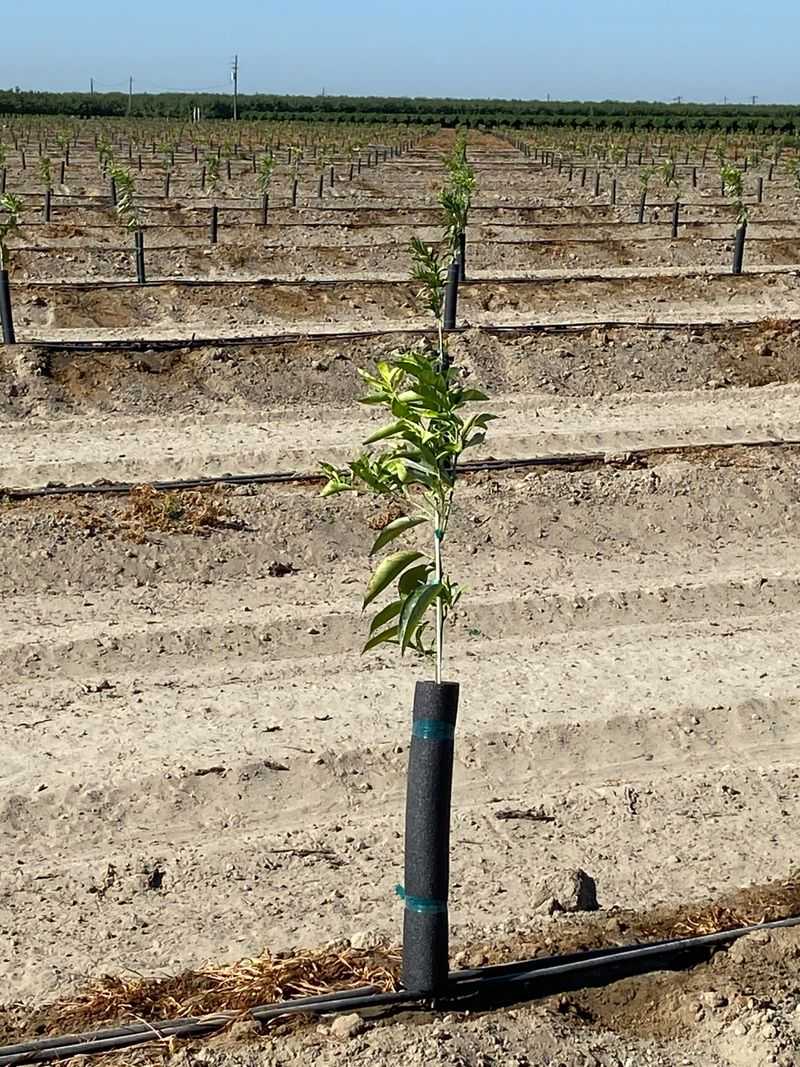
Here is a simple rule of thumb. If your tree is young and your area gets real freezes, consider targeted trunk protection for the trunk and graft union.
Then pick separate measures, such as a forecast-based cover, for the parts a wrap cannot reach.
A wrap does not shield fruit or leaves. UF/IFAS St. Lucie County even notes that microsprinklers can help some leaves and wood but are ineffective for fruit.
Any crop benefit from a wrap is indirect, and it depends on the tree surviving. UGA Extension likewise limits a wrap’s purpose to the trunk.
A wrap is a small insurance policy for the trunk, never a promise of a harvest.