
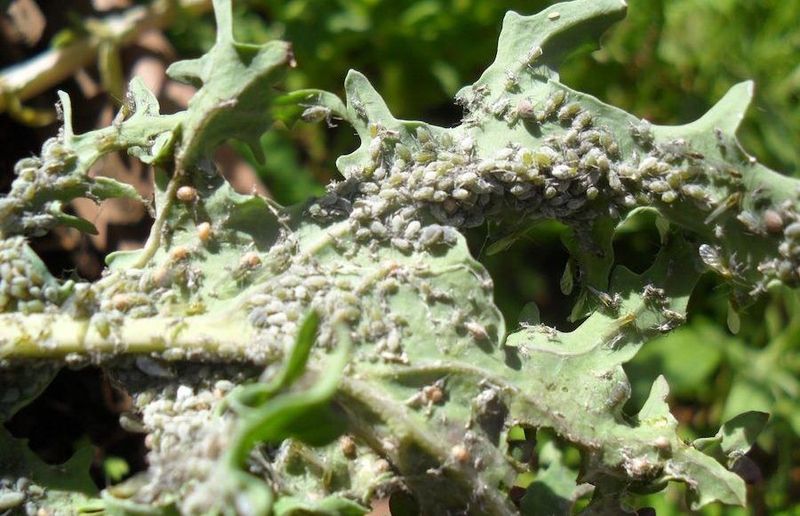
Flip over a kale or collard leaf this fall and you might find a crowd of tiny soft-bodied bugs sucking sap. Aphids can build up quickly when conditions suit them, and that can worry any gardener who has babied greens since late summer.
The good news is that you already own a pest fighter: a hose. Here is how to use a targeted stream of plain water, and what to do after the first spray.
Inspect leaf undersides and sheltered new growth
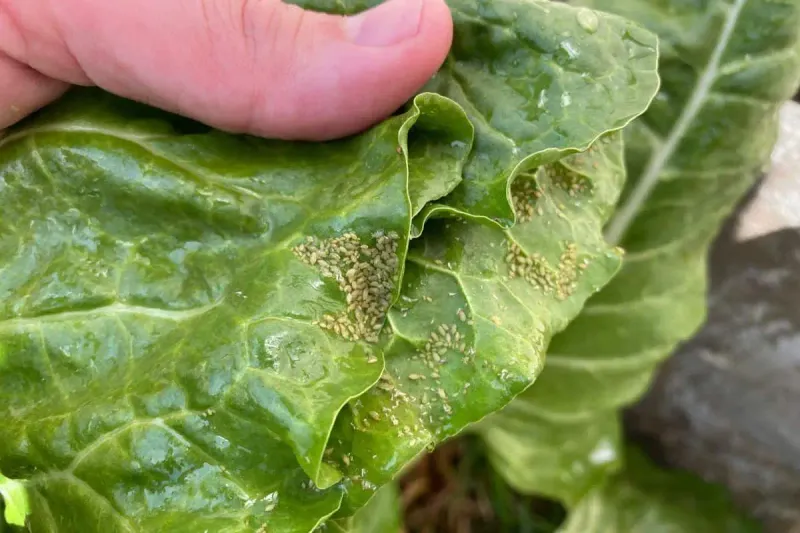
Start your search where aphids like to hide. Turn leaves over and look along the undersides, then peek into the tight, young leaves at the center of the plant.
Colonies often settle in these sheltered spots, which is why a quick glance at the tops of leaves can miss them.
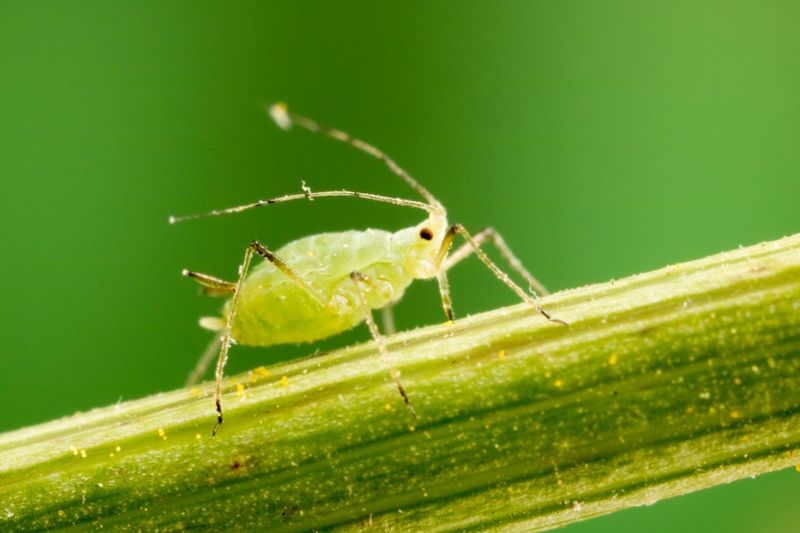
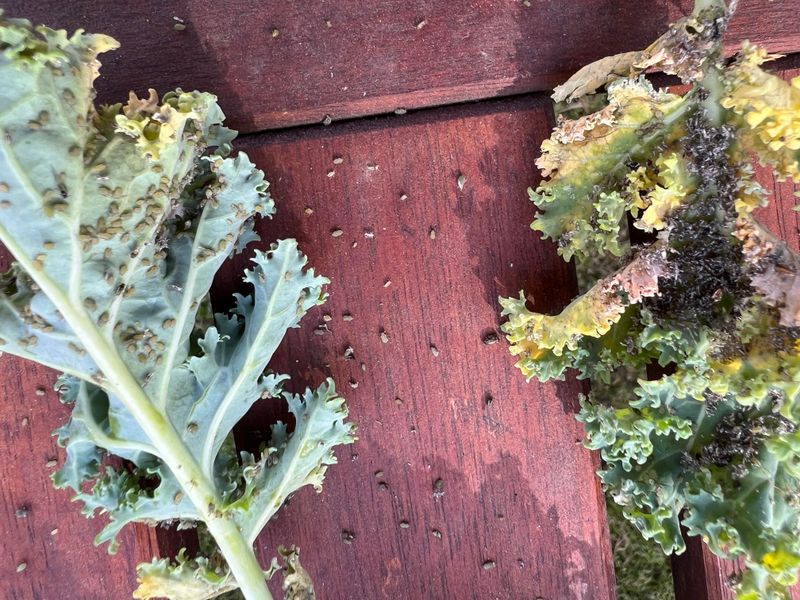
Cabbage aphids are known to feed on collards and kale, and NC State Extension’s crucifer pest guide notes that other aphid species also attack brassicas. They look like small, pale gray-green dots, sometimes dusty with a waxy coating.
You may also see sticky residue or a few shed, whitish skins nearby.
Finding aphids does not automatically mean trouble. University of Maryland Extension’s home garden advice covers how to recognize them so you can judge the situation.
Try a weekly leaf check while you water, and note whether the group is small or spreading.
Favorable conditions can support rapid aphid growth
Weather can tip the balance. University of Georgia Extension identifies cool, dry spring or fall conditions as favorable for high aphid populations on leafy greens.
That makes fall greens worth watching, though a mild autumn does not guarantee an outbreak.
Aphids also reproduce fast when the setting is right. Utah State University Extension reports that some vegetable aphids can complete a generation in 7 to 8 days at their stated optimum of 70 to 81 degrees F.
A few aphids can turn into a crowd in a couple of weeks under those conditions.
Growth rates differ by aphid species, local weather, and even how healthy your plants are. Think of this as a reason to look often, not a reason to panic.
A garden in Houston may play out differently than one in the Carolinas.
Use a targeted stream of plain water to dislodge aphids
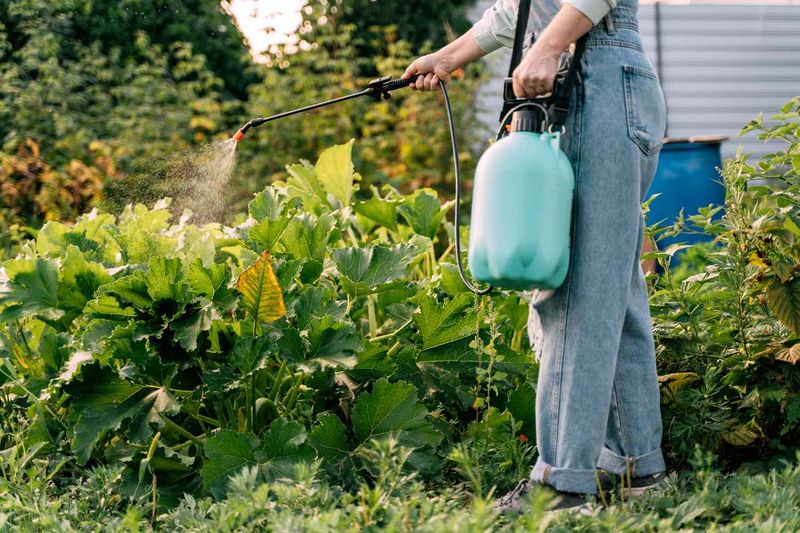
Plain water is a handy first move because it needs no products and leaves no residue. Aim a forceful, targeted stream at the aphids, especially on the undersides of leaves, and keep it on sturdy plants that can handle it.
The goal is a stream strong enough to knock insects loose, not the strongest blast your hose can make.
UC Statewide IPM explains that a strong water spray knocks aphids off plants, and most dislodged aphids do not return. That makes the method worth trying before anything stronger.
Do not expect a one-time cure, though. Oregon State University Extension recommends repeating the spray as needed.
Some aphids will hang on in folds and crevices, and new ones can show up later, so plan on a few rounds.
Spray early and protect the foliage
Morning is the best time for this chore. Spraying early gives the leaves hours of sun and air to dry before evening, which can reduce disease risk, though it will not guarantee a healthy crop.
Wet foliage overnight gives leaf diseases a friendlier setting.
Position yourself low and angle the nozzle upward so water reaches beneath the leaves, where the aphids sit. Use only as much force as it takes to dislodge them.
If a leaf bends sharply, tears, or the soil splashes up, ease off or step back.
Not every plant can take a strong stream. UC Statewide IPM suggests water sprays where plant sturdiness allows, and the University of Kentucky Master Gardener manual also covers sprays in its pest management chapter.
None of these sources set a hose pressure number, so let the plant’s reaction guide you. Young seedlings and tender transplants may need a gentler approach.
Check again and remove curled leaves when practical
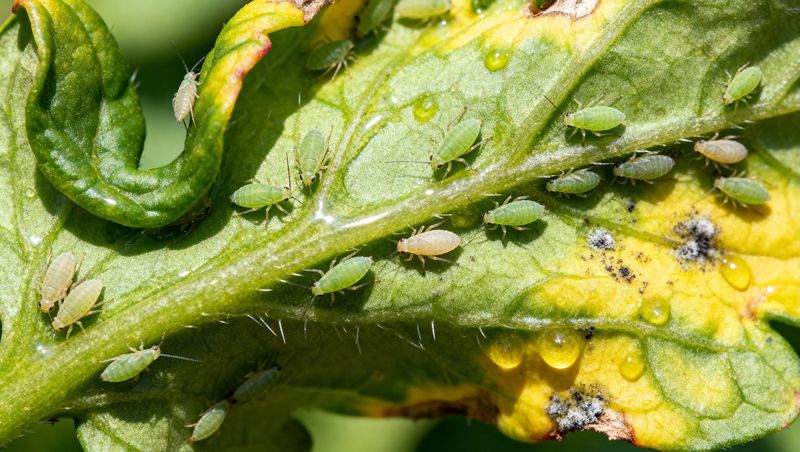
Water cannot reach everything. Aphids tucked inside curled or crumpled leaves can ride out the spray, and University of Idaho Extension notes that curled leaves shelter them from treatment.
If a leaf is badly infested and the plant has plenty more, pick it off where practical and dispose of it away from your beds.
Look again a few days later. University of Minnesota Extension describes how quickly aphids can reproduce, so a single wash may miss some or let a new buildup start.
Repeat the spray if you still see colonies growing.
You also do not have to fight every aphid. Established plants often tolerate light or moderate numbers, and natural enemies such as lady beetles, lacewings, and parasitic wasps can pull populations down.
A few small colonies with beneficial insects nearby may be fine to watch rather than treat.
Rinse harvested greens with clean running water
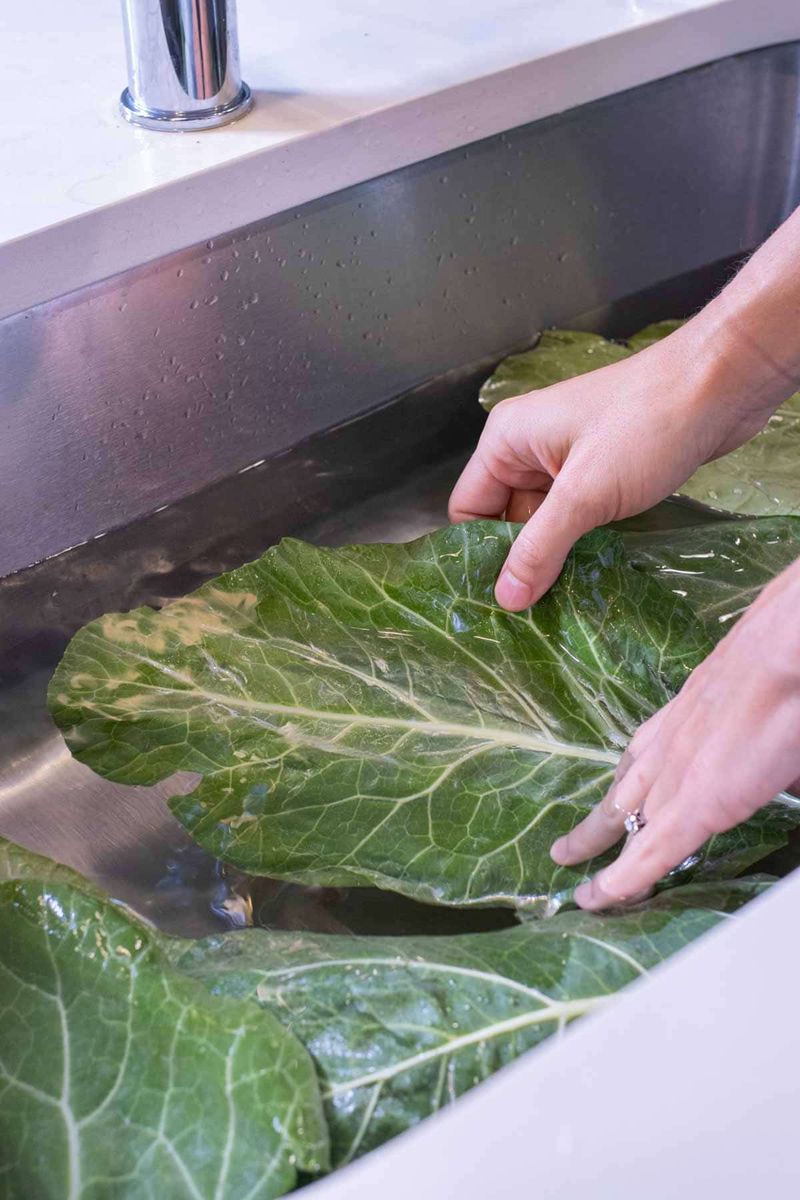
Once you bring greens inside, pest control gives way to food prep. Rinse kale and collard leaves under clean, running water before you eat or cook them, rubbing the surface gently and checking the folds and stems for stray aphids.
Skip the soap. University of Minnesota Extension and Texas A&M AgriLife Extension both advise against washing produce with soap or detergent.
Plain running water does the job.
A garden with a few aphids still grows good greens, and a careful rinse handles what is left.