
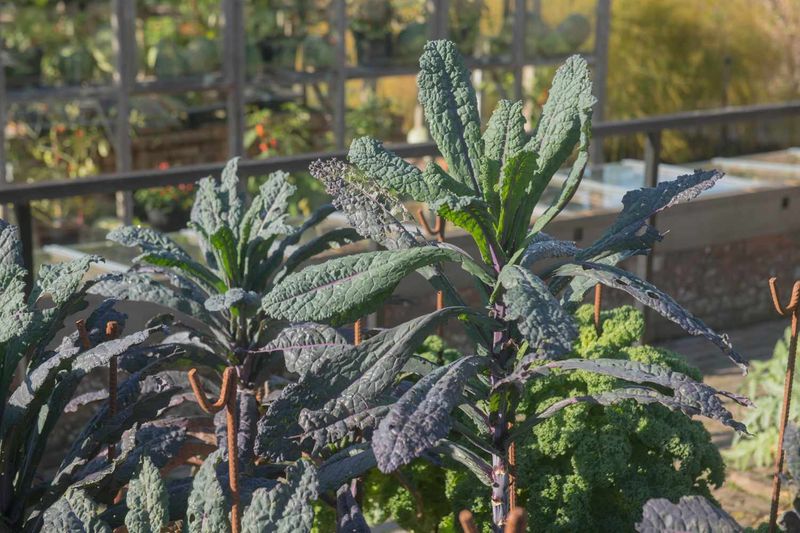
A kale plant leaning sideways in your fall bed can make you worry about the whole winter crop. Before you reach for a fertilizer bag or a shovel of soil, it helps to figure out why the plant is tilting.
Sometimes a small, careful step around the base can steady it, and sometimes the plant just needs a closer look. Here is how to sort out which situation you have and what to do next.
Height alone does not prove kale is leggy
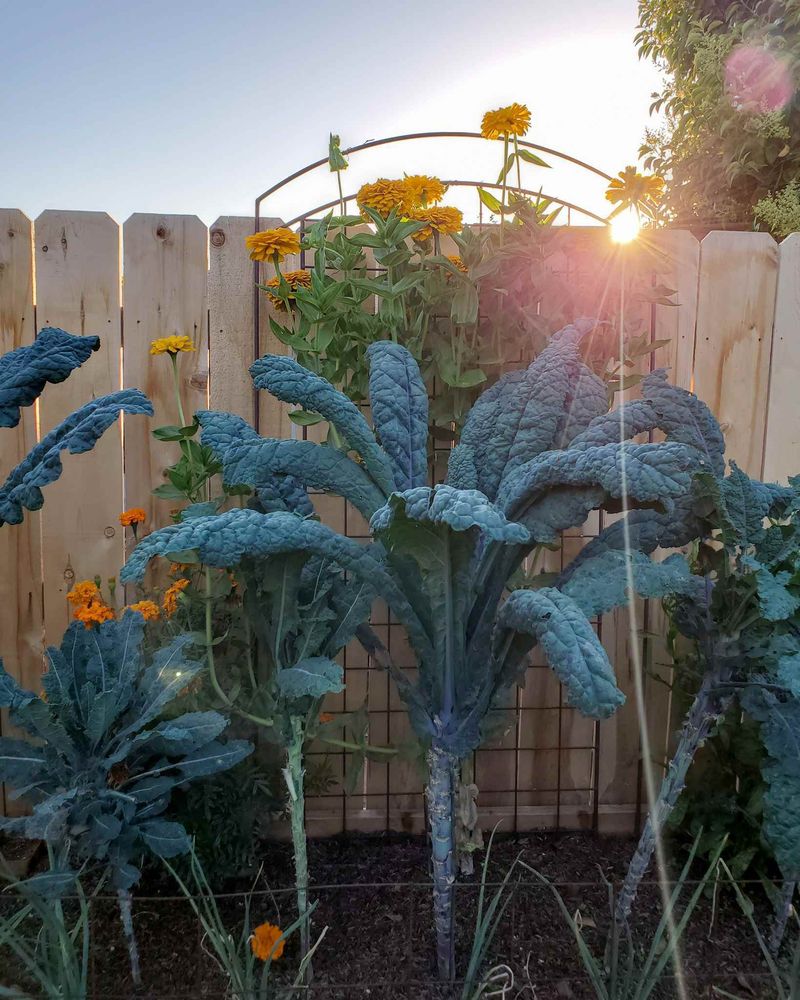
A tall kale plant is not automatically a problem plant. UF/IFAS notes that a variety like ‘Winterbor’ can reach about 2 feet, so a plant that stands tall may simply be doing what its variety does.
Leggy growth usually means stretched, weak stems with wide gaps between leaves. A tall plant with sturdy, well-spaced leaves and a firm stem is a different case from one that looks thin and stretched.
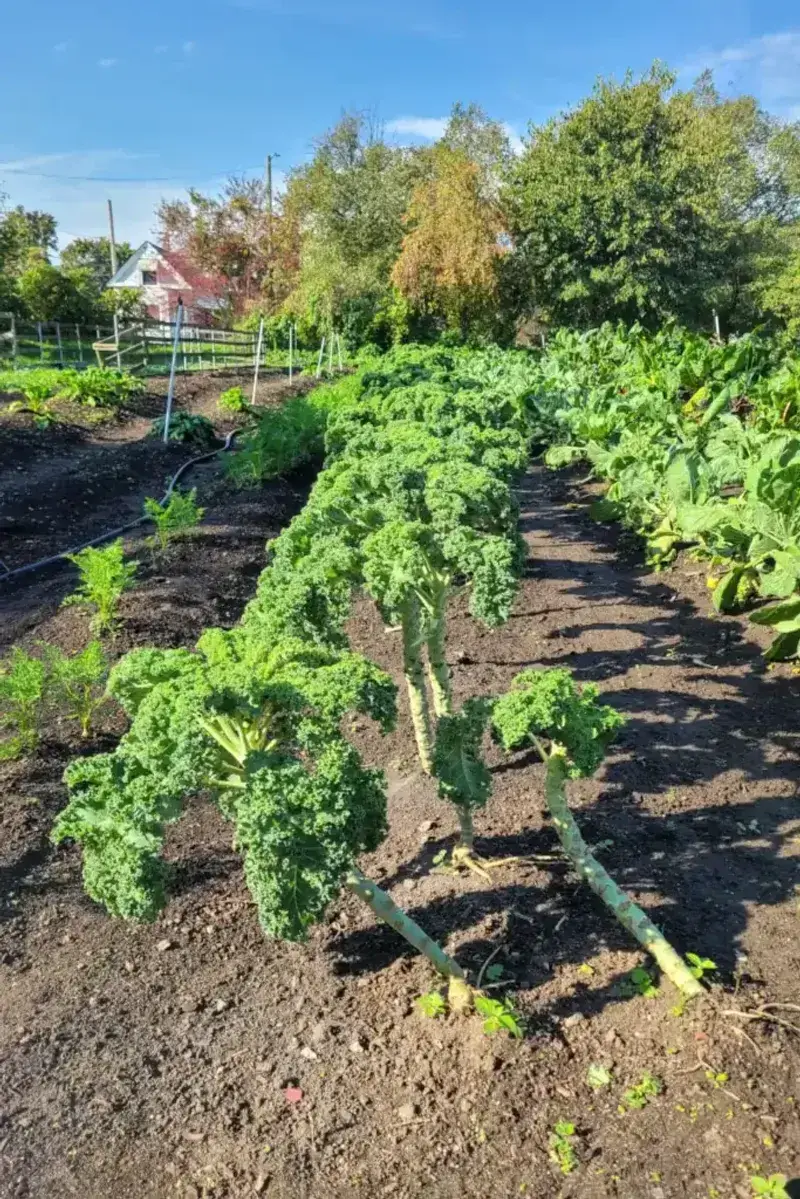
A lean can also come from the plant’s own weight. Big leaves up top can pull a tall stem sideways, especially after rain or wind.
Leaning by itself does not tell you the cause. Texas A&M guidance on spindly seedlings lists several possible contributors, which is a good reminder that one symptom can have many roots.
Take a careful look at the plant before you add soil or fertilizer.
Check the growing conditions and lower stem
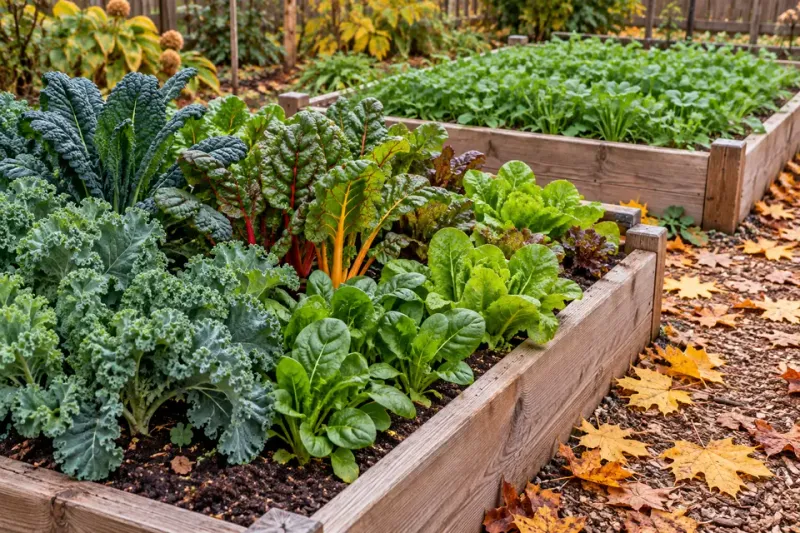
Crouch down and look at the plant from the soil up. Is the bed shaded by a fence or tree for much of the day?
Are neighboring plants crowding it so it stretches for light?
Next, wiggle the base lightly. A stem that is loose in the soil, bent, or damaged near the surface points to a physical problem, not a feeding problem.
Texas A&M lists shade, too much watering, high temperatures, too much fertilizer, and poor spacing as possible causes of spindly seedlings. That advice is written for seedlings, so it cannot diagnose a mature kale plant.
Still, it gives you a handy checklist of things to consider.
Spacing is worth a second look, too. NC State’s kale guide covers spacing and growing conditions for the crop.
Treat your inspection as a way to spot possible issues, not as proof of one cause.
Could a little soil help steady the plant?
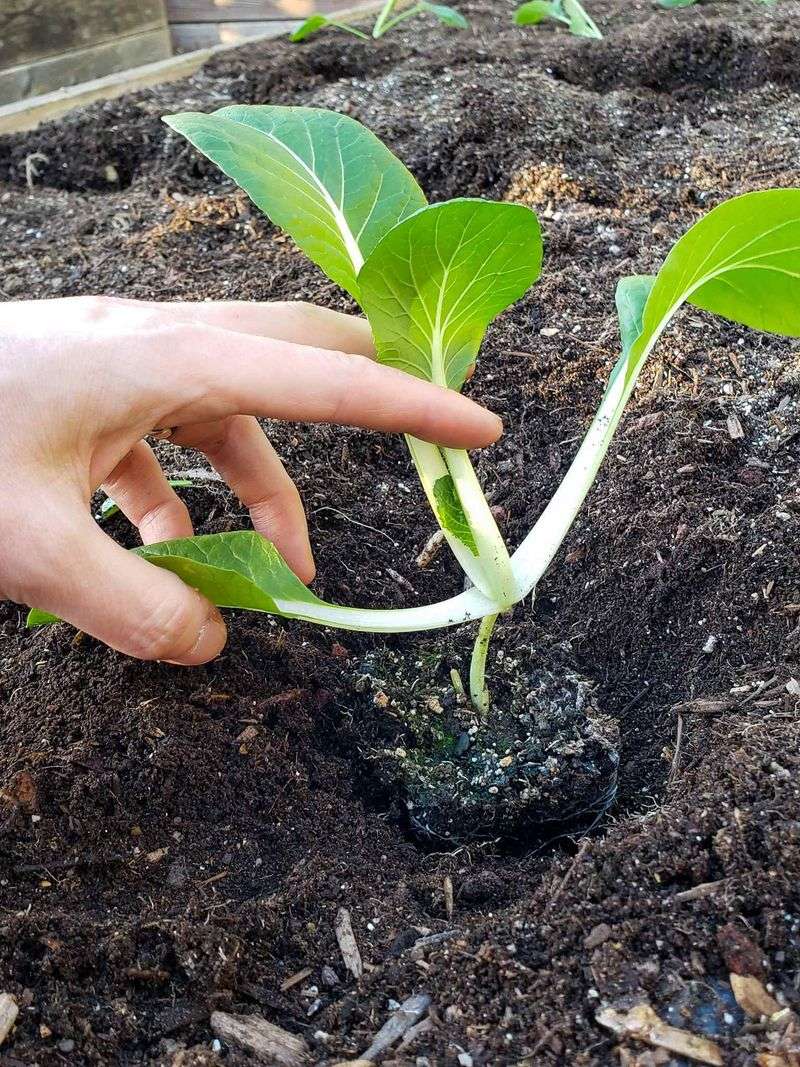
Deep planting has a real track record, but with transplants. Mississippi State Extension advises planting tall vegetable transplants deeply, up to the first set of leaves.
Brassica guidance says much the same. UC IPM tells gardeners to bury a broccoli transplant’s stem up to the first leaf.
Your kale is already established, so that advice does not transfer directly. Neither source tested piling soil around a mature plant that has started to flop.
Even so, gently firming a small amount of soil around a bare lower stem is a reasonable thing to try. Think of it as a modest practical step that may add some steadiness, not a proven rescue and not a guarantee that the plant will stand up straight.
Keep leaves and the growing center above the soil
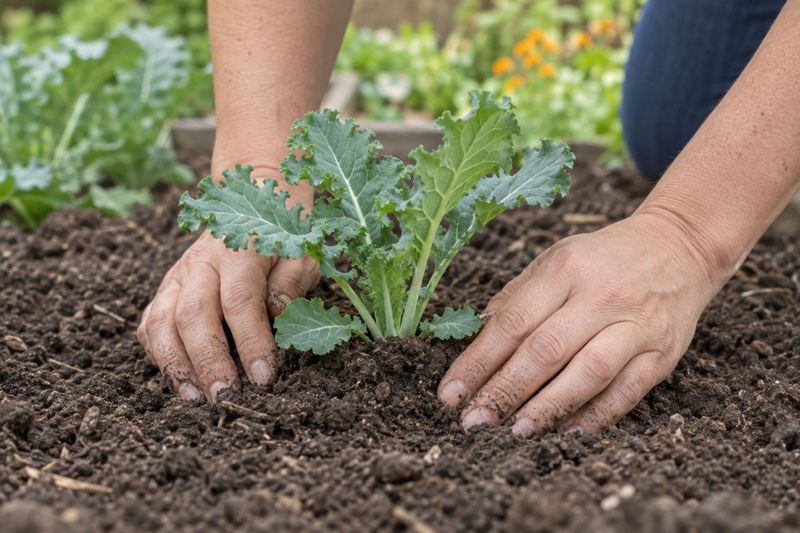
Go slowly with the soil. Use only a small amount, enough to cover the bare part of the lower stem, and press it down gently with your fingers.
Keep every leaf and the growing center at the top of the plant clear. Buried foliage can stay damp and may rot, and you are not replanting a transplant here, so avoid treating the plant that way.
The transplant guidance from UC IPM and Mississippi State is a cautious starting point, not a tested kale rescue plan.
If the plant still leans after one light round of soil, stop adding more. A loose support, such as a soft tie to a stake, is a sensible alternative.
The reviewed guidance does not compare staking with mounding for kale, so use your own judgment and watch how the plant responds over the next week or two.
Base fertilizer decisions on a soil test
A floppy plant looks hungry to many gardeners, but appearance alone is a poor guide. Kale does need fertile soil and nitrogen to grow good leaves.
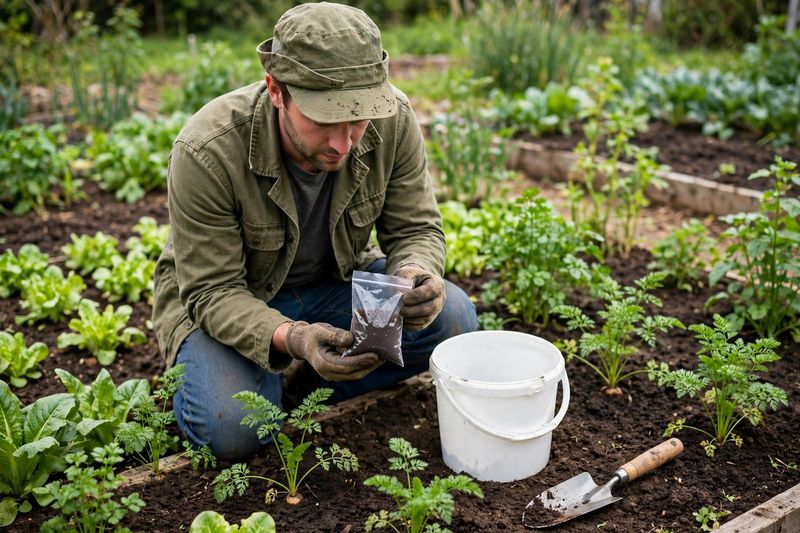
NC State Extension recommends using a soil test to guide the type and amount of fertilizer.
Extra feeding is not a stand-up treatment. Texas A&M names too much fertilizer as one possible contributor to spindly seedlings.
Neither fact explains why a mature kale plant leans. The soil test is what tells you whether your bed is short on anything.
Your local county Extension office can often explain how to collect and submit a sample. If results show a shortfall, follow the recommendation.
If they do not, skip the extra feeding and put your effort into light, spacing, and stem support.
Keep harvest expectations realistic
Soil around the base cannot be promised to repair a damaged stem or guarantee a winter harvest. It is one small step among several, and the plant’s response will tell you more than any rule.
Harvesting can help you work with what you have. UF/IFAS advises picking the lower leaves and taking no more than one-third of the plant at a time.
Leaving the top growth in place keeps the plant producing.
If the plant is badly damaged and you decide to replace it, look up local timing first. UF/IFAS planting windows for kale differ between North, Central, and South Florida, and other Southern states have their own dates.
Your county Extension office can give you the right window.
A steady plant is nice, but a well-timed second planting is the real insurance.