
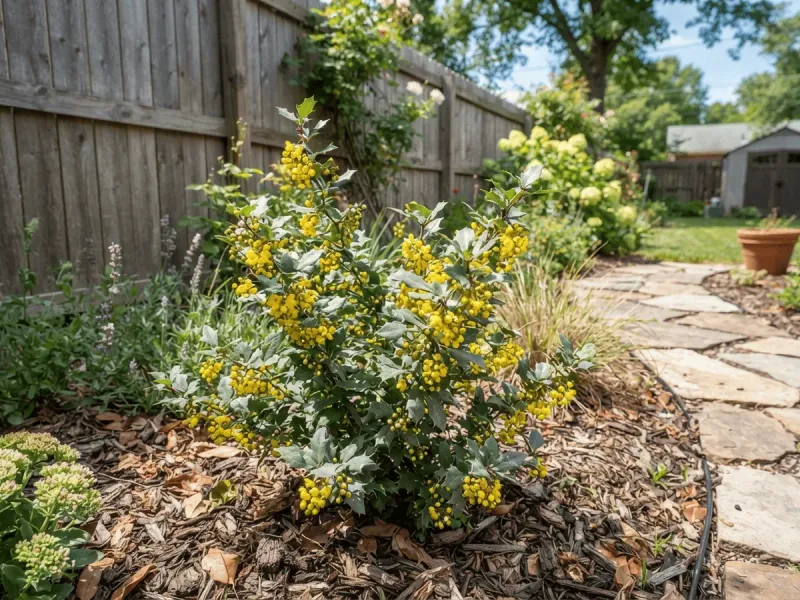
A bare fence line in Central Texas can look empty all winter, and so can the birds’ options for shelter. Agarita is a tough native shrub with stiff, spiny, evergreen leaves that stay put when other plants drop theirs.
It handles heat and dry spells once it settles in. Here is how to decide if it fits your fence, where to plant it safely, and what to expect through the seasons.
Agarita can offer evergreen cover along a fence
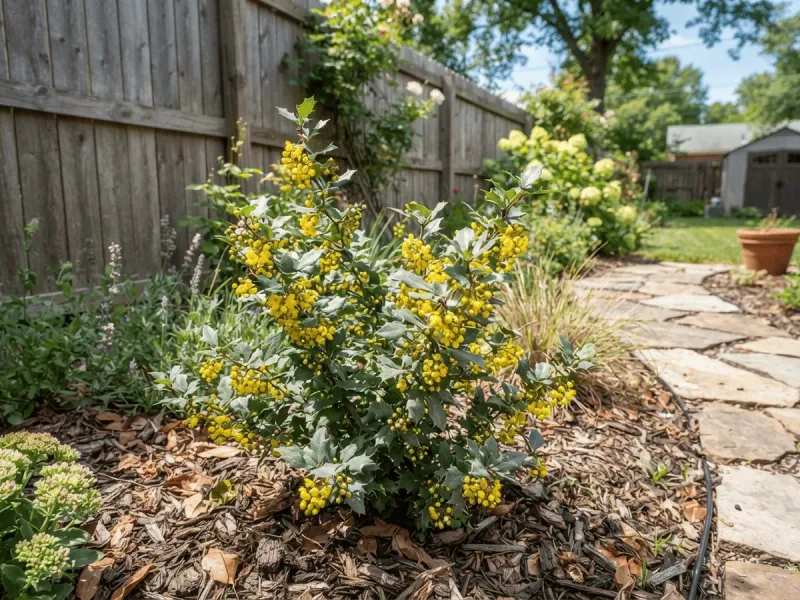
Agarita is a native Texas shrub that keeps its leaves all year. Each leaf is stiff, bluish-green, and tipped with sharp points, a bit like holly.
Grown in a row or a loose group, the branches knit into a dense, prickly tangle.
That tangle is where the habitat value comes from. Texas A&M AgriLife range plant information notes that birds and small mammals use agarita as cover, and a U.S.
Forest Service species review describes it as hiding, nesting, and resting cover for small birds and mammals. Cover like this is a possibility, not a promise.
Whether birds actually settle in depends on how dense the shrub gets and what else your yard offers.
Winter structure and winter food are two different things. The leaves hold their shape through cold months, which is useful along a fence that would otherwise be bare sticks and wire.
The berries, though, ripen in spring, so do not count on them as a cold-season food source.
Size matters too. Austin’s plant guide lists agarita at roughly 3 to 7 feet tall, which is tall enough to screen a low fence but compact enough for most yards.
Pair it with a birdbath, native grasses, or a brush pile nearby and the whole corner works harder for wildlife.
Cardinals prefer dense cover, but agarita is no guarantee
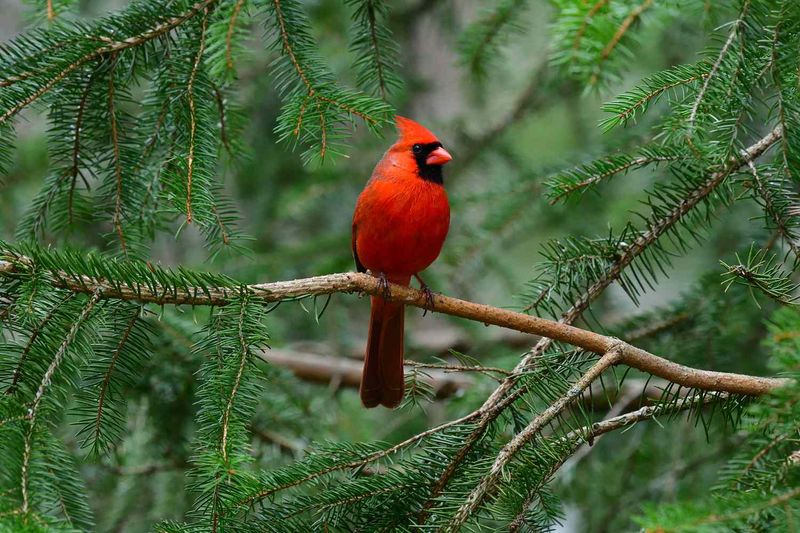
Ask a birder where cardinals hang out and the answer is usually the same: somewhere thick. Texas Parks and Wildlife describes northern cardinals as year-round residents across the eastern two-thirds of Texas that favor thick underbrush for nesting.
They also gather in winter flocks.
Cornell’s life history notes point the same direction, listing dense shrubby areas, hedgerows, and thickets as typical cardinal habitat. A thick, evergreen, spiny shrub along a fence looks a lot like that kind of place.
Here is the honest catch. The sources on agarita talk about cover for small birds in general.
None of them shows cardinals roosting in agarita all winter, and none promises that a cardinal will visit the shrub you plant.
Think of agarita as one good ingredient. Cardinals tend to use yards that offer layers of cover, a reliable water source, and food from other plants and feeders.
A young agarita also needs a few seasons to fill in, so early on it will not look like the thicket birds prefer.
A practical test is to watch the fence line each winter. If birds start ducking into the branches, you have your answer.
If not, the shrub still gives you a tough native plant with year-round structure.
Check whether your fence line suits agarita
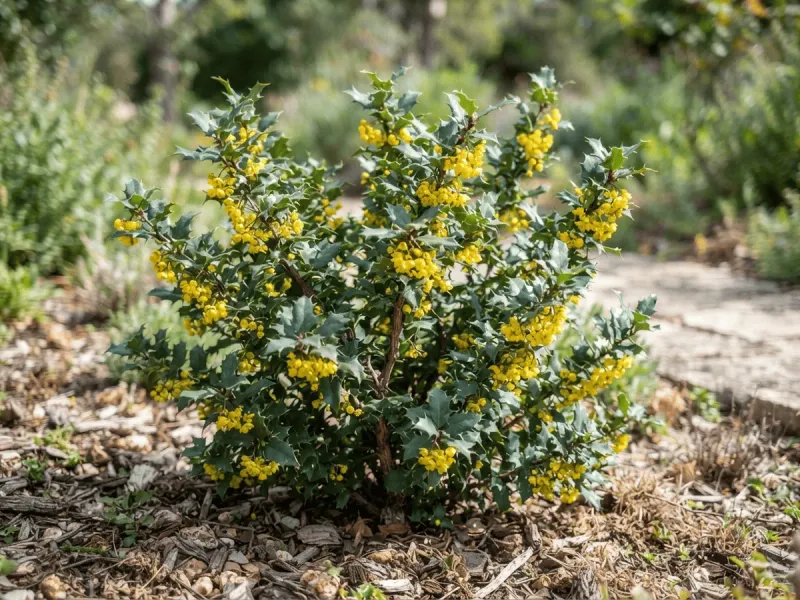
Start with the basics. Agarita usually grows about 3 to 7 feet tall and 3 to 6 feet wide, according to Austin’s plant guide, which also lists sun to part shade.
Walk your fence at midday and pick the stretch that gets steady light.
Drainage comes next. The Native Plant Society of Texas describes agarita as adaptable to a range of soils, but well-drained ground is the safer bet.
A spot where water pools after a storm is a poor choice, while a gentle slope or rocky bed suits it.
Low water needs and drought tolerance describe an established plant. A shrub fresh from a nursery pot still needs attention, which the watering section covers.
Location matters as well. The Forest Service review reports agarita across much of Texas but absent from the eastern and southeastern parts of the state.
This advice is aimed at Central Texas, so if you garden in the humid east or along the far southeast coast, check with a local native plant nursery before buying.
Finally, picture the shrub at full size. A fence with 4 feet of clear space on your side gives it room to spread without crowding a gate, meter, or mowing path.
Give the spiny shrub room
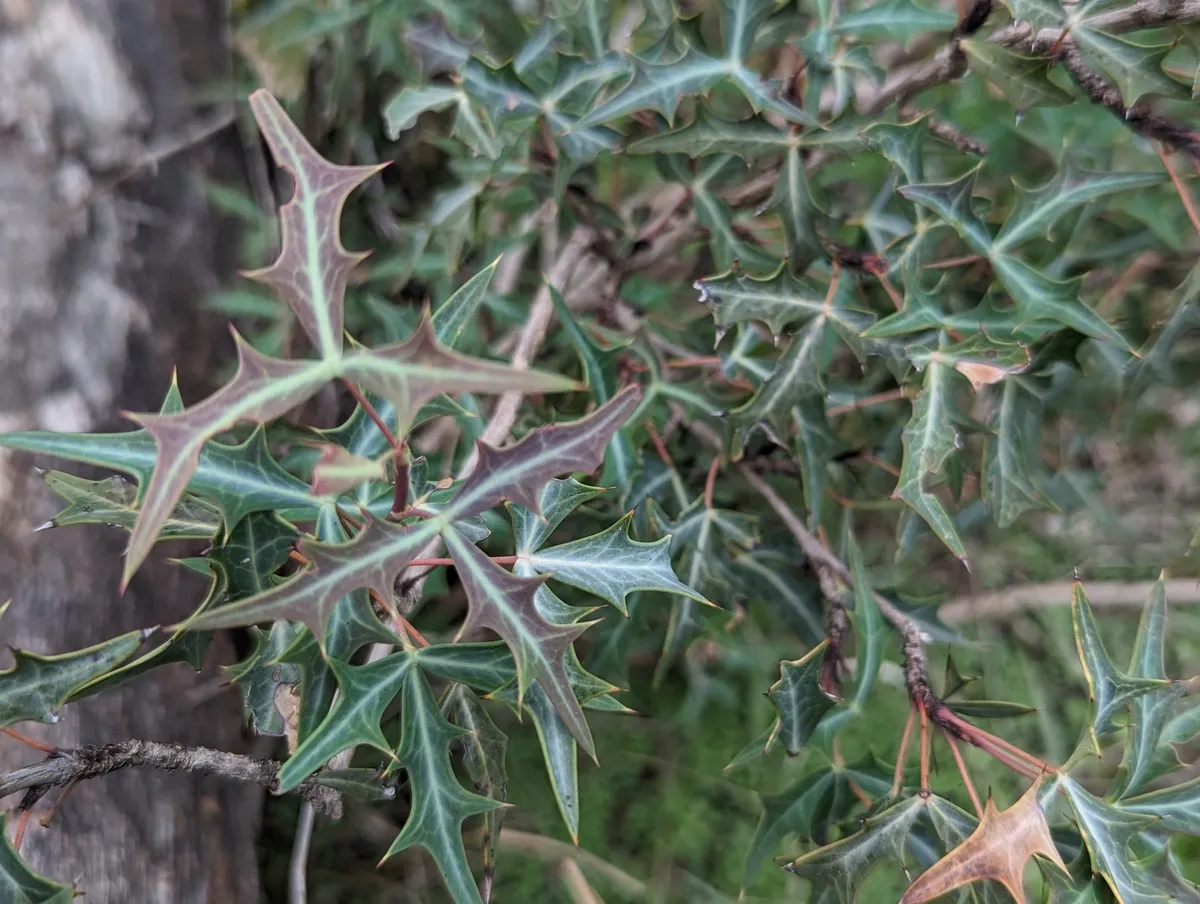
Those sharp leaves are the whole reason birds may like agarita, and also the reason to be careful where it goes. Keep it away from walkways, gates, and any spot where kids, pets, or visitors brush past.
The Lindheimer Chapter of the Native Plant Society of Texas, in its agarita care page, advises against planting beside walkways.
Fallen leaves deserve respect too. The Native Plant Society of Texas recommends gloves and notes that even dropped leaves stay sharp.
Bare feet and kneeling in the mulch under the shrub are out.
For spacing, the local chapter suggests 3 to 6 feet between plants. Lean toward the wider end if you want each shrub to keep its shape, or the closer end if you want one continuous hedge.
Either way, leave room between the shrub and the fence for maintenance.
Choose a planting side that faces your yard’s quiet edge, such as a back fence line, rather than the side where you walk the dog. Handle pruning only with thick gloves and long sleeves, and sweep up leaf litter with a rake instead of bare hands.
Water agarita while it establishes
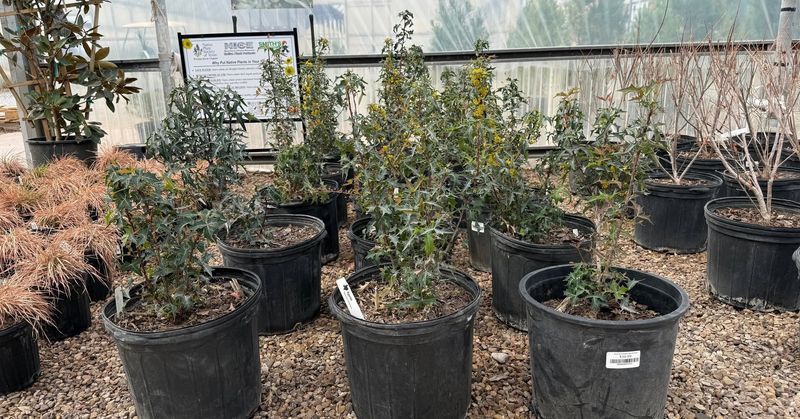
Drought tolerance is a reward for patience. A new agarita has not yet grown the deep roots that carry an established shrub through a Texas dry spell, so it needs your help at the start.
The Lindheimer Chapter’s care guidance recommends watering during establishment. No exact schedule appears in the sources, so watch the plant and the weather instead.
Check the soil near the roots, and water when it has dried out, especially during hot or rainless stretches.
After that settling-in period, demands drop. Austin’s plant guide lists very low water needs, and the Native Plant Society of Texas describes it as drought-tolerant once established.
Low is not zero, though, so a long dry summer is a good time to check on it.
Do not expect fast results either. Agarita is not known as a quick grower, and a shrub that looks small for its first seasons is normal.
Resist the urge to overwater to speed it up, since soggy soil works against a plant that prefers good drainage.
Use a watering can or slow hose near the base, and keep your hands protected from the leaves while you work.
Expect flowers first and berries in spring
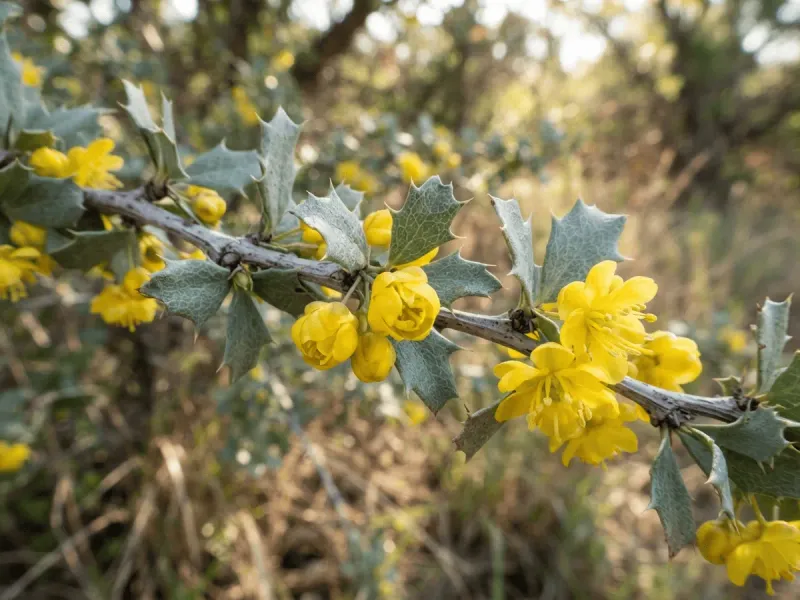
Agarita’s calendar starts with flowers. Small yellow blooms open roughly February through April, often well before many other plants wake up.
Red berries follow.
Sources differ a little on ripening. Texas Parks and Wildlife Magazine says berries ripen in April or May, while the Native Plant Society of Texas says they ripen from May and feed birds until June.
Treat both as approximate, since timing shifts with locality and the weather that year.
Notice the difference between ripening and feeding. Berries ripen in about April or May, and birds may keep eating them into June.
That is a spring and early summer food source, not a winter one, so evergreen leaves are what the shrub offers in the cold months.
The berries are described as edible, but that is no invitation to snack along the fence. Correct plant identification matters, the leaves are sharply spined, and other parts of the plant are not meant for eating.
Leave the harvest to the birds unless you have a reliable local guide.
Plant it, give it room, and the payoff arrives in sequence: cover first, blooms next, berries last.