
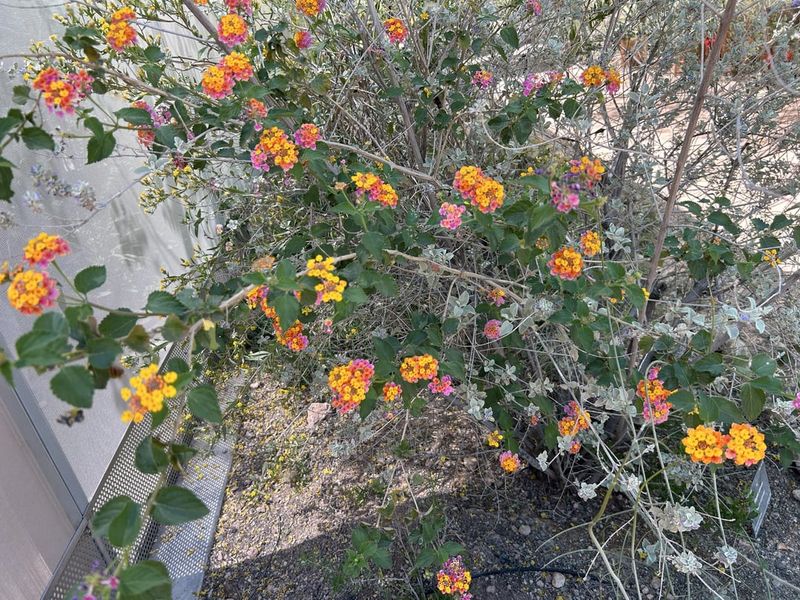
Your lantana looked great last fall, and now it is a pile of black, droopy leaves. That sight can make any Texas gardener reach for the pruners or the shovel.
But dark, mushy foliage does not tell the whole story about what is happening below. A little patience and a simple stem check can save you from tossing out a plant that may still have life in it.
Black foliage shows injury, not the plant’s final condition
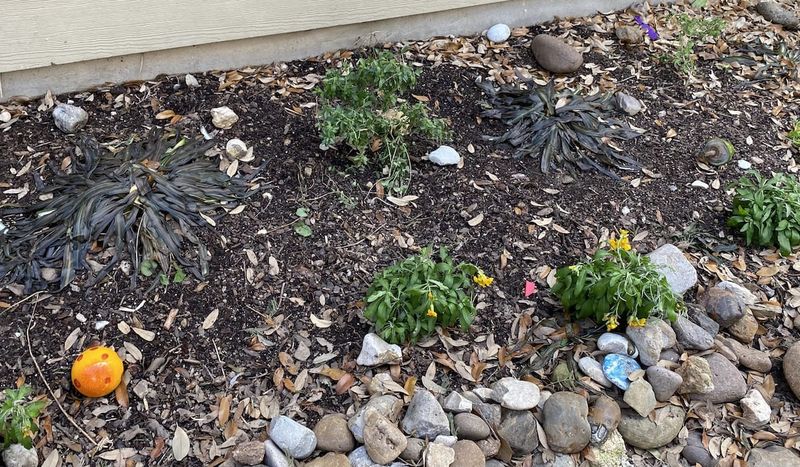
Black, limp, or water-soaked leaves are what cold injury often looks like. Freezing temperatures burst cells in soft leaf tissue, and once the plant warms up, that tissue turns dark and mushy.
Extension guidance on post-freeze plant care points out that the visible damage often shows up after the cold has passed.
Here is the catch. Leaves are only one part of a lantana.
The woody stems, the crown near the soil line, and the roots can each be affected differently, and the leaves cannot tell you which of them made it through. Texas A&M’s plant disease handbook explains that freeze injury can hit some plant parts while sparing others, so the dead areas need to be identified before anyone starts cutting.
That means black foliage does not prove your lantana is dead, and it does not prove the plant is fine either. Some lantanas regrow after a freeze, and some do not.
A harder or longer freeze raises the odds of deeper damage.
The plan is simple: wait, assess, then decide what to prune. The next sections walk through each step so you can make calls based on the plant itself rather than on how rough the leaves look today.
Wait until freeze danger passes before pruning
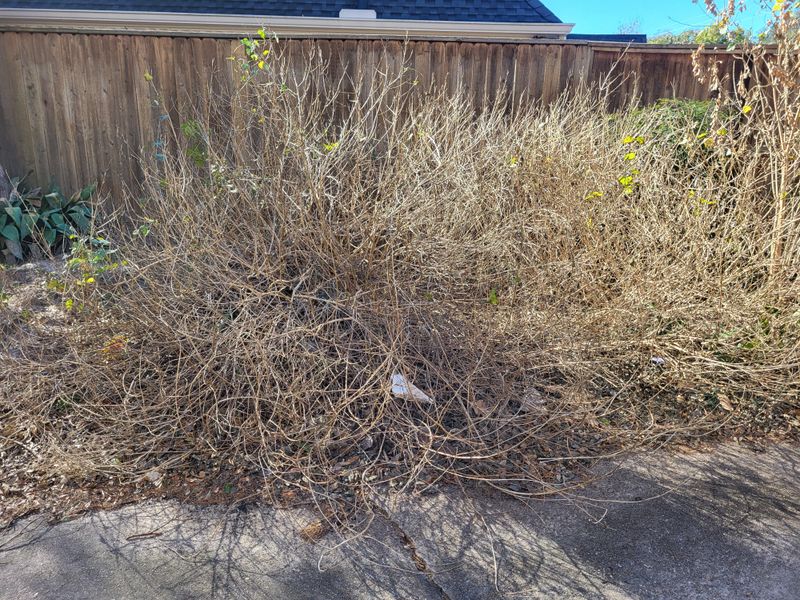
Resist the urge to tidy up right away. Cutting a frost-blackened lantana to the ground the day after a freeze feels productive, but it can backfire.
Another cold night could arrive, and fresh cuts or new growth would be exposed to it.
Those ugly leaves are doing a small job. UF/IFAS cold-damage guidance notes that damaged foliage can help insulate living tissue underneath, so leaving it in place through the rest of winter can offer some protection.
The same advice says to hold off on pruning until the risk of more freezes has passed.
Waiting also makes your later decisions easier. Once spring growth starts, you can see which stems push out new leaves and which stay bare.
A UF/IFAS Lake County article on caring for plants after a freeze makes the same point, that patience helps you tell what survived from what did not.
Timing depends on where you live. A gardener in the Rio Grande Valley may be past the last freeze weeks before someone in the Panhandle, so watch your local forecast instead of a calendar date.
For now, leave the plant alone, skip digging it out, and keep the pruners in the shed.
Check stems for signs of living tissue
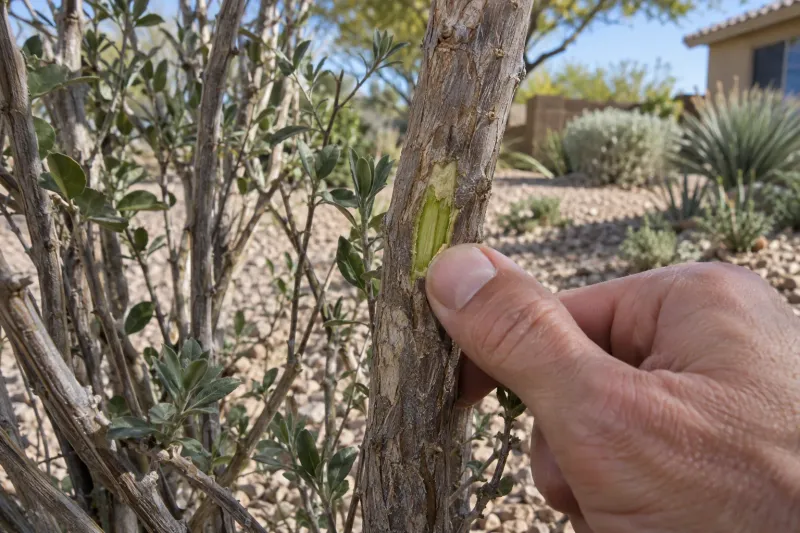
When the weather has settled and the days are warming, it is time to look at the stems instead of the leaves. Pick a stem and gently scratch a small spot on the bark with a thumbnail or the tip of a knife.
Keep the scratch tiny so you do not injure healthy tissue.
Green tissue under the bark means that spot is alive. UF/IFAS guidance describes brown or black tissue as a sign of injury at that location.
Remember that one scratch tells you about one spot. A stem can be green near the base and dead toward the tips, and a single stem does not speak for the whole shrub.
Try a few stems and work your way down from the tips toward the base to see where living tissue begins.
If the results are mixed or hard to read, do not guess. Give the plant more time and watch for new buds or leaves.
Fresh growth is a much clearer signal than any single scratch test, and it costs you nothing to wait a little longer.
Prune confirmed dead growth when spring growth begins
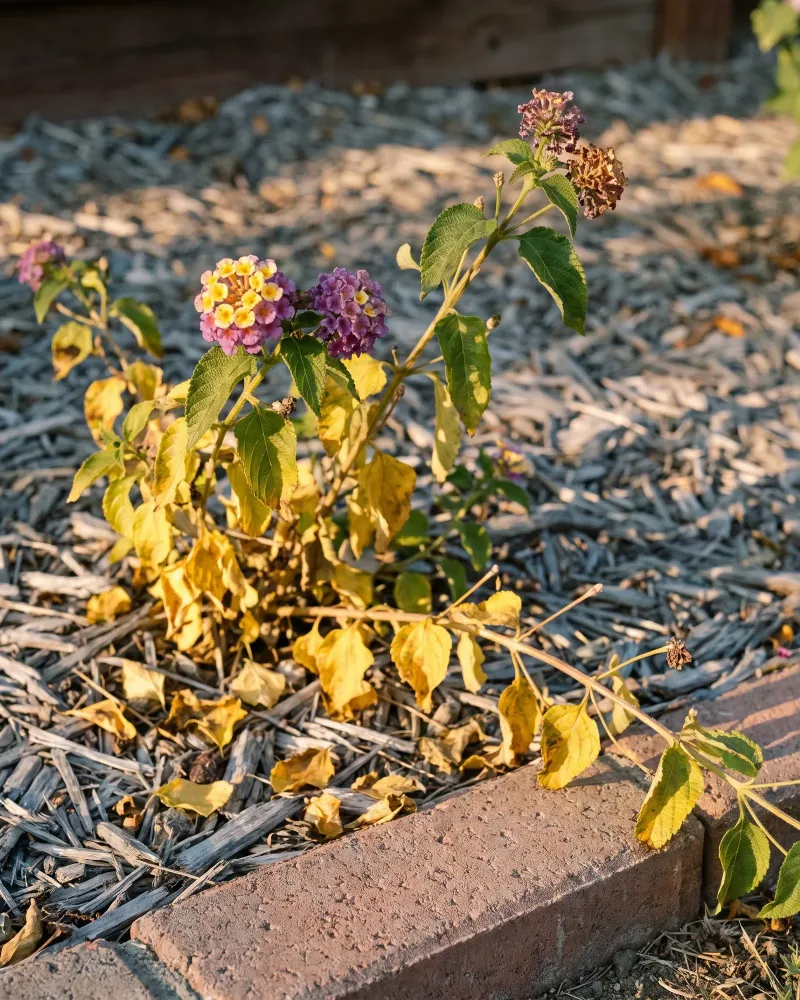
Once freeze danger is behind you and new growth is showing, you can turn your stem checks into a pruning plan. Remove the growth you have confirmed is dead, cutting back to living tissue.
Leave anything you are unsure about until it either leafs out or clearly does not.
For established Texas lantana (Lantana urticoides), Texas A&M AgriLife Extension recommends pruning to about 8 inches in early spring to encourage fresh growth. That is guidance for Texas lantana, not a rule for every species, cultivar, or location.
Texas A&M’s Travis County guidance on trailing lantana follows a similar approach. It says to wait until freeze danger has passed, inspect the stems, and cut back to about 8 inches after a hard freeze.
It also notes that the foliage can irritate skin, so wear gloves and long sleeves.
Pruning clears out dead wood and gives new shoots room, but it cannot guarantee a full, dense plant. Recovery depends on how much of the root system and crown survived.
Some plants fill in nicely, and others stay sparse or do not come back at all.
Keep water and fertilizer in check
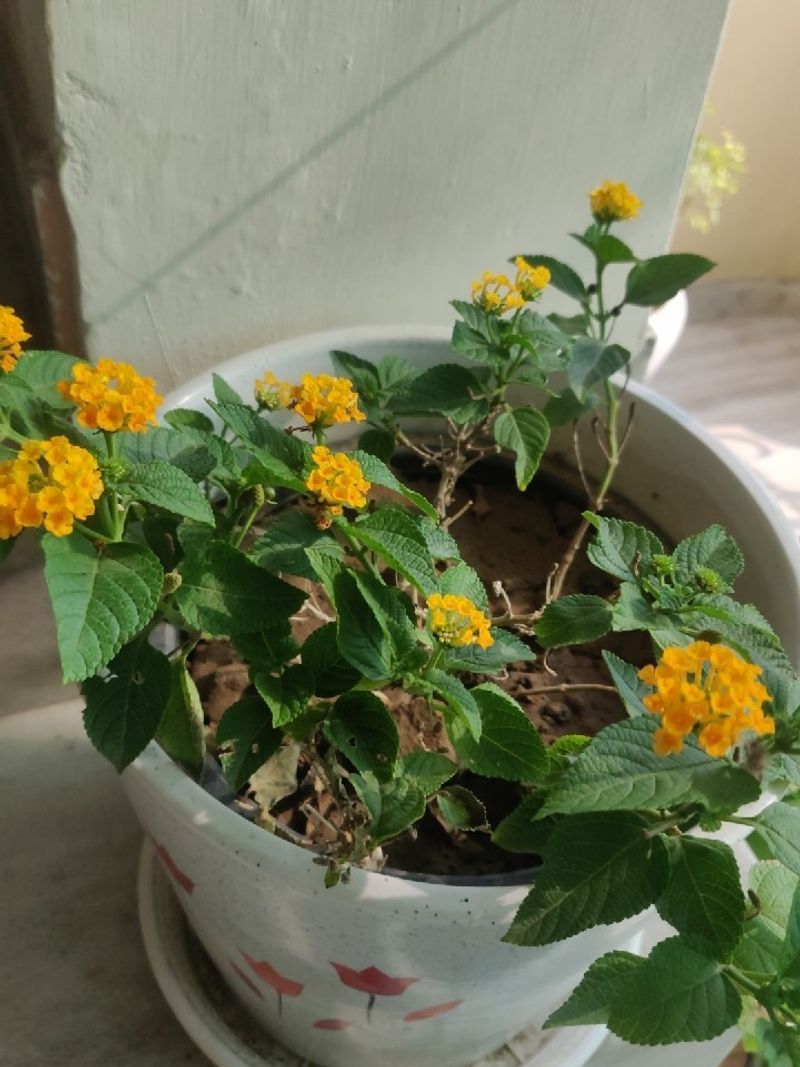
A struggling plant makes people want to do something, and the first instinct is often a hose or a bag of fertilizer. With cold-damaged lantana, a lighter touch works better.
Push a finger a couple of inches into the soil first, and water only if it is actually dry.
Texas lantana is drought-tolerant and needs excellent drainage. Texas A&M AgriLife Extension warns that too much water can kill it, and says it generally does not need fertilizer.
Soggy soil around stressed roots is a risk, especially in heavy clay that stays wet after winter rain.
Fertilizer will not repair freeze damage, and feeding at the wrong moment can push tender growth. UF/IFAS advises waiting until spring to fertilize cold-damaged plants.
If your bed drains slowly, that is worth fixing for the long run by raising the planting area or mixing in coarse material. For now, the best aftercare is checking the soil, staying patient, and letting the plant set its own pace.
Set expectations for the lantana you have
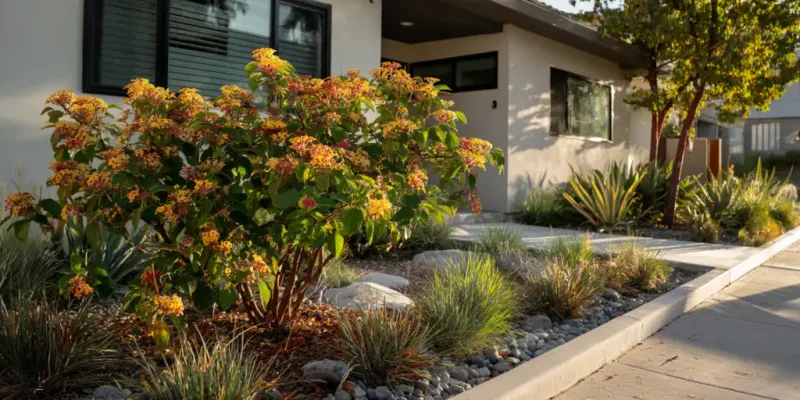
Not every lantana in a neighborhood is the same plant. The name covers different species, hybrids, and cultivars, and each can handle cold a bit differently.
Where it is planted, how exposed the spot is, how long it has been established, and how severe the freeze was all shape the outcome.
Texas lantana (Lantana urticoides) is a Texas native perennial. Texas A&M AgriLife Extension describes it as hardy in USDA zones 8 to 11, and that range applies to that plant only.
The City of Austin plant guide also lists it as a native, and notes that all parts of the plant are poisonous, so keep children and pets from eating it.
Be ready for a slow start. Clemson Extension says perennial lantanas can be slow to resume growth until soil and air are quite warm.
A bare plant in early spring is not a verdict, and there is no single date that works across all of Texas.
Give your lantana a full warm spell before deciding its fate. A plant that stays leafless well into warm weather, with brown stems all the way down, is the one to replace.