
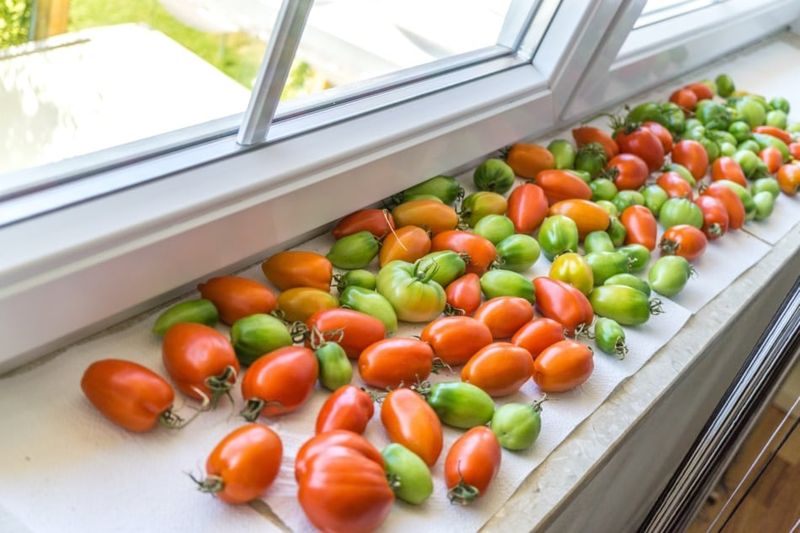
A cold snap is on the way, and your tomato vines are still loaded with green fruit. You do not have to write all of it off.
Some of those tomatoes can finish ripening indoors if you pick the right ones and store them well. Here is how to sort, store, and check your last harvest, plus what to expect from the results.
Harvest before frost kills the vines
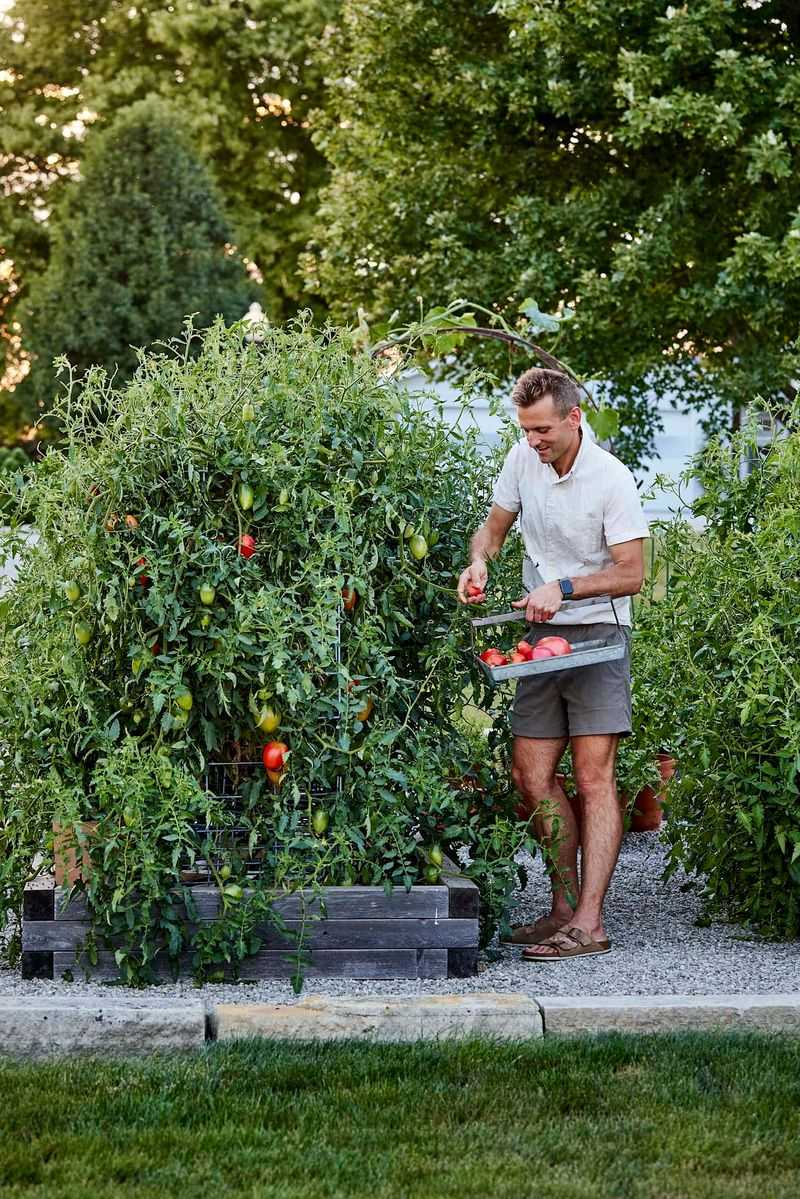
Timing matters most. An Alaska Extension guide recommends picking mature fruit before the vines freeze, and it notes that fruit from nearly spent vines is more likely to rot.
This advice covers tomatoes you bring in before the vines are frozen, not fruit left hanging on dead, frost-killed plants.
Frost does not arrive on the same day everywhere in the South. A gardener in the Texas Panhandle may be watching for a freeze weeks before someone near Houston, and much of Florida may not see one for a long time.
Skip the calendar and watch your local forecast, especially overnight lows, and check with your county Extension office if you want local timing. Texas A&M AgriLife guidance covers fall harvest timing for Texas, and University of Georgia Extension describes the fall tomato season as lasting until the first frost.
When a freeze warning shows up, plan a harvest session that day or the day before. Not every green tomato you pick will ripen well, so the next step is choosing carefully.
Choose fruit that is mature enough to ripen
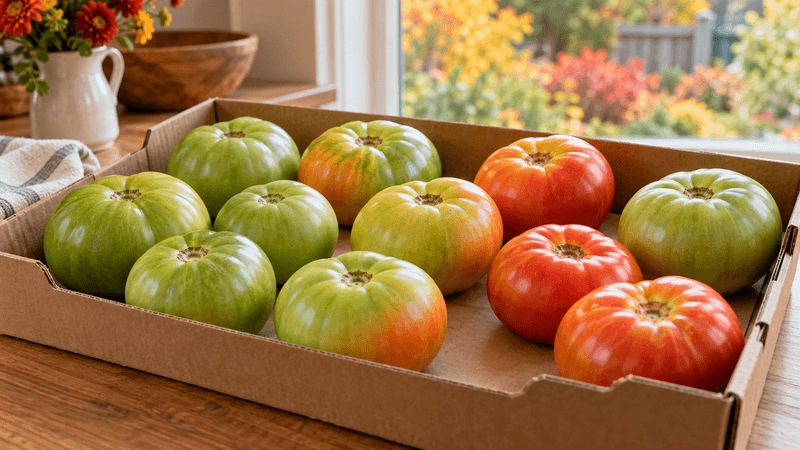
Green color alone tells you very little. What counts is maturity.
Colorado State University Extension explains that mature-green fruit will ripen indoors, but its flavor will not fully develop, while fruit that has started to blush is the better bet for quality.
Look for tomatoes that are nearly full-sized with glossy skin. A pale, cream, or blushing patch near the blossom end is a good sign.
For a firmer answer, slice open one representative tomato. If the seeds sit inside jelly and slip aside under the knife instead of being cut, the fruit is likely mature enough, a test described by Alaska Extension and University of Minnesota Extension.
Small, hard, dull green tomatoes are a different story. They may shrivel, stay pale, or turn mushy without ever developing good color.
Set them aside for another use rather than crowding your ripening batch. Even your best candidates may taste milder than garden-ripe fruit, so treat them as a bonus.
Remove the stem; it is not a ripening aid
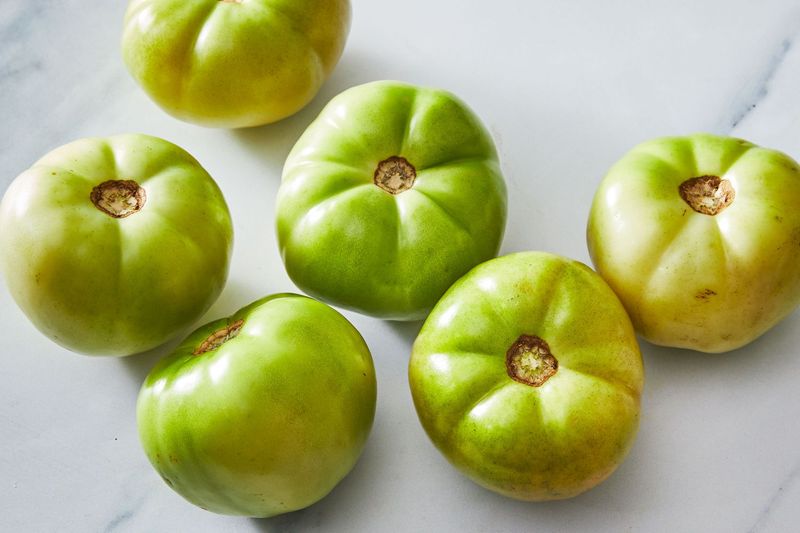
A popular tip says to leave the stem on so a green tomato will ripen. No reviewed guidance shows any ripening advantage to keeping stems attached.
In fact, the indoor-storage directions from Colorado State University Extension tell gardeners to remove the stems before storing the fruit.
Taking the stem off is not a trick that speeds anything up. It is simply part of tidy handling, and it keeps pointed stems from poking neighboring tomatoes.
What really helps is gentle care. Handle each tomato like an egg, since bruises and cracks invite rot.
Wipe off loose dirt with a dry cloth, and skip soaking them in water. Any tomato with a split, soft spot, or sign of decay belongs in the compost, not in your ripening tray, because one bad fruit can spoil the ones around it.
Set up a suitable indoor ripening spot
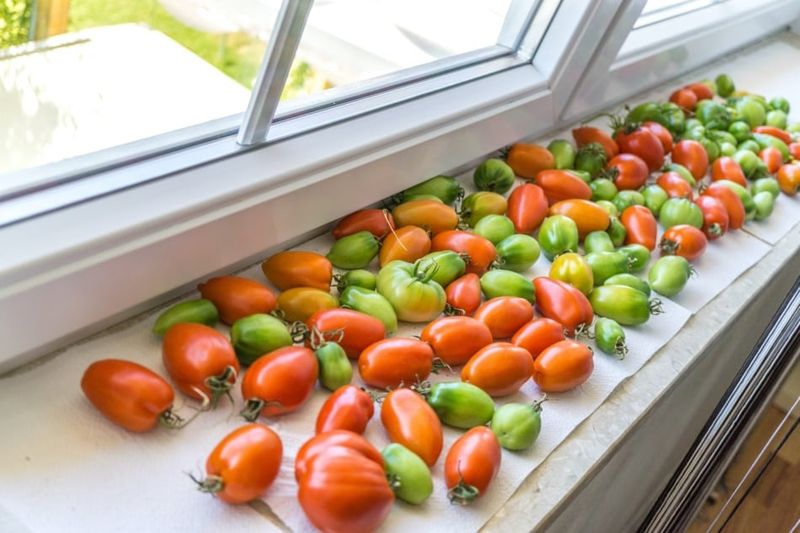
Aim for roughly 65 to 70°F. University of Georgia Extension suggests a ventilated room around 70°F, and UC Davis lists 65 to 70°F as its standard ripening temperature.
Treat that as a helpful target, not a strict rule. Cooler air slows ripening, and the same UC Davis page reports that ripening above 77°F can give fruit that is more yellow, less red, and softer.
That is why a kitchen counter works only if it is not too warm. In a hot Southern kitchen, a cooler interior room, a closet shelf, or a garage in mild weather may do better.
Keep unripe tomatoes out of the refrigerator.
Spread the fruit in a single layer or a few shallow layers, with air moving around them and no crowding. Boxes, trays, or cardboard flats work well.
Light is not required for ripening, according to Alaska Extension and University of Minnesota Extension, so a sunny windowsill is not needed.
Use extra ethylene only if you want to
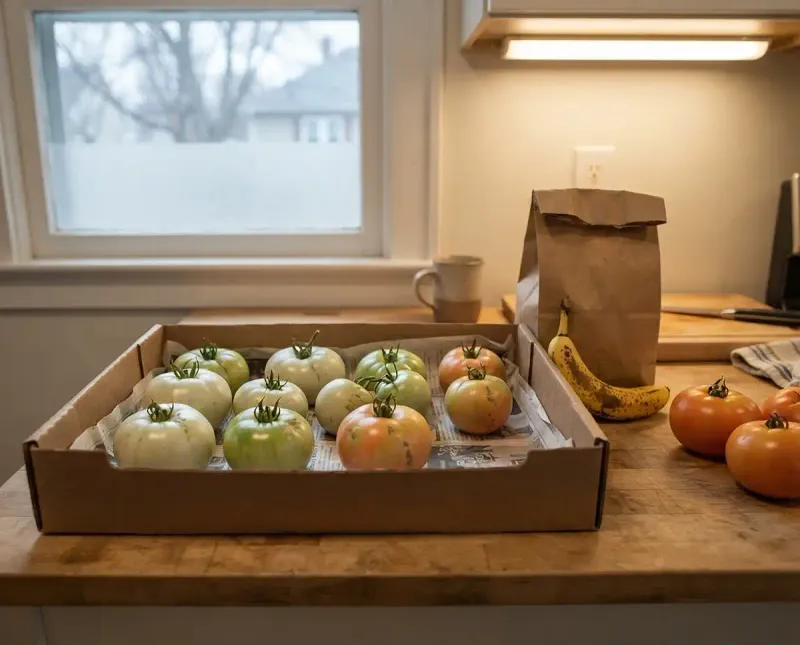
Ripening fruit gives off ethylene, a natural gas that helps signal other fruit to ripen. That is why Colorado State University Extension mentions placing a ripe tomato or banana with green tomatoes.
UC Davis also discusses ethylene in tomato ripening.
If you like, tuck one ripe tomato or a banana into the box. It may speed things along a bit, but it is an optional extra, not a requirement, and there is no guarantee of faster results.
Ethylene cannot rescue a tomato that was picked too small or too immature, and it cannot make up for a spot that is too hot or too cold. Think of it as a small nudge for fruit that is already capable of ripening.
Remove the banana or tomato if it starts to spoil.
Check the tomatoes every few days
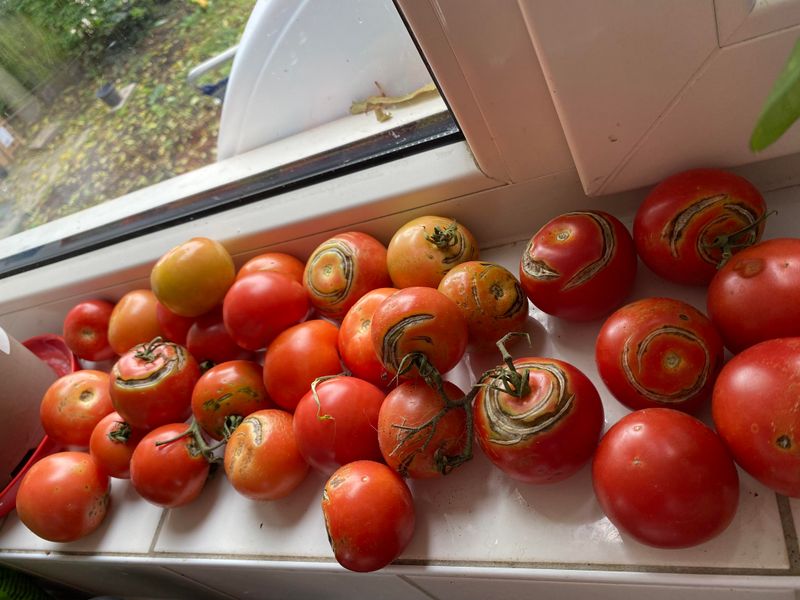
Plan a quick look every few days. Pull out any tomato that has turned fully ripe, and remove anything that is soft, moldy, or leaking.
Guidance from Colorado State University Extension and Alaska Extension supports checking the batch regularly. Discard damaged fruit instead of leaving it among sound tomatoes, since decay spreads.
Do not count on a set number of days. Some tomatoes may color up in a couple of weeks near 70°F, while cooler rooms or less mature fruit can take longer, and some may never finish well.
If a tomato shrivels or stays hard and pale, let it go.
Once a tomato is fully ripe, eat it, or refrigerate it to extend its keeping time. University of Georgia Extension and University of Minnesota Extension mention refrigerating ripe fruit, though they do not agree on exact timing, so use your eyes and nose.
A few tomatoes from the final harvest will likely be good, and that is a fair win for a freeze-night rescue.