
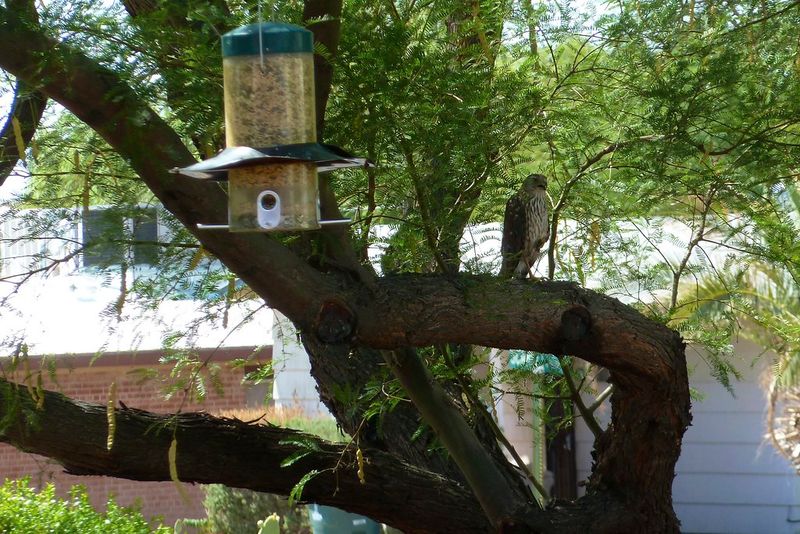
A sudden hush falls over the feeder, and every small bird vanishes into the shrubs. Then a long-tailed hawk sweeps over the fence.
Seeing a Cooper’s hawk can feel dramatic, but it is mostly a cue to look closely at what is happening. A few simple checks can tell you a lot about your feeder setup.
A hawk visit is a cue to check the feeder, not a verdict on your yard
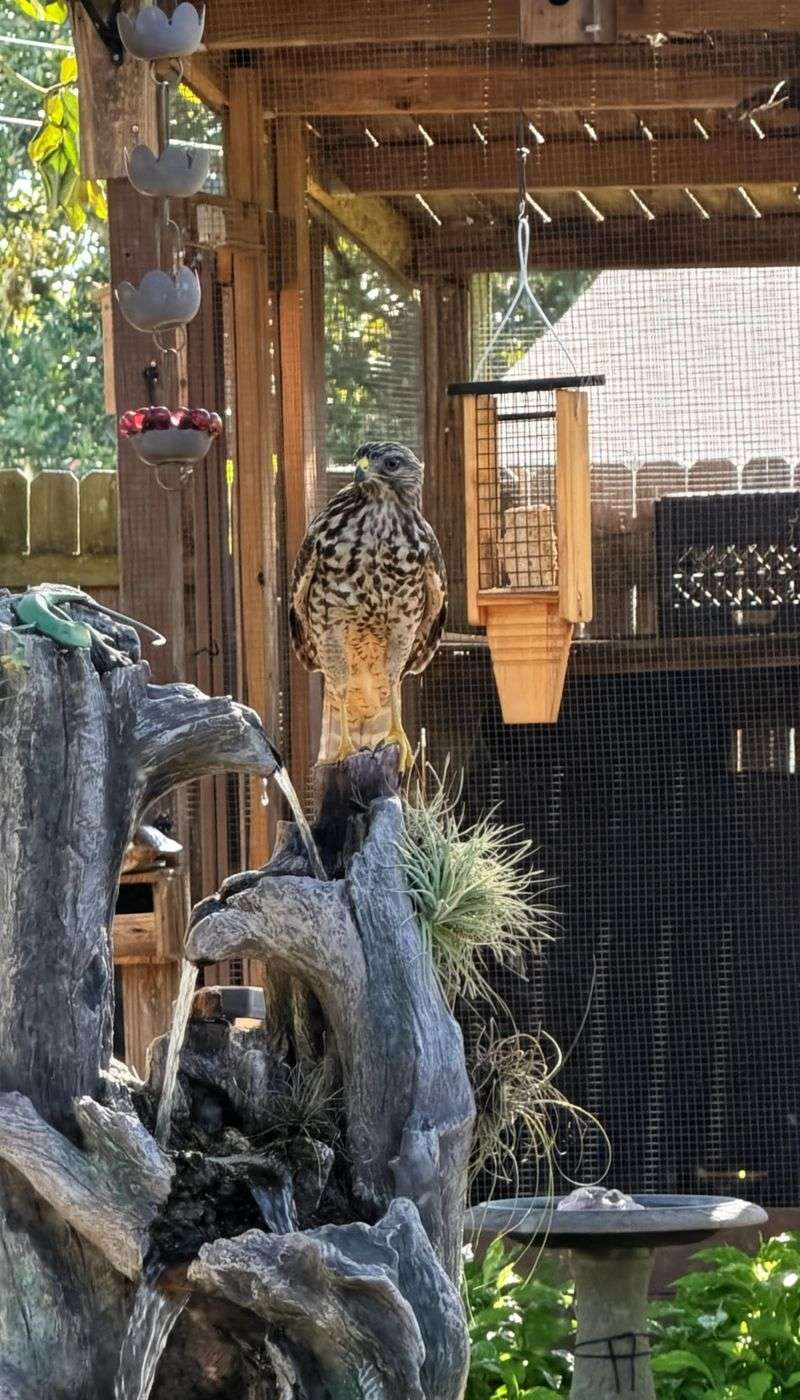
Think of a hawk sighting as a nudge to look around, not a sign that something is wrong. Cooper’s hawks are regular visitors to neighborhoods with trees, and Cornell Lab describes them as a common sight around backyard feeders.
They eat mostly birds, so a yard full of songbirds fits their hunting habits.
One appearance, though, cannot tell you why this particular hawk came by. It does not prove your feeder is causing unusual bird losses, and it does not mean your yard has a problem.
The hawk may simply be passing through on its usual route.
What it does give you is a reason to watch and to inspect. Look at where the feeder sits, how close the cover is, and whether seed has piled up below.
Then pay attention to the difference between a hawk that cruises past and one that keeps making hunting runs at your feeder birds.
Feeders can bring prey into a hawk’s hunting range
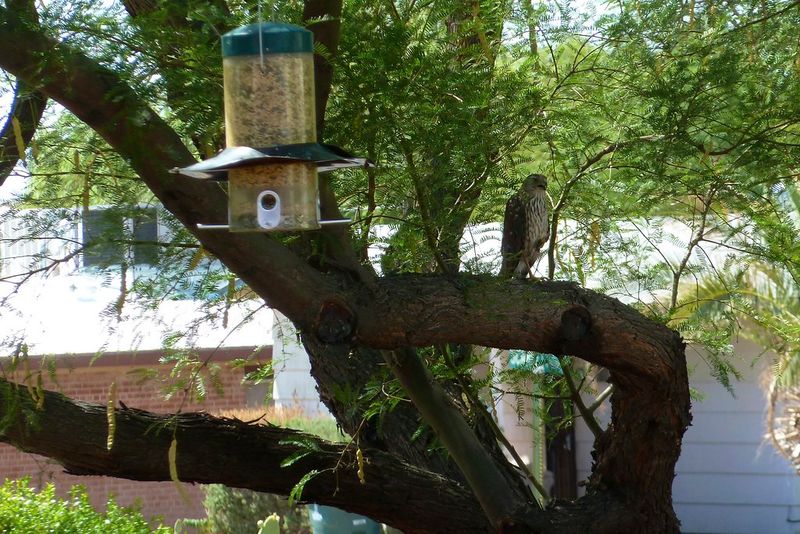
A feeder works like a dinner bell for small birds. Finches, sparrows, and chickadees gather in one spot, and that makes them easier for a predator to find.
Cooper’s hawks mainly eat birds, though Cornell also lists mammals such as mice and squirrels on the menu.
These hawks also like leafy suburbs, where mature trees give them perches and cover for approaching prey. A yard with trees and a feeder can fit that picture nicely, even if the hawk was not drawn by your feeder in particular.
Researchers have seen a similar pattern elsewhere. In a study at 52 sites in Poland, feeders drew Eurasian sparrowhawks and feral cats along with their prey.
That work shows feeders can attract predators as well as songbirds. It does not measure Cooper’s hawk impacts in Southern yards, or how many birds are lost overall.
What does the hawk actually do at the feeder?
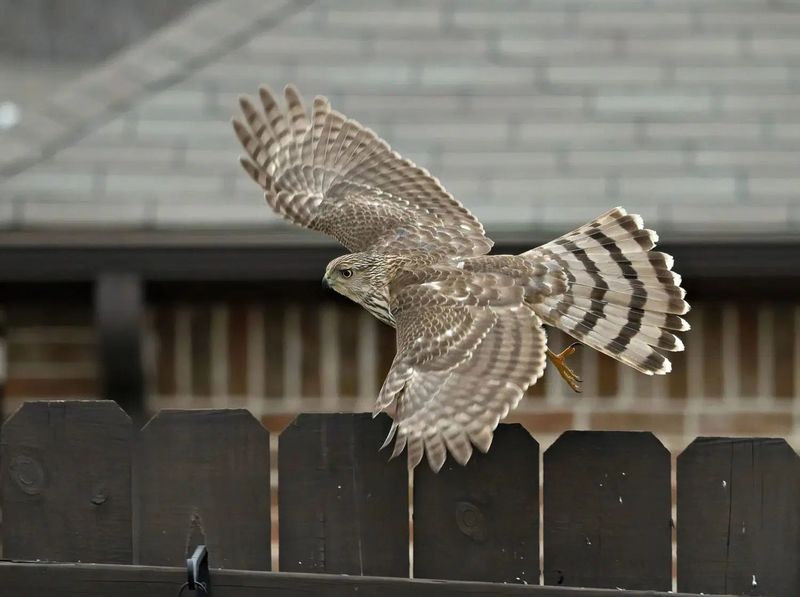
Before changing anything, spend a few days just watching. A hawk soaring high overhead is doing something very different from one that dives low through your yard.
Circling alone does not tell you what the bird intends.
Repeated hunting passes look different. The hawk swoops toward the feeder, birds scatter, and it returns again and again.
If you see actual pursuit or strikes at feeder birds, that is the pattern worth acting on.
Try to confirm what you are looking at, too. Sharp-shinned hawks and Cooper’s hawks look alike, and Cornell’s life history notes can help you learn the Cooper’s habits.
Jot down the time of day, how often the hawk returns, and whether birds are really being chased. One sighting does not call for taking the feeder down.
Repeated attacks call for a temporary pause in feeding
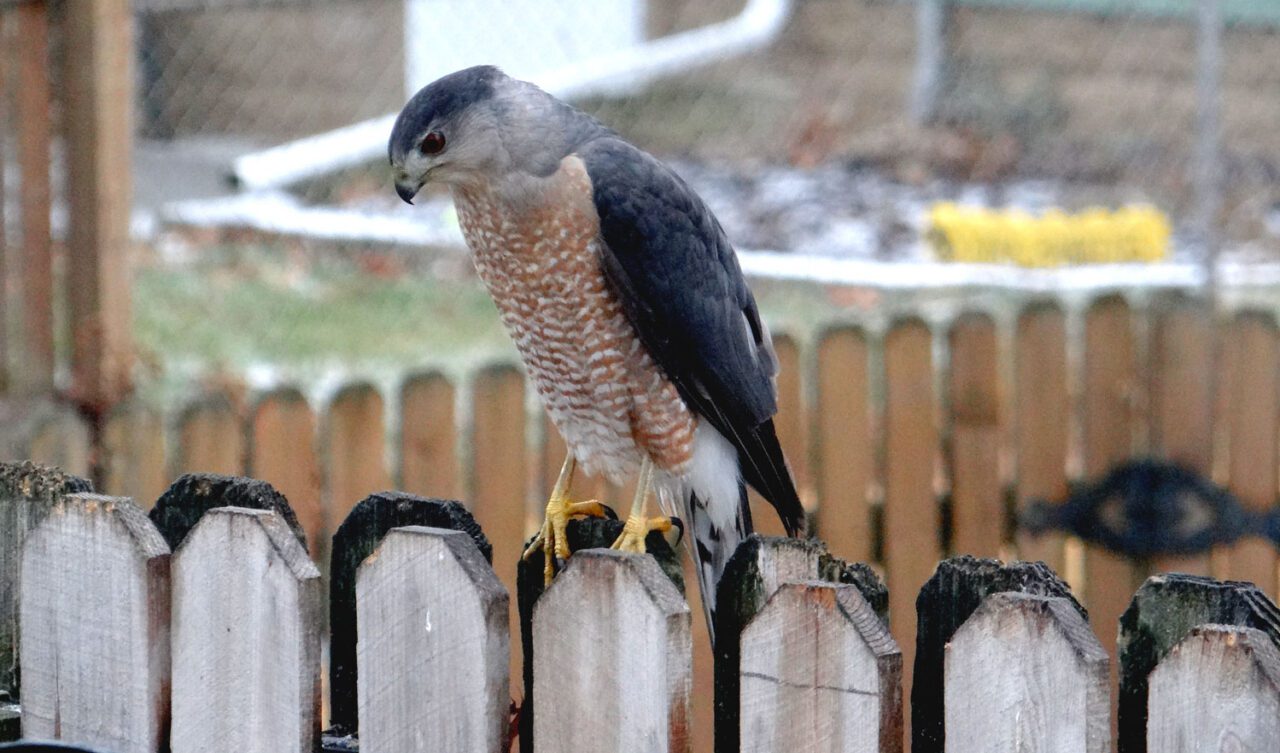
If attacks keep happening, a short break from feeding is a reasonable step. The Michigan DNR suggests stopping feed or removing the feeder for at least two weeks and cleaning up spilled seed.
Texas Parks and Wildlife also advises removing a feeder when hawk visits become a persistent problem.
During the pause, rake or sweep up hulls and seed beneath the feeder. Wash the feeder before you hang it again.
Birds will still find natural food in the meantime.
Treat this as a way to ease the conflict, not a sure fix. The hawk may move on, or it may keep checking your yard.
When the pause ends, rehang the feeder, watch how things go, and reassess the layout if attacks return.
Give feeder birds shelter without creating a hidden ambush spot
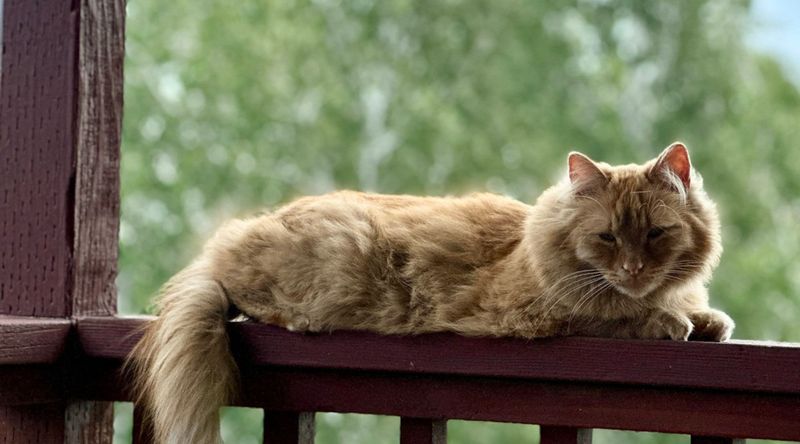
Feeder placement is a balancing act. Birds feel safer when a tree or shrub is close enough to dash into if a hawk appears.
But thick cover right beside the feeder can hide a cat waiting to pounce.
Cornell suggests placing feeders about 10 feet from natural shelter. Treat that as a starting point, not a magic number.
Your fence lines, neighbors’ cats, and tree layout all change what works.
UF/IFAS also stresses shelter nearby while warning about ambush cover. Walk your yard and ask two questions.
Can a bird reach cover in a second or two? Could something crouch unseen within a pounce of the feeder?
Adjust a little at a time and keep watching.
Keep the feeding area clean and remove spoiled seed
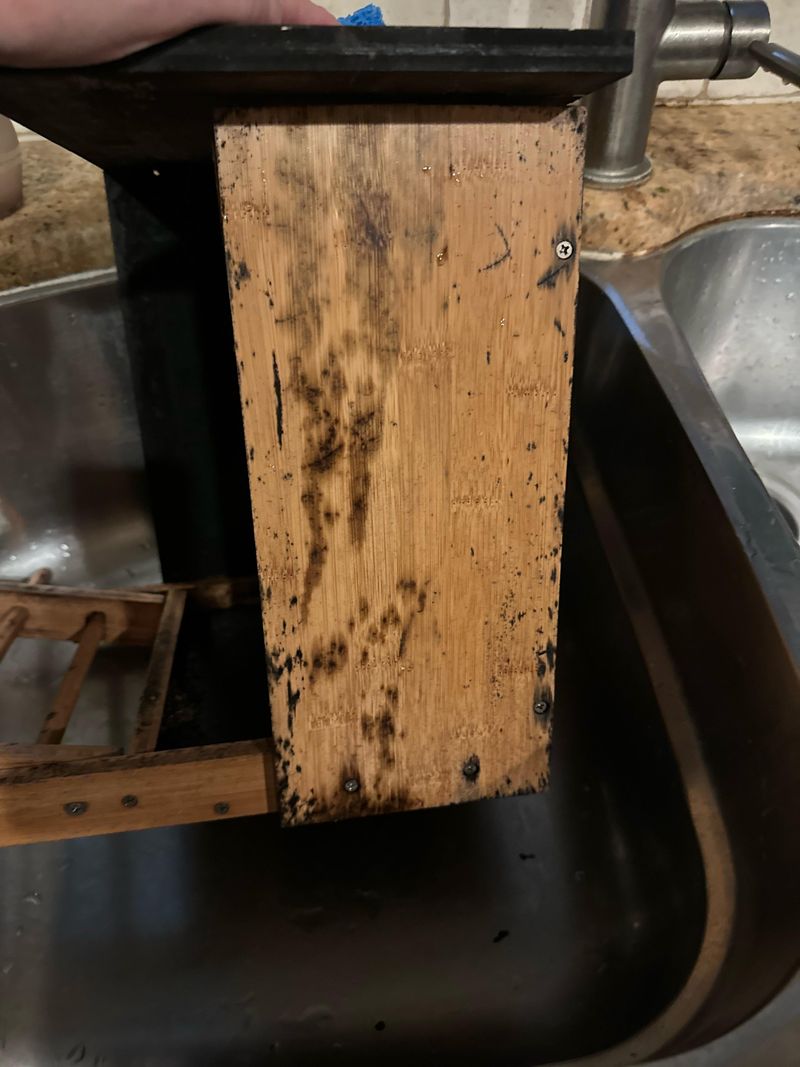
Cleanup is good bird care, though it is a separate job from dealing with hawks. Sweep up spilled seed and hulls, and toss anything wet, moldy, or spoiled.
Old seed on damp ground can go bad quickly.
Southern weather makes this extra important. UF/IFAS notes that Florida’s heat and humidity can encourage mold in seed.
After a rainy stretch, check hoppers and trays for clumps.
If you ever spot a sick bird at your feeder, take the feeder down and wash it. Project FeederWatch offers cleaning and disinfection guidance you can follow step by step.
A clean feeding area keeps birds healthier, but it will not decide whether a hawk drops by.
Native plants support birds beyond the feeder
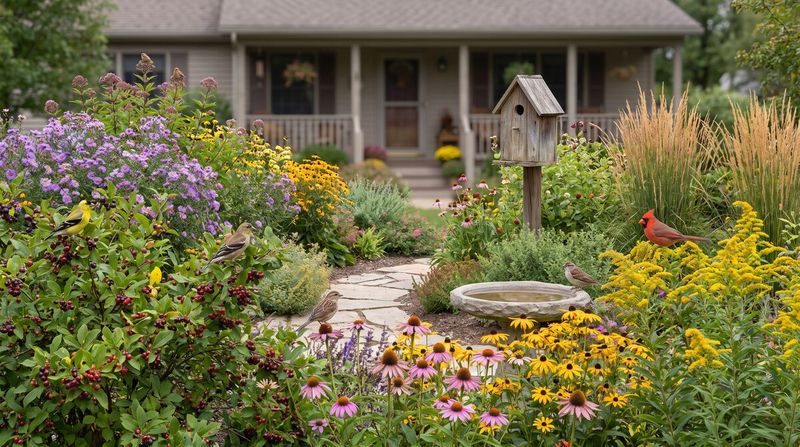
Feeders are only one piece of the picture. Native plants can supply food and cover year-round, which gives birds more places to forage and rest.
Cornell’s FeederWatch program points to native vegetation as a dependable source of food and habitat.
Think of this as a slow, long-term upgrade. Berries, seeds, and insects tied to local plants can keep birds visiting your yard even when you pause the feeder.
That makes a break from feeding easier to manage.
Planting natives will not keep a hawk away, and it will not prevent attacks. Hawks hunt wherever birds gather.
Check with your county extension office for plants suited to your part of Florida or Texas, and add a few at a time.
Observe and adjust without harming the hawk
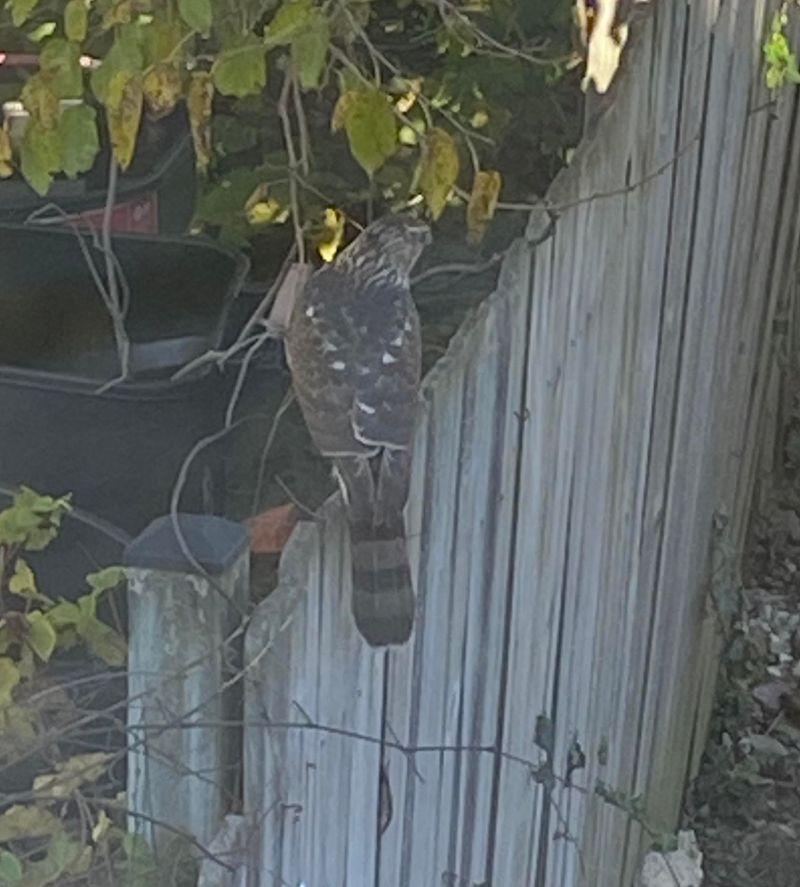
Start with watching, then adjust what you can. Note whether the hawk is passing through or hunting your feeder birds.
If attacks recur, pause feeding for a couple of weeks, clean the ground, and rethink where the feeder sits.
Never poison, trap, shoot, or chase the hawk. Cooper’s hawks are protected migratory birds, and the Migratory Bird Treaty Act generally prohibits taking them without authorization.
Harassing the bird is not a safe workaround.
A hawk in your yard is a cue to check the setup, not proof that anything is failing. The yard is doing what yards with trees and birds do: feeding everyone who shows up.