
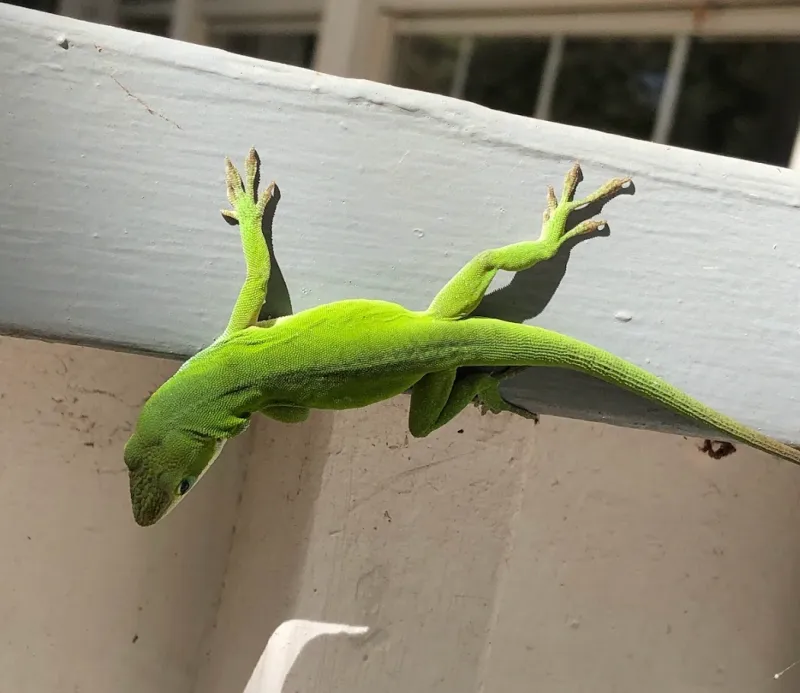
Those quick little lizards darting across your patio pots are hunting something. Florida gardeners often wonder whether anoles are quietly thinning out the bugs on their plants.
The real answer is more interesting, and a bit more complicated, than a simple yes or no. Knowing what anoles eat, and which kind you have, helps you see your yard’s wildlife clearly.
A patio anole may be green or brown
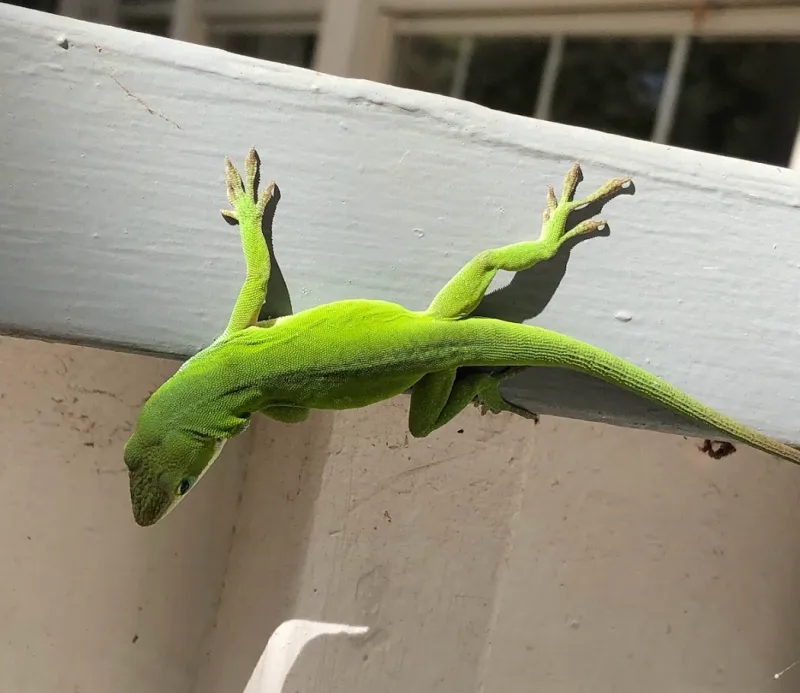
The lizard on your hibiscus pot could be one of two very different animals. Florida’s only native anole is the green anole (Anolis carolinensis).
The other is the brown anole (Anolis sagrei), which comes from the Caribbean and is now common in many urban parts of the state, according to UF/IFAS Gardening Solutions.
Many people just say anole and leave it there. That works for casual chatting, but it blurs some real differences.
The two species share a lot, including a taste for small invertebrates, yet they do not have the same place in Florida’s wildlife story.
Brown anoles are non-native, and UF/IFAS describes some habits that go beyond bug eating. They may eat small lizards, including young green anoles, and they may also nibble vegetation.
Green anoles are the native species that can be affected by that competition.
You do not need to become a lizard expert to follow the rest of this article. Just keep in mind that when someone talks about what anoles do in a yard, the answer can depend on which species is doing it.
Later sections come back to that point when we look at diet, pests, and other wildlife.
Small invertebrates are part of the menu
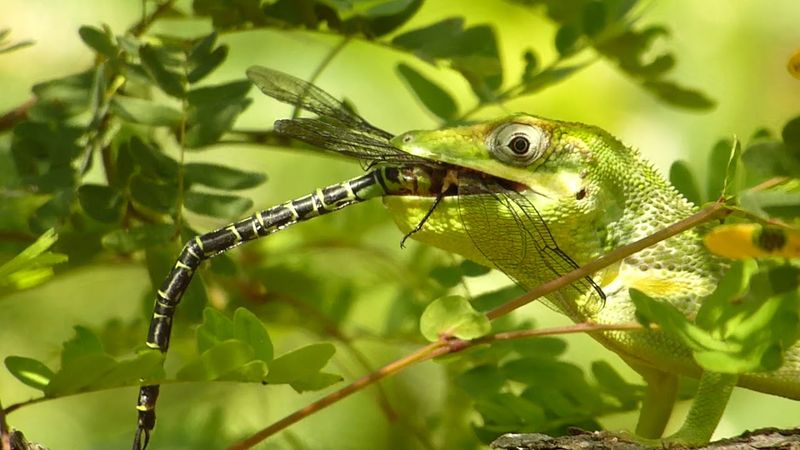
Watch an anole for a few minutes and you will probably see it freeze, then lunge. What it catches is usually small.
UF/IFAS lists beetles, flies, spiders, roaches, and other small invertebrates as prey for both the native green anole and the introduced brown anole.
Those are all creatures you may spot around patio pots, shrubs, and garden beds. A fly landing on a leaf, a beetle crawling along a stem, or a roach hiding near the edge of a planter could all be on the menu.
Spiders are on the list too, so anoles are not only eating the insects that bother plants.
That list tells us what anoles eat, but it does not tell us how much. Nobody can say from this information how many bugs one lizard eats in a day or a season.
It also does not say which bugs on your plants are being caught, or whether the ones you worry about are on the menu at all.
So the fair takeaway is modest. Anoles do hunt some of the small creatures around your plants.
Beyond that, treat any number or promise about their bug appetite with caution.
A varied diet does not prove fewer garden pests
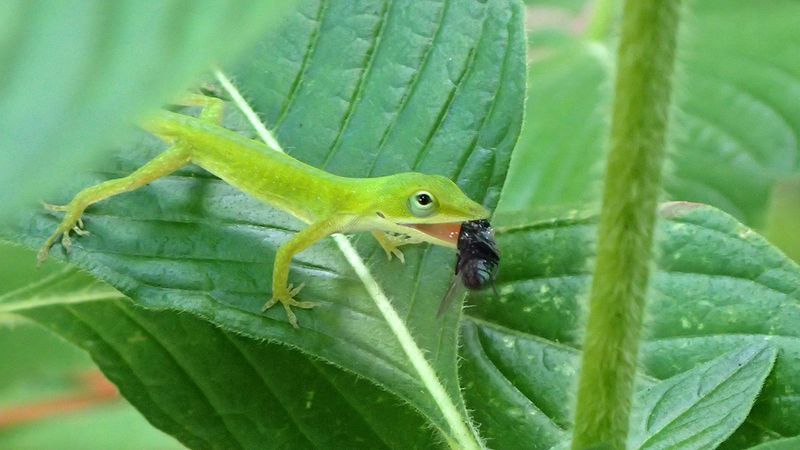
Eating bugs and reducing a pest problem are two different things. A lizard can snack on beetles all day and your plants might still look the same, because new insects can arrive, hatch, or hide where lizards do not look.
Nothing in the documented diet shows that anoles cause a noticeable drop in patio or garden pests.
It is easy to fall for a tidy story here. Say you notice anoles and, a few weeks later, fewer bugs.
Weather, season, plant growth, and other predators could all play a part, so the lizards may not be the reason. Any change you see is a possibility worth enjoying, not a proven yard-wide effect.
One Florida study gives a useful reality check. Researchers at six Broward County sites found that arthropod biomass, basically the amount of small invertebrate life, dropped as urbanization increased.
It was also linked to better body condition in brown anoles. In other words, more bugs went with healthier lizards.
That study looked at food supply and lizard condition. It did not test whether anoles reduce garden pests or whether plants end up healthier.
So if aphids or caterpillars are chewing your plants, plan to handle them directly rather than waiting on a lizard.
Brown anoles can affect green anoles
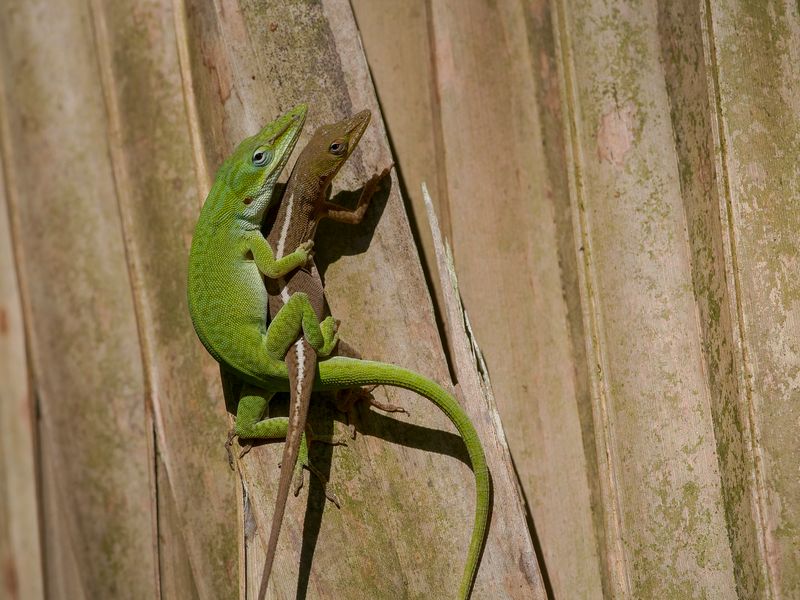
Back to the two species. Brown anoles are not just bug eaters, and that matters for native wildlife.
UF/IFAS notes that brown anoles may eat small lizards, including young green anoles.
There is also a habitat angle. Green anoles may shift higher into vegetation where brown anoles are present, a pattern described in research on competition between the two species.
Brown anoles tend to spend more time lower down, so a green anole may end up sharing less of the same space.
This is where plant variety comes in. UF/IFAS Extension in Sarasota County points out that a range of plant heights, including shrubs and trees, can provide habitat for green anoles.
A yard with only low pots and bare walls offers fewer options than one with layers.
None of this means every yard will play out the same way. You might see both species getting along on one fence and only one species on the next block.
Think of these findings as patterns researchers have documented, not a forecast for your garden.
Anoles are not a mosquito-control plan
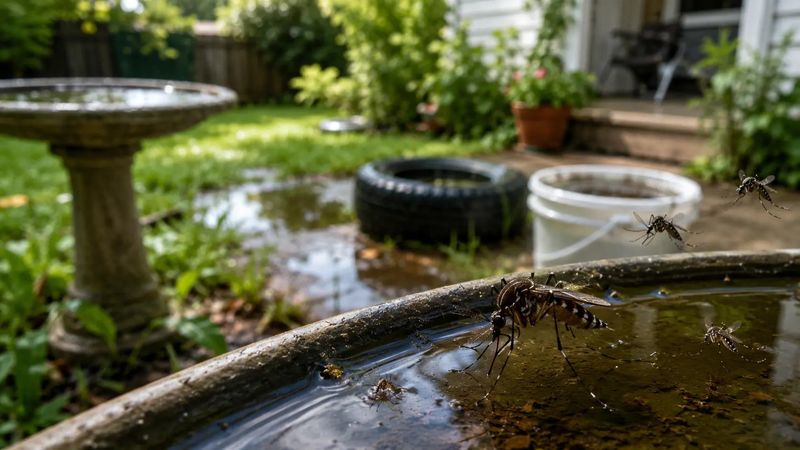
Lizards and mosquitoes share a yard, so it is tempting to link them. But a mosquito biting an anole is not the same as an anole eating a mosquito.
Those are two separate events, and only one of them has been reported.
In a study covered by UF/IFAS News, brown anoles were often identified as blood-meal hosts for one important mosquito species. Whether lizards change virus transmission was described as an open question.
The finding does not show that anoles reduce mosquito numbers.
For real mosquito reduction, UF/IFAS recommends an integrated approach built around removing standing water and other breeding sites. It also cautions against relying on natural predators to prevent mosquito-borne disease.
Try a quick patio check. Look under plant saucers, in buckets, in clogged gutters, and in bromeliad cups or birdbaths that hold water for days.
Emptying or scrubbing those spots does more than any lizard can be counted on to do.
Treat resident anoles as wildlife, not pest control
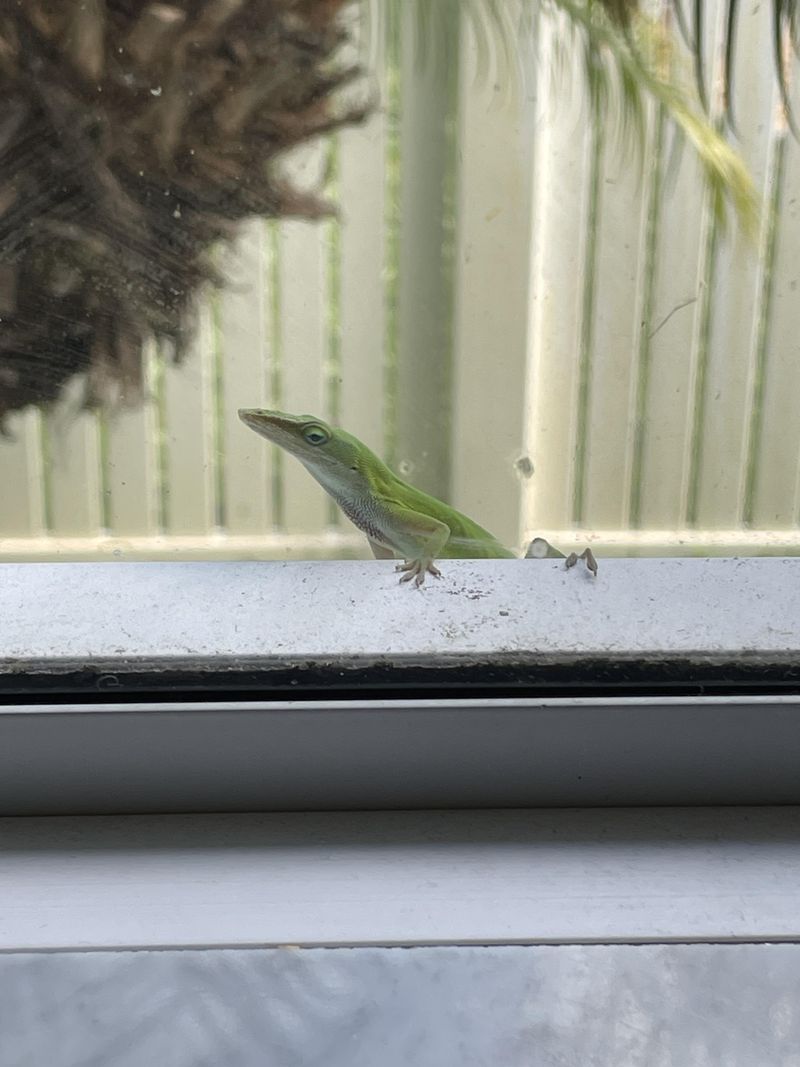
Enjoy the anoles for what they are: small predators that eat some of the little invertebrates around your plants, as UF/IFAS Gardening Solutions describes. Just do not count on them to clear your plants of pests.
For mosquitoes, follow the UF/IFAS advice on standing water and breeding sites.
There is no reason to catch, release, or relocate lizards for pest control. The evidence does not show that it works.
A lizard on your pot is a small, quick-eyed neighbor, not a pest-control service.