
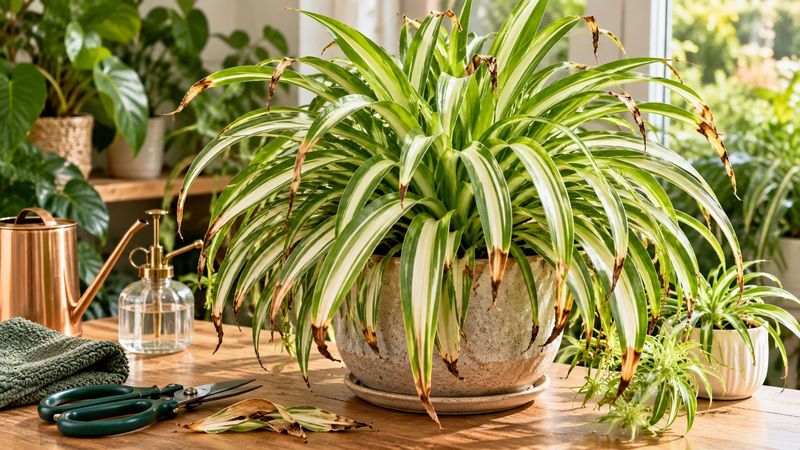
Crispy brown tips on a spider plant can show up fast once the heat kicks on. Many gardeners blame dry winter air right away, but the tips are really a clue, not a verdict.
A few simple checks can tell you whether humidity is part of the story or whether something else is going on. Here is how to sort it out, starting today.
Brown tips do not prove the air is too dry
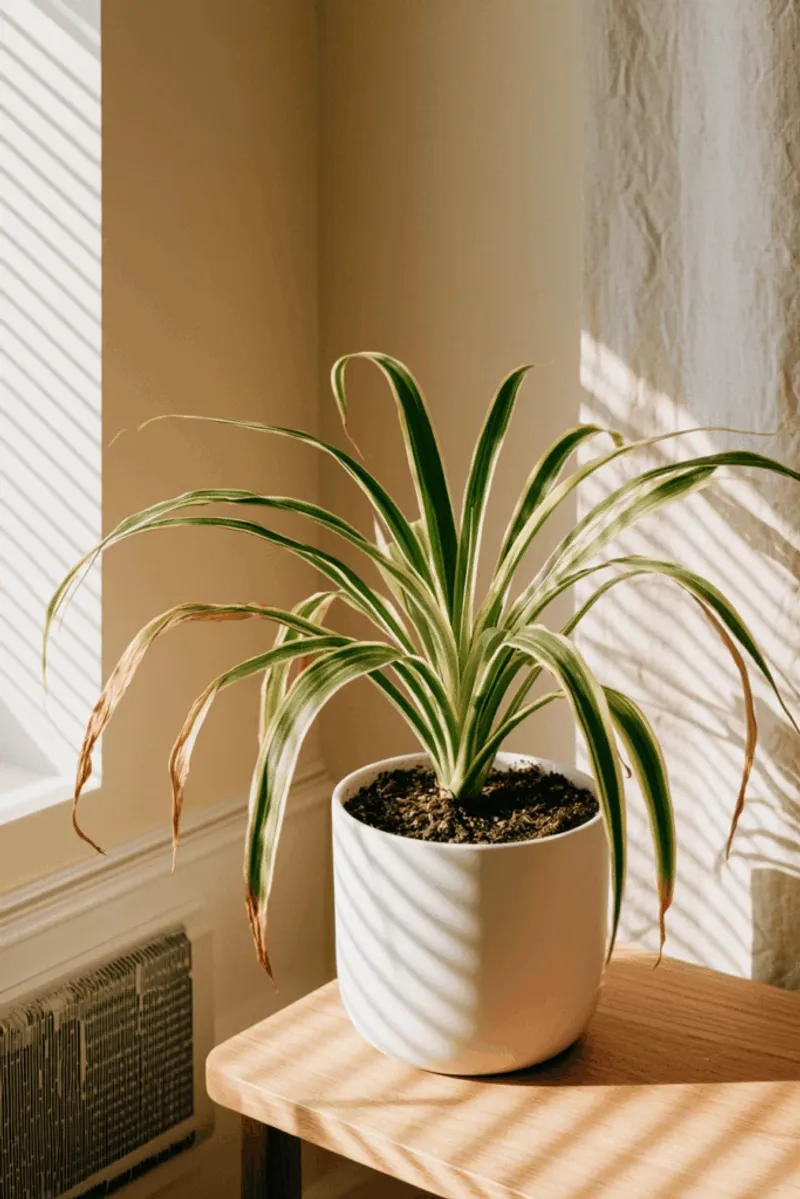
Low humidity is one possible reason for brown tips, but the symptom alone cannot prove it. Iowa State Extension lists dry air as the most likely cause of brown tips on houseplants in general.
Even so, it is only a starting point for a spider plant.
Several other stresses leave the same mark. Soil that stays too dry or too soggy, extra fertilizer, mineral salts, chemicals in tap water, hot spots, and cold drafts can all burn leaf tips.
UC IPM notes that both too little and too much water can harm a plant. Spider plants in particular can react to fluoride and other chemicals, according to UF/IFAS.
So think of this as detective work rather than a one-step cure. You will measure the air, check the plant’s spot, look at the soil, and think about your water and feeding habits.
Each step rules something in or out, and that keeps you from fixing a problem you do not have.
Winter heating can create dry air around a plant
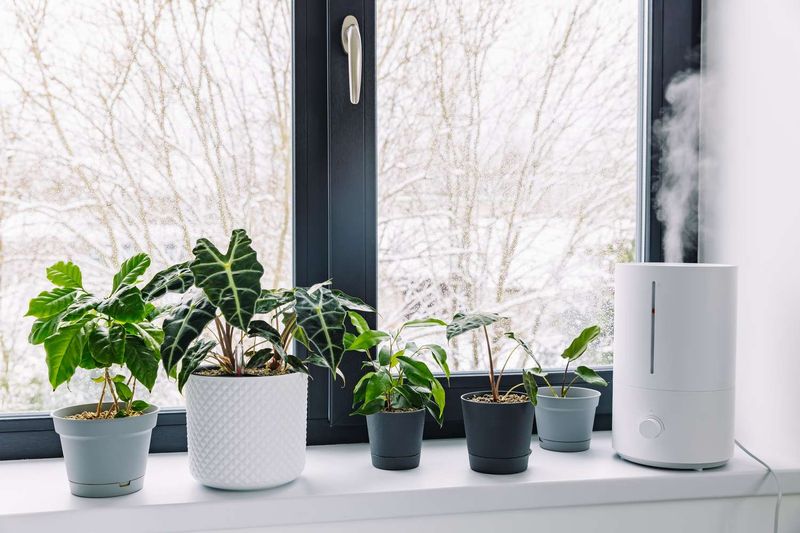
Cold outdoor air holds very little moisture. When that air is pulled inside and warmed, the relative humidity in the house can drop low, as University of New Hampshire Extension explains.
That is why winter is a reasonable time to suspect dry air.
The spot where your plant sits matters too. A heating vent, radiator, or fireplace can blow hot, dry air straight onto the leaves and make the small area around the plant harsher than the rest of the room.
Still, a heated home is not automatically a dry one. Some houses stay comfortably humid all winter, and some plants shrug off conditions that bother others.
Think of heating as a reason to check, not proof of the cause. Notice whether your plant sits in the path of warm air, and keep that in mind for the next steps.
Measure humidity before adding moisture
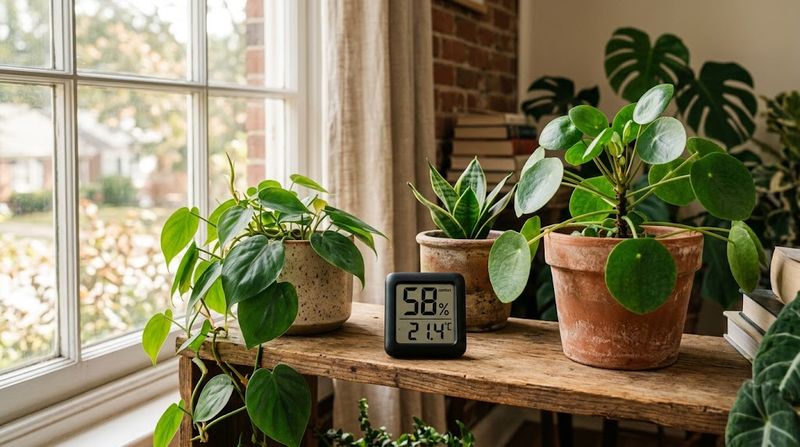
Guessing from the season or from how the room feels is not very reliable. A small digital hygrometer costs little and gives you a real number.
Set it near the plant, at leaf height, and check it over a day or two.
Two different ranges are useful here. UNH Extension describes 40 to 60 percent relative humidity as suitable for most houseplants.
Separately, EPA guidance for the home says to keep indoor humidity below 60 percent, ideally between 30 and 50 percent, and to cut back if you see condensation on windows, walls, or pipes.
Those ranges overlap but are not the same, so aim for the safe middle and never push past the household limit. Also remember that a reading in the right range does not clear or confirm anything about your plant.
A good number simply tells you to look at soil, water, and fertilizer next. A low number tells you humidity may be contributing.
Use a nearby humidifier if measured humidity is low
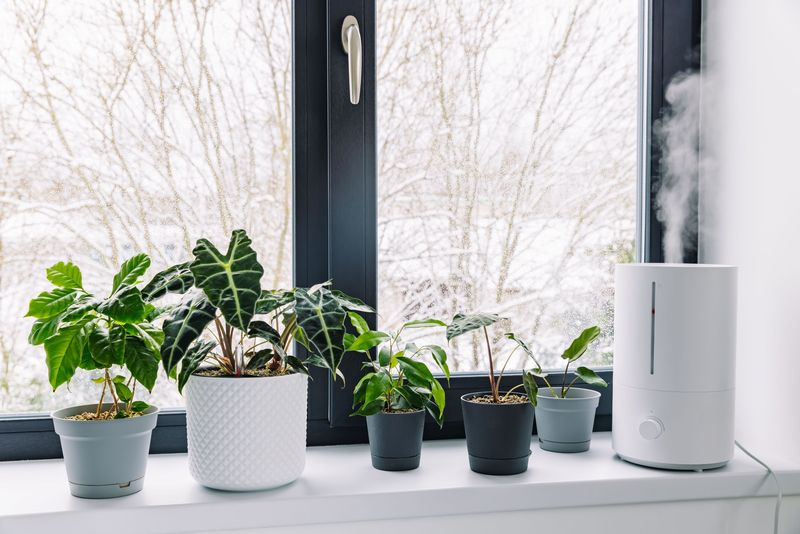
If your hygrometer shows the air really is dry, a portable humidifier placed near the plant is a sensible try. Keep the hygrometer beside it so you can watch the numbers.
UNH Extension suggests this pairing of humidifier and monitor. It may help, but it is not a guaranteed cure.
Grouping plants or using a pebble tray can add a little local moisture, especially in a small room with little air movement. Expect a modest effect.
If you use a tray, keep the pot sitting above the water line so the roots never stand in water.
Do not chase high numbers. The EPA advises keeping household humidity below 60 percent.
If windows start to fog or drip, turn the humidifier down or off. Clean the unit as its maker directs so it stays safe to run.
Check the plant’s location and soil before changing its watering
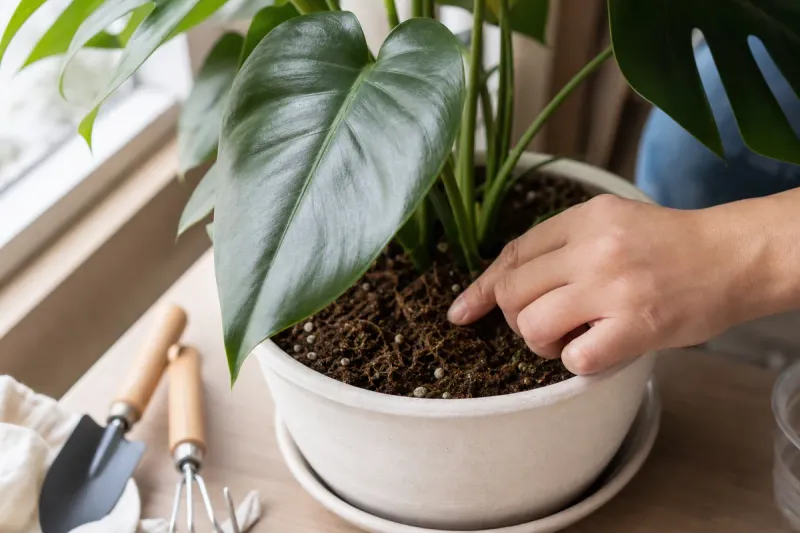
Before reaching for the watering can, look around. Is the plant right above a heat vent, or beside a door or window that lets in cold drafts?
Moving it a few feet away from either one is free and quick.
Next, push a finger into the soil. Water should follow soil condition, not a fixed calendar.
The New York Botanical Garden suggests that in winter you let the top half inch of soil dry between waterings. Empty any drainage water from the saucer so the pot is never left sitting in it.
Adding water without checking can make things worse. UC IPM points out that wet soil can damage roots and lead to leaf symptoms.
If the soil is bone dry for long stretches, water thoroughly and let it drain. If it stays soggy, ease off and check that the pot has drainage holes.
Consider water chemicals and fertilizer salts
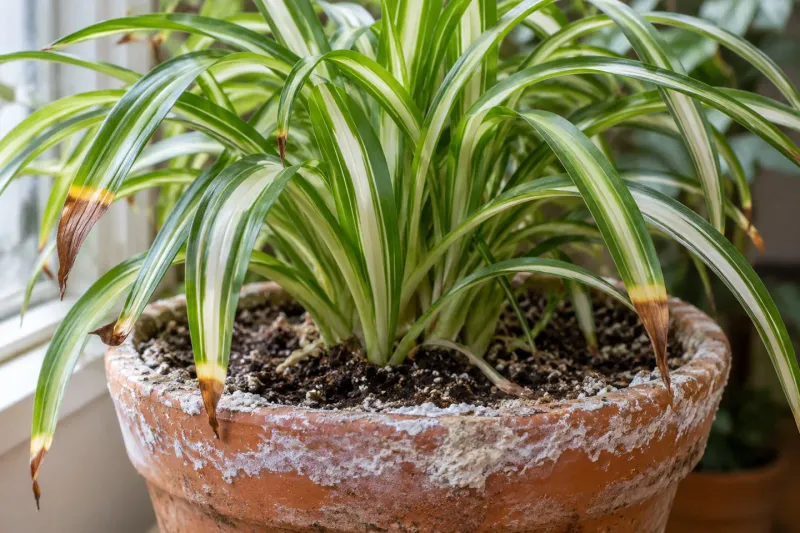
When humidity and placement do not explain the damage, look at what goes into the pot. Fluoride and other chemicals in tap water can bother spider plants, and UF/IFAS suggests rainwater or distilled water if fluoridated or mineral-heavy water is a concern.
Not every brown tip calls for a water change, so treat this as a test, not a rule.
Fertilizer can be a culprit too. A white or tan crust on the soil or along the pot rim is a clue that salts are building up.
Cut back on feeding if you have been generous.
You can also flush the pot. Clemson Extension recommends periodically running water through the potting mix to carry salts out, then letting it drain fully.
Do this in a sink or tub, and never leave the pot sitting in the runoff.
Trim damaged tips and watch the next leaves
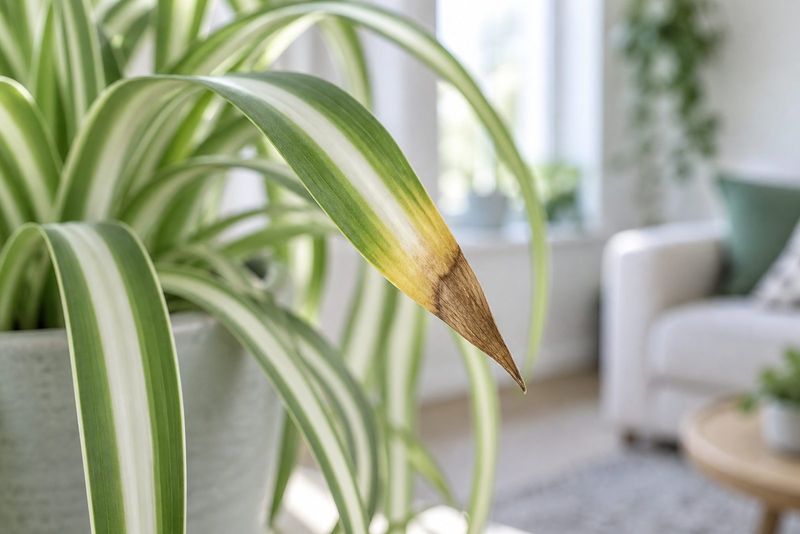
Brown tissue will not turn green again. If the tips bother you, snip them off with clean scissors, cutting along the leaf’s natural taper.
Trimming improves looks, but Iowa State Extension cautions that browning can return if the underlying cause is still there.
The better test is the new growth. Watch the fresh leaves over the next several weeks.
If they unfurl with clean, green tips, whatever you changed is probably helping. If new tips brown again, move on to the next suspect on your list.
Damaged leaves do not heal, a point also made in an Extension expert response.
Change one thing at a time so you can tell what worked, and keep notes if that helps. A humidifier is one tool among several, not a promise.
Healthy new leaves are the real scoreboard.