
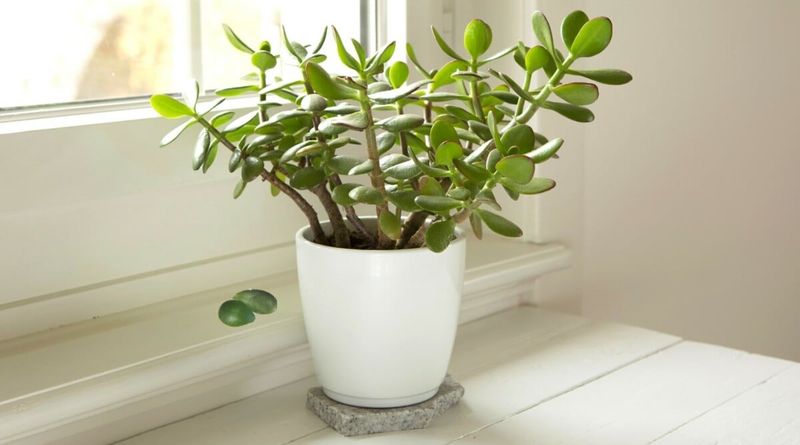
Your jade plant looked plump and happy on the patio, and now green leaves are piling up on the floor. It is a worrying sight, but a dropped leaf is a clue, not a verdict.
The move indoors changes light, temperature, and watering conditions all at once, so several things could be involved. Here is how to look for the real cause before you change anything.
Moving indoors can prompt leaf shedding
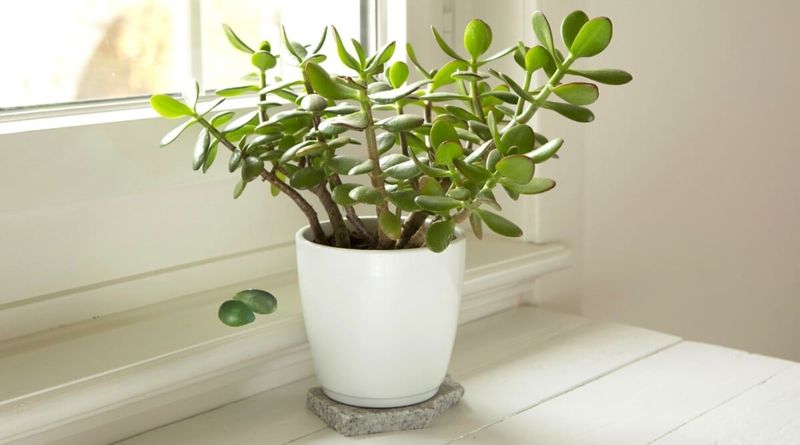
Jade plants that spend summer outside often meet a very different world once they come indoors. Light is dimmer, air feels different, and the watering routine rarely stays the same.
Extension guidance on jade plants notes that occasional leaf drop can happen as a plant adjusts to lower indoor light.
Because so many conditions shift together, the timing of the move alone cannot tell you which one is responsible. A plant that dropped leaves right after coming inside might be reacting to light, to soil that now stays wet longer, or to something unrelated that was already brewing.
Iowa-based and other extension sources also list a quick change from brighter to darker conditions as a possible trigger. Still, a few fallen leaves is different from a plant that keeps shedding or loses many leaves at once.
Heavy or continuing loss deserves a closer look rather than a shrug, and another extension answer on jade care points to causes such as watering problems and light. Treat the first few leaves as a prompt to start checking.
Winter light can contribute to leaf loss
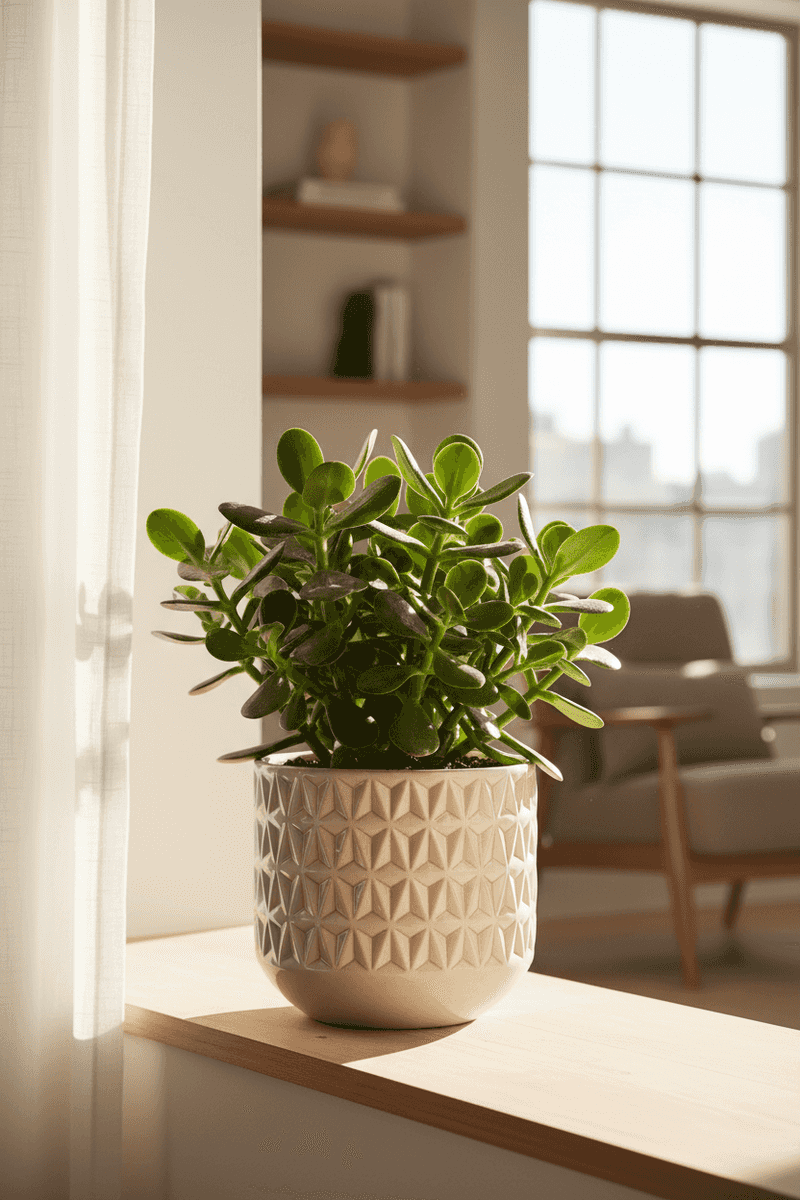
Jade is a sun lover. According to the University of Wisconsin Extension, it does best with four or more hours of direct sun, though it can get by in bright indirect light.
When a plant goes from open sky to a room corner, some leaf drop may be part of its adjustment.
The trouble starts when the light stays too weak. Insufficient light can lead to weak, drooping growth and ongoing leaf loss, and that is a different situation from a brief adjustment response.
Move the pot close to a bright window and watch how the plant responds. If your home simply does not get enough natural light in winter, supplemental grow lighting can fill the gap, and extension guidance mentions it as an option.
More direct sun is not always the answer. If the plant spent months in a dim spot, bring it into stronger light gradually so the leaves are not scorched.
Check the soil before changing how you water
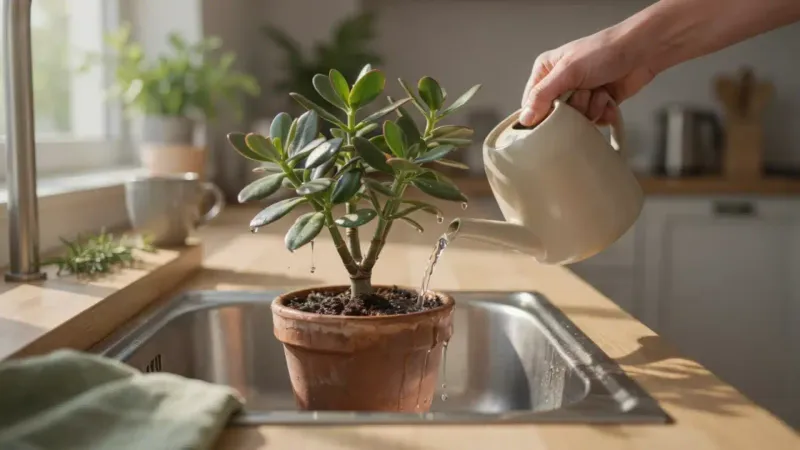
Water trouble can look surprisingly similar from either side. A jade can drop leaves from too much moisture, and it can drop them from drought too.
That is why checking the soil beats guessing.
Winter growth slows, and indoor light and air differ from outdoors, so soil may dry at a different pace than it did in summer. Pot size, soil mix, and drainage all matter as well.
Because of this, a summer routine may no longer fit, and no single schedule works for every home.
Wrinkled leaves before they fall can point toward thirst, according to an Ask Extension answer, while yellow or soft leaves can hint at too much moisture. Treat these as clues only, not proof.
Feel the soil and look at the whole plant.
Set the plant up to succeed with a well-draining succulent or cactus mix and a pot with drainage holes, and empty any water that collects in the saucer. The Wisconsin Extension advises less water in winter, but jade still needs some.
Guidance from the New York Botanical Garden ranges from keeping soil on the dry side to watering when leaves begin to pucker.
Cold exposure and abrupt swings can trigger shedding
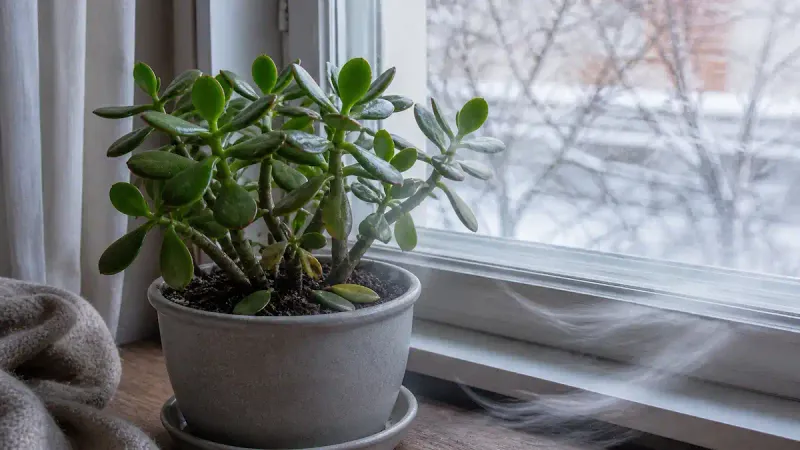
Picture a pot sitting on a sill where cold air leaks around the glass, or beside a door that opens to winter every time someone comes home. Spots like these can shock a jade in a way that low light or watering does not.
Freezing conditions can kill a jade, so keep it away from anywhere that gets that cold. The Iowa State Extension lists drafts and temperature swings among the environmental problems that can cause houseplant leaf drop.
The University of Wisconsin Extension also advises avoiding cold drafts and sudden changes.
Check where the plant sits at different times of day. A window that feels fine at noon may be chilly overnight.
Water temperature counts too. The New York Botanical Garden notes that cold water can shock the plant and trigger leaf drop, so tepid water is the safer choice.
No exact household temperature is known to prevent every case, and ordinary indoor heating is not proven to be the culprit, so focus on drafts and sudden shifts.
Mealybugs leave clues beyond dropped leaves
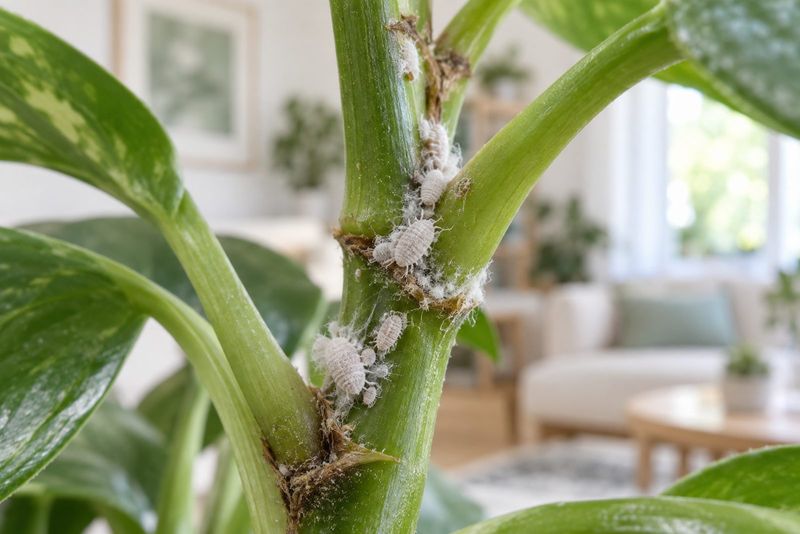
Plants that summered outdoors can bring along hitchhikers, so a quick inspection right after the move is worthwhile. Mealybugs are a known pest of jade, and Wisconsin Extension lists them among the problems to watch for.
Look closely where leaves meet stems and on the undersides of leaves. You are searching for white, cottony insects or egg masses, sticky honeydew on leaves or the surface below, and dark sooty mold that grows on that residue.
According to the UC Statewide IPM Program, large populations can weaken plants, which may contribute to leaf drop.
Finding these signs can help explain a struggling plant. On the other hand, fallen leaves alone do not confirm an infestation, so look for the physical evidence before treating.
If you do spot mealybugs, isolating the plant from others is a sensible first step.
Soft stems call for a closer disease check
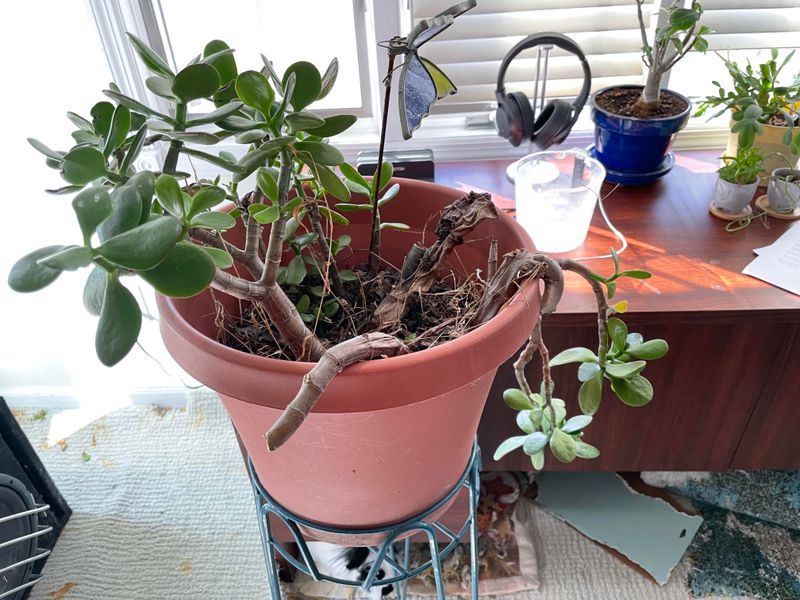
One lone leaf on the floor is a small matter. A stem that feels mushy or starts to collapse is another story and deserves attention quickly.
Poor drainage or overwatering can lead to root rot, according to University of Connecticut Extension. That guide also reports powdery mildew and bacterial soft rot on jade.
Start with what you can see. Check whether the pot drains freely and whether water sits in the saucer.
Look at the stems and leaves for white, powdery patches or for soft, darkened areas.
To lower the odds of fungal trouble, water the soil rather than the foliage and improve airflow around the plant if fungal symptoms show up. Ask Extension guidance also links disease to jade leaf loss.
These steps may help, but no method guarantees recovery. Investigate drainage and roots before deciding whether repotting makes sense.
A few older lower leaves may fall naturally
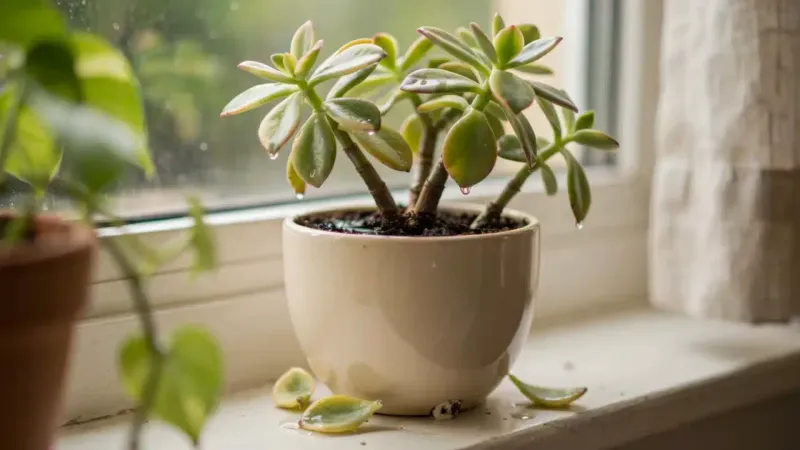
Not every fallen leaf signals trouble. As a jade matures, its oldest leaves near the base can drop gradually, much like a tree shedding its inner needles.
The Wisconsin Extension and Ask Extension both describe occasional leaf shed as a normal part of jade growth.
The pattern is your best comparison point. A plant with firm, plump leaves, fresh growth at the tips, and only a few old leaves falling from the bottom is usually less worrying.
Compare that with a plant shedding leaves from all over, dropping many at once, or losing leaves while also showing soft stems, sticky residue, or shriveling.
Take a good look at the whole plant before deciding. Healthy new growth is a reassuring sign, while steady loss that continues deserves a closer investigation.
Match your response to the pattern
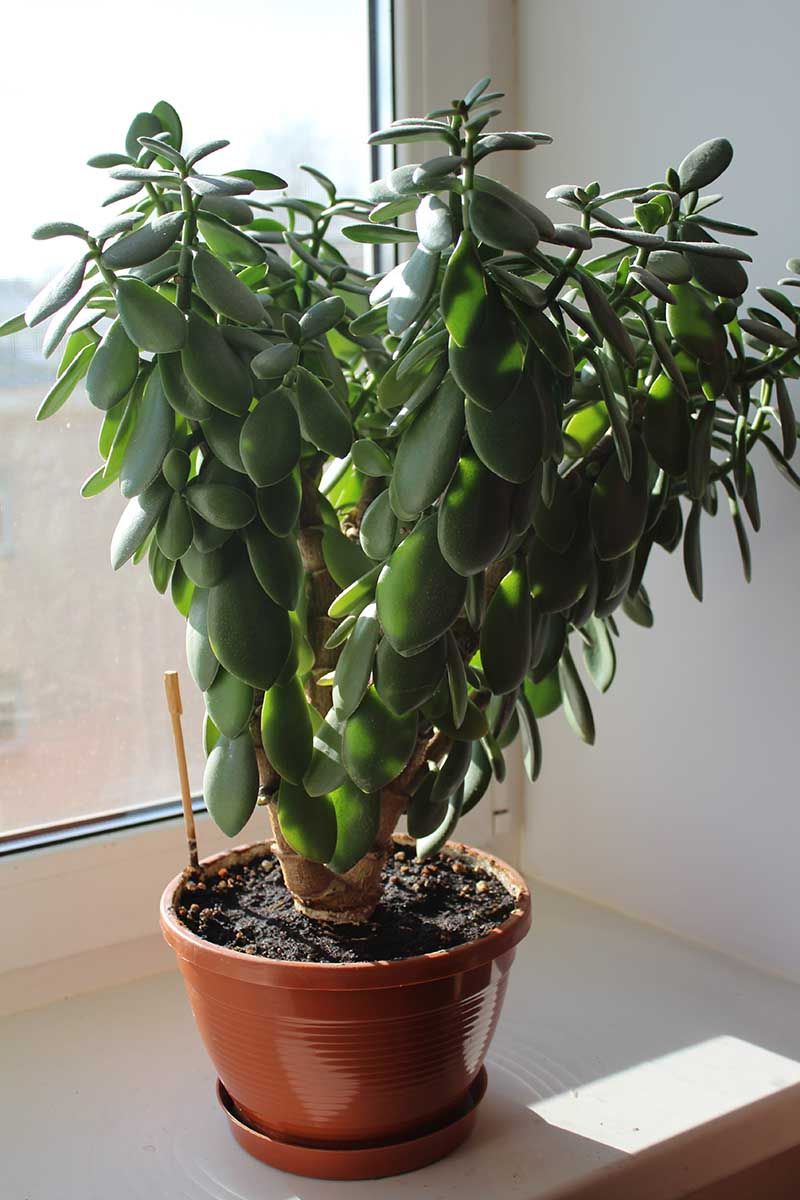
Leaf drop tells you something is off, but not what. Work through the checklist: light, soil moisture and drainage, drafts or temperature swings, and any visible signs of pests or disease.
The Iowa State Extension guide on houseplant problems shows why checking conditions comes first.
Then change one thing at a time, so you can see what helps. Jade care basics from Wisconsin Extension are a good reference.
A jade usually tells its story slowly, so the plant that gets one careful fix beats the plant that gets ten at once.