
Your cucumber vines are lush and green, yet the fruit has stopped coming. That can feel like a mystery, especially when fall is supposed to bring one last harvest.
Poor pollination is one possible cause, and it is one you can check in a few minutes with a small brush. Here is how to look closely at the flowers and decide what to try next.
Check the flowers before diagnosing a pollination problem
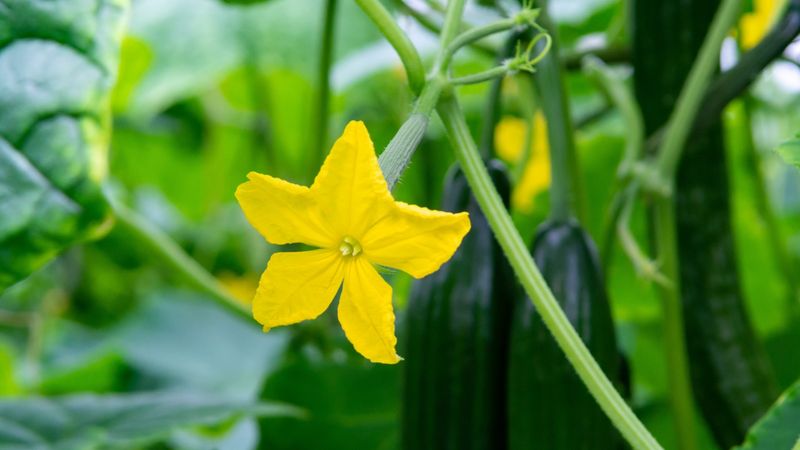
Start with the flowers themselves. A vine covered in leaves tells you little, but the blooms and tiny fruits give real clues.
Look behind the petals. A female flower has a miniature cucumber-shaped ovary right under the bloom, while a male flower sits on a slender, plain stem.
According to University of Arkansas Extension guidance, male flowers often show up first and then drop after blooming.
That means a pile of fallen male blooms is normal and not a sign of trouble. What deserves a closer look is a female flower that drops, or a baby cucumber that turns yellow and falls off.
Those signs make pollination worth investigating, though they do not prove it is the cause. University of Georgia Extension explains how pollen has to reach the female flower for fruit to develop.
Walk the row for a few mornings and note how many female flowers you see and what happens to them.
Weather may hinder pollination, but cold nights are not a diagnosis
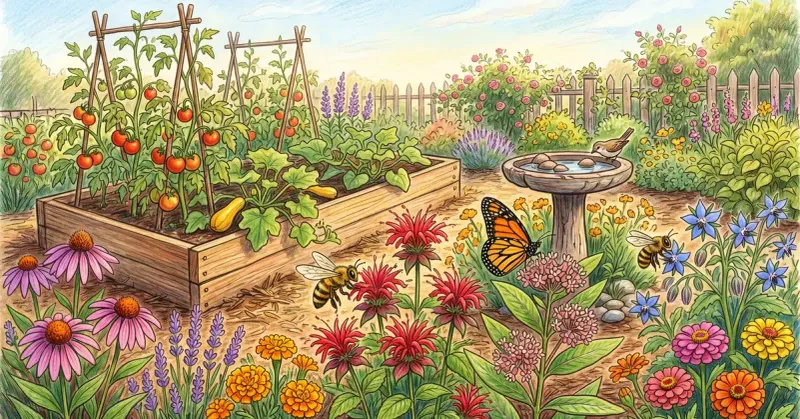
Most common cucumbers depend on insects, mostly bees, to carry pollen from male flowers to female ones. Each flower opens for only a limited time during the day, so the visits have to happen during that window.
Cool or rainy weather can make bees less active, and fewer visits can mean fewer pollinated flowers. Cold nights alone are not a proven reason for a stall, though, so treat weather as one clue among several.
Arkansas Extension notes that cold and rainy weather can hamper bee activity, and Georgia Extension describes how cucumbers rely on pollinators.
It also helps to separate fewer bee visits from direct effects on the plant itself. Temperature can change how the vine flowers and sets fruit, and heat can cause trouble too.
Minnesota Extension reports flower and small fruit loss with hot days or warm nights.
No single temperature works as a cutoff for every garden, so watch your own blooms and see whether bees show up while they are open.
Move pollen between fresh flowers by hand
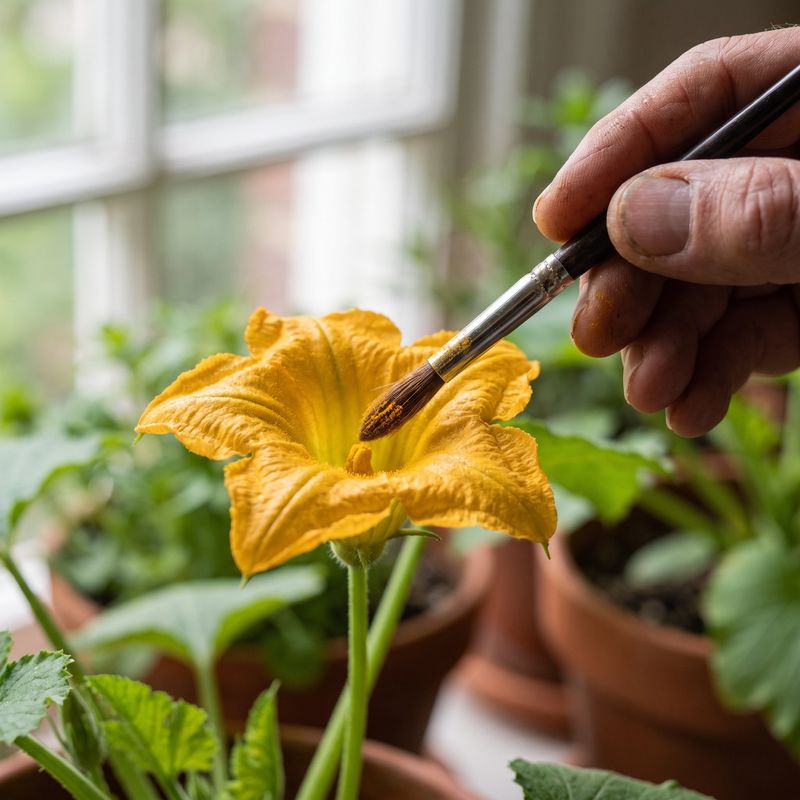
Morning is the time to try this, when flowers are freshly opened. Pick a newly opened male flower and look for the yellow pollen inside.
A small soft brush or a cotton swab works well for a small planting.
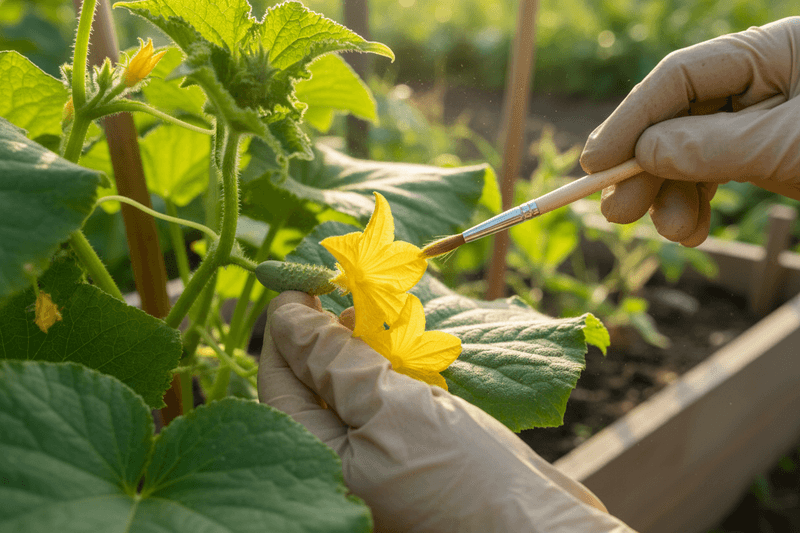
Before you touch anything, confirm which flower is female by finding the tiny cucumber-shaped ovary behind the petals. Then brush the pollen from the male flower and dab it onto the center of the female flower.
Texas A&M AgriLife Extension and NDSU Extension both describe this approach.
Think of it as a practical test when pollinator visits seem limited, not a guaranteed rescue. One male flower can often serve several females.
A quick safety note: if you use any pesticide, follow the label, including pollinator restrictions during bloom or when bees are active, as EPA pollinator guidance explains.
Watch the tiny fruit for a response, not a promise
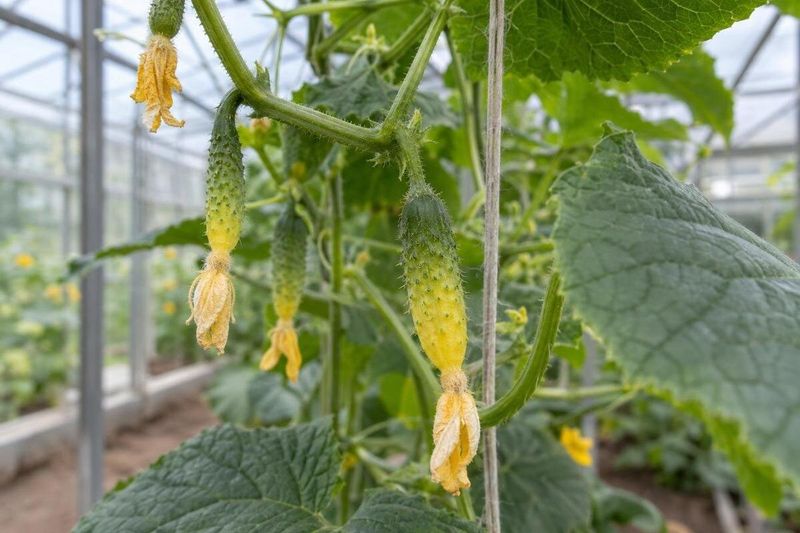
After pollinating, give it several days and check back on the small ovary. If pollination worked, it should keep developing and slowly swell.
An unpollinated one may stay small, turn yellow, and drop, as described by Arkansas Extension.
Do not judge the whole vine by one bloom. Keep tracking each new female flower you pollinate, and note which ones grow and which fall.
A simple tally on a notepad or a plant tag shows a pattern faster than memory does.
Patience matters here. NDSU Extension presents hand-pollination as a way to help when pollen transfer is the limit.
It has limits. A brush cannot create fruit where there are no female flowers, and it cannot fix severe plant stress or another underlying problem.
If the little fruits still fail, that result is useful information, and it points you toward the next cause to check.
Check variety and growing conditions before blaming pollination
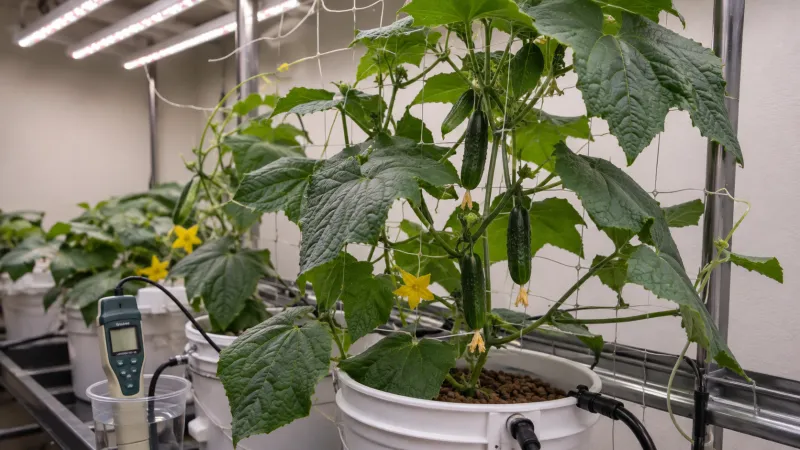
Your variety may explain more than the bees do. Some parthenocarpic cucumbers can set fruit without pollination, so brushing them changes little.
Gynoecious varieties make mostly female flowers and may need a pollen-producing variety nearby, according to Oklahoma State Extension and Minnesota Extension. Check your seed packet for the type.
Then consider the plant’s conditions. Uneven watering, too much nitrogen, heat stress, and pests can all lead to a leafy vine with little fruit, a pattern covered in an Oklahoma State column.
Lots of green growth after heavy fertilizing is a common clue.
Timing matters too. Early in the season, vines often make only male flowers at first, and late in the season a plant may simply be near the end of its productive window, a point also raised by Arkansas Extension.
A vigorous vine with few fruits does not prove pollination failure by itself. Rule out these simpler causes first.
Set fall expectations by your region
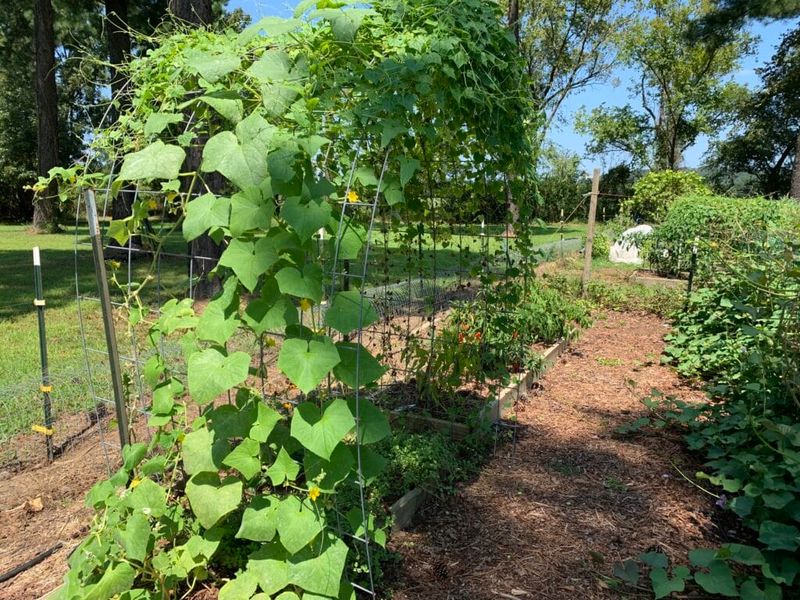
The South is not one climate, and fall planting dates differ from place to place. UF/IFAS lists different cucumber windows for Florida: August to September in the north, September in the center, and September to February in the south.
Texas has a spring and a fall cucumber season in most areas, as described by Texas A&M AgriLife. These schedules show that fall cucumbers make sense for the region.
They do not promise that every fall vine keeps producing as conditions change, so check local guidance for your area when judging whether more blooms are likely.
Here is a measured plan. Look for female flowers and tiny fruits.
If poor pollen transfer seems plausible, try hand-pollinating in the morning using the method from AgriLife Extension. Then see whether the fruit develops.
A late vine may surprise you, or it may be done for the year, and either answer teaches you something for next season.