
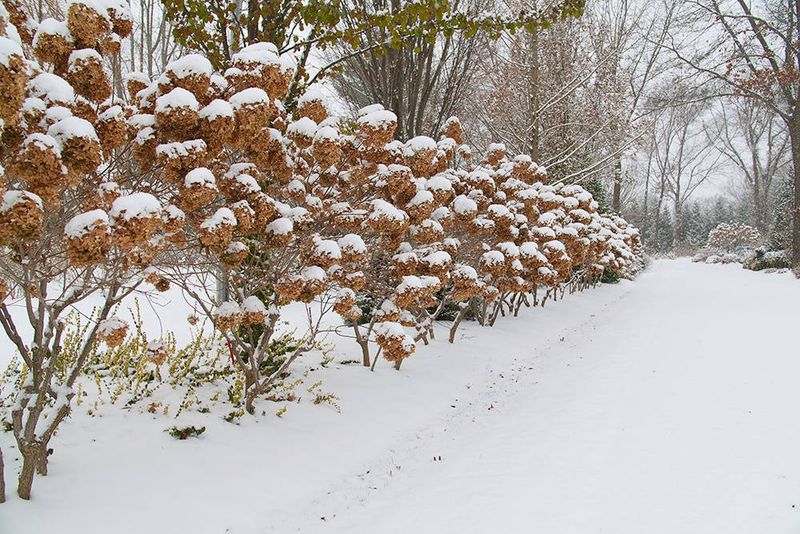
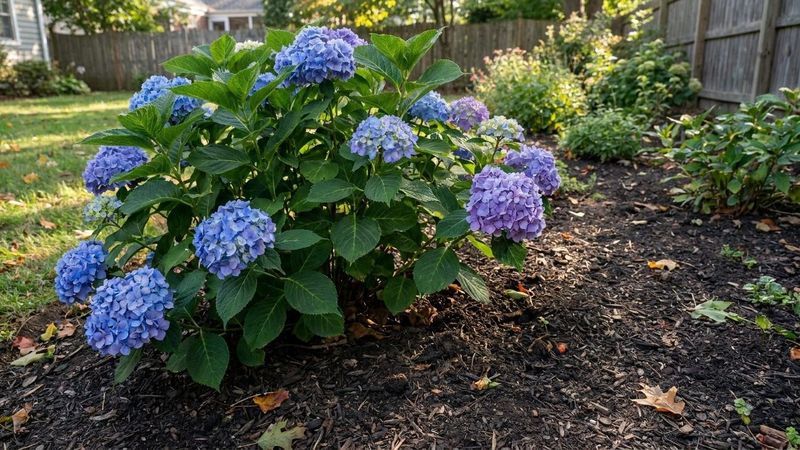
Few things sting like a bigleaf hydrangea that leafs out green and never blooms. The flower buds were likely set last summer, sitting on bare canes all winter with no shelter.
One simple job before the hard freeze may help protect them, and it does not involve a single pruning cut. This guide is for bigleaf hydrangeas in North Carolina yards, not for every hydrangea you might grow.
Identify your hydrangea before choosing a winter task
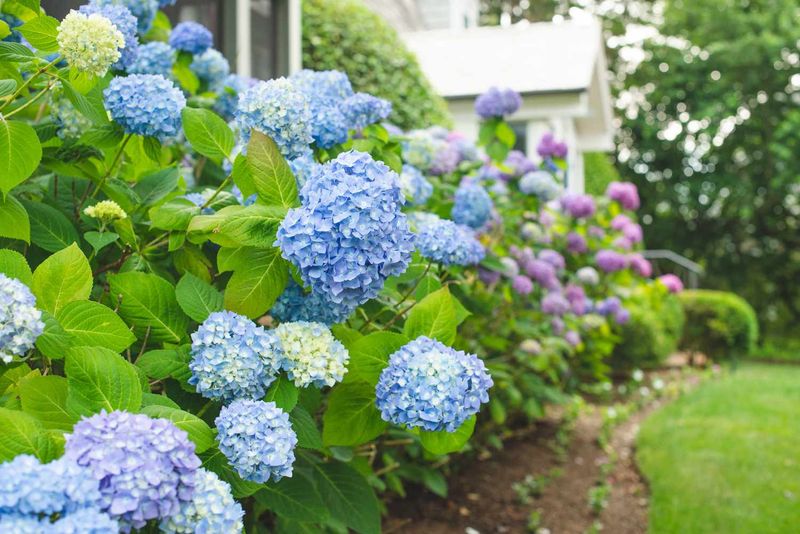
Start by figuring out which hydrangea you actually have, because the winter job depends on it. Bigleaf hydrangeas (Hydrangea macrophylla) flower on growth made the year before, and NC State Extension’s bigleaf profile notes that some reblooming cultivars can also flower on new growth.
Bigleaf is the type for which the leaf-filled cage in this article is recommended.
Oakleaf hydrangeas also bloom on old wood, according to NC State’s oakleaf page. That fact alone does not show the cage works for them.
The sources cited here recommend the cage for bigleaf plants only, so treat oakleaf as an open question and not a green light.
Panicle hydrangeas bloom on new wood, and University of Maryland Extension says smooth hydrangeas do too. Those plants form their flower buds in spring, so they do not need old-wood bud protection.
Check the leaves: big, rounded, glossy leaves usually point to bigleaf, while deeply lobed leaves like an oak’s point to oakleaf. A plant tag or a photo search can settle it.
Bigleaf hydrangea buds depend on previous-year canes
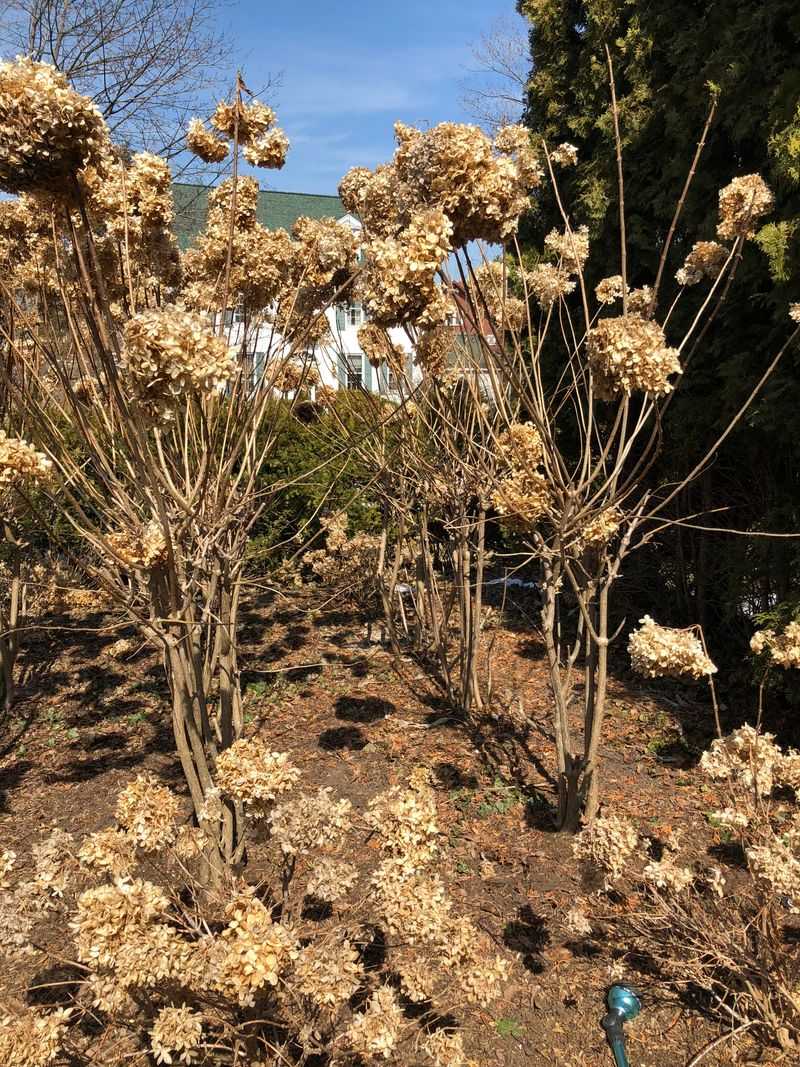
Next summer’s mopheads are already waiting on the canes you see right now. Bigleaf hydrangeas flower on previous-year growth, and UGA Extension’s bigleaf hydrangea guide explains that buds form in late summer.
By the time frost arrives, the potential flowers are in place and have no leaves to shelter them.
That is why the canes are the thing to protect. A cold winter or a hard late frost can kill buds on stems that otherwise look fine, which is how a healthy green shrub can end up without blooms.
It also explains the one thing to skip. Do not prune old-wood hydrangeas in fall as routine winter preparation, because cutting back can remove the very stems that carry next season’s flowers.
NC State suggests pruning bigleaf hydrangeas before August 1, and the UGA guide advises against pruning after that date.
If a cane is clearly dead or broken, you can deal with it later, once new growth shows you what survived. For now, the plan is to leave the wood alone and shelter it.
Build a leaf-filled cage for a bigleaf hydrangea
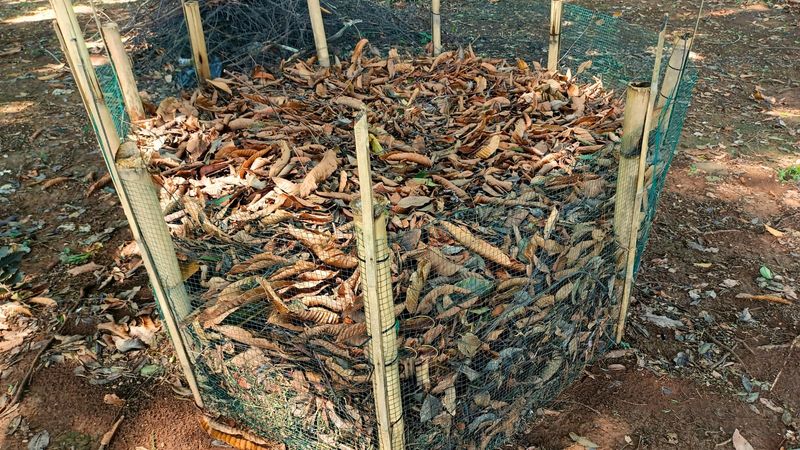
Here is the job: surround the shrub with a chicken-wire cylinder and fill it with leaves. UGA Extension recommends this for bigleaf hydrangeas as a way to insulate the canes and buds through winter.
Set it up in a few steps. Cut a length of chicken wire long enough to circle the plant with some room to spare, and form it into a cylinder.
Stand it up around the shrub, wide enough that the wire does not press against the canes. Stake or secure it so wind cannot topple it.
Then fill the cage with dry fallen leaves, loosely packing them around and over the canes. Shredded or dry leaves work better than soggy mats.
Go slowly. UNH Extension also describes a mesh cylinder with fallen leaves and cautions gardeners not to damage buds while installing it.
Avoid bending canes inward or snapping tips as you work the wire into place.
This cage is a winter-insulation measure, not a guarantee. It is also recommended for bigleaf hydrangeas, and these sources do not establish it for oakleaf types.
Use local frost risk, not a statewide calendar deadline

North Carolina stretches from the Blue Ridge to the coastal plain, and first frost does not arrive everywhere at once. NC State’s climate analysis of the state describes substantial regional variation in first fall frost dates.
A mountain gardener may be watching for frost weeks before someone near the coast.
Those dates are averages, so they are not a forecast for any one year. A warm autumn can push the first hard freeze later, and a cold snap can come early.
That is why this article does not offer one fixed deadline for the whole state.
Instead, time the work to your own conditions. Watch your local forecast and your own yard, and plan to have the cage built and filled before a hard freeze is expected, with a little cushion for busy weekends.
Gathering leaves and wire early means you are not scrambling on a cold evening.
If a hard freeze is forecast and the cage is not up yet, the UGA guide also suggests covering bigleaf hydrangeas when temperatures drop below freezing. That is a different approach, covered next.
Keep winter cages, cold-snap covers, and mulch distinct
Three different jobs get mixed up in winter talk. The leaf-filled cage is a season-long insulation approach for bigleaf hydrangeas.
A sheet or frost cover is a short-term response to a forecast freeze, and you take it off when the cold passes. Neither one is a promise of bloom.
Covers need care. UF/IFAS cold-protection guidance says a temporary cover should reach the ground and ideally not rest on foliage.
That advice covers landscape plants in general and is not hydrangea-specific. The same publication warns that typical home irrigation systems may not deliver enough water for protective icing, so do not count on sprinklers for freeze protection.
Mulch has its own role. NC State’s woody ornamentals chapter says it conserves soil moisture and reduces soil-temperature swings.
Spread 2 to 3 inches of organic mulch over the root zone, and keep it at least 6 inches from stems or the crown.
Mulch is not proven protection for buds higher up on the canes. A well-mulched shrub with no above-ground protection still has exposed buds, so think of mulch as root care and the cage as bud care.
Treat protection as a help, not a promise
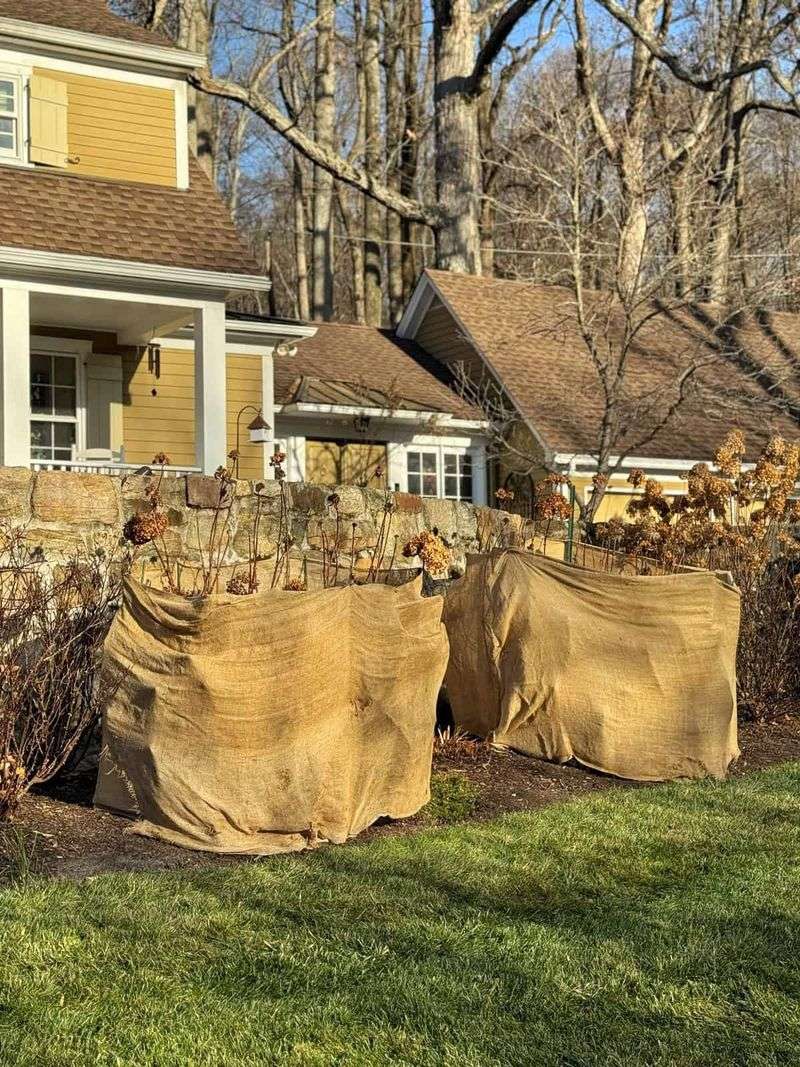
Even a well-built cage can fall short. UNH Extension reports that extra protection may not prevent winter injury, and the UGA guide describes protection as a way to help buds, not secure them.
Several things shape the outcome. Your cultivar matters, since some are hardier than others.
So does exposure: a plant in a windy open spot faces more stress than one near a sheltered wall. Dormancy and temperature swings play a part, and a warm spell followed by a sudden drop can be hard on buds.
A late frost in spring can still nip buds after the cage comes off.
None of this means skipping the job. It means keeping expectations honest and watching the plant.
In spring, wait for new growth before judging what survived, and prune only what is clearly dead.
The cage is a supported method for bigleaf hydrangeas, and it cannot guarantee next summer’s blooms. Think of it as a warm coat for the buds, not a force field.