
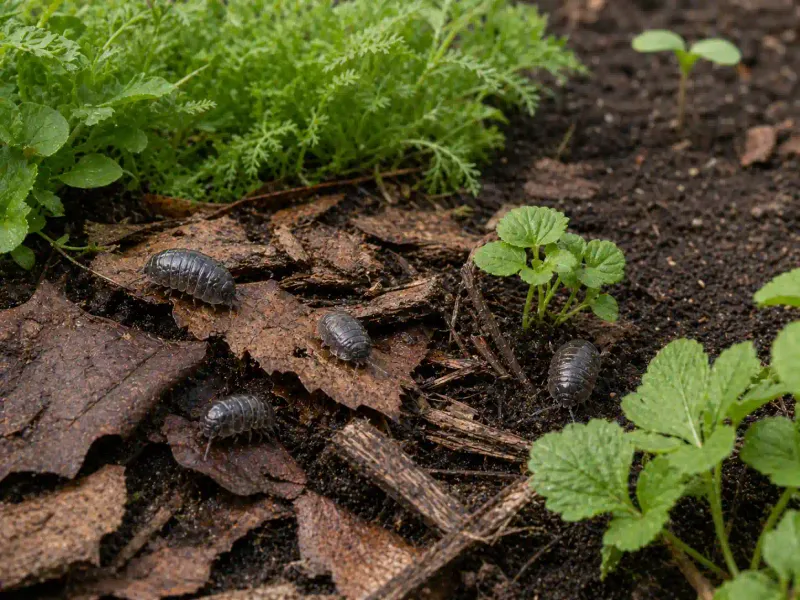
You lift a corner of mulch and a crowd of gray, many-legged critters scatters across your lettuce bed. It looks alarming, especially when your seedlings are small and tender.
Before you rake everything away or reach for a spray, a few quick checks can tell you whether those visitors matter at all. Here is how to read the clues and adjust the bed without losing the benefits of mulch.
A sowbug sighting is a clue, not a diagnosis
Finding sowbugs under your mulch feels like a verdict, but it is really just a clue. These small gray crustaceans like moist, sheltered places, so UC IPM notes they commonly live under mulch, boards, and decaying plant debris.
That is where the claim in the title goes too far. Seeing sowbugs does not prove your mulch is too thick.
It also does not prove that winter rain caused a surge, and it does not prove the sowbugs are hurting your plants. The sources reviewed link sowbugs to damp, protected habitat, but they do not show that California winter rains reliably cause swarms.
Many gardeners find sowbugs are mostly harmless. Oregon State Extension describes them as generally harmless detritus feeders, while acknowledging that large numbers can cause minor seedling damage now and then.
So the smart approach is simple. Look at the seedlings first and decide whether anything is actually being eaten.
If it is, or if your young greens are sitting in damp debris, make targeted changes to how mulch and moisture are handled near them. Mulch itself is not the villain.
It conserves water and helps soil, which matters in a state with long dry summers and water limits. What may need adjusting is where the mulch sits and how deep it is around vulnerable plants.
The next sections walk through how to check for damage, what else could be responsible, and how to rearrange the bed so your seedlings get a better start.
Check whether sowbugs are damaging the seedlings
Start with the plants, not the bugs. Crouch down and look at the seedlings and the damp soil surface around them, since that is where damage shows up.
Check lower leaves, stems at the soil line, and any tender new roots you can see.
Fresh chewing, ragged edges, or seedlings that look nibbled at the base are worth noting. A sowbug sitting nearby is not proof it did the eating, because they are often just sheltering in the same spot.
According to UC IPM, sowbugs mostly feed on decaying material and only occasionally damage seedlings.
Slugs are another possible culprit. Look for shiny slime trails across soil, leaves, or nearby boards.
UC IPM suggests inspecting at night or early in the morning, when slugs are active, to confirm them.
If you want to know exactly which critter you have, look closely at its shape. Pillbugs commonly roll into a tight ball when you touch them.
Sowbugs do not roll up, and they have two visible appendages at the rear end. Not every roly-poly is a sowbug, so a quick look can save you from blaming the wrong creature.
If the seedlings look healthy and growing, you may not need to do anything about the bugs themselves. If you do see damage, note where it is and move on to adjusting the bed.
Why damp debris offers sowbugs shelter
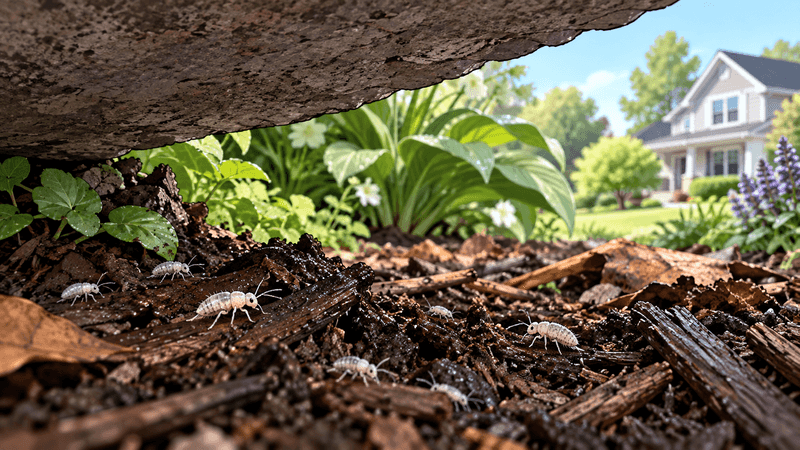
Sowbugs are not insects at all. They are crustaceans, related to shrimp and crabs, and they breathe through gill-like structures that need moisture.
That is why you find them in damp, covered places instead of out on dry, sunny soil.
Their main job in the garden is cleanup. They feed primarily on decaying plant matter and help break it down, according to UC IPM.
Now and then they will nibble seedlings, new roots, lower leaves, or produce that touches damp soil.
So think of mulch and leftover debris as a hiding place rather than a dinner plate. A thick layer pressed against stems can hold moisture and give cover, which is the kind of habitat these animals look for.
The sources do not say that mulch touching a stem is itself their food.
University of Florida researchers describe a similar pattern for these related pests, which tend to gather where organic material keeps conditions damp. Your California bed works the same way on the small scale: a soggy pile of old leaves beside a seedling is a better hangout than bare, drier soil.
That is useful, because shelter is something you can change. You do not have to fight the bugs directly.
You can simply make the spot right next to your young greens less cozy.
Pull mulch back from seedlings, not out of the whole bed
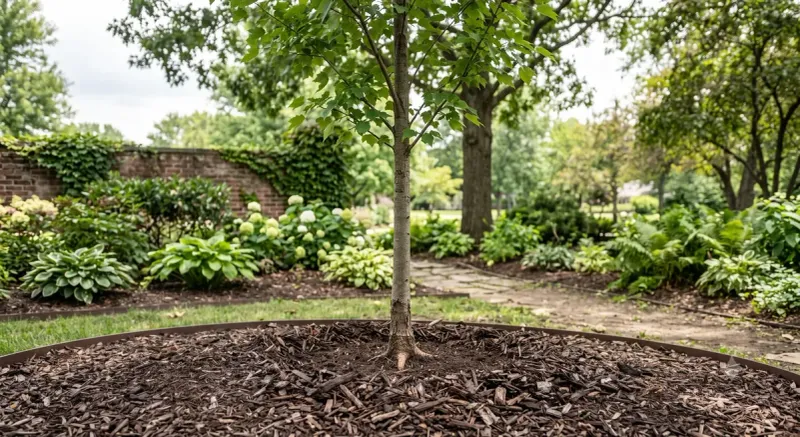
You do not need to strip the bed. Mulch helps hold soil moisture, which is a real benefit in California, so keep it where it is doing good work.
The change is local: create a small bare zone around each young plant.
Use your hand or a small trowel to slide mulch and compost back from the stems. Leave the base of the plant bare, and pick out any decaying leaves, spent plants, or soggy debris nearby.
UC IPM recommends keeping mulch and compost back from plants and removing decaying debris as a first response.
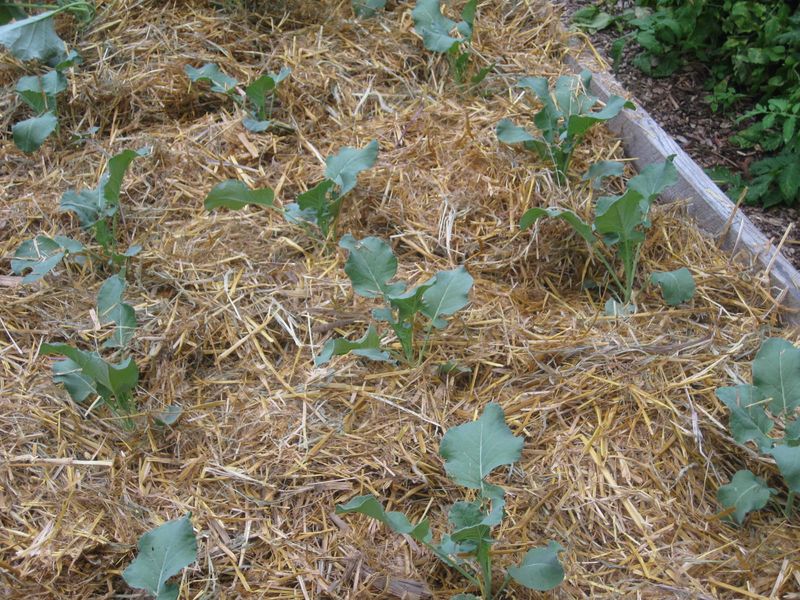
Depth matters too. UF/IFAS guidance suggests 1 inch or less of mulch for seedlings and small vegetables or herbs, and 2 to 3 inches for established landscape plantings.
Those numbers come from Florida and are practical rules of thumb, not a California rule or a proven sowbug-control line.
For vegetable beds, UF/IFAS Gardening Solutions notes that mulch conserves soil moisture, which is why thinning it near seedlings rather than removing it makes sense.
A simple routine works well. Thin the mulch to a light layer around seedlings, keep a finger-width gap or more at the stems, and leave the deeper mulch on shrubs and perennials.
Then check again in a few days to see whether new damage is still showing up.
Reduce surface wetness without stressing young greens
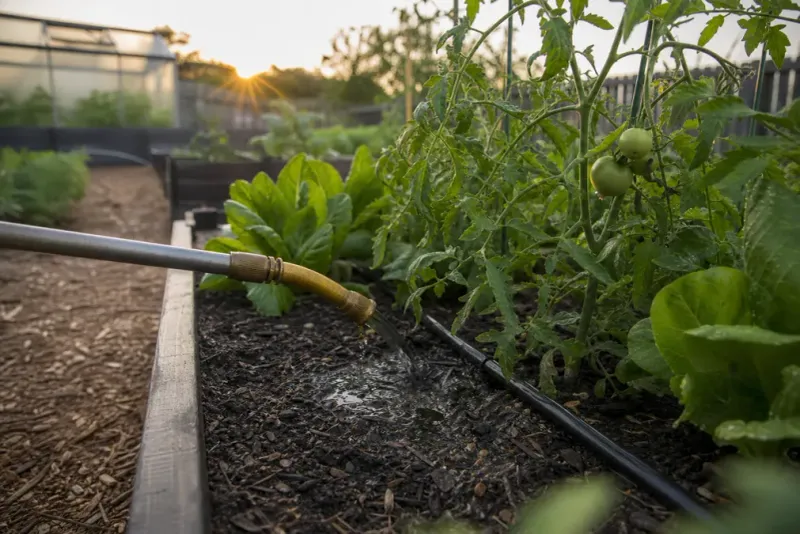
Moisture is the other half of the shelter story, but seedlings still need water. The goal is a soil surface that is not constantly wet, not a bed that is dried out.
Young greens have shallow roots and can wilt fast if you cut back too far.
Timing is an easy place to start. UC IPM suggests watering early enough in the day that surfaces dry by evening.
A morning soak leaves the top layer drier overnight, when many garden critters are most active.
UC IPM also advises reducing irrigation only as far as is compatible with healthy plant growth. That means watching the plants.
If leaves stay perky and the soil a couple of inches down is lightly moist, you are in a good range. If seedlings droop, water more.
Rainfall and soil type change the math. A clay soil in a wet stretch of winter may hold water for days, so supplemental watering can pause.
A sandy or fast-draining soil may need a drink between storms. Poke a finger into the soil before you turn the water on.
Small habits help too. Skip light, frequent sprinkles that only wet the surface, and water at the base of the plants rather than overhead when you can.
Those changes cut down on damp spots without starving your seedlings.
Use bed layout to reduce favorable hiding places
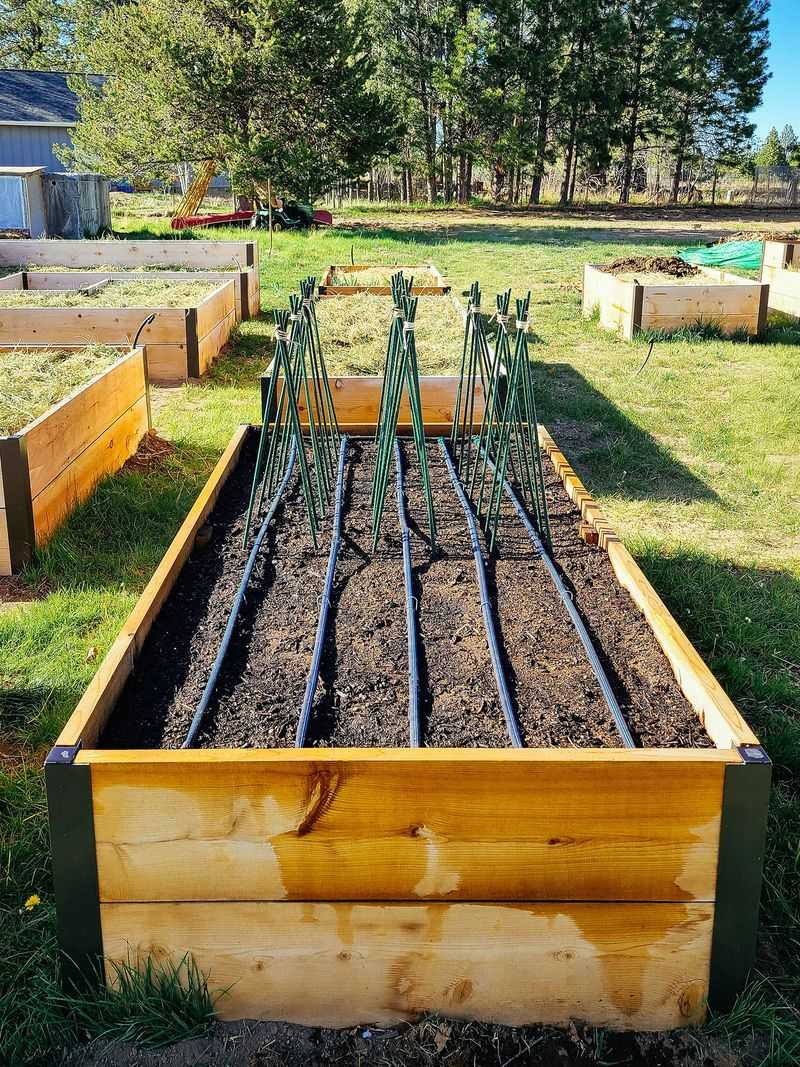
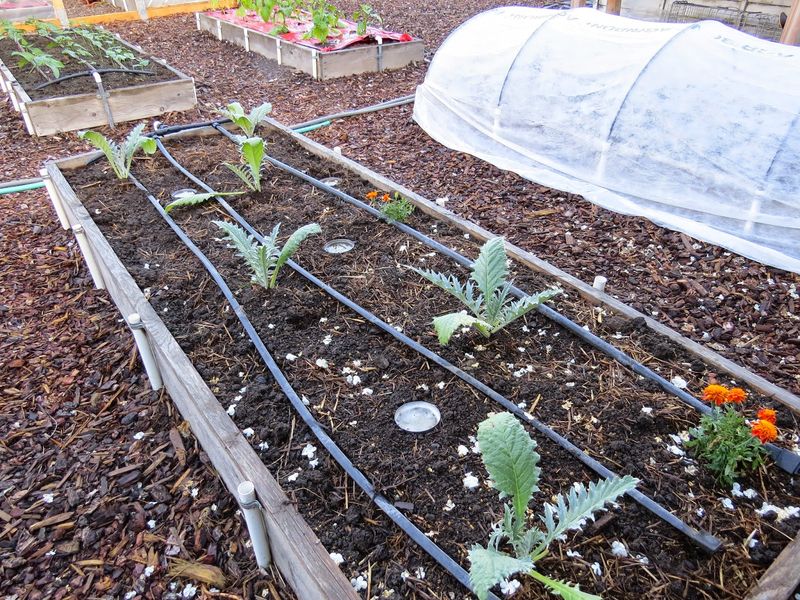
If sowbugs keep returning, the design of the bed can do some of the work for you. UC IPM lists raised beds, drip or furrow irrigation, and keeping compost or mulch back from plants as measures that can help keep sowbugs from becoming a serious problem.
Raised beds drain more freely and let the surface dry faster than flat, compacted ground. Drip lines put water at the roots instead of wetting the whole surface, and furrow irrigation keeps moisture in channels rather than across the planting area.
Layout also covers the small stuff. Move boards, pots, and stacked flats that sit directly on the soil near the bed, since they create dark, damp cover.
Tidy edges where leaves collect, and keep compost piles a little distance from seedling rows.
These are options, not requirements. Plenty of gardens with ordinary in-ground beds and a few sowbugs do fine, and nobody needs to rebuild a yard because of one sighting.
They are not guarantees either; sowbugs can still show up, and that is normal.
Pick the change that fits your space and budget. For many California homeowners, adding a drip line or pulling mulch back from the planting rows is enough to make the difference.
Reset the bed, then watch the seedlings
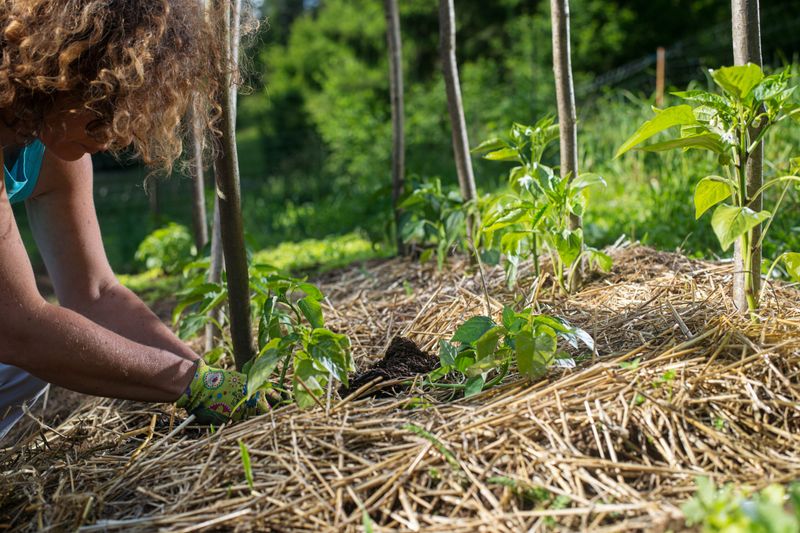
Work through it in order. Confirm whether the seedlings are actually damaged, clear out decaying debris, pull mulch back from the stems, and adjust watering only as much as plant health allows.
Then give it a week and look again, as UC IPM’s habitat-first approach suggests, before considering anything stronger.
A sowbug sighting alone does not mean your mulch is too thick, and neither does a rainy winter week. The plants tell the real story.