
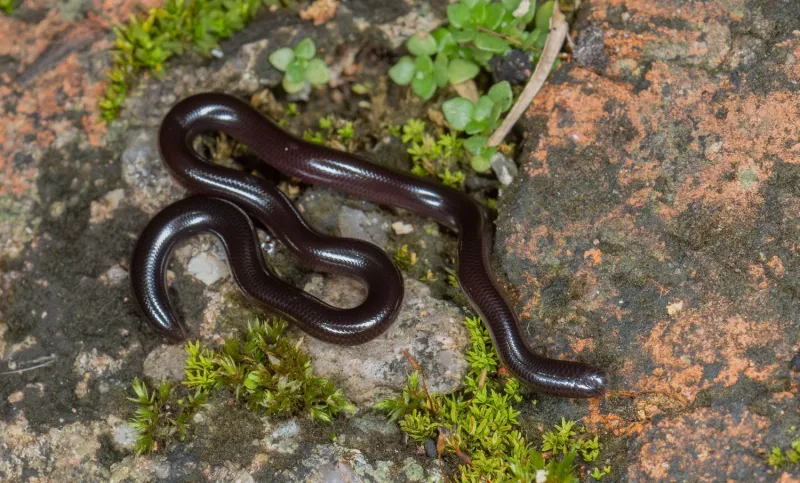
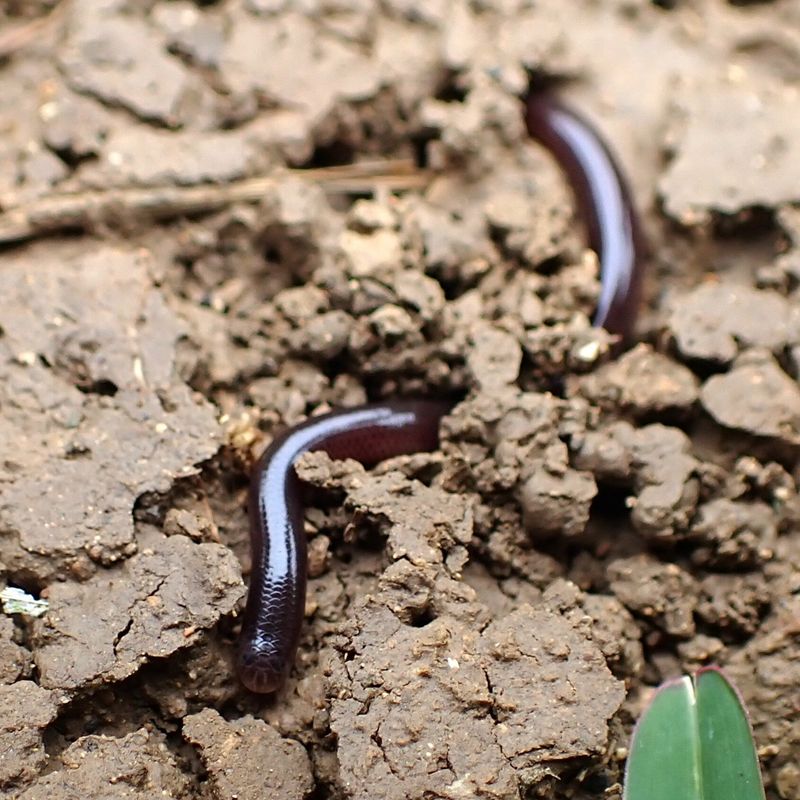
Turn over a flowerpot or scoop a handful of Florida soil, and you might spot a thin, glossy, wormlike creature wriggling away. It could be an earthworm, but it could also be a tiny snake called the Brahminy blind snake.
Knowing the difference helps you decide what to do next, and it takes only a close look. Here is how to compare the two, why the snake may show up in your beds, and how to handle an encounter calmly.
A shiny animal in Florida soil may be a flowerpot snake
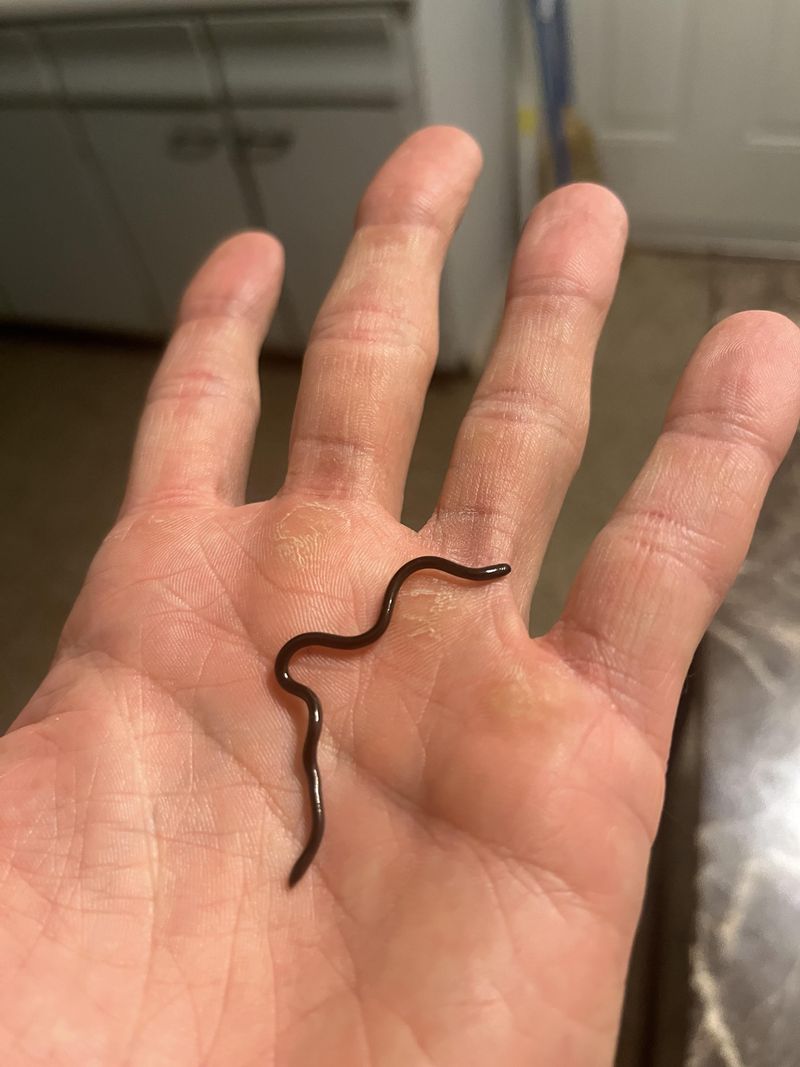
Picture this: you tip a terracotta pot to repot a fern, and something thin and shiny squirms across the soil. Most people would guess earthworm.
In Florida, though, a small glossy animal like that may be a Brahminy blind snake, also called the flowerpot snake.
According to the Florida Museum of Natural History, this is a tiny, nonvenomous snake that turns up in soil, leaf litter, gardens, and potted plants. It is a real snake, with scales and a backbone, not a type of worm.
Its small size and burrowing lifestyle are a big reason it gets mistaken for something else.
It also helps to know that this species is non-native in Florida. It was brought here from elsewhere and now lives in many parts of the state.
Being non-native does not make it dangerous to you, but it does mean it is not part of Florida’s original wildlife.
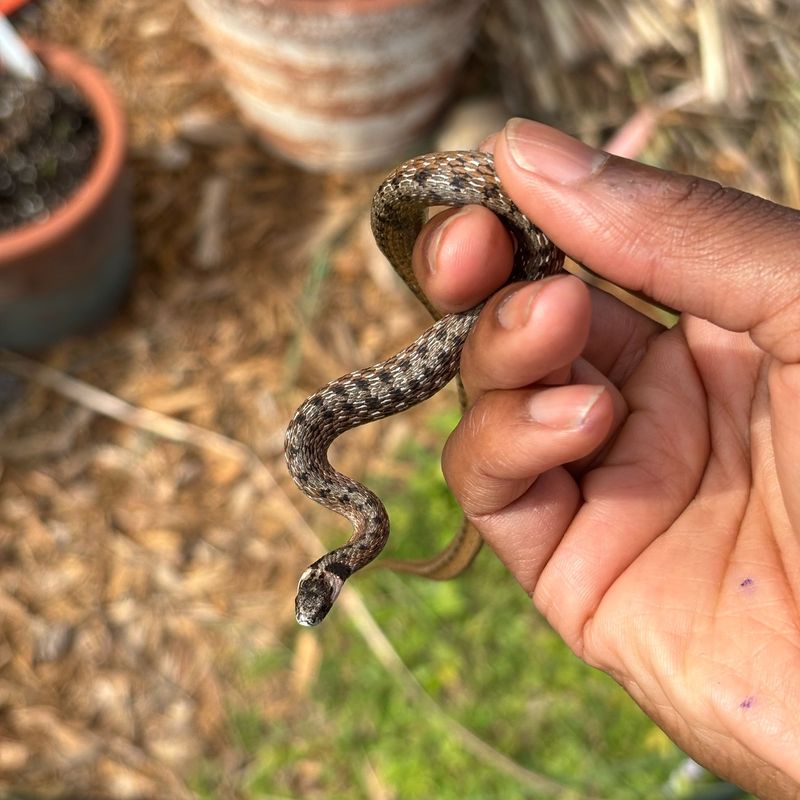
A word of caution before you decide what you found. A quick glance or a short description cannot confirm every identification.
Other small, soil-dwelling animals exist, and some young snakes can look similar at first. UF/IFAS Extension lists the Brahminy blind snake among commonly encountered snakes in Florida’s residential areas, so it is a reasonable possibility, but not a certainty.
The next section gives you clues to check.
How to compare it with an earthworm
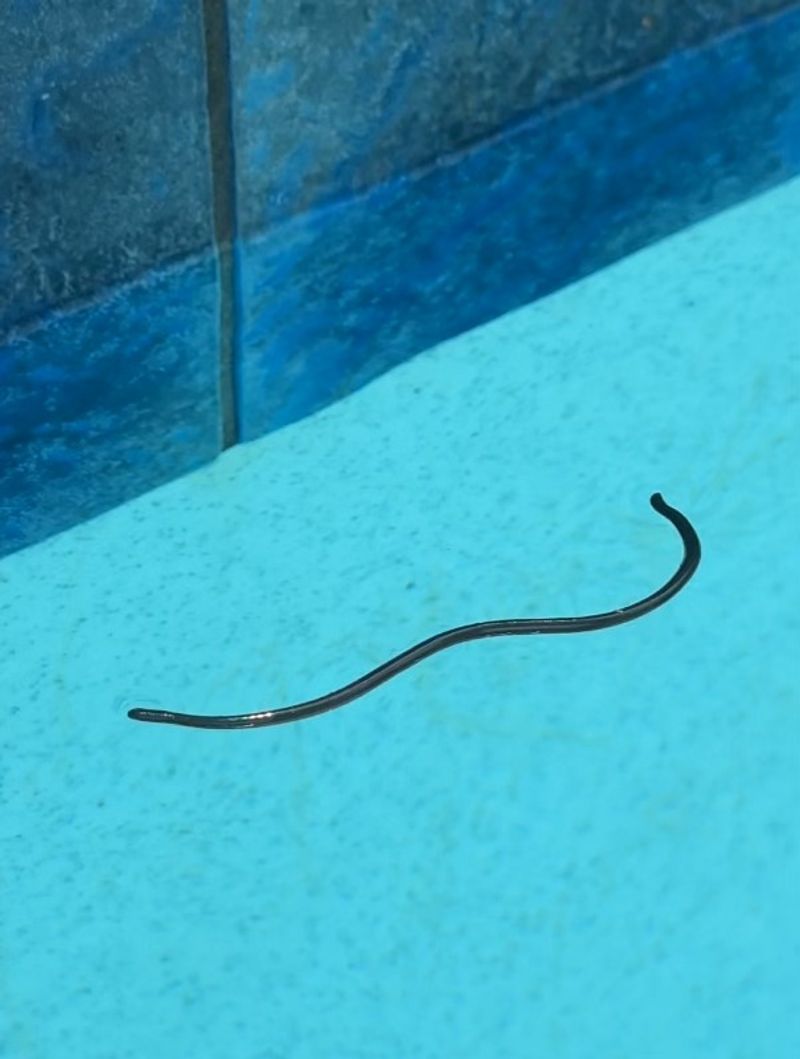
Start with size. Most adult Brahminy blind snakes are roughly 4 to 6.5 inches long, about the length of a pencil stub.
Their color runs shiny gray, charcoal, or purplish, and the body looks smooth and polished, like a tiny strand of licorice.
Next, look closely at the body. Earthworms have visible rings, called segments, all along their length.
According to the Florida Museum of Natural History, the blind snake lacks those segments, and its head and tail both look blunt, which makes it hard to tell front from back at a glance.
Now check the face, without picking the animal up. The eyes are reduced to small dark pigment spots lying beneath scales, so you may need good light to see them.
Blind does not mean eyeless, and these spots are simply very small. You may also see a tiny tongue flick in and out, something earthworms never do.
Movement can add another hint. A snake often moves with a purposeful, S-shaped glide, while an earthworm stretches and squeezes along.
A pocket flashlight or phone camera zoom lets you study all of this from a safe distance. The UF/IFAS identification guide describes the same small, shiny, wormlike look.
Treat all of these as clues, not a guarantee. If most of them match, a blind snake is a good guess.
If several do not, keep your options open.
Why it turns up in gardens and pots
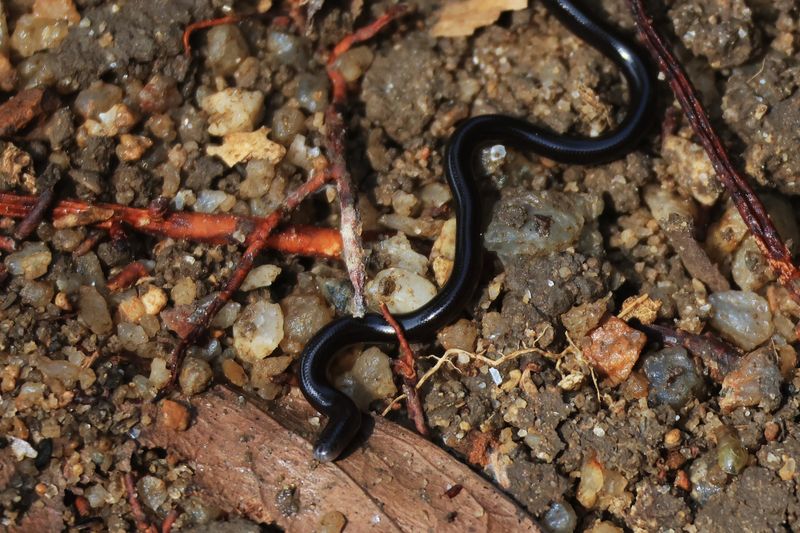
Soil is this snake’s home turf. It spends much of its life underground and under leaf litter, so a garden bed, mulch pile, or potted plant is just the sort of place it lives.
Digging or repotting simply exposes an animal that was already tucked away.
The snake’s travel history helps explain its reach. The Florida Museum of Natural History notes that it was first reported in Miami in the 1970s and has since spread through much of the peninsula, with a few isolated records in the Panhandle.
It is often moved around in the soil of ornamental potted plants.
That means a plant bought at a nursery or traded with a neighbor can carry a hitchhiker in its root ball. A snake this small is easy to miss when soil is bagged, loaded, and hauled to a new yard.
None of this means every pot or garden bed holds one. Plenty of Florida yards will never have a flowerpot snake in them, and finding one is a matter of place and chance.
If you do come across one, it is simply a small soil resident you happened to uncover.
A practical habit: when you repot, work on a tray or tarp and keep an eye out for movement. You will see anything small that wriggles out, and you can look it over before deciding what to do.
Its diet does not prove it helps the garden
Here is what the snake eats, as far as researchers have documented: the eggs, larvae, and pupae of ants and termites. The Florida Museum of Natural History and UF/IFAS Extension both describe this diet.
That is the full list, so there is no good reason to add slugs or other garden pests to it.
It is tempting to jump from that menu to a garden payoff. Ants and termites sound like problems, so a snake that eats them must be a helper, right?
The leap is too big. Nobody has shown that these snakes shrink household ant or termite colonies, protect plants, or make soil better.
Eating the young stages of a few insects is a small, specific habit. A whole colony is far bigger than what one tiny snake can eat, and the queen and workers go on as before.
So what is the useful takeaway? The snake is simply a soil animal with a narrow diet.
It is not a proven garden ally, and there is no evidence that it is a garden threat either. If you have an ant or termite problem, treat it with methods recommended by UF/IFAS rather than counting on a snake.
Seeing one in your beds is mostly a curiosity. Enjoy the surprise, take a photo from a distance, and keep your pest plans separate from your snake sightings.
Harmless to people does not mean native or beneficial
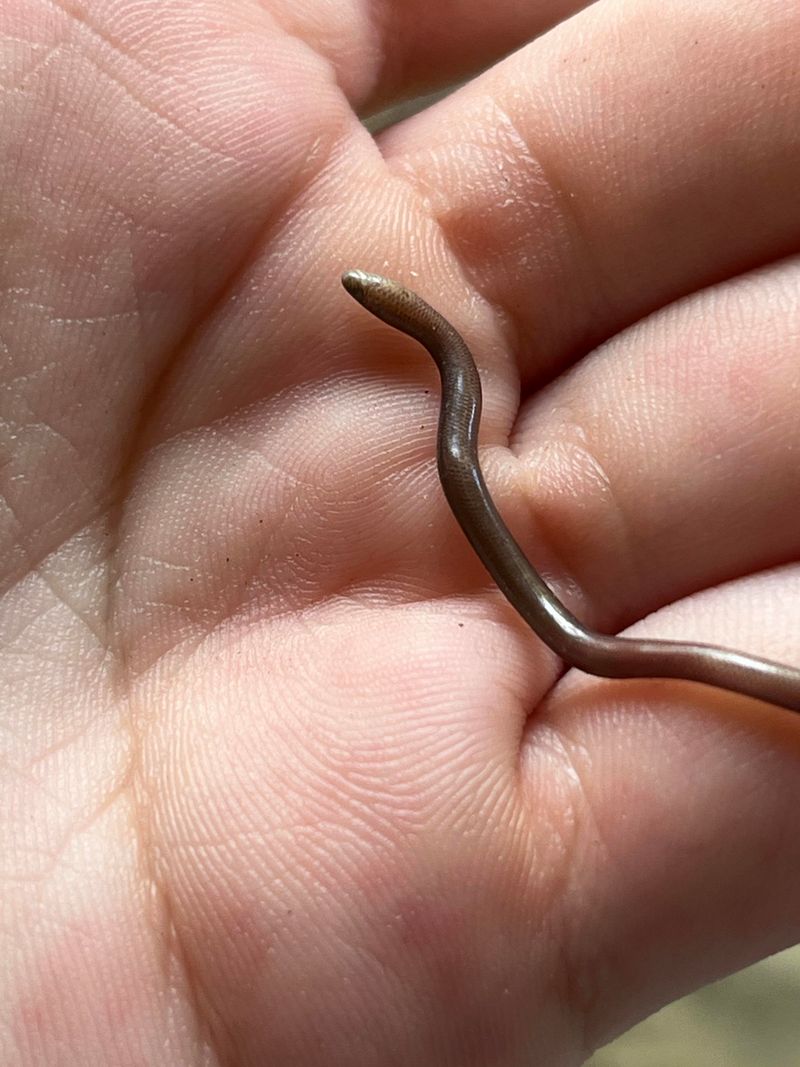
Harmless has a narrow meaning here. The Brahminy blind snake is nonvenomous, and the Florida Museum of Natural History treats it as no danger to people or pets.
Its mouth is tiny, and it has no venom to worry about.
That safety label answers one question only: will it hurt you or your dog? It does not say the snake belongs in Florida, and it does not say the snake does your garden any favors.
Those are separate questions.
On the ecology side, a 2023 review in the Annual Review of Ecology, Evolution, and Systematics reports no known negative impacts from this snake in South Florida. That sounds reassuring, but be careful with it.
No documented harm is not proof of no impact, and the review points out that ecological effects of many non-native species have not been studied closely.
In plain terms, scientists have not found a problem, and they also have not shown that the snake is entirely without effects. Both statements can be true at once.
For you, the practical step is simple. Avoid unnecessary handling, since even a harmless animal can be stressed or injured by grabbing, and the UF/IFAS guide advises leaving snakes alone where possible.
Look, learn, and let it go on its way.
What to do if you find one
Outdoors, the plan is easy. If you are confident you have found a Brahminy blind snake in a bed or pot, leave it alone.
Cover the soil back over it or step away, and it will find its own way. UF/IFAS Extension advises avoiding contact with snakes where possible.
Indoors, a small snake on the floor may call for a gentler move. UF/IFAS guidance describes sweeping it softly into a dustpan or container and releasing it outside.
Do this only when it feels safe and easy, and skip the bare hands, since you cannot be sure what kind of snake you have.
A few simple tips make it smoother. Stay calm and keep pets and children out of the room.
Place a container or dustpan beside the snake and guide it in with a broom. Then carry it outdoors to a shaded, planted spot away from the door.
If you are unsure what the animal is, or you cannot move it safely, call a qualified wildlife professional. The UF/IFAS guidance on preventing snake encounters also covers how to make your yard and home less inviting to snakes in general.
A photo taken from a safe distance can help an expert identify it quickly. Sometimes the best garden skill is knowing when to look and not touch.