
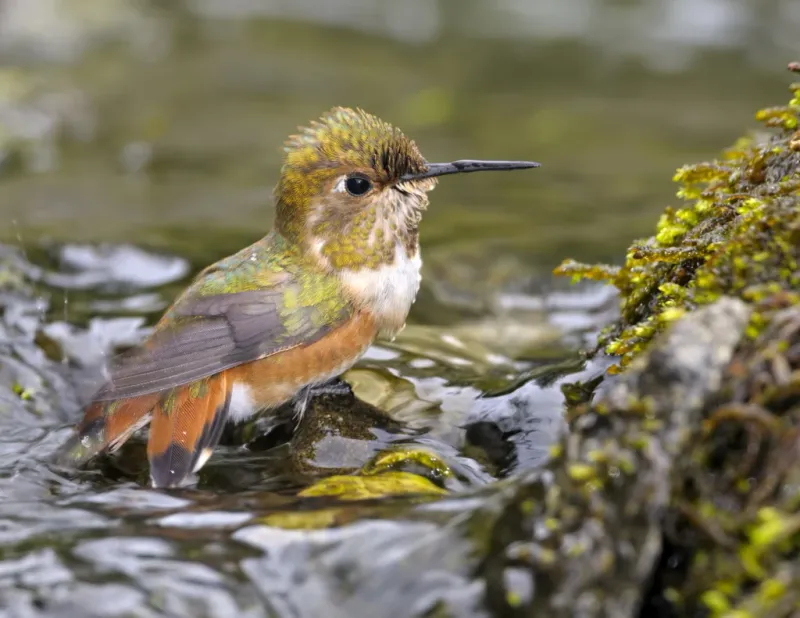
Somewhere between November and March, a tiny, fast-moving bird may start guarding your Florida nectar feeder. Most people assume it is the usual local hummingbird, but sometimes it is a species that nests thousands of miles away in the West.
Telling the difference takes a little patience and a good look. Here is how to size up your winter visitor and keep your feeder safe for it.
A Florida winter sighting is not automatically a Rufous
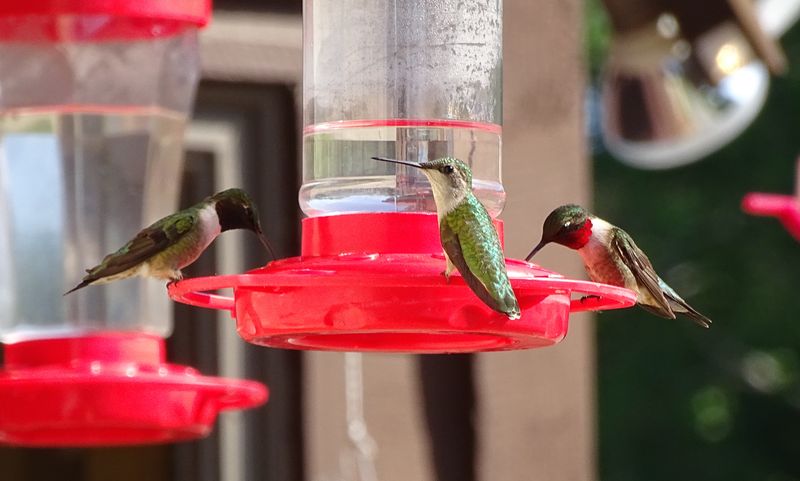
Florida’s most common hummingbird is the Ruby-throated, according to UF/IFAS Extension. The same publication describes Rufous and Black-chinned hummingbirds as occasional winter visitors.
Some Ruby-throats also stay through winter, and in southern Florida they may remain year-round.
So a hummingbird at your feeder in January could be any of these. Season alone does not tell you which one.
A Rufous is a real and exciting possibility, but it is not a safe guess for every yard.
Banding work gives a sense of how common Rufous can be in some places. A published study covered captures at selected sites in Florida and Alabama from November 2008 through March 2018.
Of 1,870 hummingbirds caught, 931 were Rufous, 583 were Ruby-throated, and 219 were Black-chinned. Those numbers show Rufous can be plentiful where banders worked.
They do not give statewide odds, and they cannot tell you the chance that the bird at your feeder is a Rufous.
Three species is also not the full list. UF/IFAS describes three as the typical Florida group, but the Florida Ornithological Society checklist includes additional hummingbirds recorded as rarities.
The banding study itself captured 11 species across its Florida and Alabama sites. Keep an open mind, and let what you can actually see do the deciding.
Why does a western hummingbird turn up here?
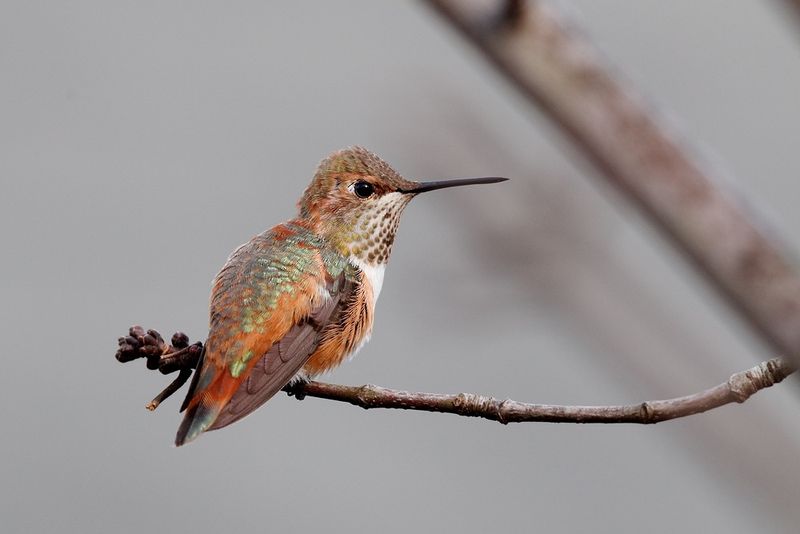
Rufous Hummingbirds breed in the West, from the Pacific Northwest up into Alaska and western Canada. Their travels are unusual for a hummingbird.
According to Cornell Lab range information, they head north along the Pacific Coast in spring and return south along the Rockies in late summer and fall.
Most of the species spends winter in Mexico. Still, Rufous Hummingbirds are documented in the southeastern United States in winter, which is why a Gulf Coast or Florida sighting is possible.
The American Bird Conservancy also describes the species as a long-distance migrant for its tiny size.
That is the story for the species as a whole. It does not tell you where one particular bird in your yard began its trip or which path it took.
Only tracking or banding records can show that.
If your visitor turns out to be a Rufous, saying it is a western species is fair. Claiming its exact route is a step too far.
Enjoy the idea, and keep the facts straight.
Field marks can make Rufous plausible, not certain
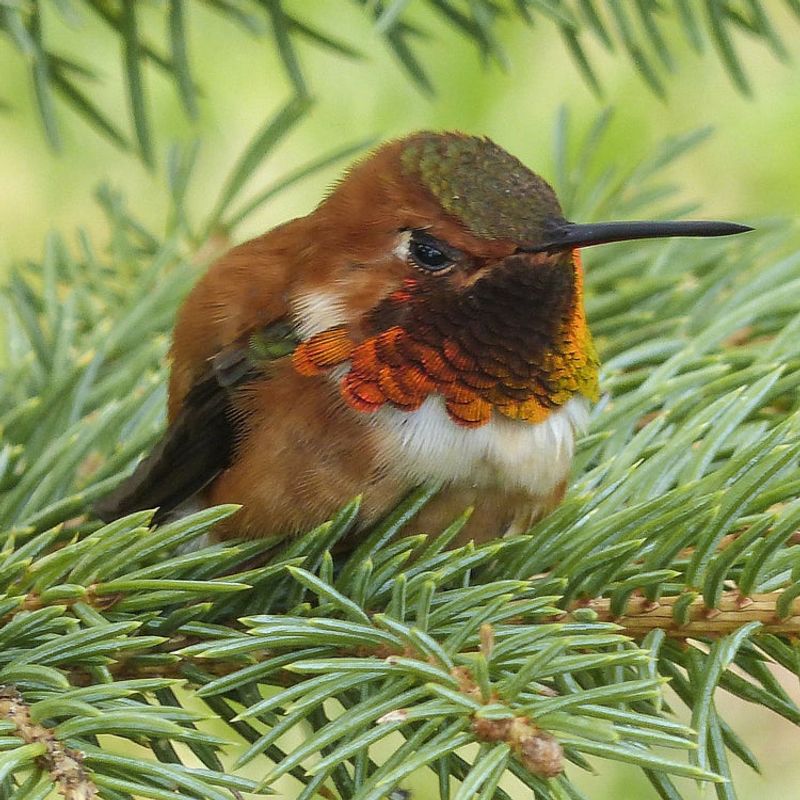
Start with color. According to Cornell Lab identification notes, adult males are bright orange or rufous and often show an iridescent red throat.
Females and immature birds are greener, with rufous on the flanks or tail.
That is where caution matters. A glimpse of a green back proves very little, because many hummingbirds have green backs.
A single field mark seen for a second is a clue, not an answer.
Rufous can also be hard to separate from Allen’s Hummingbird, a close look-alike. Project FeederWatch cautions that winter hummingbirds in general can be tough to identify by sight alone.
Think about the other candidates too. Ruby-throats are common, Black-chinned hummingbirds visit in winter, and the state checklist lists more rarities.
Here is a practical routine. Take photos from the front, side, and back, and include the tail when it fans out.
Note the date, your county, and any rufous color on the sides or tail. If you are still unsure, share the photos with your local Audubon chapter or a regional bird records group for review.
A careful label like “possible Rufous” is perfectly respectable until someone experienced weighs in.
A feeder helps, but it is not the whole habitat

Mixing nectar is easy. The Smithsonian National Zoo recipe calls for one part refined white sugar to four parts water.
Stir until the sugar dissolves, then let it cool before filling the feeder.
Skip the red dye, since the feeder’s colored parts already attract birds. Leave out honey, which can encourage harmful growth, and avoid sugar substitutes, which do not give hummingbirds the energy they need.
Hummingbirds also eat small insects and spiders, and they visit flowers for natural nectar. UF/IFAS guidance treats a feeder as a supplement, so it works best alongside nectar-producing plants.
For Florida yards, UF/IFAS hummingbird garden advice leans on flowering plants that suit our sandy soil and warm climate. Native choices such as coral honeysuckle and firebush are popular picks.
Plant them in groups where you can see them from a window.
Hang the feeder in partial shade, where nectar stays cooler. Place it near flowers and shrubs, so a tired winter visitor finds both a quick drink and natural cover nearby.
Florida warmth calls for closer feeder attention
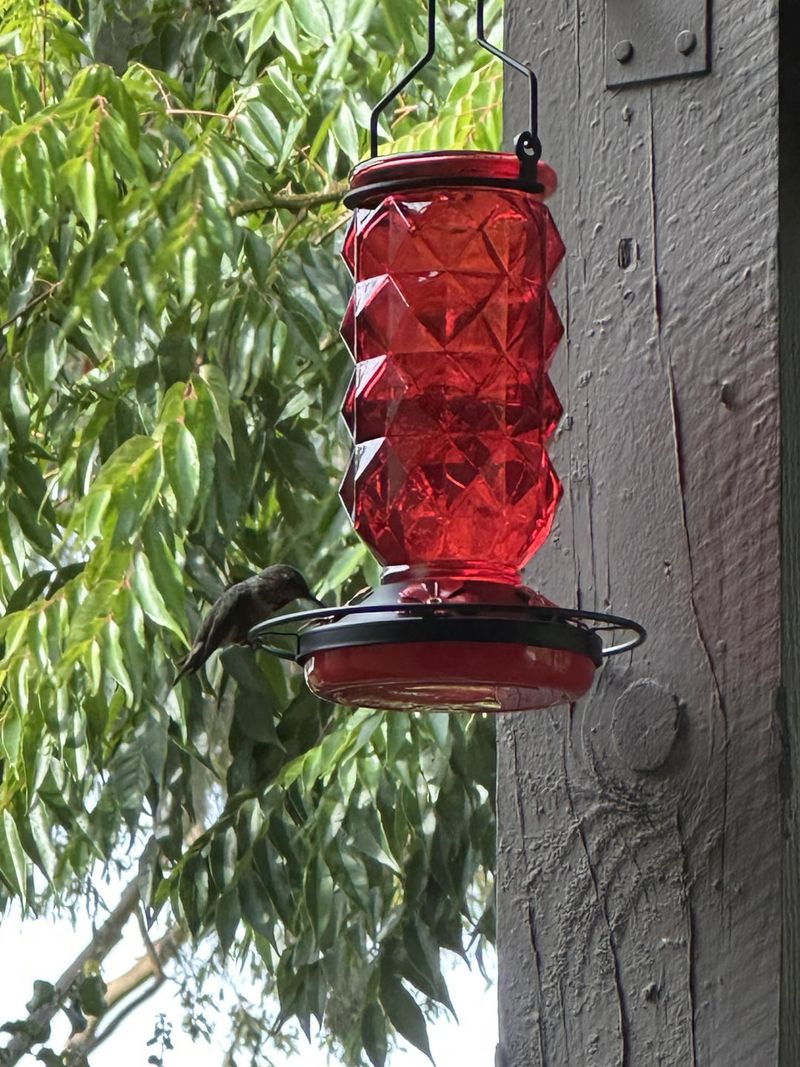
Warm days speed up spoilage. Nectar can turn cloudy or grow mold much faster in Florida than in cooler places, so advice written for northern yards needs adjusting.
UF/IFAS recommends changing the solution and cleaning the feeder every four to five days. Audubon suggests cleaning daily or every other day in hot weather.
On a warm Florida afternoon, follow the more frequent end of that range, and clean right away if you see mold.
The two sources differ on soap. UF/IFAS allows a little soap if you rinse thoroughly.
Audubon advises against dish soap because of residue. A safe middle path is to scrub with hot water and a bottle brush, and if you use soap, rinse until no trace remains.
Fill the feeder with only what the birds will drink in a day or two. A smaller amount is easier to replace and wastes less.
Keeping a clean feeder up in winter will not stop any hummingbird from migrating. The Smithsonian National Zoo says as much on its nectar recipe page.
Project FeederWatch likewise points to winter feeders as a help for visitors, as long as they stay maintained.
Enjoy the visitor without guessing at its story
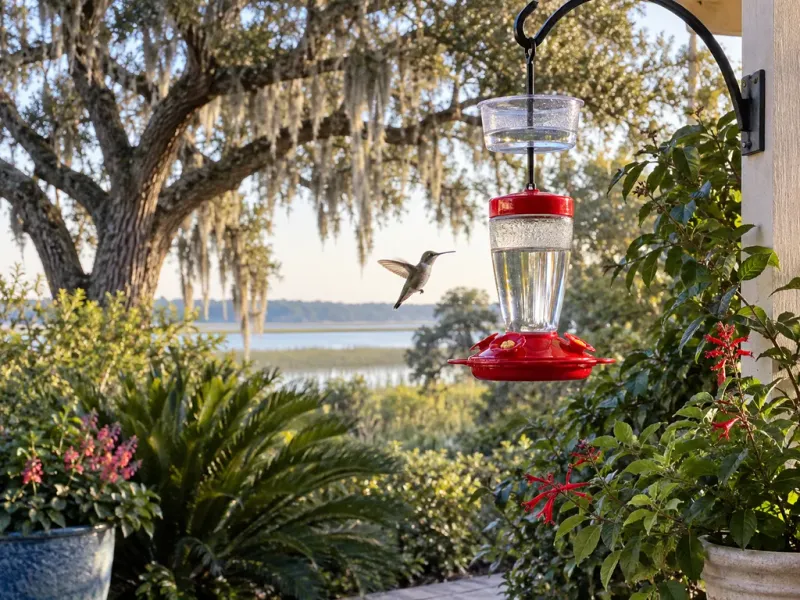
A quiet chair near the feeder and a phone camera are all you need. Watch the bird for a few minutes, snap photos from several angles, and jot down the date and place.
If something looks unusual, ask an experienced birder to take a look. Keep the nectar fresh and the feeder clean, and let the bird tell you more over the coming weeks.
A hummingbird in winter is a gift whether or not it ever gets a rare label.