
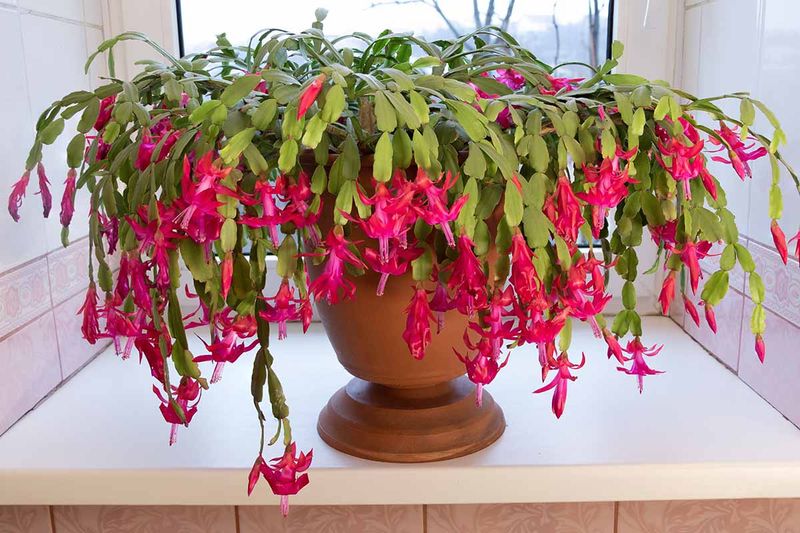
A Thanksgiving cactus with plenty of green stems and no buds can feel like a plant that forgot its job. Often the missing piece is simple: the plant needs long, uninterrupted nights to get the message that flowering season is coming.
Here is how that darkness cue works, how to use it at home, and why your timing matters more than you might think.
Why a Thanksgiving cactus may have no buds
A bud-free plant is not always a struggling plant. Indoor homes are bright at night, with lamps, TVs, kitchen lights, and porch glow coming through windows.
NC State Extension notes that artificial light at night can interfere with bud formation, which may explain a stubborn plant that looks otherwise fine.
Not every flash of light ruins the process, and the effect varies. Still, a cactus parked beside a frequently used lamp has a harder time getting a clear long-night signal.
The name on the tag may not settle things either. Holiday cacti are sold as Thanksgiving, Christmas, or just holiday cactus, and UMass Extension explains that hybrids and cultivars differ in when they flower.
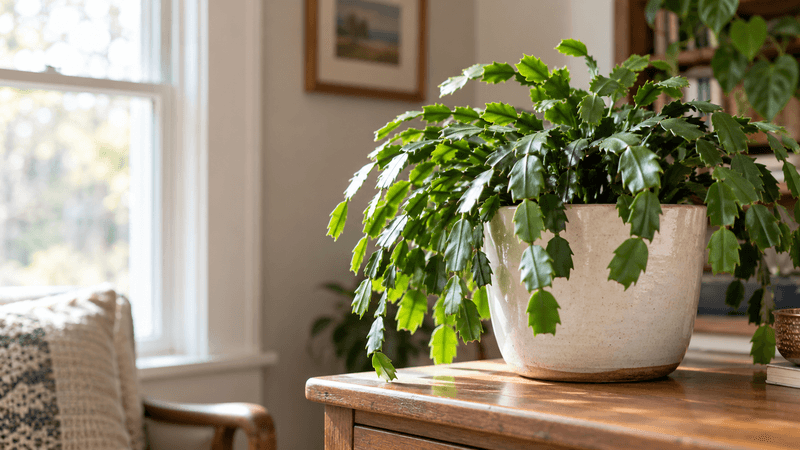
Pointed, toothed edges on the stem segments are a helpful clue for a Thanksgiving cactus, but the label alone cannot tell you when yours will bloom.
Long nights can cue bud formation
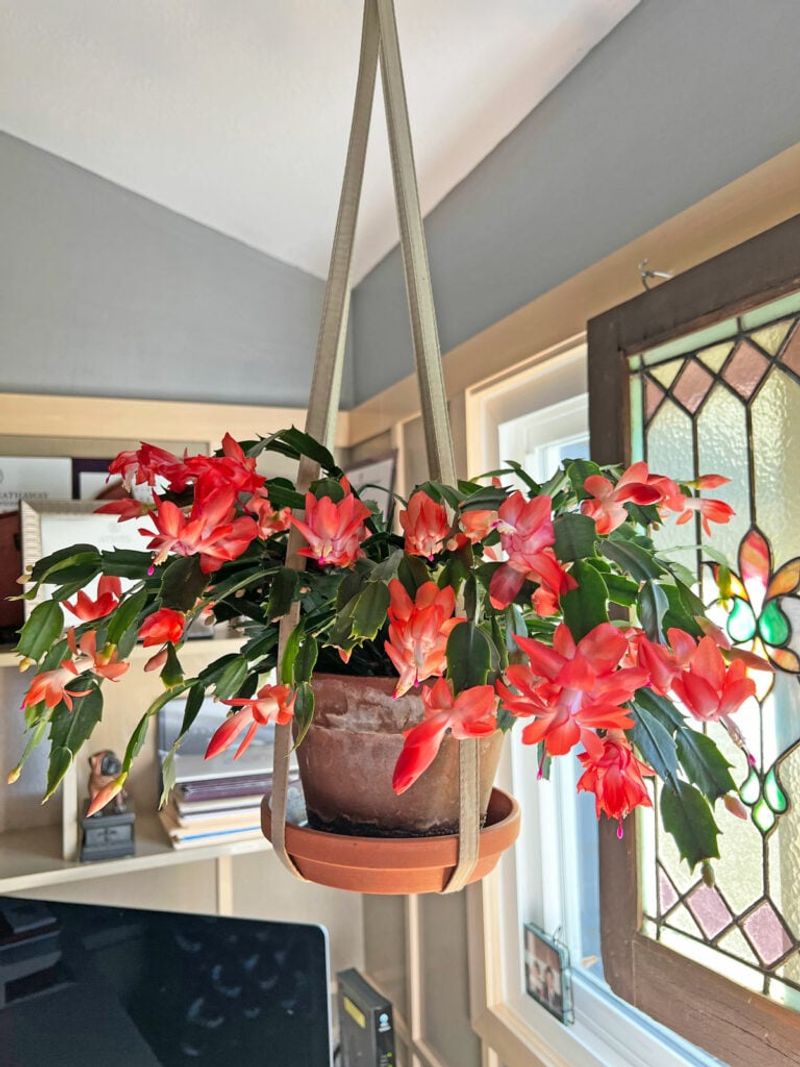
Thanksgiving cactus is a short-day plant, which means it reads the length of the night. When nights grow long and stay dark, the plant can respond by forming flower buds at the stem tips.
NC State’s plant guide describes this response to short days and long nights.
Think of darkness as a nudge rather than a switch. Long nights can encourage buds, but they do not promise flowers on a set date.
Temperature, plant condition, and the particular cultivar all shape what happens, as UMass Extension explains for holiday cacti. Two plants on the same shelf can bud a week or more apart.
The practical routine comes next, so for now the takeaway is simple: the cue is real, and it works on the plant’s schedule.
Set realistic expectations for this Thanksgiving
Here is the candid part. Thanksgiving 2026 lands on November 26, and the November calendar shows that is only 14 days after this article’s publication date of November 12.
Guidance such as Kansas State Extension’s reblooming advice calls for several weeks of long nights. Starting now is unlikely to be enough for buds by the holiday table, so please do not count on it.
Flowering time also varies with cultivar and growing conditions, as UMass Extension notes. Beginning the routine now may still encourage buds later in the season, and it can help prepare the plant for next year’s cycle.
Treat any early bloom as a bonus.
Give the plant consistent dark nights
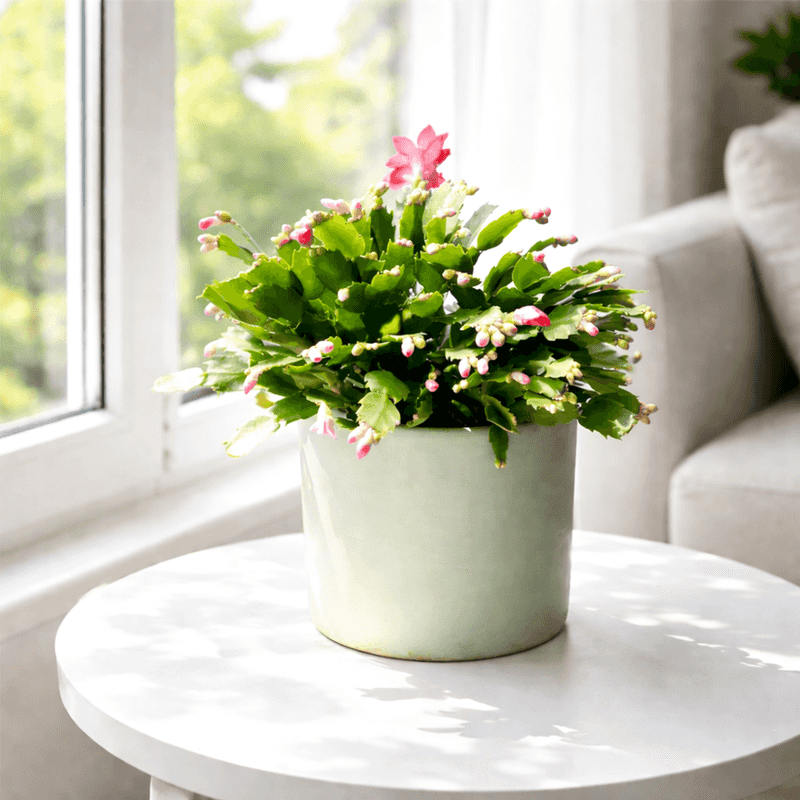
A good target is about 12 to 14 hours of continuous darkness every night for several weeks. Iowa State Extension suggests roughly 14 hours for 4 to 6 weeks, and other sources give somewhat different hours and durations.
Treat the numbers as a reasonable starting point, not a universal formula.
Two setups work well. Move the plant to a spare room where nobody switches on a light at night, or set a large cardboard box over it each evening.
Kansas State Extension describes both approaches.
In the morning, uncover the plant and return it to bright, indirect light. Keep it away from lamps, kitchen lights, and other household glow, since NC State notes that nighttime light can interfere.
A quick routine you can repeat every day beats a perfect one you skip.
Cooler nights may help, but avoid cold damage
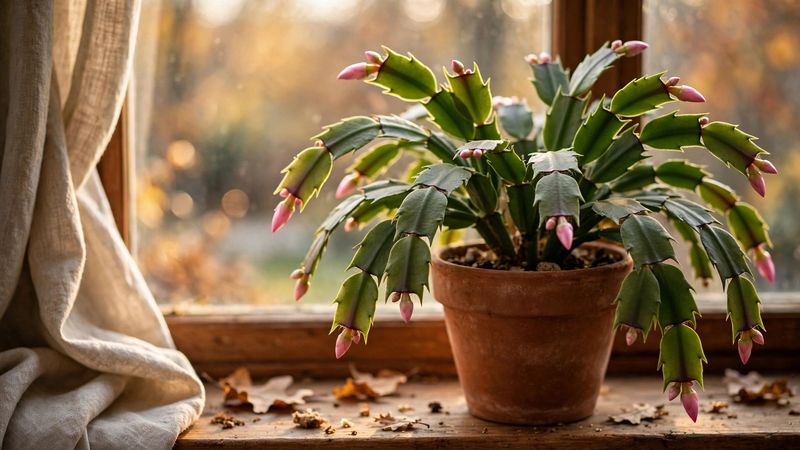
Mild coolness at night, often around 55 to 65°F, can support bud formation, according to South Dakota State Extension. It is a helper, not a replacement for long nights, and UMass Extension treats temperature as one factor among several.
Plenty of Florida and Texas homes stay warm in fall, and that is fine. UF/IFAS guidance passed along through Ask Extension says cooler temperatures can enhance flowering but are not absolutely required.
Do not chill the plant on purpose. N.C.
Cooperative Extension warns that temperatures below about 50°F can cause damage or bud loss. If you use a porch or sunroom, bring the plant inside before a cold snap.
Water normally instead of forcing drought
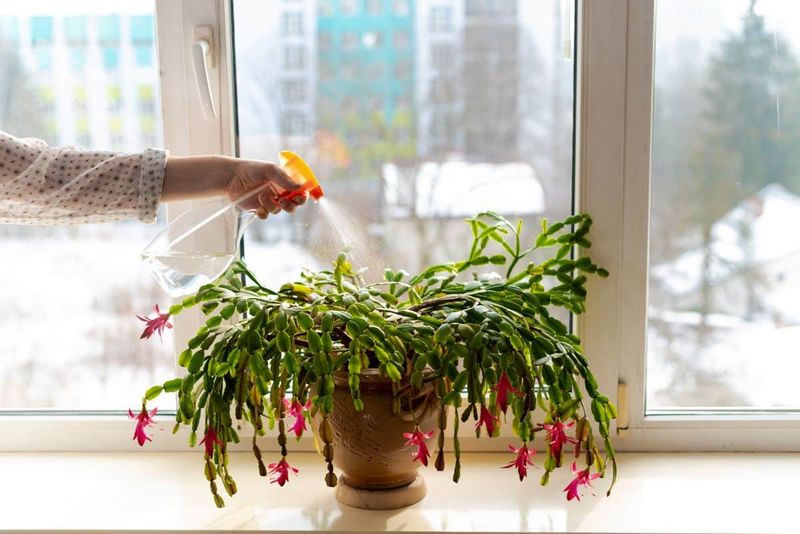
You may hear that withholding water pushes a holiday cactus into bloom. The research points the other way.
A 1981 HortScience study on Schlumbergera truncata found that high water stress reduced bud numbers.
UMass Extension likewise says research does not support drought as a way to induce buds.
Water for your potting mix instead. Check the top inch or so, water when it has dried, and let extra drain away so roots never sit in a soggy saucer.
Avoid both waterlogging and long stretches of bone-dry soil. Steady, ordinary care keeps the plant in shape to respond when the long nights do their work.
Keep conditions steady after buds appear
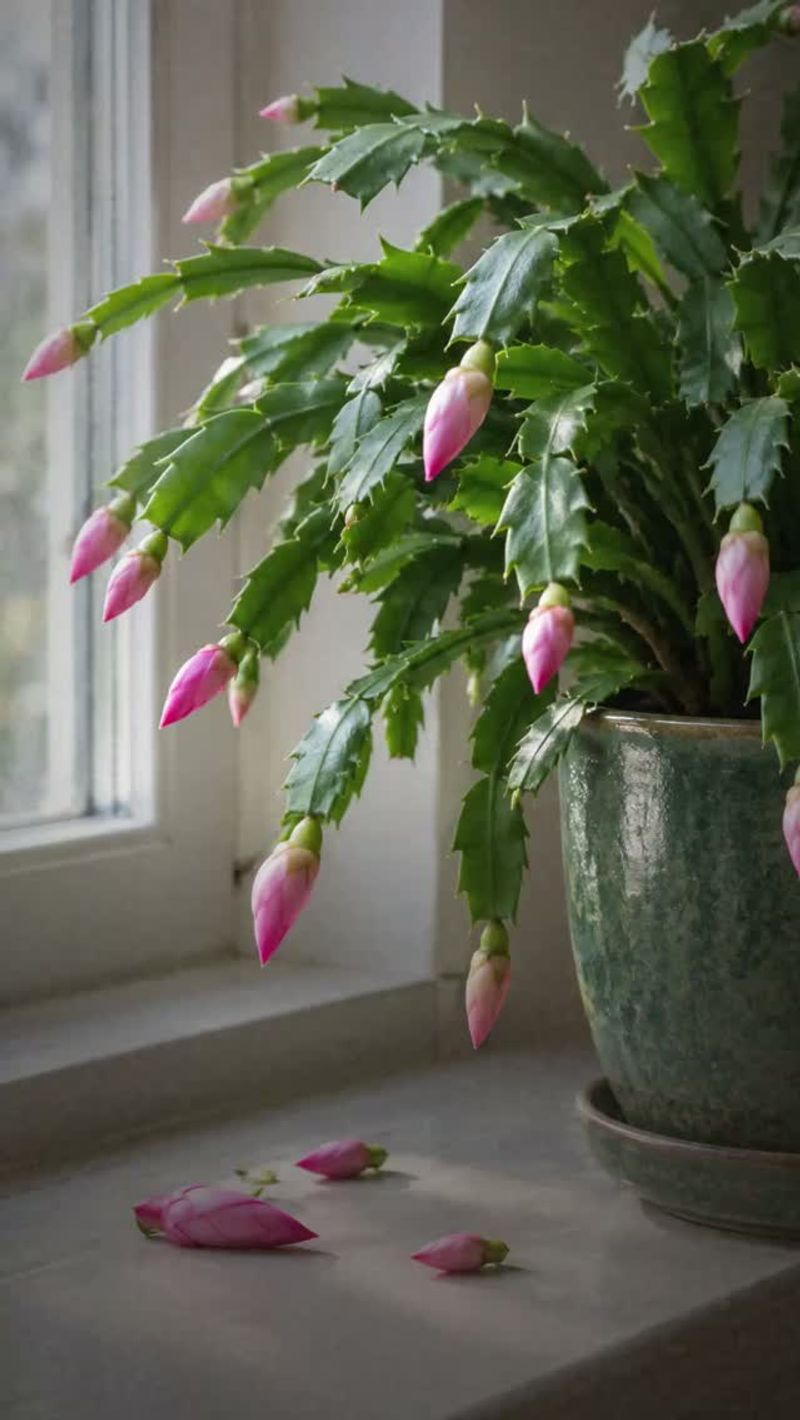
Once tiny buds show at the stem tips, the job shifts from changing things to leaving them alone. Iowa State Extension says sudden changes in light, temperature, or moisture can cause bud drop.
Pick a good spot and keep the plant there. Avoid turning or relocating it, keep it away from heating vents and drafty doors, and water on a steady schedule.
Long nights plus ordinary care can encourage flowers, but your plant sets its own pace. A cactus that blooms after the turkey is gone still keeps its end of the bargain.