
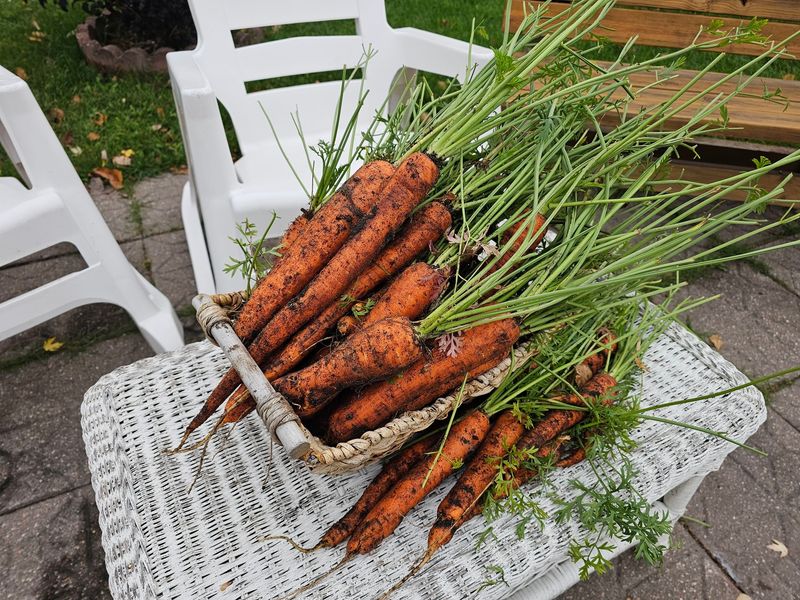
You pull a carrot from your fall bed and it looks like it has legs, or it corkscrews like a party streamer. Rocks, clods, and packed soil are common suspects, and they are also some of the easiest problems to fix.
This guide helps you sort out what likely happened and how to re-sow in the mild Southern winter. A little bed work now may give your next crop a better shot at growing smoothly.
What can make a carrot fork or twist?
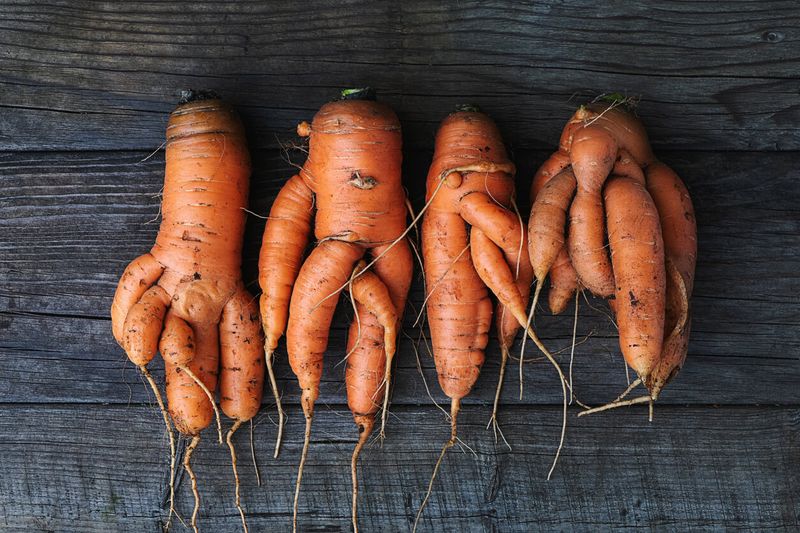
A carrot grows from a single taproot that pushes straight down. When the tip hits a rock, a hard clod, or a layer of packed soil, it can split, bend, or wrap around the obstacle.
The shape you see at harvest is a record of the path that root had to take.
That is why Texas A&M AgriLife Extension recommends loose, well-drained soil and removing rocks before planting. UF/IFAS also points to soil obstructions as a reason roots come up malformed.
Debris in the bed is a believable suspect, not a verdict. Still, fixing the soil is a sensible first move because it is something you can control.
It may reduce the odds of crooked roots, though it cannot promise every carrot will come out straight.
Treat clods as a suspect, not a diagnosis
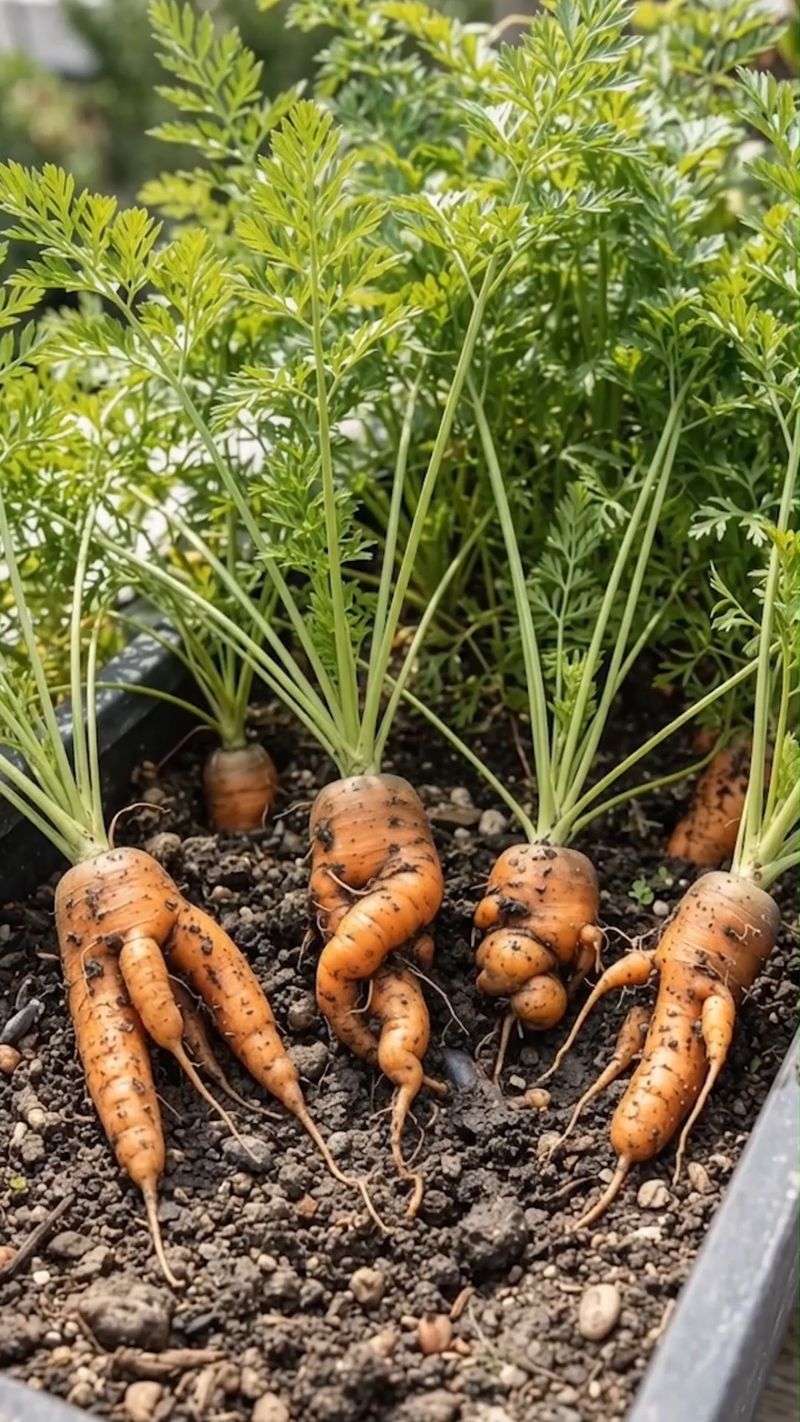
A forked carrot cannot tell you by itself why it forked. Clods and rocks fit the clues, but other things can leave similar marks.
Root shape is a symptom, and several causes can produce the same symptom.
Damage to the taproot early in life, such as from rough cultivation or transplanting, can lead to branching. Utah State Extension lists fresh manure and excess nitrogen as possible contributors to root injury and branching.
Fertilizer injury, root diseases, and nematodes can also deform roots.
Look for clues. If the bend wraps around a spot where you found a stone, soil is likely involved.
If roots look knotted, swollen, or covered in galls, or the plants were fed heavily, consider other causes. Either way, skip fresh manure and heavy nitrogen as a fix.
Prepare a loose, clean seedbed
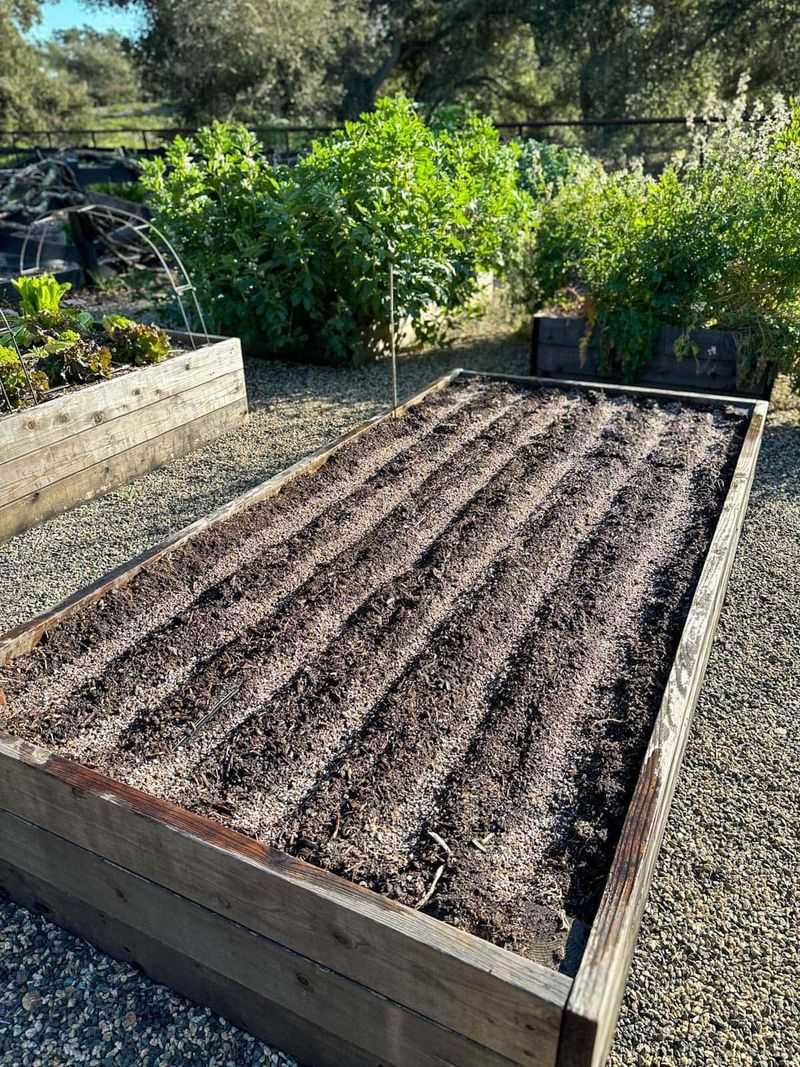
Start by loosening the carrot row deep, since the root needs open soil below the surface. Texas A&M suggests working the soil 8 to 12 inches deep, and UF/IFAS guidance points to about a foot.
A digging fork works well for this.
As you go, pull out stones, old roots, sticks, and hard clods. Break up what remains and rake the top into a fine, even surface.
Crusted or cloddy ground can keep tiny carrot seeds from emerging at all, so a smooth surface helps early establishment too.
If your soil is heavy or shallow, think about variety. University of Maryland Extension notes shorter-rooted types such as Chantenay suit these conditions better than long ones.
A short, stocky carrot has less distance to travel through tough ground.
Sow directly and maintain steady moisture
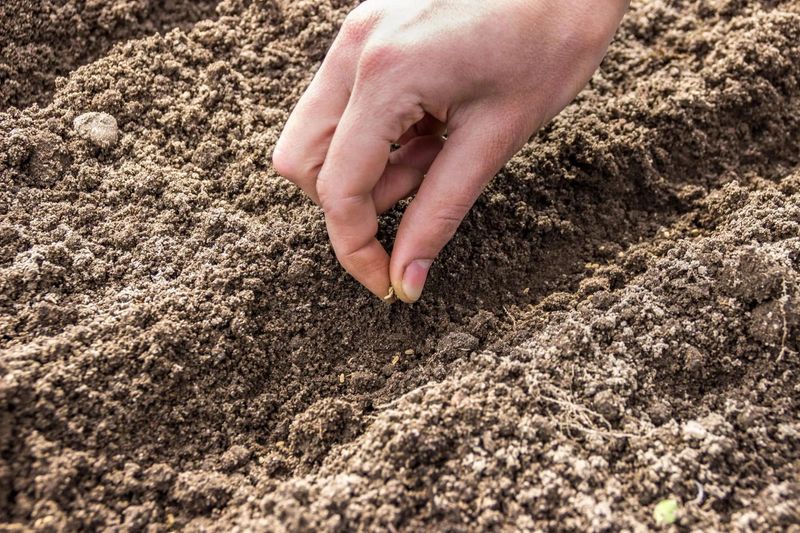
Carrots do best sown right where they will grow. Transplanting is not the better route, because moving seedlings can damage the delicate taproot.
Sowing depth depends on your source. Florida guidance from UF/IFAS gives about 1/4 inch, while Texas A&M gives about 1/2 inch.
Follow the one that matches your state, and keep the depth consistent along the row.
Then keep the seedbed evenly moist. A light daily misting beats an occasional soaking, because the surface must not dry into a crust while seeds are waking up.
Be patient. Carrots can take roughly two to three weeks to emerge, so a slow start does not mean the sowing failed.
Wait a few weeks before you decide to start over.
Thin seedlings carefully
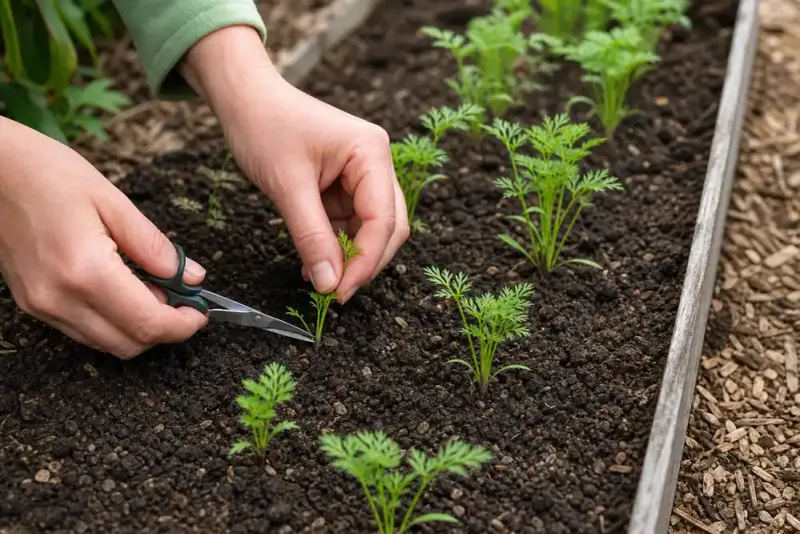
Crowded seedlings compete for space, and roots squeezed together can press against each other. Thinning gives each plant room to size up.
UF/IFAS recommends leaving 1 to 3 inches between plants.
Snip or pinch extras at the soil line rather than yanking them, so you do not disturb the roots of the seedlings you are keeping. Water afterward to settle the soil.
Go easy with tools afterward. Deep hoeing or digging near the row can injure roots, and Utah State Extension connects root injury with branching.
Pulling weeds by hand close to the plants is safer.
Careful thinning lowers crowding and damage risks. It is not a guarantee of straight carrots, but it removes a few avoidable problems.
Check the local fall planting window
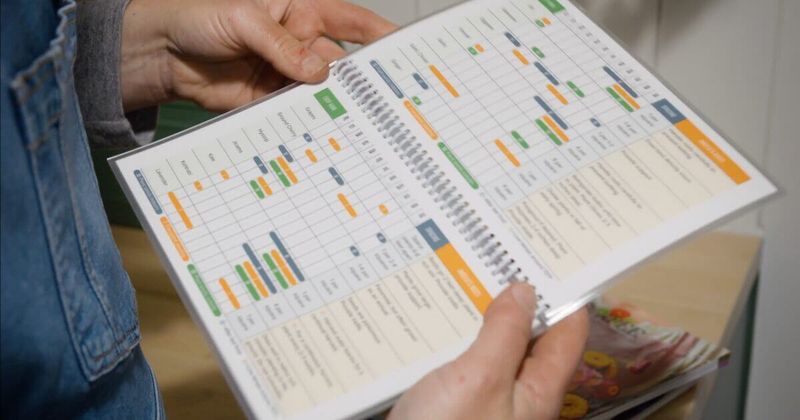
Before you re-sow, check whether your local calendar still has room. Florida is split.
UF/IFAS lists carrots for August through March in North and Central Florida, and September through March in South Florida.
Texas is not one climate. Texas A&M’s fall guide gives different dates by region.
Its home-growing page says South Texas plantings can run July through February and suggests an August fall planting elsewhere. Treat these as local examples, not one statewide date.
The best next step is your county Extension calendar. The UF/IFAS root crop publication is another handy reference in Florida.
Timing matters because a late sowing may not leave enough days for roots to size up before cold or heat arrives.
Plan for a realistic harvest
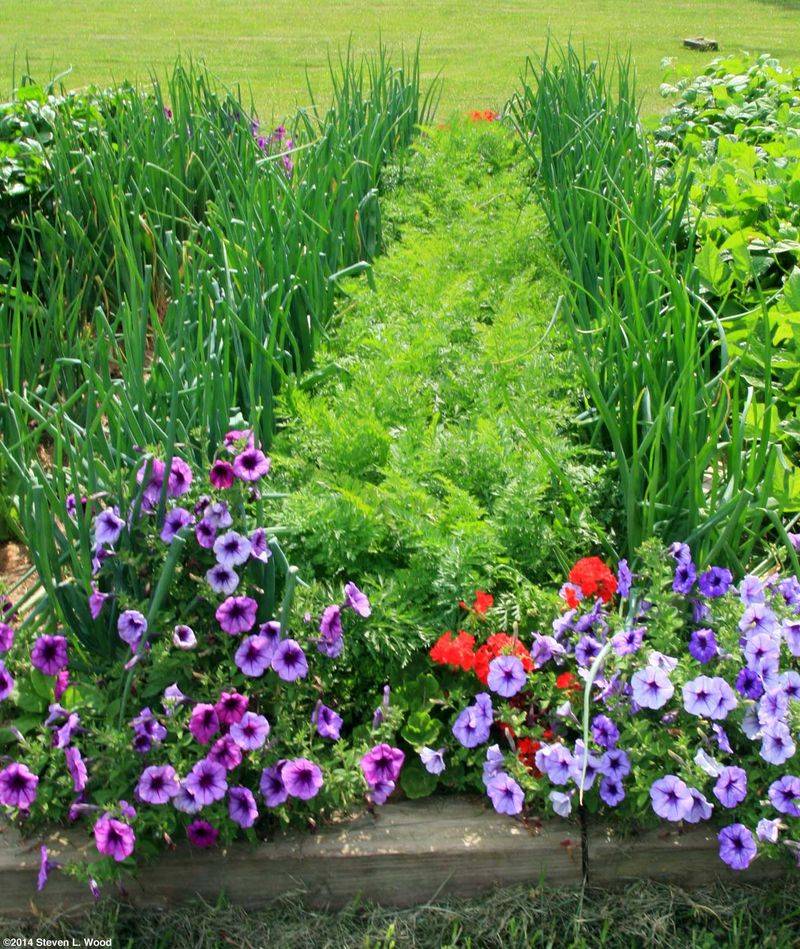
Grab your seed packet and count forward. Days to maturity vary by source and variety.
UF/IFAS gives a range of 70 to 120 days, while Texas A&M gives 70 to 80 days for home gardens.
Compare that number with the weeks left in your local window. If your variety needs 100 days and your area cools or warms sooner, choose a quicker type or wait for the next season.
These numbers are guidance, not a harvest date.
Carrots are classed as frost tolerant, but that does not mean every crop will thrive through every freeze. Watch the forecast and cover rows during hard cold snaps.
Oddly shaped carrots are still edible, just trickier to peel. A crooked carrot still tastes like a carrot.