
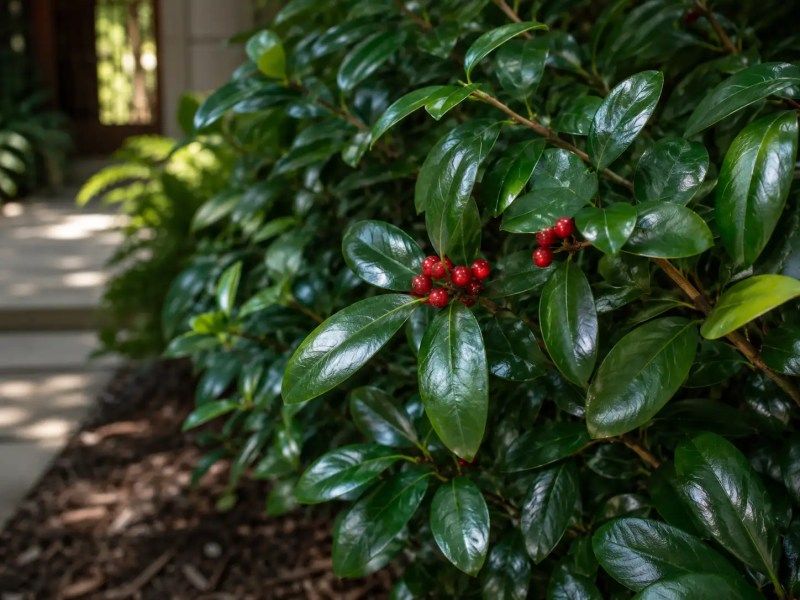
A fence should frame your yard, not leave you staring at a plain wall between bloom seasons. Florida native plants can fill that space with bright flowers, colorful berries, and soft clouds of pink grass.
Unlike a row of crape myrtles, a mixed native border gives birds and butterflies more places to feed and shelter. Match these ten picks to your part of Florida and your soil, and you can enjoy a longer parade of color.
1. Firebush
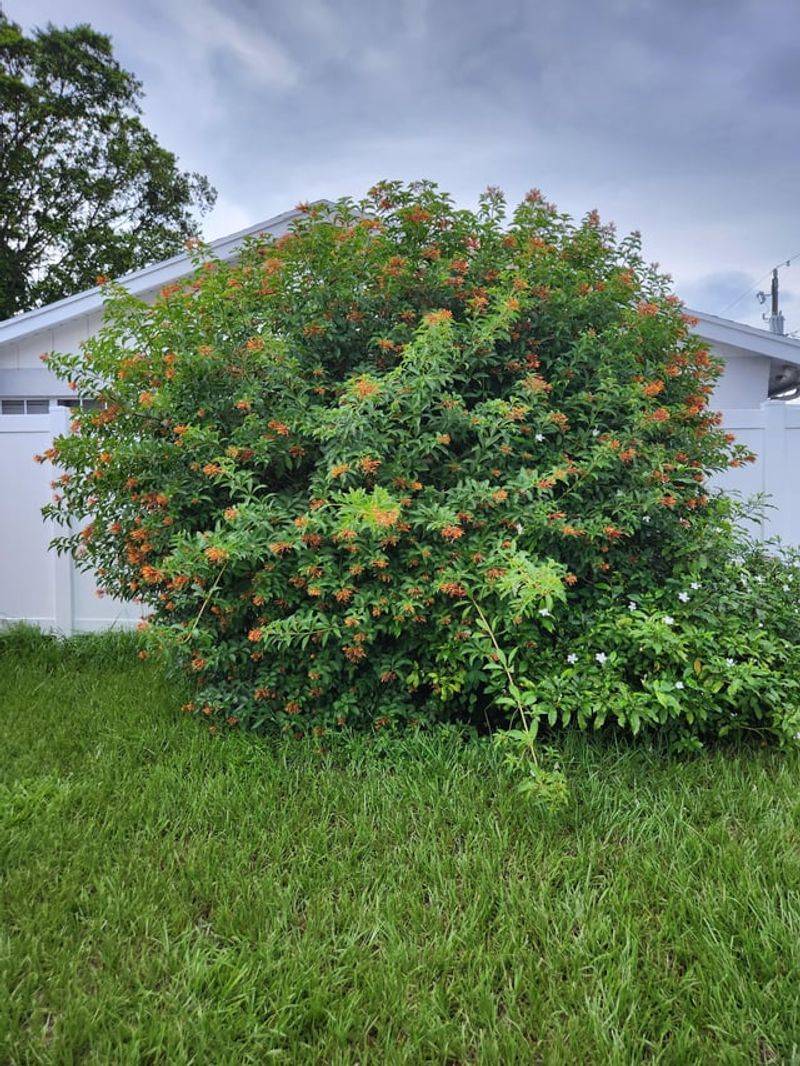
Orange-red flowers can make a plain fence look lively before you even reach the backyard gate. Native firebush, Hamelia patens var. patens, brings that bright color through much of the warm season, with butterflies and hummingbirds adding movement.
Give it sunshine for the strongest flowering, although it tolerates partial shade. In Central and South Florida, it can become a large shrub, often reaching 5 to 10 feet or more where cold does not cut it back.
Leave several feet between the plant and your fence so branches have room to spread without constant clipping. Water regularly while roots establish, then adjust irrigation to rainfall and soil conditions rather than keeping the bed soggy.
Ask a native nursery for the Florida-native variety because some plants sold as firebush are nonnative forms or hybrids. Northern Florida freezes can kill stems back, so use it there as a seasonal accent rather than dependable winter screening.
For an easy arrangement, place a few firebush shrubs behind lower grasses. Their loose shape looks better with room to breathe than when trimmed into tight boxes.
2. American Beautyberry
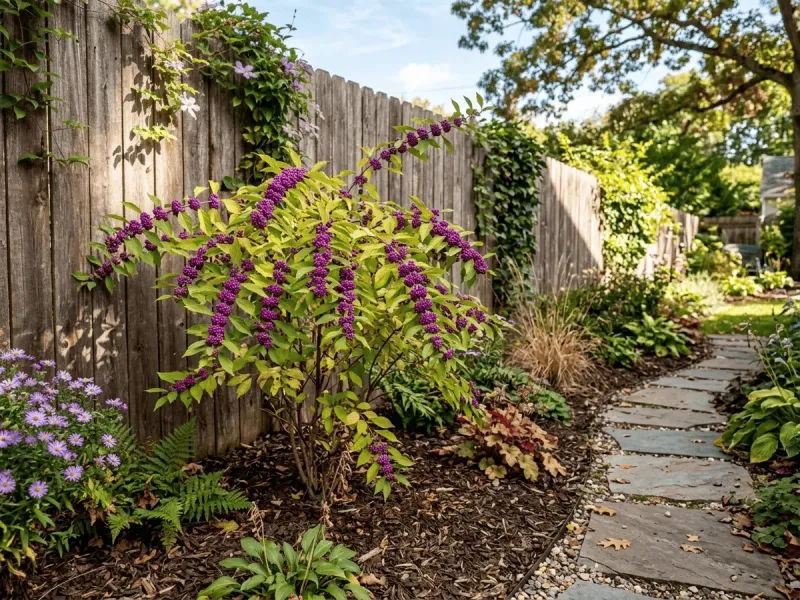
Purple berries wrapped around arching stems look almost too bright to be real. American beautyberry, Callicarpa americana, earns its place along a fence by delivering its biggest color show after many summer flowers have faded.
The small spring and summer flowers are modest, but late-summer and fall fruit turns the shrub into a standout. Birds eat the berries, giving you another reason to leave the branches untrimmed during the display.
Choose a spot with sun or partial shade and reasonably well-drained soil. Plants commonly grow about 3 to 8 feet tall, with a broad, relaxed outline that suits an informal boundary better than a narrow hedge.
Beautyberry loses its leaves in winter, so pair it with evergreen natives if year-round coverage matters. Keep its mature spread in mind when planting beside a gate or walkway.
In late winter, selective pruning can renew an overgrown plant before fresh growth begins. Avoid repeated shearing through summer, which removes the stems that would carry the berries you planted it to enjoy.
3. Coral Honeysuckle
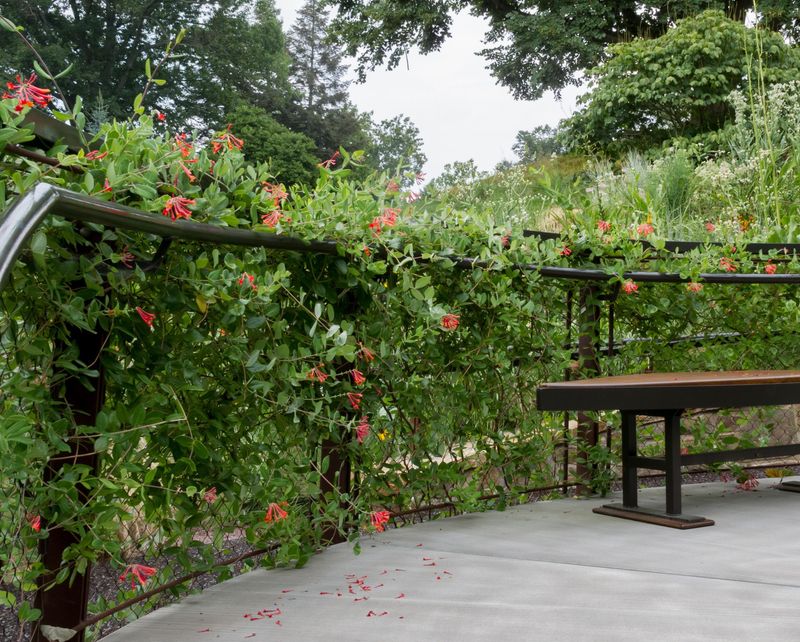
A narrow planting strip does not have to mean a dull fence. Coral honeysuckle, Lonicera sempervirens, sends its color upward, covering a trellis with clusters of red-orange tubes that attract hummingbirds.
Unlike invasive Japanese honeysuckle, this Florida native is a suitable choice for a wildlife-minded garden. Its strongest bloom often comes in spring, with additional flowers possible during the warmer months.
Install a sturdy trellis slightly in front of the fence rather than letting stems disappear between boards. That small gap makes repairs easier and lets you guide new growth without wrestling with the fence itself.
Sun encourages heavier flowering, though partial shade can work. Provide well-drained soil, water during establishment, and enough climbing space for a vine that can reach 10 to 20 feet or more.
Prune after the main flower show when shaping is needed, and redirect wandering stems while they are flexible. Foliage may thin in colder parts of Florida, but the vine remains useful where you want vertical color without giving an entire bed to a shrub.
4. Crossvine
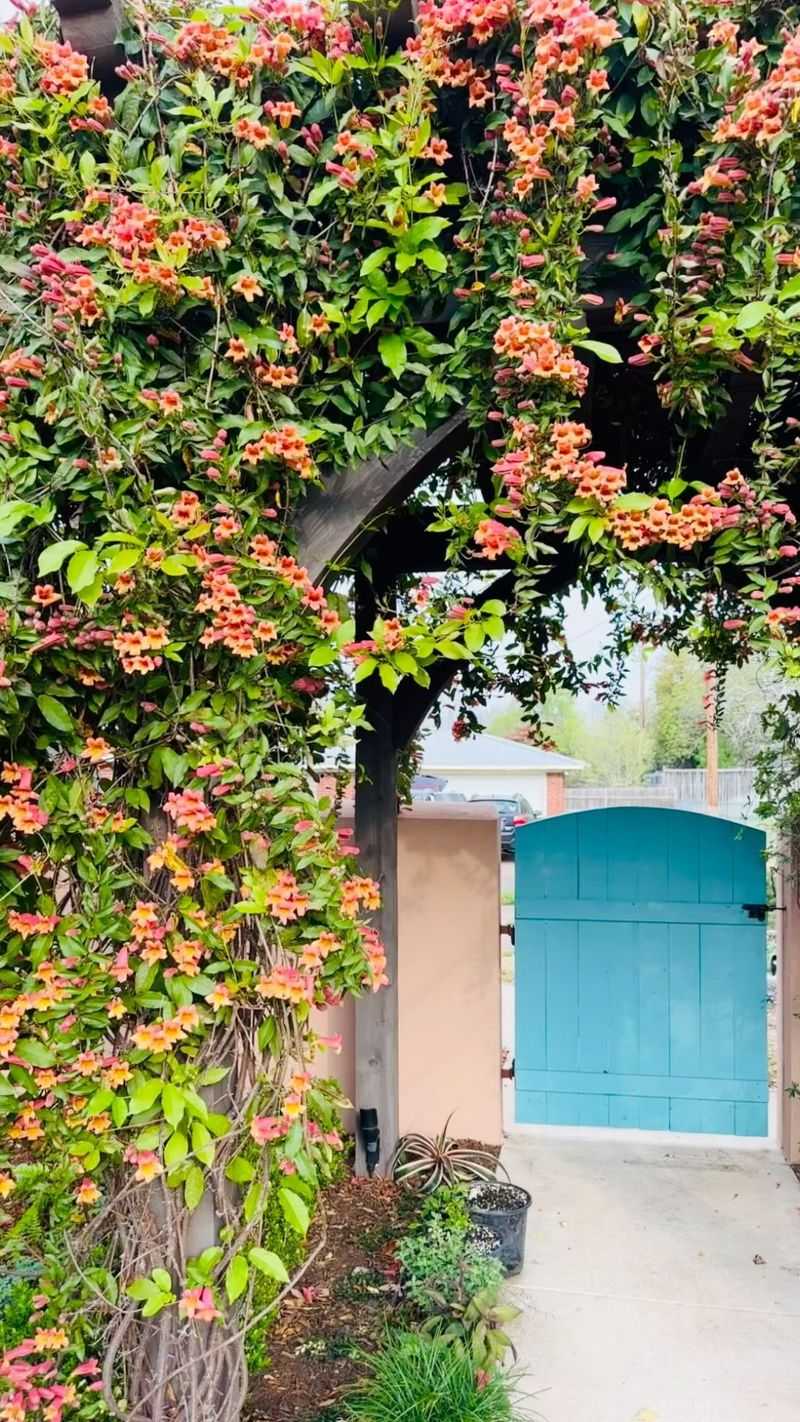
When a tall fence needs a bold spring makeover, a few scattered flowers may not do the job. Crossvine, Bignonia capreolata, can cover a substantial support with orange-red trumpets that glow yellow inside.
The main bloom arrives in spring, making it a useful partner for shrubs that peak later. Hummingbirds visit the flowers, and the foliage supplies a green backdrop after the brightest display ends.
Plan for vigor before planting: this native vine can climb 30 feet or more. A strong, separate trellis is safer than asking an aging wooden fence to carry a mature tangle of stems.
Crossvine grows in sun or partial shade and handles a range of soils, provided the site is not constantly waterlogged. Once established, it can manage dry periods, though a newly planted vine still needs careful watering.
Trim after the spring bloom to keep it within its assigned space. For a small courtyard fence, coral honeysuckle is usually easier to manage; crossvine belongs where you have height, sturdy support, and room for a larger display.
5. Walter’s Viburnum
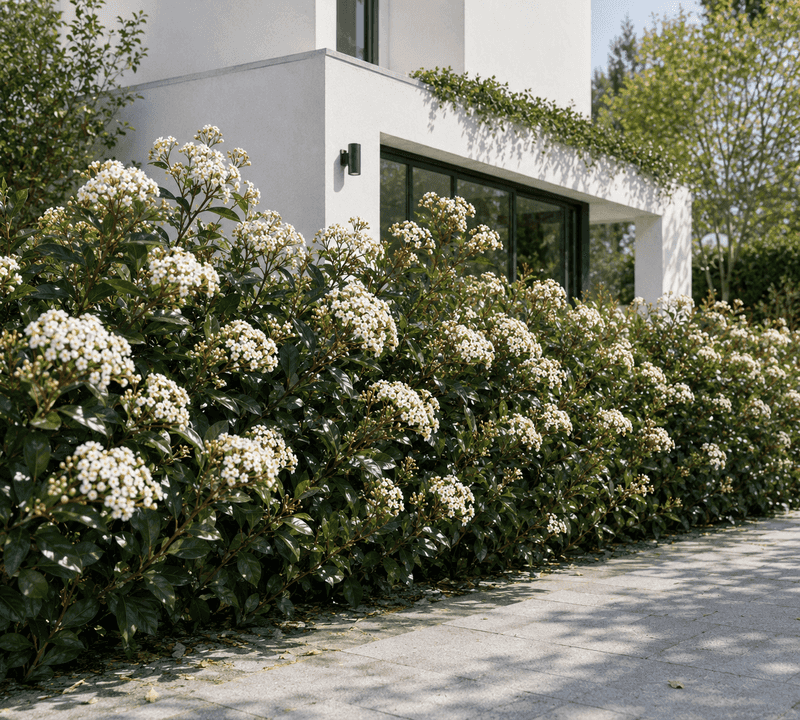
White flowers have a useful trick: they brighten a fence without competing with every other color in the yard. Walter’s viburnum, Viburnum obovatum, supplies a cloud of small spring blooms above dense green foliage.
Use it as the steady background for showier seasonal plants. Its branching structure also gives birds cover, making the border more useful than a line of flowers alone.
Check the plant label carefully because size varies widely. The species can become a large shrub or small tree, while selected compact forms fit much smaller spaces.
Sun to partial shade works, and established plants tolerate a range of Florida conditions, including occasional wetness and some drought. Even so, match the selection to your site’s drainage and water it consistently during establishment.
Skip the constant hedge trimming if flowers are your goal. Light shaping after bloom preserves a more natural outline and avoids cutting away the next display.
In colder areas, foliage may become thinner in winter. Plan your fence screening around the plant’s local behavior rather than assuming every Walter’s viburnum will stay equally dense statewide.
6. Chickasaw Plum
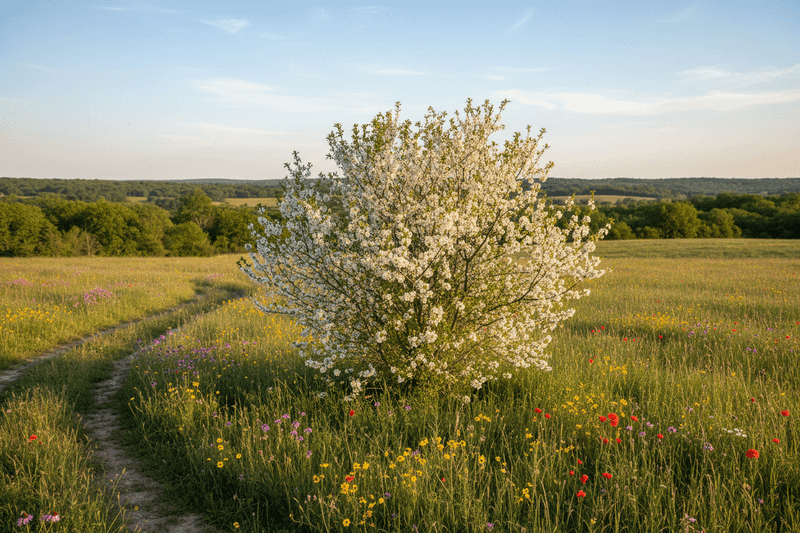
Before the summer border gets busy, bare branches covered in white blossoms can steal the show. Chickasaw plum, Prunus angustifolia, brings that early-season charm to sunny fence lines, especially in North and Central Florida.
Flowers appear in late winter or early spring, often before the leaves fully open. Small plums follow when pollination and growing conditions cooperate, providing food for wildlife and sometimes a harvest for the kitchen.
Allow room for a small tree or broad, multistem shrub, commonly around 12 to 20 feet tall. Plant it away from gates, narrow paths, and play areas because branches can be thorny.
Its biggest planning issue is suckering. Roots can send up new stems, gradually creating a thicket that works well along a spacious property edge but causes trouble in a tight ornamental bed.
Choose full sun and well-drained soil, then remove unwanted suckers while they are small. For a homeowner who wants early flowers and a more natural boundary, the extra management can be worthwhile, but this is not a tidy substitute for a clipped hedge.
7. Necklacepod
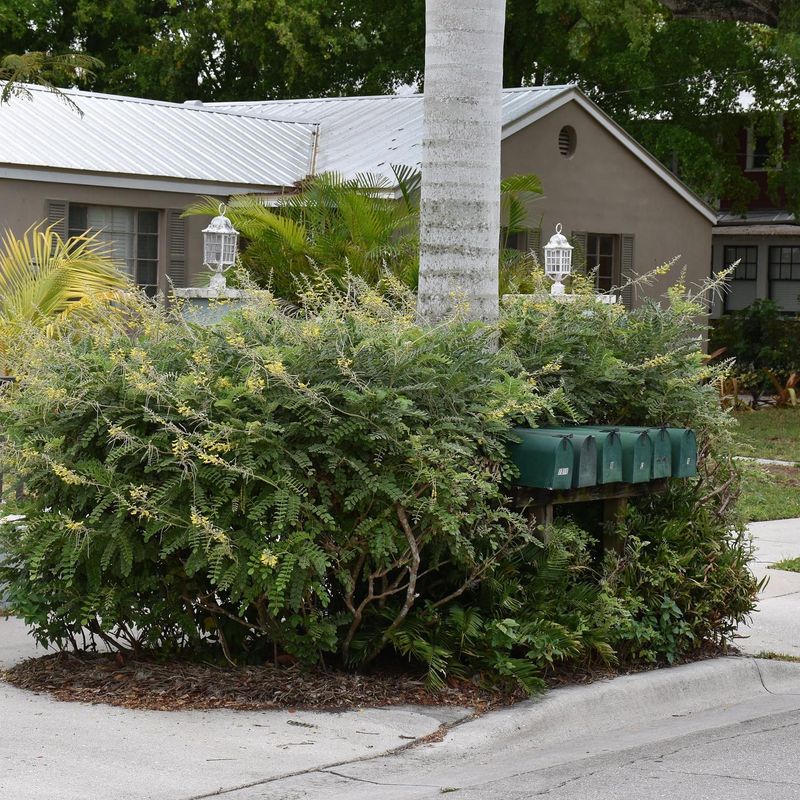
Yellow flower spikes bring a sunny look to coastal yards where salt and sandy soil limit the choices. Native necklacepod, Sophora tomentosa var. truncata, offers that warm color with an open, arching shape.
It is best suited to frost-free or nearly frost-free South Florida locations. Flowering can stretch across much of the year in warm conditions, followed by seedpods pinched between the seeds like a string of beads.
Give the shrub full sun and freely draining soil. It commonly reaches about 6 to 10 feet tall, so leave room for its branches instead of squeezing it into a narrow strip against the fence.
Ask a knowledgeable native nursery for the Florida-native variety. Other forms of Sophora tomentosa are sold, and the shared common name does not guarantee you are buying local native stock.
The seeds are poisonous if eaten, so consider another plant where young children or pets might chew fallen pods. In the right setting, necklacepod provides a loose, beach-garden look that pairs especially well with lower native grasses and open stretches of fence.
8. Wild Coffee
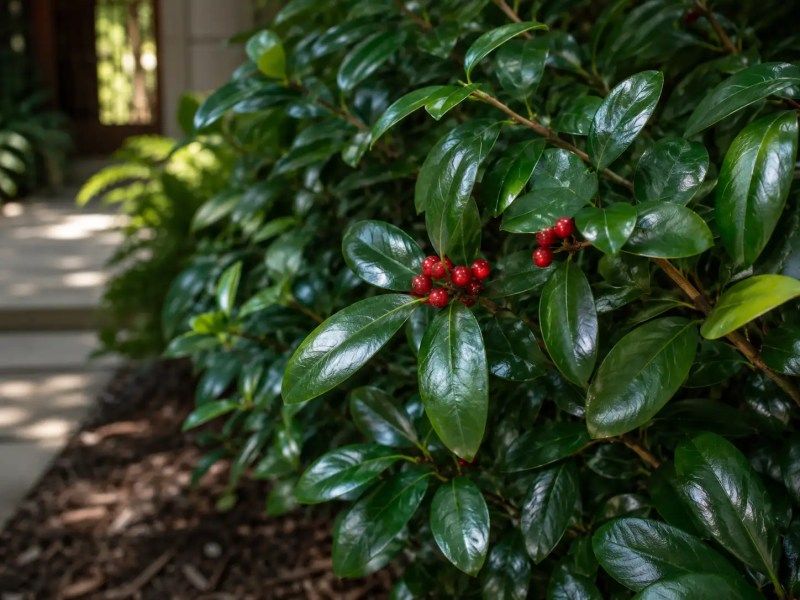
Shade along a fence often becomes the forgotten part of the yard. Wild coffee, Psychotria nervosa, gives that space glossy, deeply textured leaves, small white flowers, and bright red fruit.
The flowers are not as showy as crape myrtle blooms, but they draw pollinators. Later, the berries create small flashes of color and attract fruit-eating birds.
Choose this shrub mainly for Central and South Florida, with protection from cold in cooler locations. Partial shade is a comfortable fit, especially where intense afternoon sun would make a narrow bed harder to water.
Expect a plant roughly 4 to 10 feet tall, depending on conditions, and allow enough width for its leafy branches. Moist, well-drained soil is helpful during establishment; do not assume that every shaded bed stays evenly moist.
Use wild coffee behind low groundcovers or along a sheltered patio fence where you can appreciate its foliage up close. Despite its common name, it is not the plant used to produce your morning coffee, so enjoy it as an ornamental rather than treating its fruit as a kitchen crop.
9. Scarlet Hibiscus
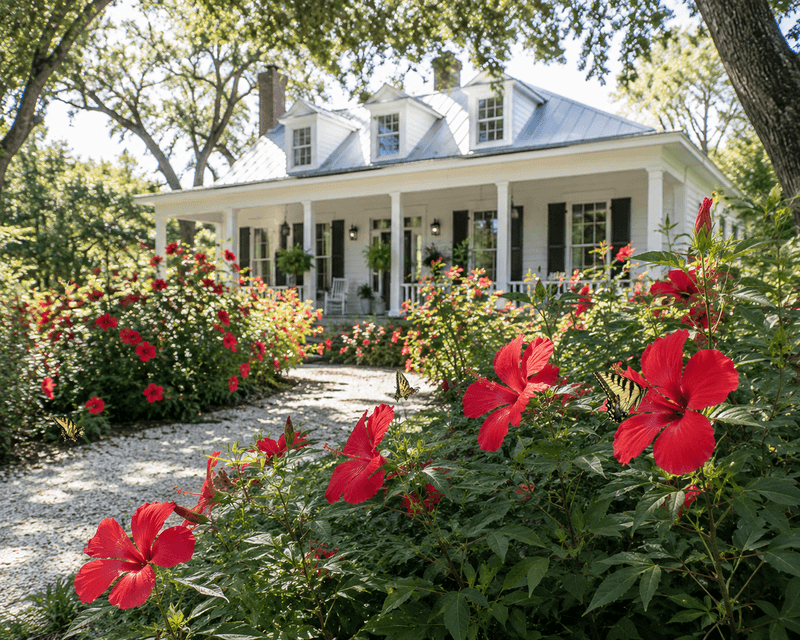
A damp fence corner can be an opportunity instead of a planting headache. Scarlet hibiscus, Hibiscus coccineus, sends up tall stems topped with large red flowers that look striking against weathered wood or a pale fence.
Also called scarlet rosemallow, this Florida native belongs in sunny, moist places. A rain-garden edge or a low bed that holds moisture suits it far better than a dry strip beside hot pavement.
Plants often reach about 4 to 8 feet tall during the growing season. Individual flowers last only a day, but established plants can open new blooms over an extended summer period.
Leave space around the stems and avoid planting where you need a solid evergreen screen. The top growth dies back in winter, leaving a seasonal gap until new shoots return.
Mark the crown so you do not accidentally dig into it during cool-season cleanup. If your fence bed drains rapidly and dries out between rains, choose a dry-site native instead of committing to frequent irrigation just to keep this wetland beauty comfortable.
10. Muhly Grass
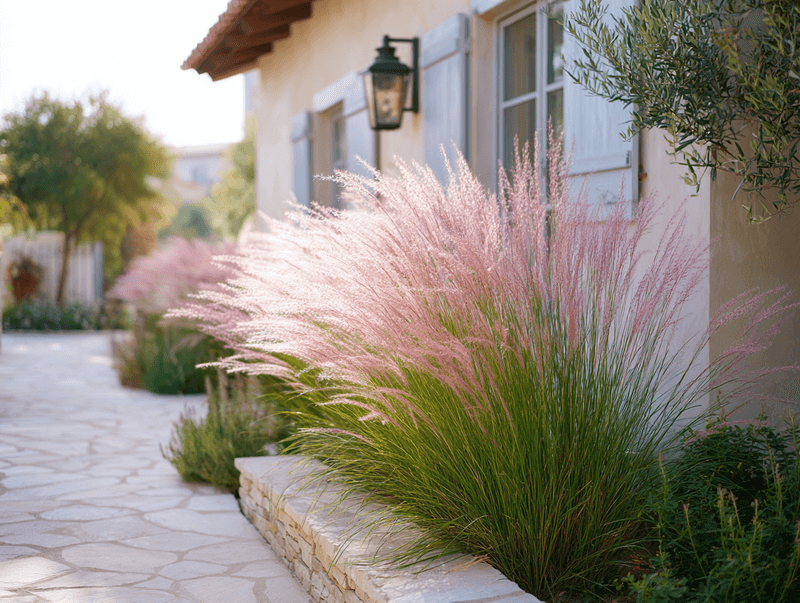
By fall, a row of airy pink plumes can make the bottom of a fence look wrapped in mist. Muhly grass, Muhlenbergia capillaris, delivers that effect without needing the space of another shrub or tree.
The fine green foliage stays fairly quiet for much of the year. Then the flower stalks rise above it, creating a pink-to-purple haze that looks especially bright when sunlight shines through from behind.
Plant in full sun and well-drained soil, spacing clumps about 3 feet apart or according to their expected mature width. Repeating several plants along the fence creates a stronger display than scattering single clumps around the yard.
Once established, muhly handles dry conditions well, but young plants still need watering while roots spread. Avoid permanently soggy spots and deep shade, which work against its best growth and flowering.
Let the plumes fade naturally, then tidy plants in late winter before fresh growth gets underway, removing dead material without cutting into the crown. Paired with evergreen shrubs and berry-producing natives, muhly supplies the soft fall finish that a fence line full of summer-blooming trees can miss.