
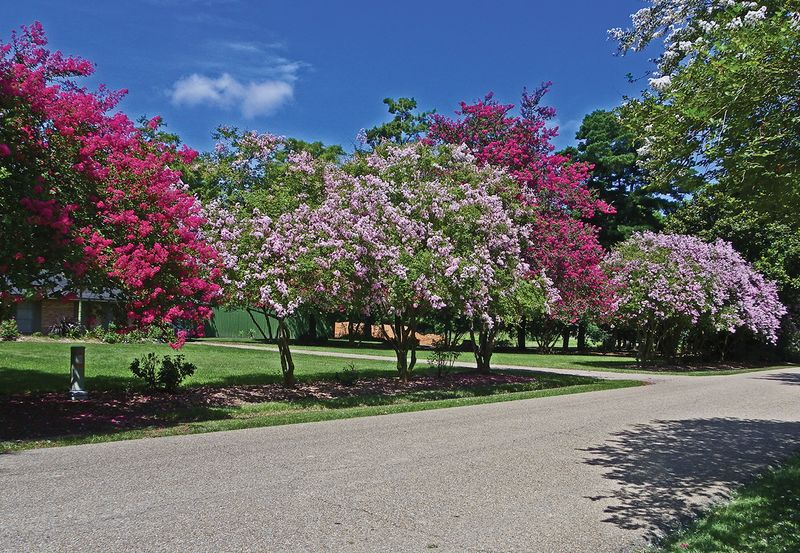
Crape myrtles line streets and yards all over Central Texas, so it is no surprise that people talk about their problems. Bark scale, harsh pruning, and stubborn sprouts get plenty of attention.
But is there really a wave of homeowners pulling these trees out? Here is how to judge your own tree and decide what to do next.
The winter removal trend remains unverified
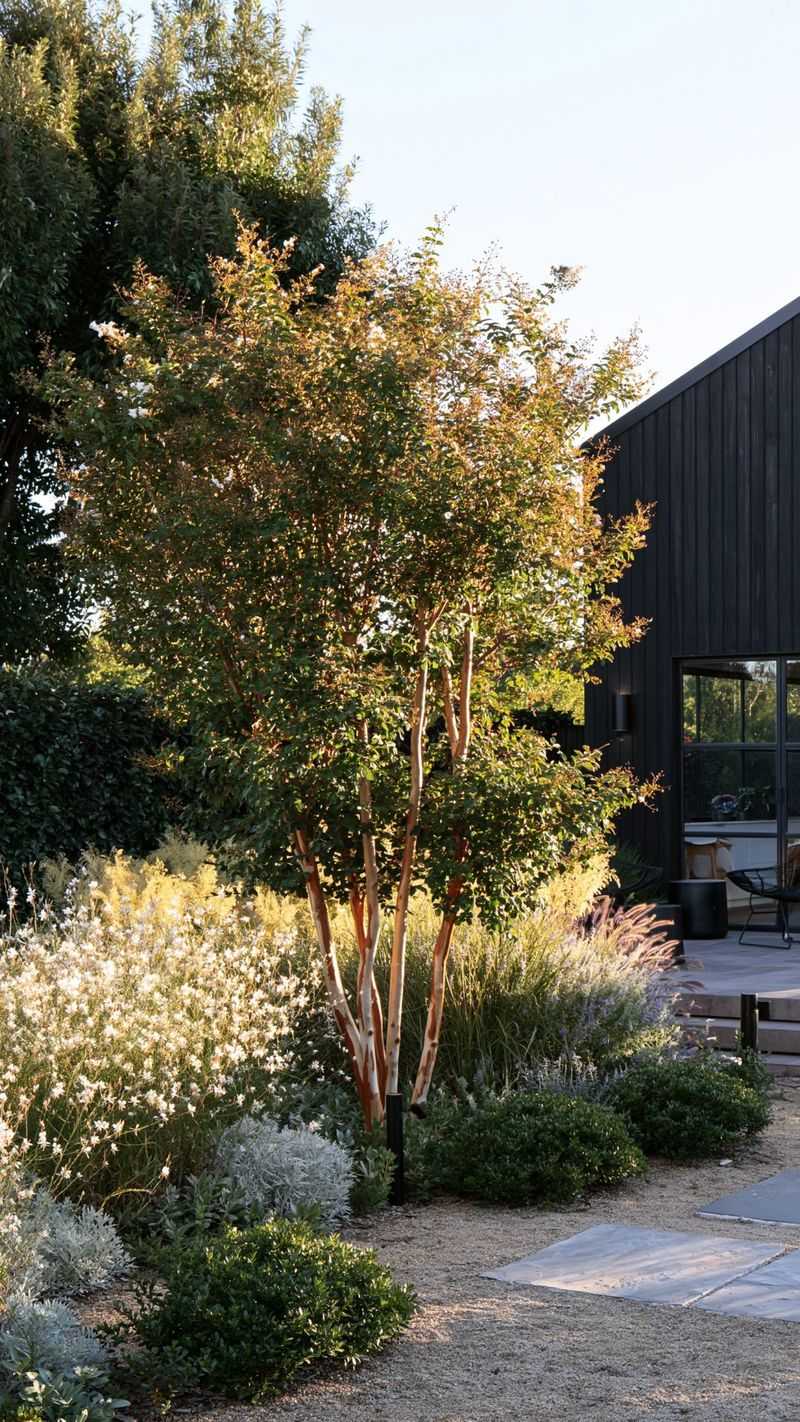
Plenty of people online claim that Central Texas homeowners are quietly ripping out their crape myrtles this winter. No survey or removal data backs that up, so it is best treated as a rumor rather than a fact.
What does exist is a lively conversation about tree choices. The City of Round Rock, for example, has published an article on choosing native trees and why they matter.
That shows people are discussing native options, but it does not show that crape myrtle removals are going up.
So this guide skips the trend and focuses on something more useful: how to size up one tree in one yard. Crape myrtles do have real issues, including bark scale, heavy pruning habits, and sprouts that follow removal.
Each of those deserves a close look before anyone picks up a shovel.
Some trees will deserve to stay, some will need a little care, and a few may truly be in the wrong spot. The goal is to help you tell which one you have, using what you can actually see in your own yard.
A well-placed crape myrtle can still be an easy-care tree
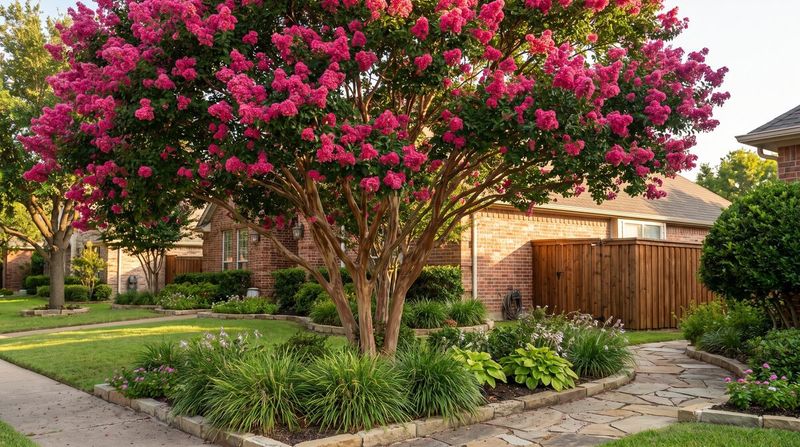
Before blaming the tree, start with what it does well. Texas A&M Forest Service says crape myrtle performs well across much of Texas and tolerates drought and slightly alkaline soils.
Those traits match a lot of Central Texas yards, where summers are hot and soils often lean alkaline.
Size is where many problems begin. Crape myrtles come in everything from compact types to trees that reach well over 20 feet.
A big variety planted three feet from a fence or under a window will outgrow its space, and the owner ends up cutting it back year after year.
That kind of struggle says more about the match between tree and spot than about the species. A tree with room to reach its mature height and width often needs very little attention.
To judge your own tree, check the tag or look up the variety if you can. Then measure the space.
Walk out to where the canopy will end up and see whether it clears the roof, the walkway, and the neighbor’s yard.
If the answer is yes, and the tree blooms well in summer, you may already have the easy-care plant you were promised. If the answer is no, the fix may be a different tree, not a different pruning routine.
Bark scale can make a tree—and nearby surfaces—messy
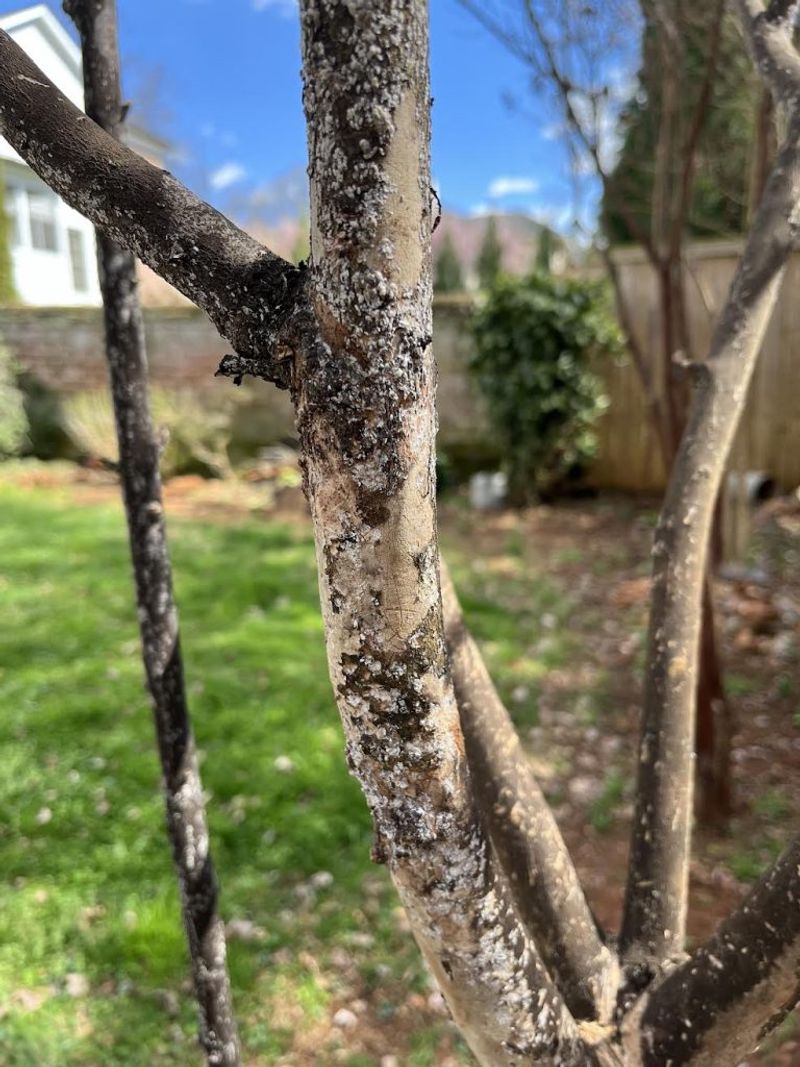
Crape myrtle bark scale is a small insect that feeds on the tree and leaves behind a sugary liquid called honeydew. According to Texas A&M AgriLife Extension, heavy infestations can leave sticky deposits and black sooty mold on the tree and on nearby cars, patios, and plants.
It looks bad, and it is annoying to clean up. Still, AgriLife notes that even high infestations rarely kill landscape crape myrtles.
Not every tree is infested, and some cultivars may be less susceptible than others.
Spraying is not always the answer. Beneficial predators can help hold scale down, and broad-spectrum insecticides can harm them.
In one landscape experiment, certain products were linked to about three times as much scale.
If you are thinking about treatment, talk with your local Extension office and follow the product label. Some products can hurt pollinators, so do not apply them while the plant is flowering or bees are visiting.
Timing also varies. AgriLife’s Texas monitoring guidance puts systemic treatments near leaf-out, often early to mid-March, and contact treatments around mid-April to early May.
Those windows shift with the product, the site, the year, and crawler activity, so treat them as rough guides.
A good first step is simply to look. Check the trunk and branch forks for white or gray crusty patches, and note whether the stickiness and black film are mild or heavy before deciding anything.
Topping is a pruning choice, not a care requirement
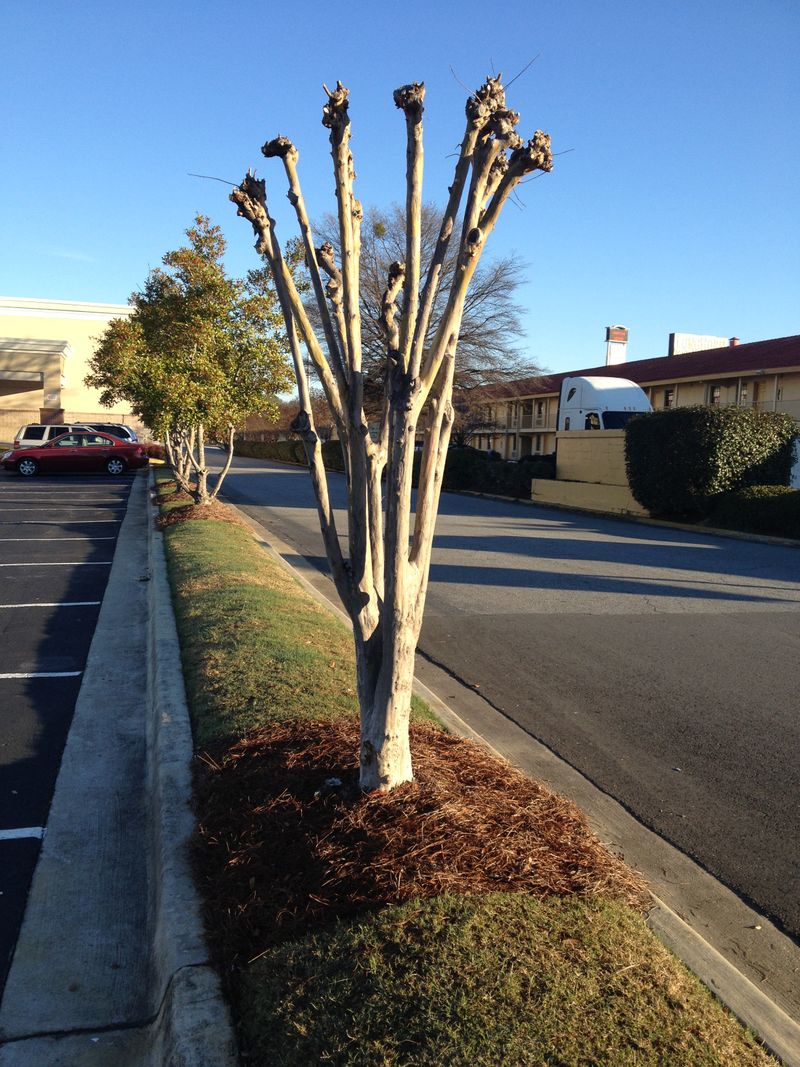
Walk through almost any Texas neighborhood in late winter and you will spot them: crape myrtles cut back to knobby fists on top of thick trunks. This is often called crape murder, and it is a habit, not a rule.
Nothing about the tree requires it.
According to UF/IFAS Extension, crape myrtles need little or no pruning when the plant’s mature size fits its location. The guidance says proper selection and placement can head off many of the problems people try to fix with a saw.
When pruning is needed, the approach is selective. Remove dead or damaged branches, ones that cross and rub, and ones growing inward toward the center.
Cut them back to a branch or the trunk instead of leaving large stubs.
UF/IFAS suggests the dormant, leafless period for structural pruning, which in its Florida guidance is typically December through February. Texas gardeners should adapt that to local conditions, such as when your area’s last hard freeze usually passes and when new growth starts.
A practical test: if you find yourself cutting every winter just to keep the tree under a certain height, the tree may be too big for the spot. Rather than topping it again, consider whether a smaller variety or a different location would end the cycle.
Root shoots are a real nuisance; routine structural damage is not established
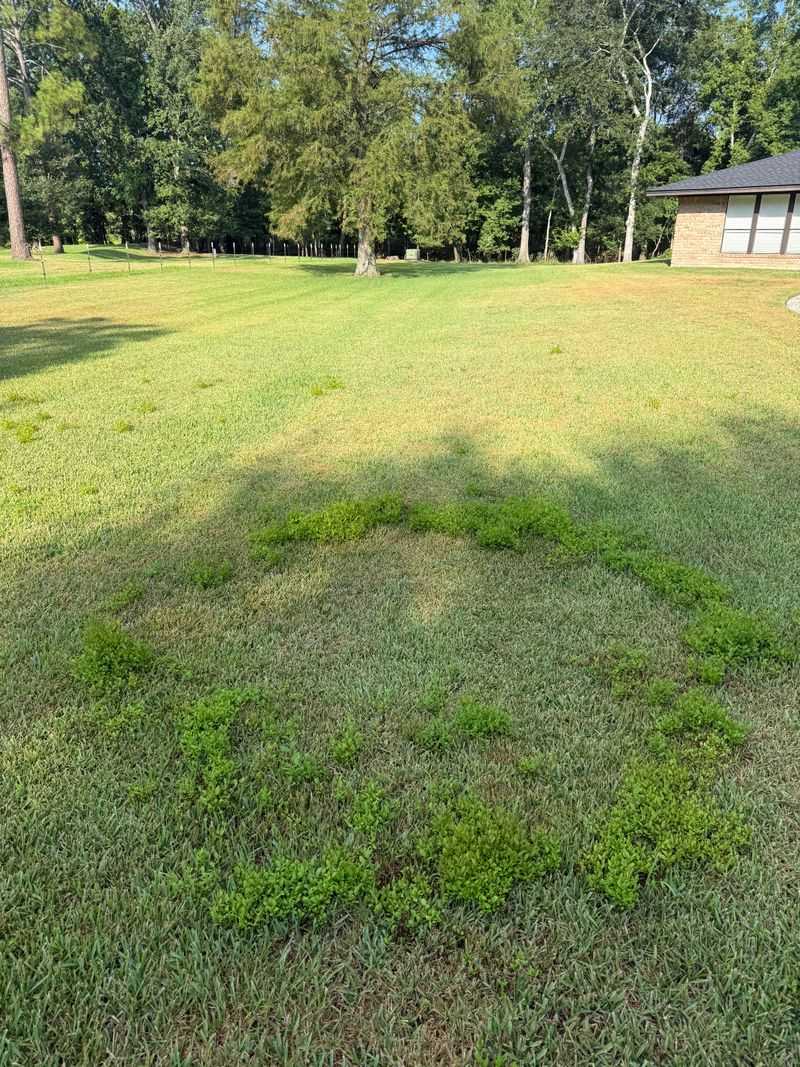
After a crape myrtle comes out, many people find new shoots popping up from the leftover roots, sometimes for a long time. That is a documented nuisance.
Extension guidance on root shoots says repeated removal of sprouts may be needed.
Herbicide is sometimes suggested, but it is not a casual or one-time fix. It can harm nearby plants you want to keep, so be careful around lawns, shrubs, and other trees that may share the root zone.
Shoots after removal are a separate issue from damage while the tree was alive. Extension guidance on crape myrtle roots says the plant does not have an aggressive root system.
The sources reviewed do not support the idea that crape myrtles commonly damage foundations or pipes.
If you have a specific concern, such as a cracked slab or a slow drain near a tree, have it checked by a plumber or foundation professional. Many things can cause those problems, and blaming the nearest tree may waste time.
If you do remove a tree, plan for follow-up. Mow or snip sprouts as they appear, and check back every few weeks in the growing season.
Persistence usually does more than any single treatment.
Choose a native replacement for the site, not just the label
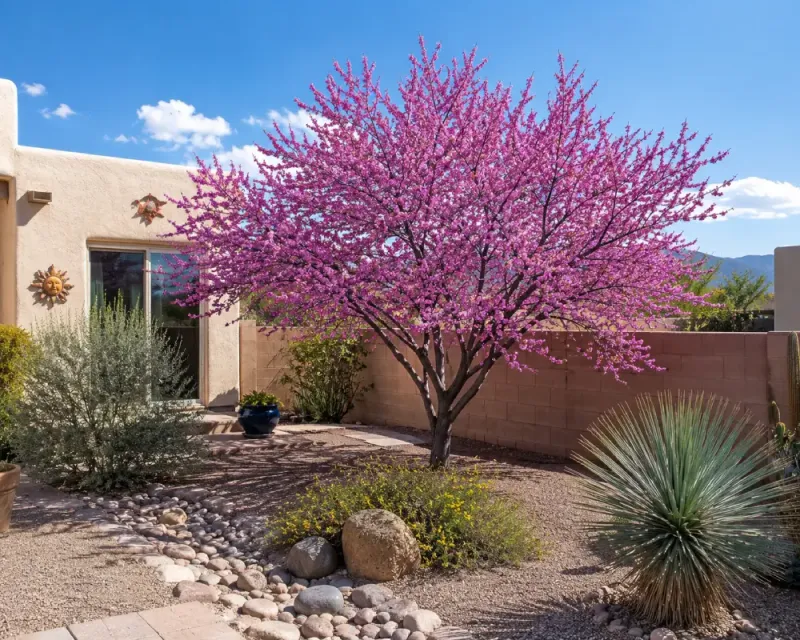
If you decide a tree has to go, the next question is what takes its place. Start with the spot, not the plant tag.
Measure the open space, check how many hours of sun it gets, and note whether the soil is shallow and rocky, clay, or sandy.
Think about water too. Some trees want regular moisture while others handle dry stretches better, and no species is guaranteed to use less water in every yard.
Mature size matters most of all, since a tree that fits now may crowd the house in 15 years.
The Texas A&M Texas Tree Selector lists Mexican plum, Texas redbud, and desert-willow among small-tree options for Bexar County. These are starting points for research, not universal substitutes for every Central Texas site.
Your soil and light may suit one better than another, or none of them.
Interest in native trees is also showing up locally. The City of Round Rock’s native-tree article, mentioned earlier, promotes options such as desert-willow and Mexican plum as locally suited.
That is useful context, but it does not mean native trees are always easier to keep.
Before buying, look at mature height and width, bloom season, and any care needs listed for the species. Visit a local nursery and ask what is thriving in nearby yards with similar conditions.
A tree that matches your site will usually beat one chosen only for its label.
Make the decision tree by tree
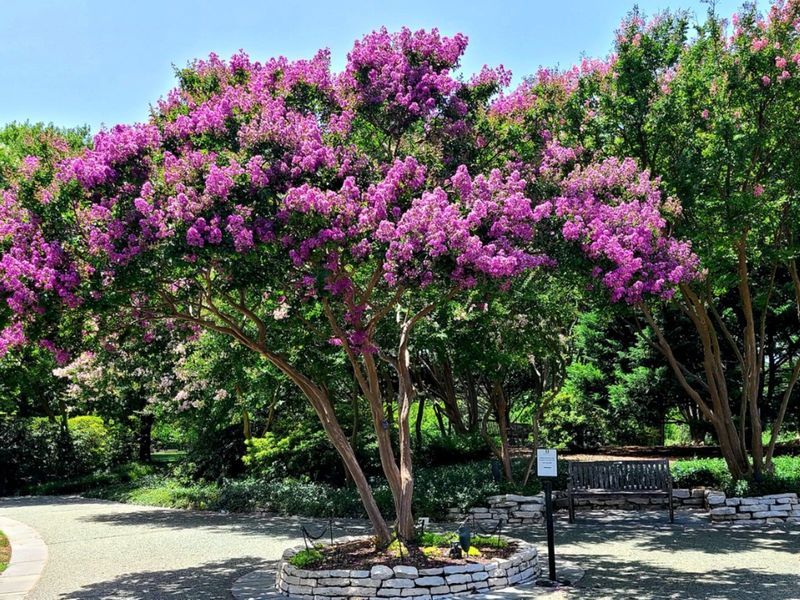
Think of it as three paths. If a tree fits its spot and looks good, keep it.
Texas A&M Forest Service describes crape myrtle as a good performer across much of Texas, so many trees will earn their place.
If the tree has problems, match the response to the problem. For scale, look at the trunk first and talk to Extension before treating, using AgriLife’s bark scale guidance as a starting point.
For a hacked-up tree, switch to selective cuts as described by UF/IFAS.
If the tree is simply too big or in the wrong place, replacement makes sense, but only after you match a new choice to the site.
No data shows a winter removal wave, so you can skip the pressure to follow a crowd. A careful look at one tree is all this decision needs.
Sometimes the best landscape upgrade is simply learning what the plant you already have is trying to tell you.