
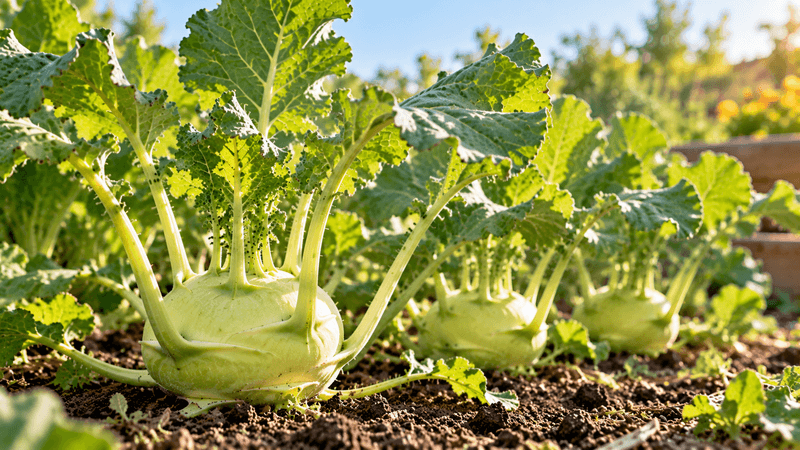
Kohlrabi looks like a pale green or purple ball sitting on the soil, and it should be crisp and sweet. When it turns tough or cracks open, it is easy to blame the last dry spell.
The real story has a few more twists, including heat and how long the stem stays in the bed. Here is how to sort out what you are seeing and what to do for the crop you have now.
Woody stems and split skins offer different clues
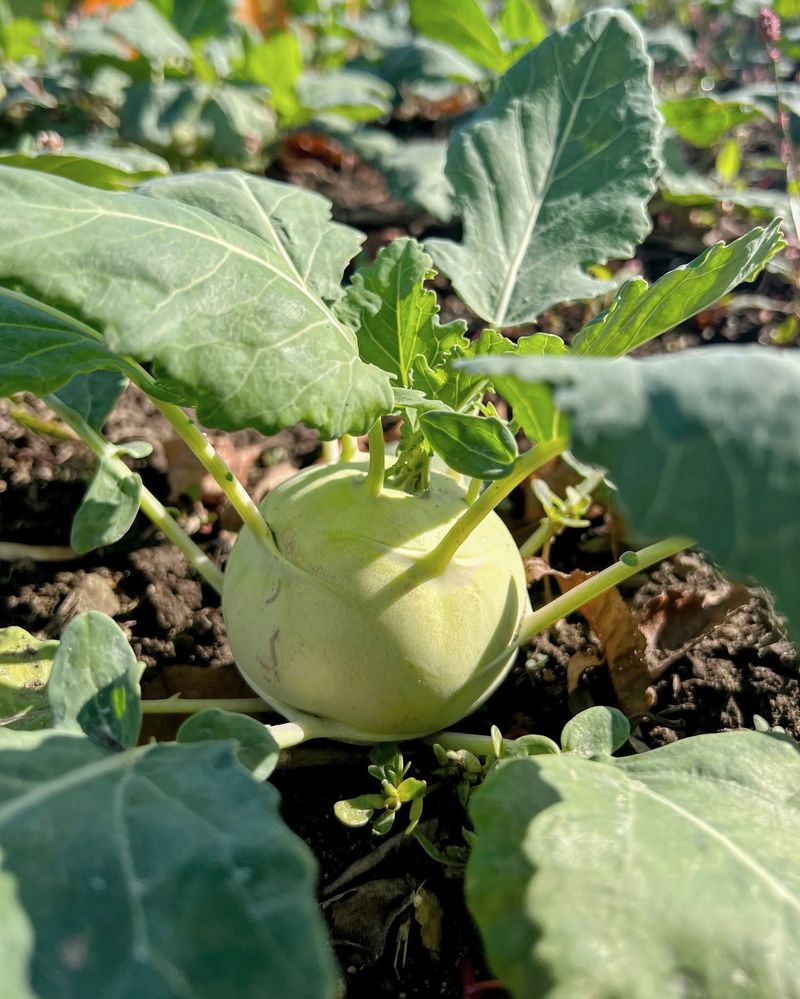
A woody kohlrabi and a split kohlrabi are not the same problem, so look at each one separately. Woody means the swollen stem feels tough and stringy when you slice it.
Split means the skin has a visible crack.
For woodiness, Virginia Cooperative Extension points to dry soil and picking too late. Utah State Extension adds that larger stems tend to be tough and woody.
Splitting has less research behind it. One seed company, Burpee, says cracking can come from drought or too much late nitrogen.
That is a company explanation, not a settled extension finding.
So a stem that is both woody and cracked may have more than one cause behind it. The look of the damage alone cannot tell you which one it was, and a recent dry spell is only one suspect.
Check heat and harvest timing before blaming the dry spell
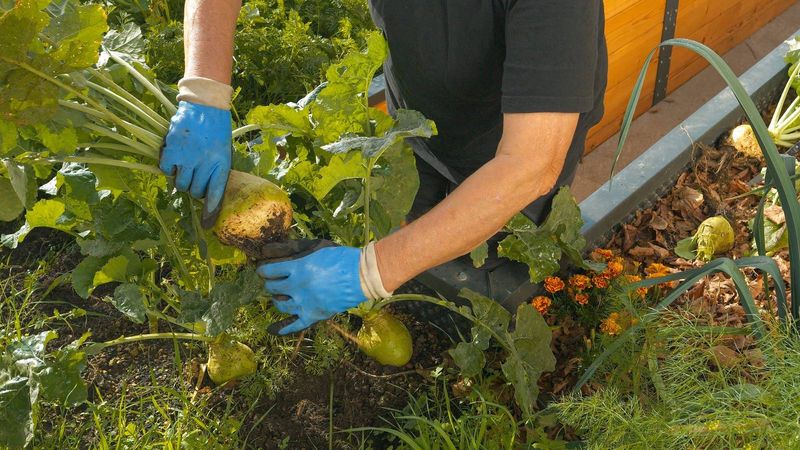
Before you pin everything on watering, ask how long those stems have been sitting out there. Late harvest is one of the best-documented reasons kohlrabi gets tough.
A bulb that was perfect last week can be past its prime now.
Heat matters too. Utah State Extension says high temperatures reduce quality and can make enlarging stems tough and woody.
Fall plantings in Texas and Florida often mature during warm spells, so a stretch of hot days may have played a part.
Run a quick check on your bed. Measure the stems, think back to the last few weeks of weather, and feel the soil a few inches down.
Each answer adds a clue.
Maybe the stems are large, the weather was hot, and the soil dried out. Those factors overlap, and it is hard to say which one did the most harm.
Treat your diagnosis as a best guess, not a verdict.
Harvest promptly, but let variety and season guide size
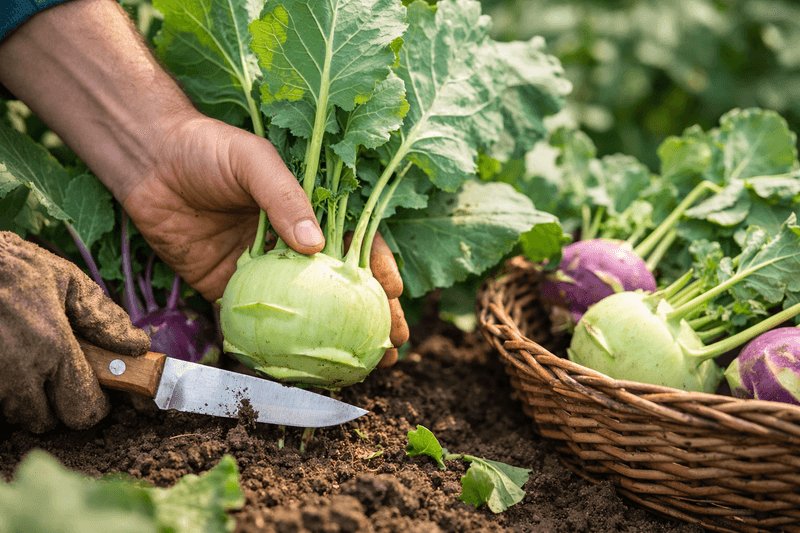
If stems are already in the bed, pick them soon and test the texture. Watering will not turn a tough stem tender again, so waiting around does not help.
Peel one, slice it, and see whether it is crisp or stringy.
A common harvest target is 2 to 3 inches across, but that is a guide rather than a hard line. USDA guidance notes that fall-grown kohlrabi may stay less prone to woodiness at 4 to 5 inches.
Variety and growing conditions change the answer. Check your seed packet for the expected size, and compare it to what Utah State Extension describes for stems that grow too large.
A practical approach is to harvest one test bulb now. If it is tender, keep picking at that size.
If it is tough, harvest the rest sooner and use the milder ones raw or cooked.
Restore moderate, even moisture in the bed
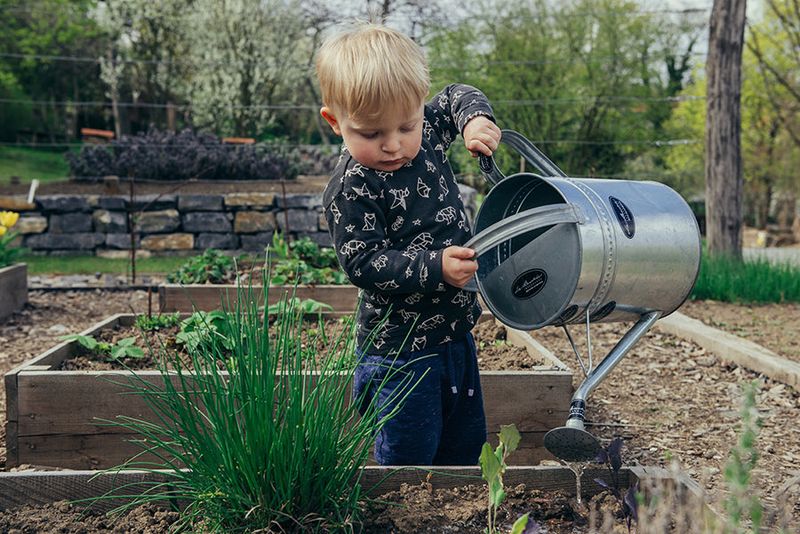
Here is a step you can take this week: push a finger two inches into the soil near your kohlrabi. If it feels dry, water.
If it is damp, wait a day and check again.
The goal is moderate, even moisture. Virginia Cooperative Extension names dry soil as a cause of woody bulbs, and Alabama Extension also stresses consistent moisture for kohlrabi.
Soggy soil is not the answer. Aim for damp like a wrung-out sponge, not a puddle.
Steady moisture may help reduce future stress on the crop, but it will not repair stems that are already woody or split. The amount you need changes with rain, soil type, and temperature, so let the soil guide you instead of a fixed schedule.
Track rain and aim water at the root zone
A cheap rain gauge takes the guesswork out of watering. Set it in the bed and count both rain and irrigation toward your total.
Iowa State Extension gives about 1 inch of water per week as a general vegetable-garden benchmark. Kohlrabi guidance can run up to 1 to 2 inches.
Treat these as starting points and adjust for rain, soil, heat, and how the plants look.
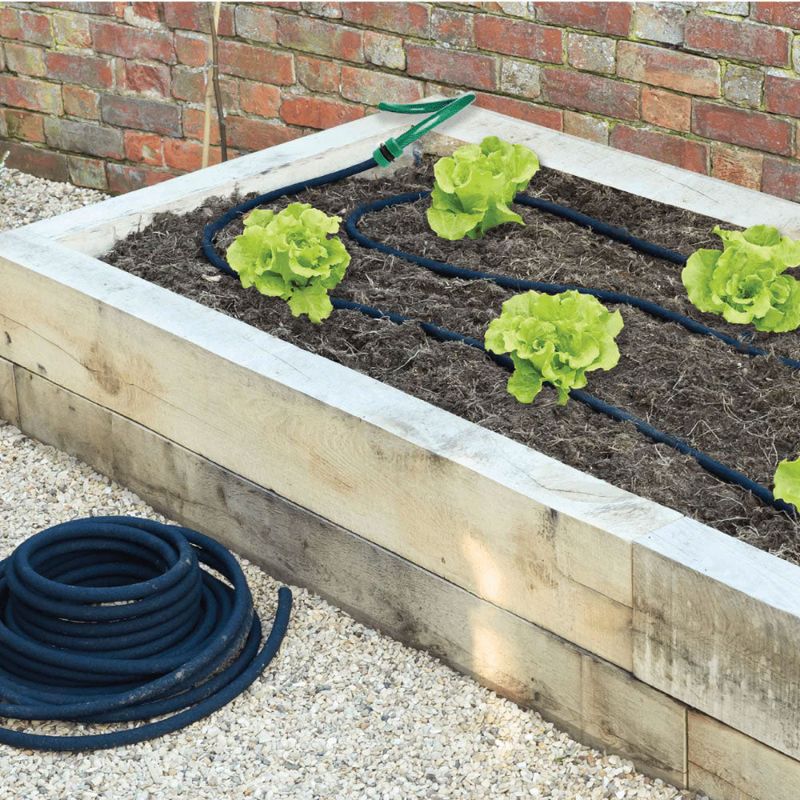
Drip lines or soaker hoses send water toward the roots instead of onto leaves and paths. A layer of mulch helps hold that moisture in the soil.
Do not overdo it. Texas A&M AgriLife Extension warns that too much water can contribute to root rot and plant decline.
If the soil stays soggy, skip the next watering.
Use local planting windows for the next fall crop
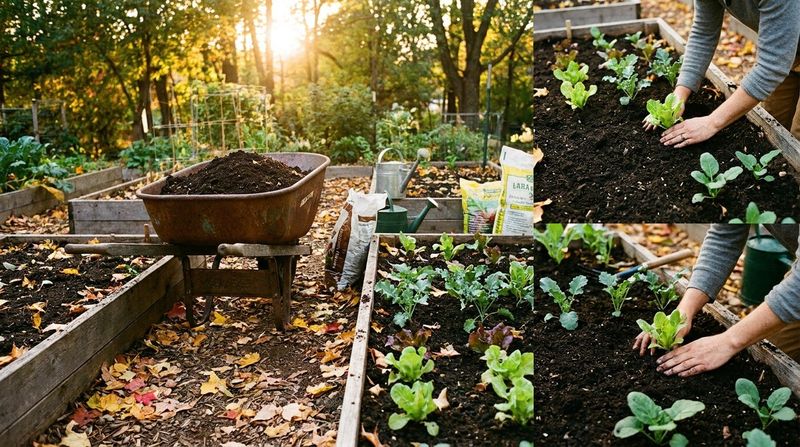
Next season, start with a planting window that fits your corner of the state. Texas and Florida are large, and the right dates differ from one region to the next.
UF/IFAS lists kohlrabi planting times that vary across North, Central, and South Florida. Texas gardeners can use the regional dates in the Texas A&M fall vegetable guide.
Planting at the right time will not guarantee perfect bulbs. You will still want to watch stem size, check soil moisture, and harvest on time.
Write your dates on a calendar, and note what the weather did. Next fall you will have a record of what worked.