
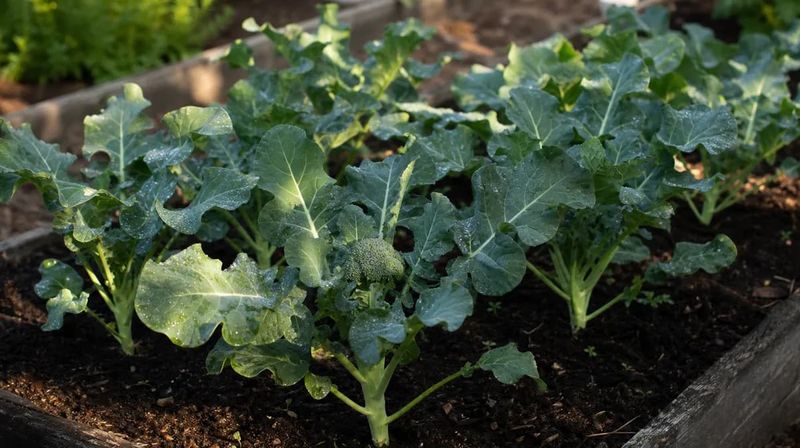
Walk out to your fall broccoli bed and you may find leaves that look like someone took a hole punch to them. Cabbage loopers are one possible culprit, but they are not the only one.
A few quick checks can tell you what is really going on. Then you can pick a response that fits the problem instead of reaching for a spray you may not need.
November holes call for inspection, not an instant diagnosis
Fall and winter broccoli is a familiar sight in Central Texas gardens, but planting windows differ by region. Texas A&M’s fall vegetable gardening guide splits the state into regions and places Central Texas in Region III, so check the timing for your own area.
Cabbage loopers do feed on broccoli and other cole crops. Even so, the sources do not show that loopers caused the November damage in your particular garden.
Holes tell you something chewed on the plant. They do not tell you what.
So start with a close look. Check both sides of the leaves, down into the center of the plant, and over any broccoli heads.
Watch for caterpillars and for small dark droppings, which are a sign something is actively feeding.
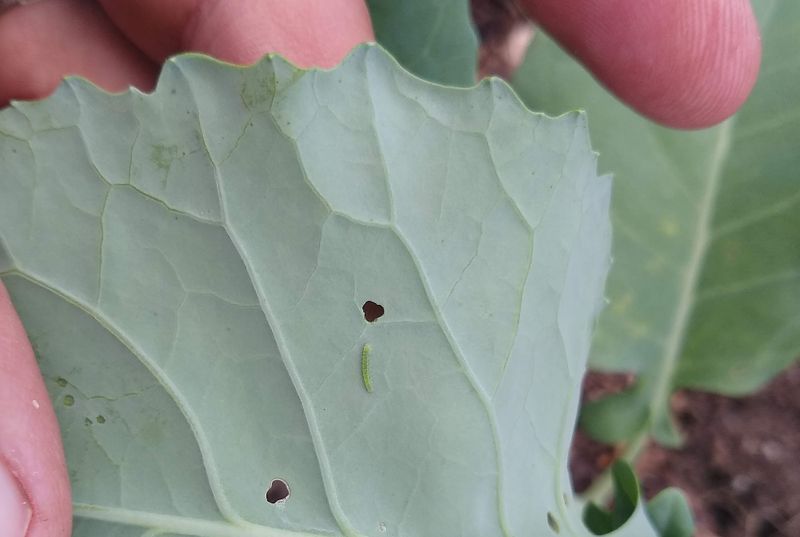
According to the Texas Vegetable Growers Handbook, a looper is a green caterpillar that moves in a looping motion. In the garden, look for a smooth, light-green caterpillar that arches its body as it inches along.
If you find one, you have a real lead. If you find none, hold off on treating anything.
The University of Minnesota Extension also describes several caterpillars that feed on cole crops, so a green caterpillar is a clue rather than a final answer.
Other pests can leave holes in broccoli leaves
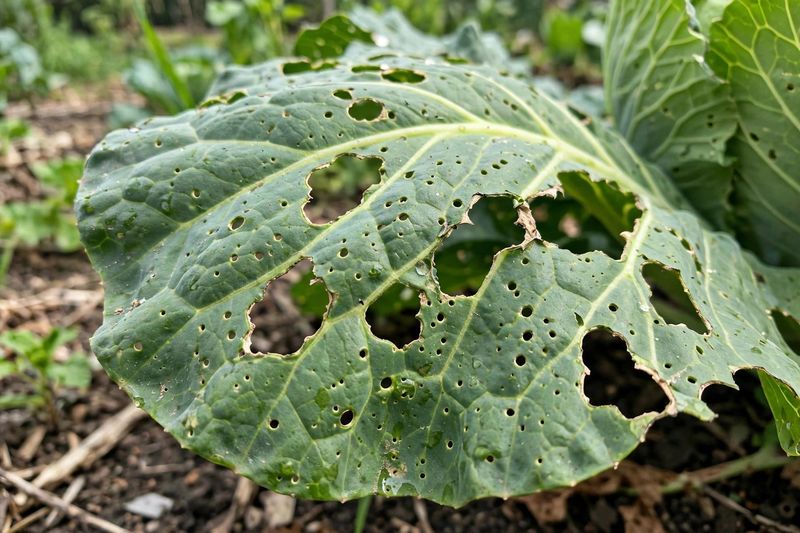
Broccoli leaves can end up with holes for more than one reason, and the shape of the damage offers hints. Think of the pattern as a clue, not proof.
Tiny, irregular shot holes often point to flea beetles. These small jumping beetles chew many little pits across a leaf.
According to the University of Minnesota’s broccoli diagnostic page, larger, ragged holes can come from caterpillar feeding by loopers or imported cabbageworms.
Diamondback moth larvae leave a different calling card. They can scrape a leaf so a thin, windowpane-like patch remains before the tissue breaks away and becomes a hole.
A hole you see today may have started as one of those translucent patches days earlier.
The Minnesota caterpillar guide covers several of these cole crop feeders, which is a good reminder that a few different insects can look alike from a distance.
The practical move is to find the pest itself. Check the leaf undersides and the plant center for caterpillars, and look for tiny beetles that hop when you brush the foliage.
Naming the culprit first keeps you from treating the wrong problem.
Some leaf feeding does not automatically call for treatment
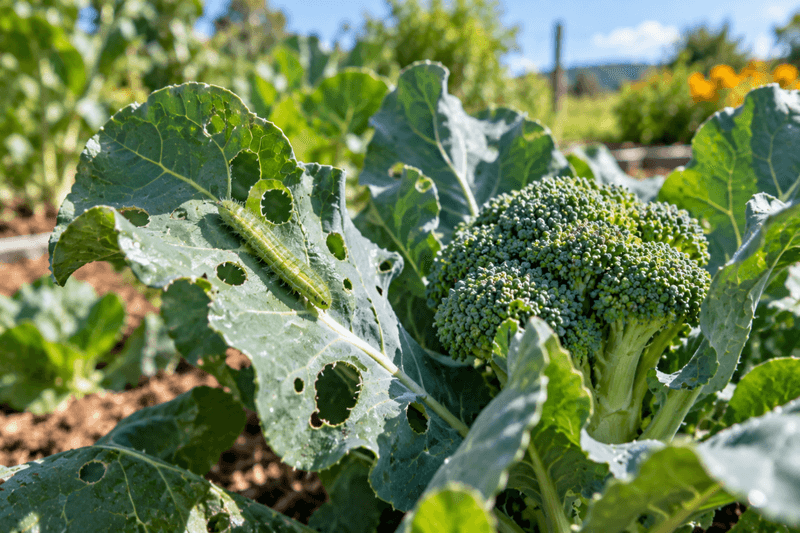
A chewed leaf is not a crisis. Cole crops can tolerate some leaf loss, according to the University of Minnesota Extension, and older plants generally handle it better than seedlings or fresh transplants.
That difference matters in a Texas fall garden. A big plant with ragged outer leaves may carry on fine.
A small transplant with only a handful of leaves has less to spare, so the same feeding deserves a faster response.
To decide, weigh three things. Are caterpillars actually present?
How big is the plant? How much of the foliage is gone, and is the damage still growing?
You may see a treatment threshold in other places. The Utah State University guide is one example, but it was not built for Central Texas home gardens, so do not treat its numbers as a rule for your bed.
If you find no caterpillars, there is nothing to treat. If you find a few on a sturdy plant, simple removal is usually enough.
Save stronger steps for confirmed caterpillars and damage that keeps spreading.
Pick off a few confirmed caterpillars
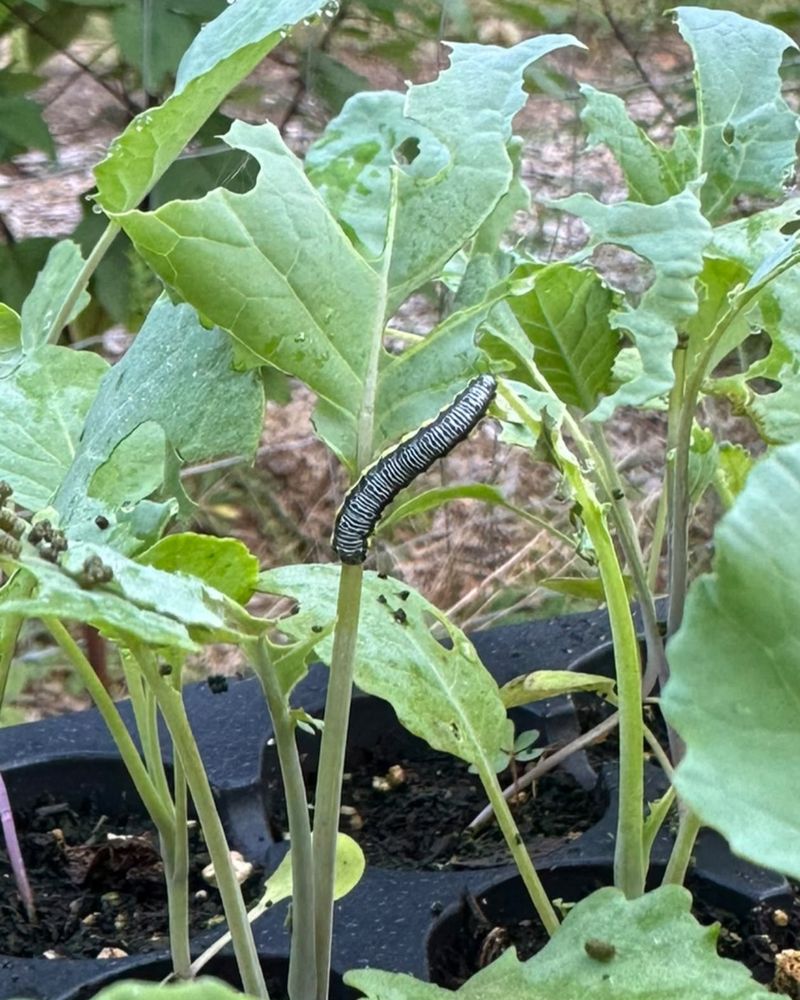
When your inspection turns up only a few caterpillars, hand-picking is a practical answer for a small garden. The Utah State University Extension lists it as an option when numbers are low.
Pick the caterpillars you actually find, not just the spots near holes. Look under leaves, along the midribs, and deep in the center of the plant, since caterpillars often hide there.
A morning or evening check works well when light is soft and the pests are easier to spot.
Drop what you collect into a container of soapy water. Then check again over the next several days, because new caterpillars may show up as moths keep laying eggs.
Keep your expectations realistic. Picking can thin out the caterpillars, but it will not mend leaves that are already chewed, and it cannot guarantee a harvest.
It also fits only small problems. If you pull off a dozen and find a dozen more the next day, that is the time to think about a labeled treatment.
Use Bt kurstaki only when treatment is warranted
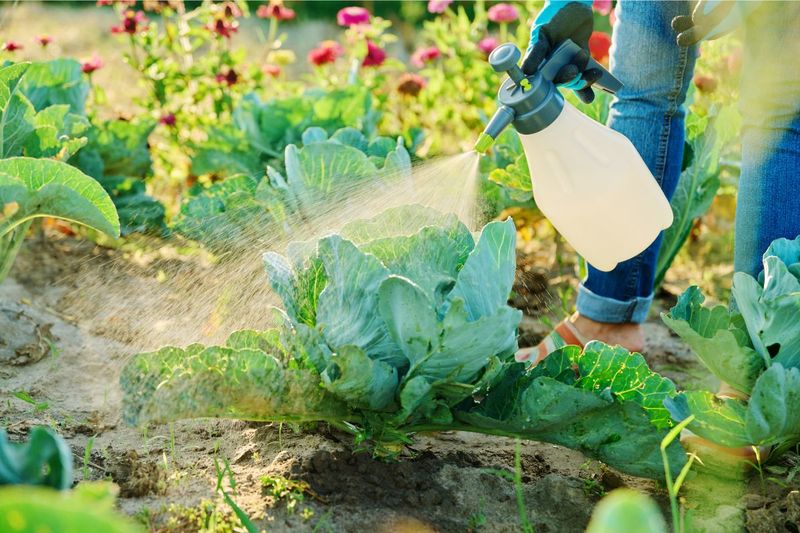
If caterpillars are confirmed and feeding is more than a plant can shrug off, a product with Bacillus thuringiensis subsp. kurstaki, or Bt kurstaki, may be a targeted choice. The Utah State University guide notes that the larvae must eat it, that it works best on young caterpillars, and that thorough coverage of the leaves matters.
Only buy a product whose label lists broccoli. Then follow that label, including how to apply it and when you can harvest.
One product’s rate or repeat schedule does not carry over to another, so this article gives no general numbers. For an example of what a label spells out, see this EPA-posted Dipel DF label.
Do not expect one spray to settle things for good. The National Pesticide Information Center explains that Bt residue breaks down with sunlight and weather.
Bt is selective, but not harmless to every insect. It can affect butterfly and moth caterpillars that eat treated leaves, so keep it off plants where you are raising monarch or swallowtail host plants.
NPIC reports low toxicity to bees, yet that does not make every product or use risk-free.
An organic label does not mean risk-free either. Treat Bt as a tool for confirmed caterpillars, not a routine spray.
Use row covers as prevention, not a cure
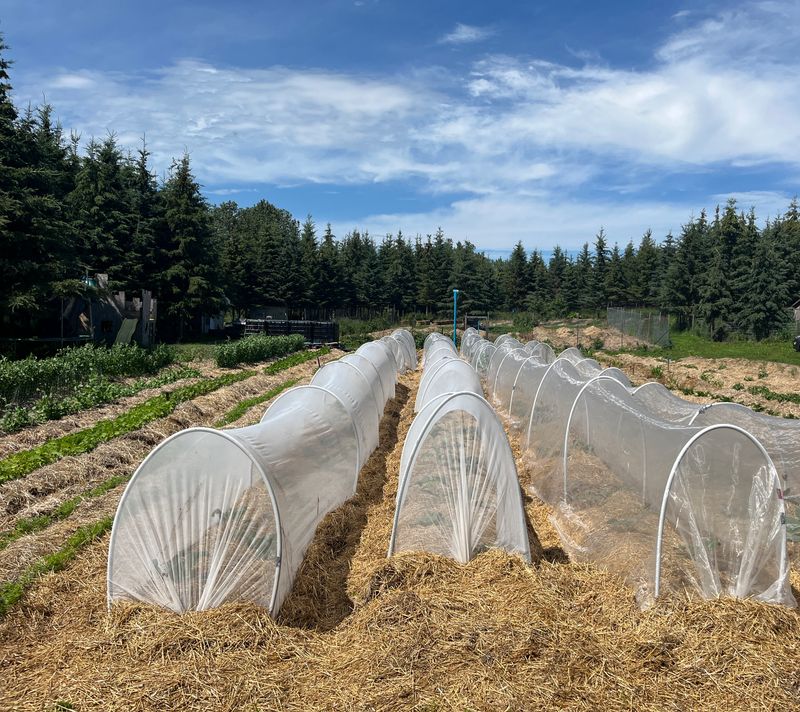
Row covers work on a simple idea: keep the moths from reaching the plants. The Utah State University Extension says floating row covers can exclude egg-laying moths, and they work best when put on before pests are present.
That timing is the key. A cover set over broccoli at planting can block moths before eggs are laid.
Put one over plants that already have caterpillars and you may simply shut the pests in with their food.
Think of a cover as prevention, not rescue. If caterpillars are already feeding, inspect, hand-pick, or consider a labeled treatment instead.
Beyond that, the source does not give installation details, so follow the instructions that come with the cover you buy. No cover is a guarantee, but starting early gives you a way to cut down on new arrivals without spraying anything.
Make the response match what you find
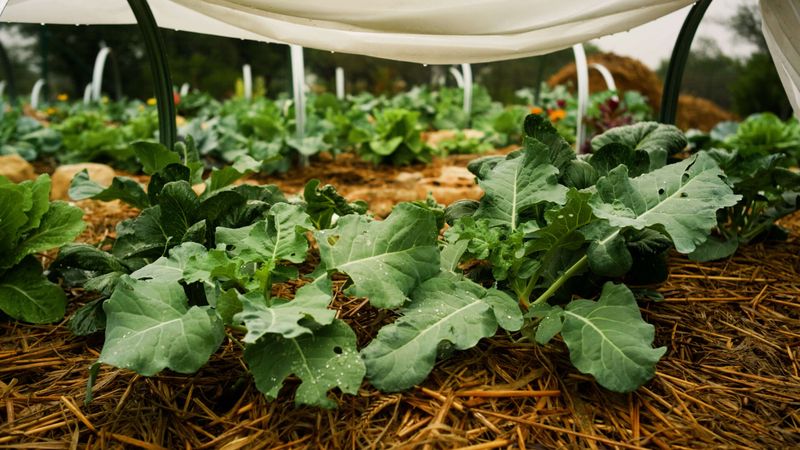
Start by looking. Check leaves, plant centers, and heads for caterpillars, remembering that leaf holes have several possible causes.
If you find a few, pick them off. Turn to a broccoli-labeled Bt kurstaki product only when confirmed feeding calls for it, and set up covers before pests show up.
None of this guarantees every caterpillar gone or a bumper winter harvest, as the Utah State and Minnesota guides make clear.
A holey leaf is a question, not a verdict.