
When August heat fades, a lot of California yards go quiet, and the bees and hummingbirds that visited all summer suddenly have little to eat. That gap matters, because many native bees are still active and Anna’s hummingbirds stay here all year.
The good news is that a handful of tough, water-wise native plants bloom right through fall and even into winter. Plant a few of them and your yard can stay busy with wings when the neighbors’ gardens have gone brown.
1. California Fuchsia (Epilobium canum)
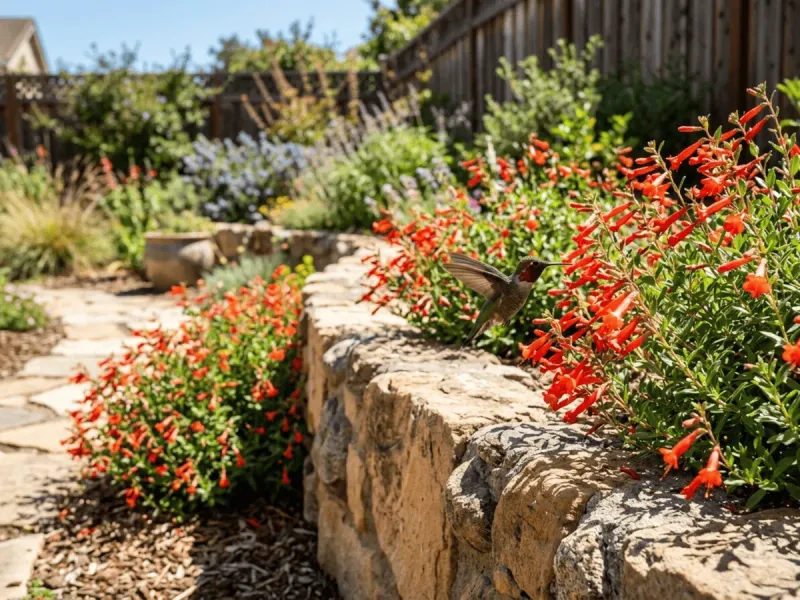
Ask any hummingbird fan in California what blooms when everything else gives up, and you will probably hear one name first. California fuchsia lights up from late summer into fall with flaming orange-red trumpets that seem made for a hummingbird’s beak.
It thrives on neglect. Once established, it needs little to no summer water in most areas, and it loves sun, slopes, and lean soil.
Cut it back hard in winter, since it spreads by roots and returns fresh each spring. Varieties like ‘Everett’s Choice’ stay low, while others climb to about two feet, so pick one that fits your space.
2. Cleveland Sage (Salvia clevelandii)
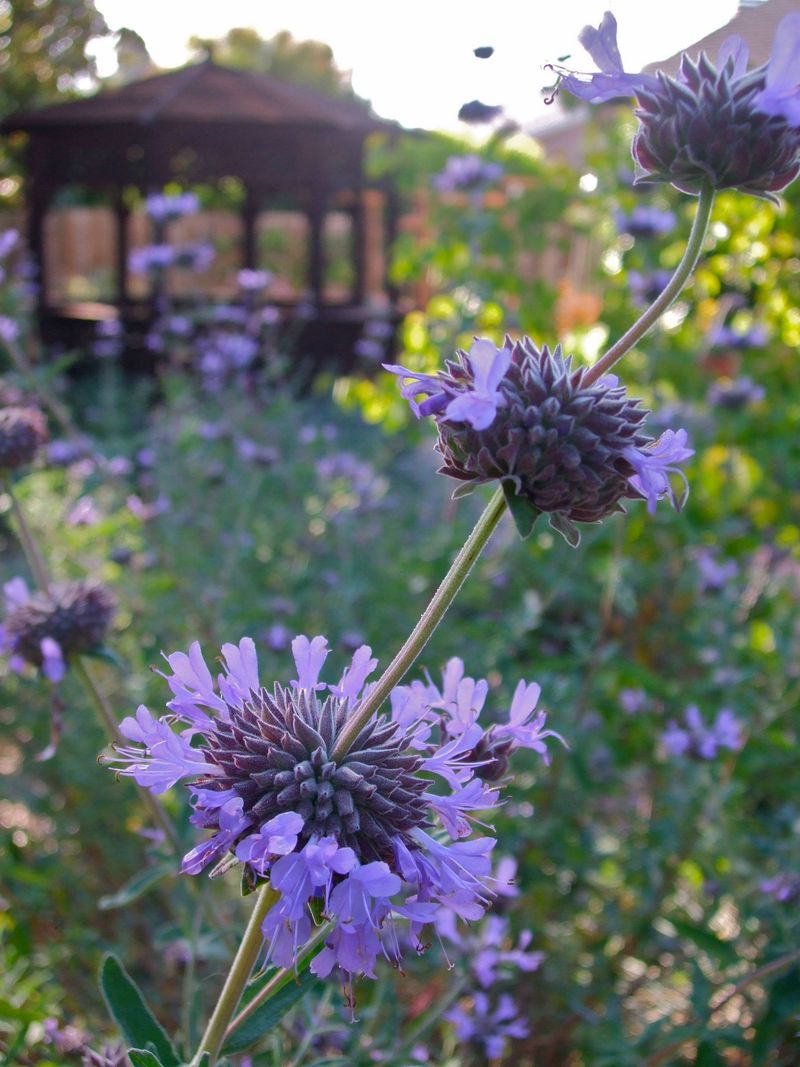
Brush past it on a warm afternoon and the whole yard smells like a hiking trail in the Southern California foothills. That fragrance is half the reason people plant Cleveland sage, but the bees are the other half.
Its stacked purple flower balls start in late spring and, with a light trim after the first flush, can push out extra blooms into late summer and early fall. Native bumblebees and carpenter bees work it constantly, and hummingbirds stop by too.
Give it full sun, fast-draining soil, and almost no water once it settles in. Overwatering is the most common way homeowners lose it, so let it stay dry.
3. Coyote Mint (Monardella villosa)
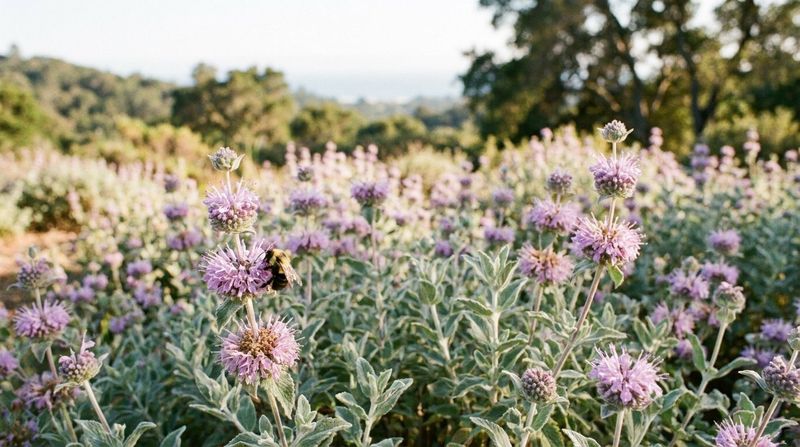
Small but mighty is the honest pitch here. Coyote mint forms a tidy mound under two feet tall, yet its lavender pom-pom flowers draw a crowd of tiny native bees, butterflies, and the occasional hummingbird.
Bloom often runs from early summer well into fall, especially near the coast or with an occasional deep drink inland. The leaves smell like a minty campfire tea when you crush them.
It fits nicely at the front of a border or along a walkway. Shear off spent flowers to tidy it and nudge out a few more blooms.
4. California Buckwheat (Eriogonum fasciculatum)
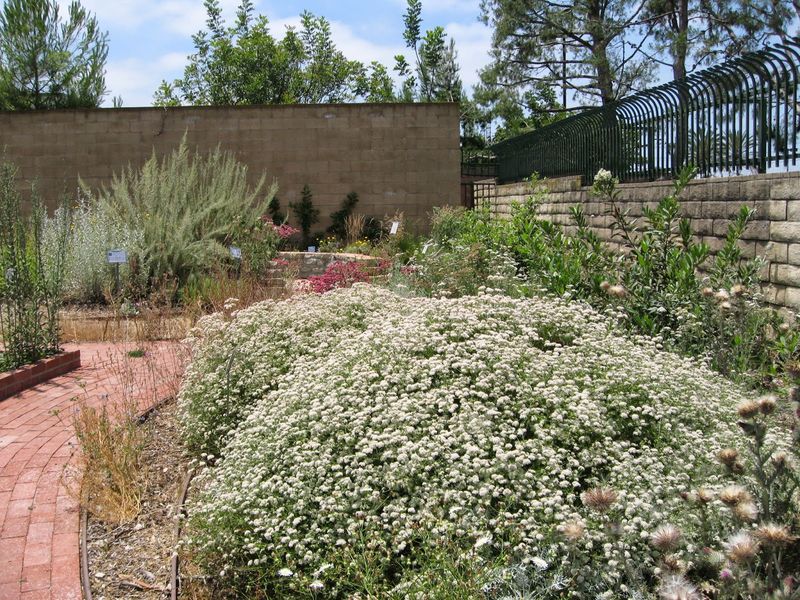
Few plants feed as many insects as this scrappy hillside shrub. Researchers and native plant groups often list California buckwheat among the top nectar sources in the state, and its clusters host a remarkable variety of bees, wasps, and butterflies.
Flowers open creamy white in late spring and keep coming through summer into fall in many gardens. As they age, they turn a warm rusty brown that looks great in autumn and can still offer seeds for birds.
Plant it on a slope or a sunny bare spot and walk away. It needs little summer water and helps hold soil in place.
5. Goldenrod (Solidago velutina ssp. californica)
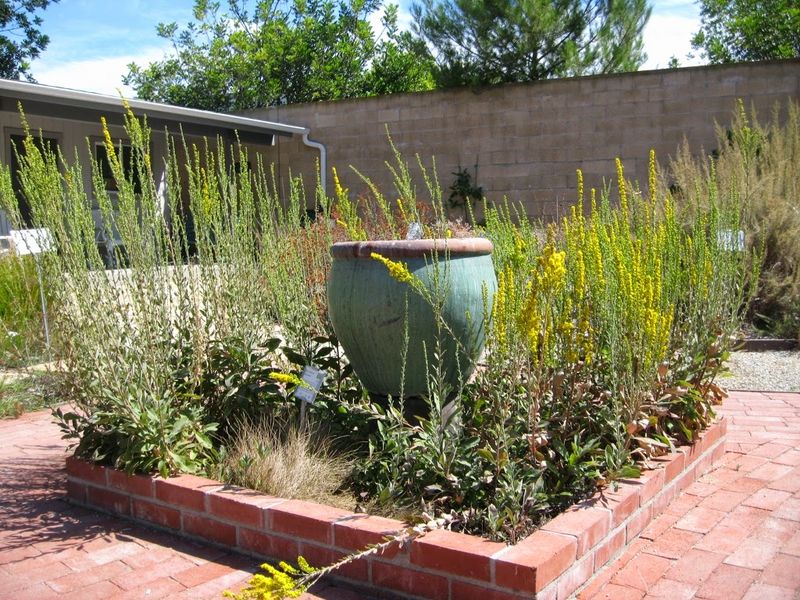
Here is a myth worth clearing up: goldenrod does not cause hay fever. Its pollen is heavy and carried by insects, not wind, so you can enjoy it without sneezing.
California goldenrod saves its show for late summer and fall, when bright yellow plumes rise above the leaves. That timing makes it a major food source for native bees and butterflies building up for cooler months.
It spreads by underground runners, so give it a meadow corner or a spot where it can roam. A deep watering now and then during the dry season can keep it looking fresh.
6. California Aster (Symphyotrichum chilense)
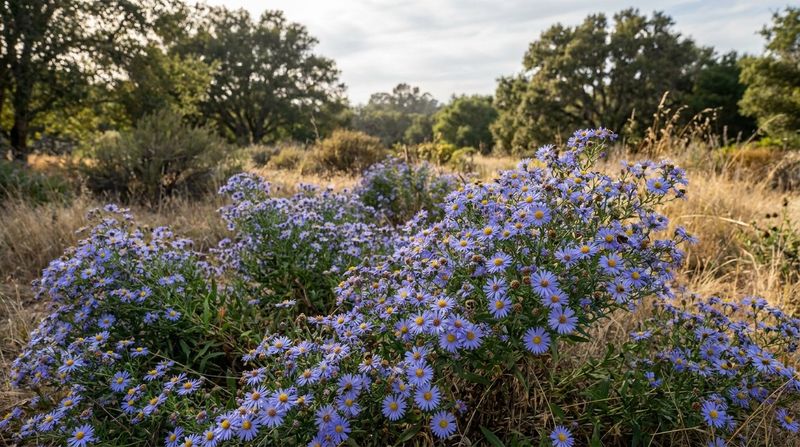
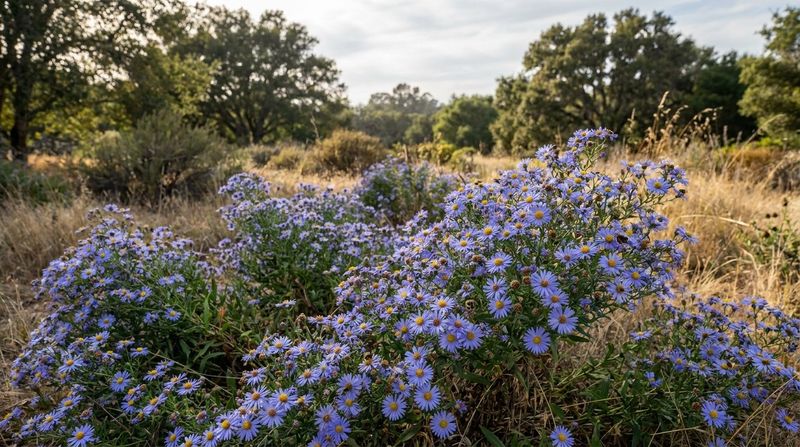
Picture a drift of soft lavender daisies in October, buzzing like a tiny city. Pacific aster, often called California aster, brings that scene to coastal and valley yards when most flowers are done.
Its blooms open from late summer into fall, giving native bees and butterflies a reliable late meal. It handles clay soil better than many natives, which is a relief for plenty of suburban homeowners.
Like goldenrod, it spreads by runners. Pair the two together for a purple and gold fall combo that pollinators adore.
7. Hummingbird Sage (Salvia spathacea)
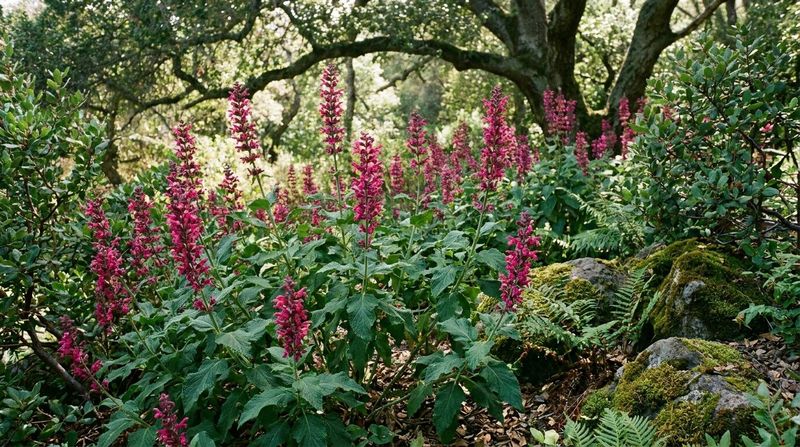
Got a shady spot under an oak where nothing seems to grow? Hummingbird sage might be your answer.
This low, fruity-scented sage spreads into a lush groundcover and sends up magenta flower spikes mostly in late winter and spring. That timing is the point: it fills the cool-season gap after fall bloomers fade, which keeps resident Anna’s hummingbirds fed when they are nesting.
It tolerates dry shade once settled and looks best with a little water in fall. Pair it with fall bloomers for nearly year-round hummingbird food.
8. Manzanita (Arctostaphylos)
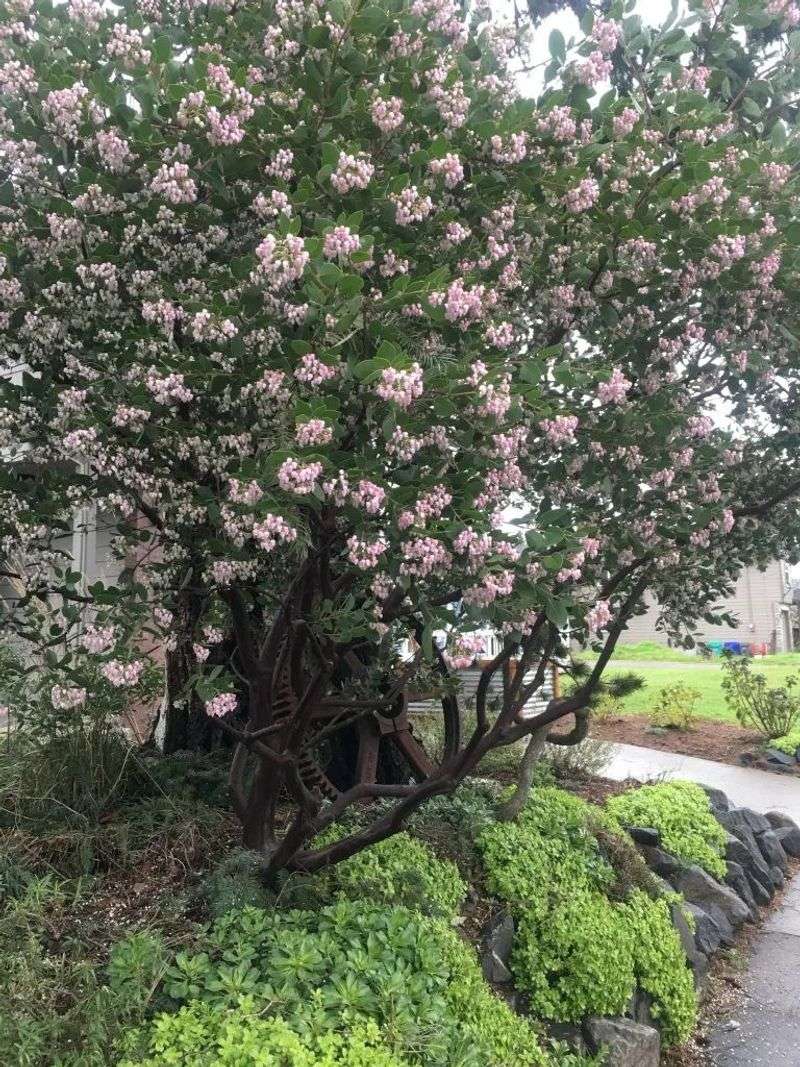
That twisting mahogany bark gets all the compliments, but the winter flowers do the real work. Many manzanitas bloom from roughly December through early spring, hanging tiny pink or white bells that feed hummingbirds and early queen bumblebees.
For a yard that stays alive year-round, that cold-season nectar is gold. Few other plants offer food during those months.
Choose a variety sized for your space, from groundcovers like ‘Emerald Carpet’ to small trees like ‘Dr. Hurd’. Plant in fall, water to establish, then keep summer water very light.
9. Toyon (Heteromeles arbutifolia)
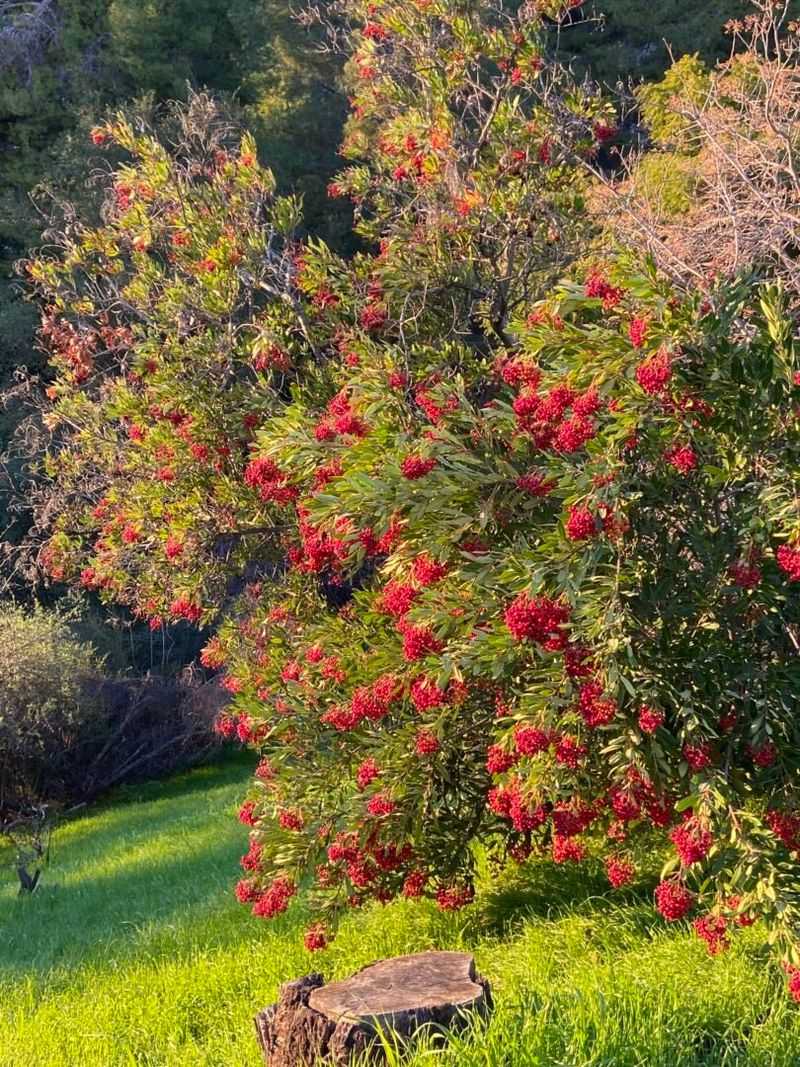
Legend says Hollywood got its name from this shrub, nicknamed California holly. True or not, toyon earns its spot in any wildlife garden.
Its white flower clusters arrive in early summer and draw lots of bees. Then in fall and winter, the plant turns red with berries that robins, mockingbirds, and cedar waxwings strip clean.
So while it is not a fall nectar source, it extends the feeding season for birds after pollinators slow down. It is drought tolerant, handles sun or part shade, and works as a hedge or small tree.
10. Desert Willow (Chilopsis linearis)
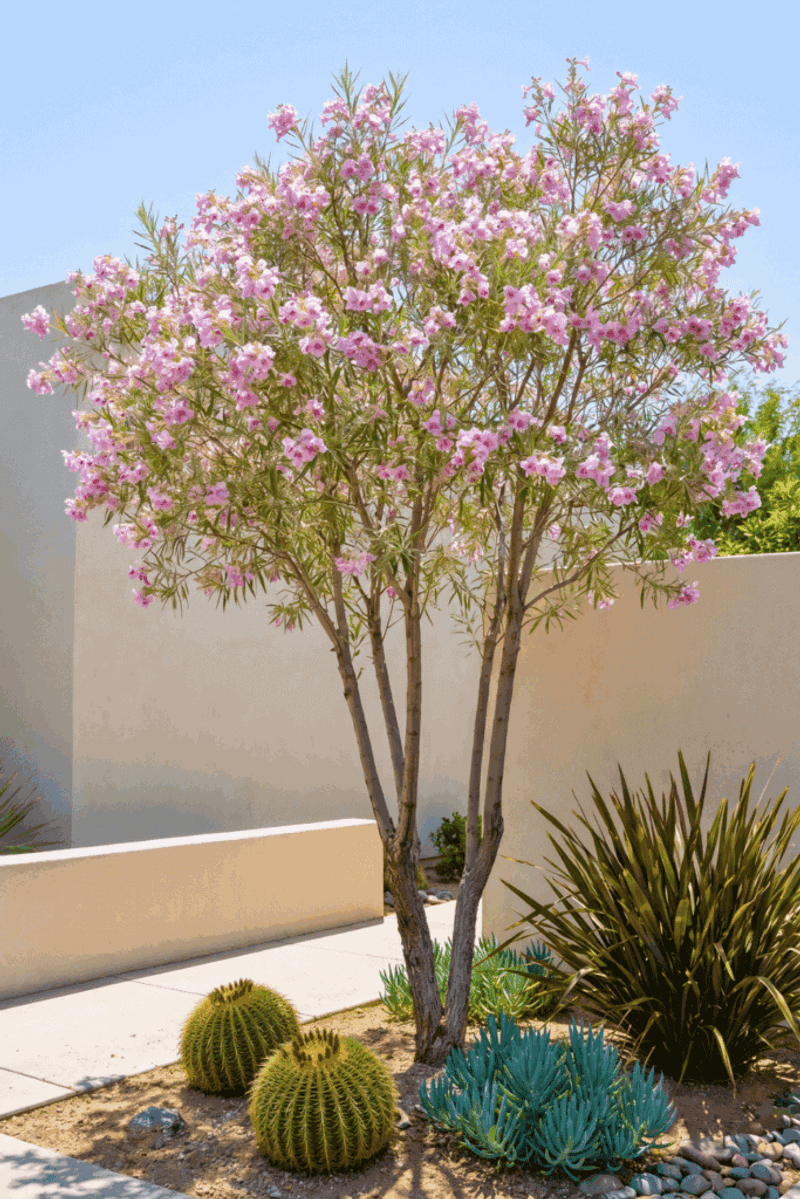
Inland gardeners baking in Riverside or the Central Valley, this one is for you. Desert willow shrugs off fierce heat and still pushes out orchid-like pink and purple trumpets.
Bloom can run from late spring through late summer and sometimes into early fall, especially with an occasional deep soak. Hummingbirds and large bees love the flowers.
It grows into a small, airy tree that casts light shade on a patio. It drops leaves in winter, so pair it with evergreen manzanita or toyon to keep the yard lively all year.