
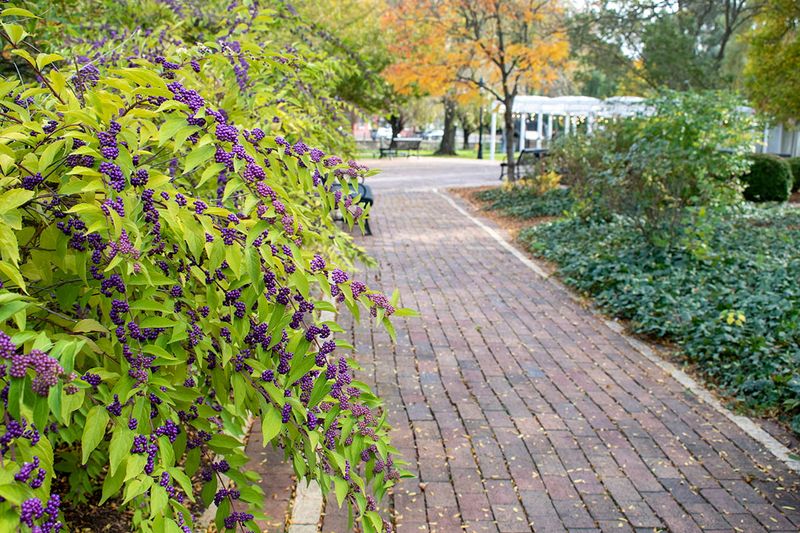
Dragging sheets across the yard gets old fast when North Florida strings together several frosty nights. The right native plants can handle normal winter cold without that extra work once they are established in the ground.
These seven picks offer everything from evergreen cover to flowers and bird food. Some lose their leaves or turn brown for winter, but that does not mean they need rescuing.
1. Yaupon Holly
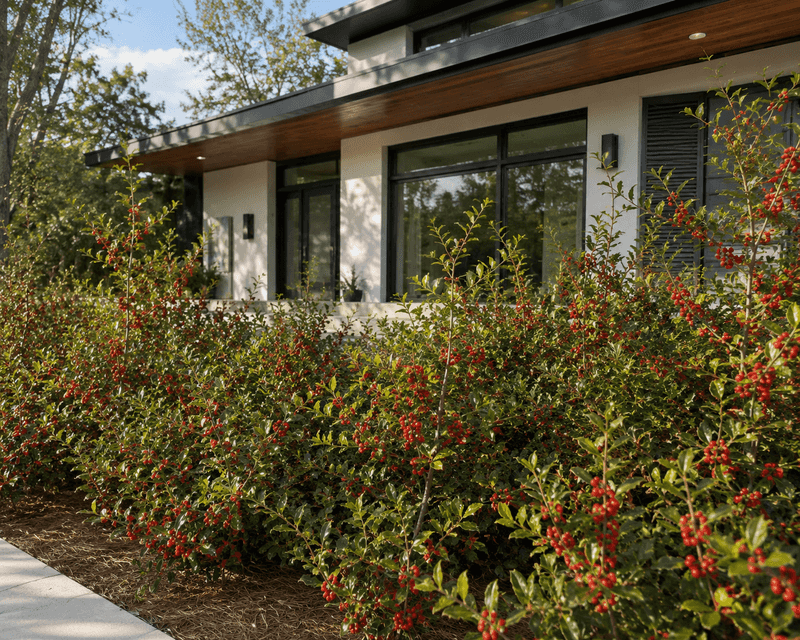
Red berries against green leaves can make a winter yard look cheerful even when the lawn has gone dull. Yaupon holly, Ilex vomitoria, brings that color while handling the ordinary frosts and freezes of North Florida without a cover once established.
Use it as a loose hedge, a large screening shrub, or a small tree near the front walk. Standard plants can reach roughly 15 to 25 feet tall, so check the mature size before planting beneath windows or power lines.
Give yaupon sun to partial shade and room for its natural branching. It handles a range of Florida soils, including sandy ground, and needs much less watering after its roots settle in.
Only female plants produce berries, and a male yaupon nearby is needed for pollination. If fruit is your goal, ask the nursery for a fruiting female rather than assuming every dwarf selection will deliver.
Birds use the berries, while the dense branches offer shelter. Keep pruning light, and remember that these fruits are wildlife food, not a snack for people or pets.
2. Wax Myrtle
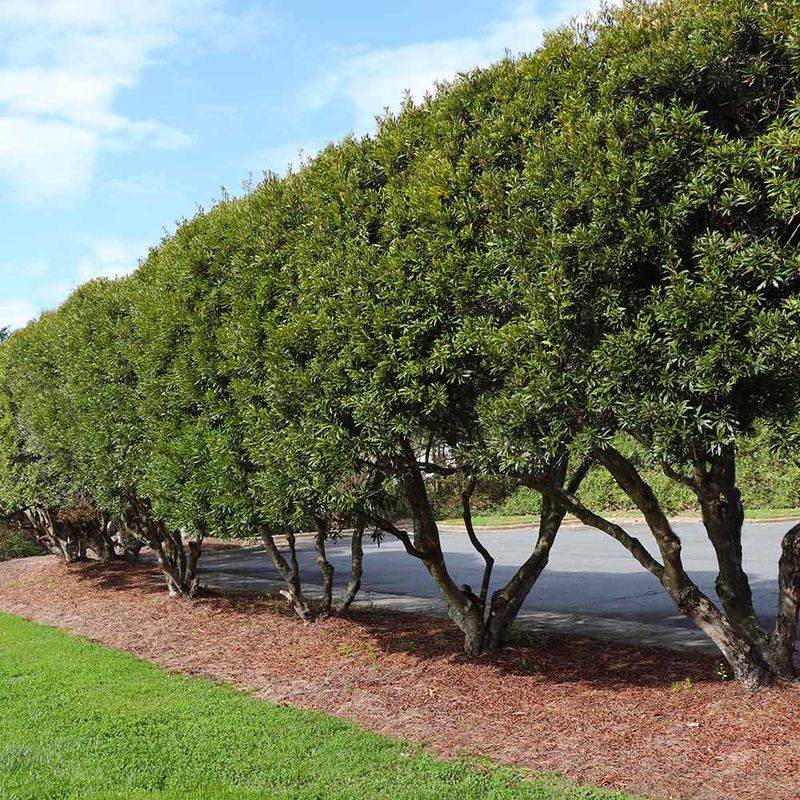
A bare fence feels a lot less exposed with a leafy screen in front of it. Wax myrtle, Morella cerifera, fills that role with airy evergreen growth that normally comes through North Florida winter weather without blankets or frost cloth.
Its biggest advantage is useful coverage without the stiff look of a tightly clipped hedge. Expect a large shrub or small tree, often around 10 to 20 feet tall, with enough width to require planning along narrow property lines.
Choose sun or partial shade, and water regularly while the plant becomes established. Wax myrtle tolerates sandy soil and seasonally moist sites, making it useful where growing conditions change across the yard.
Female plants carry small, waxy fruits when pollinated by a male. Those fruits feed birds, and the foliage releases a familiar spicy scent when gently crushed.
Thin crowded branches instead of constantly shearing the outside. Keep this potentially large, combustible shrub away from buildings where wildfire exposure is a concern, and do not mistake cold tolerance for freedom from all maintenance.
3. Dwarf Palmetto
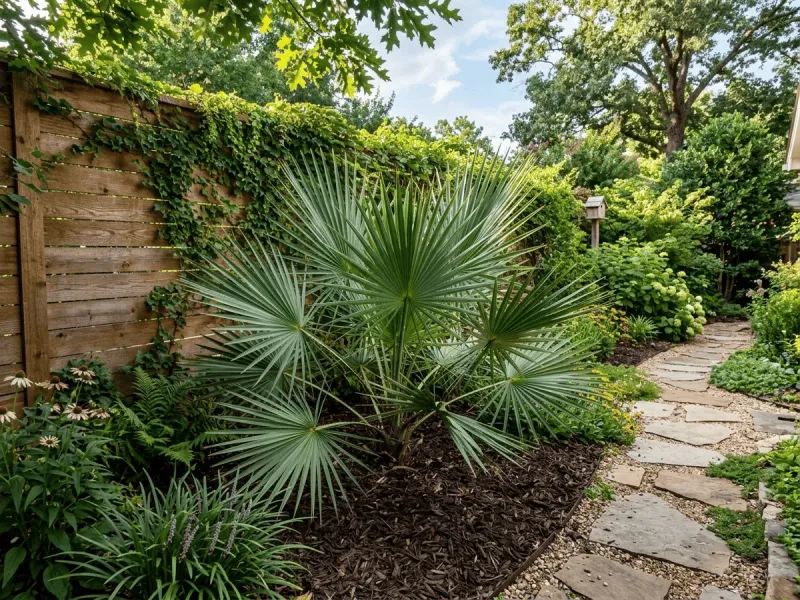
Want a palm look without wrapping a trunk every time the forecast turns cold? Dwarf palmetto, Sabal minor, offers broad fans and strong cold tolerance in a plant that usually keeps its trunk underground.
That low-growing shape makes it especially useful beneath trees or along a woodland edge. Many plants reach about 4 to 6 feet tall, although size varies, so leave space for the leaves to spread rather than crowding it against a walkway.
Partial shade and moist soil suit it well. Established plants tolerate some drier periods, but a hot, bone-dry strip beside pavement is not the easiest place to get one started.
Plant the root ball at its existing depth and water through dry spells during establishment. Growth can be slow, which is a reason to choose a healthy nursery plant rather than expecting instant coverage from a tiny pot.
Its foliage generally stays green through local winter cold, giving shaded beds structure when nearby perennials disappear. Remove fully dead fronds as needed, but leave healthy green ones to support growth.
4. Pink Muhly Grass
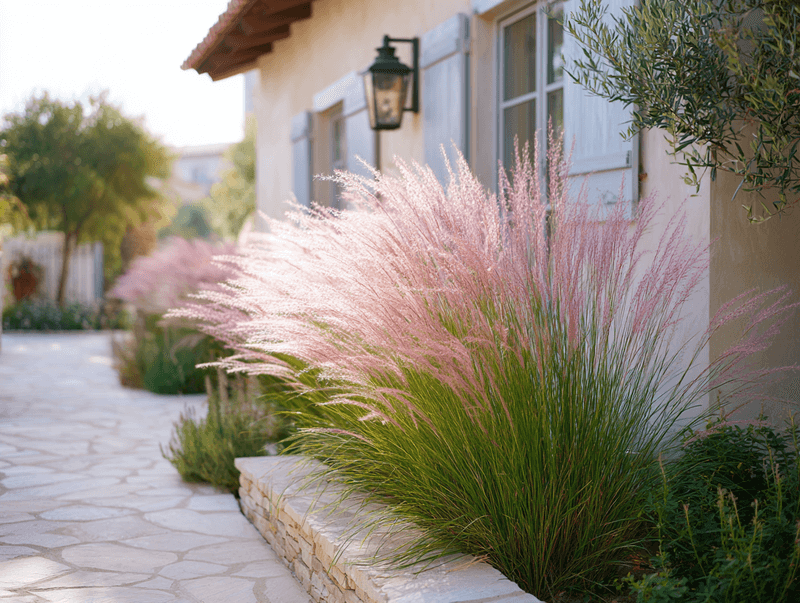
Those pink clouds do not need a rescue mission when frost arrives. Pink muhly grass, Muhlenbergia capillaris, is a native clumping grass whose established roots tolerate North Florida winter cold even as its airy flowers fade.
The fall display is its headline feature, but the fine blades also soften driveways, mailbox beds, and sunny borders. Plants commonly form clumps about 2 to 3 feet tall and wide, with flower stems reaching higher.
Full sun and good drainage matter more than rich soil. Sandy North Florida beds often suit it well, while a soggy low spot can lead to disappointing growth or decline.
Leave the tan stems standing through much of winter if you enjoy their texture. Brown foliage after cold weather is not, by itself, a sign that the plant has died.
Before fresh spring growth begins, cut back the old foliage without digging into the crown. Space plants for their mature width, avoid heavy fertilizer, and resist turning a naturally graceful grass into a tightly crowded row that stays damp at its base.
5. Oakleaf Hydrangea
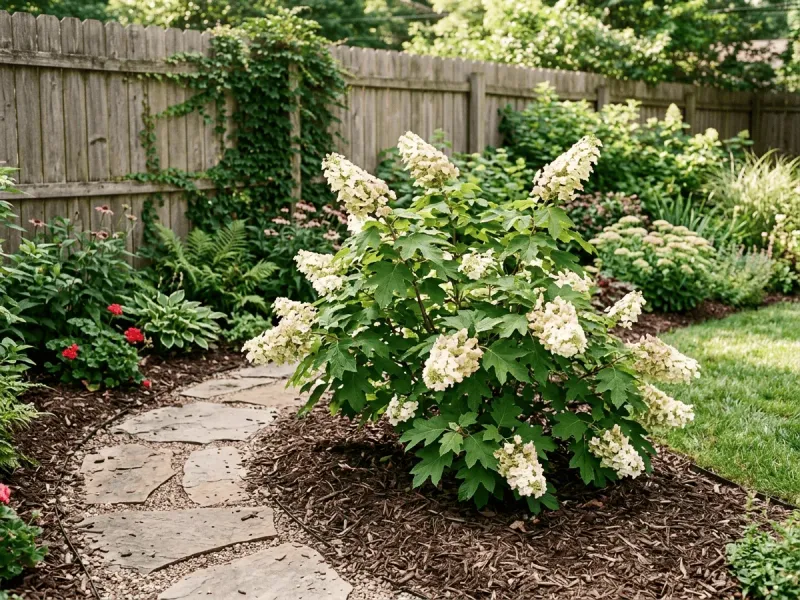
A shrub can lose its leaves and still be doing exactly what winter asks of it. Oakleaf hydrangea, Hydrangea quercifolia, goes dormant rather than needing to be tucked under a sheet during normal North Florida freezes.
Choose it for the shady side of the garden, where its large, lobed leaves create a bold backdrop. White flower clusters arrive in late spring or early summer, followed by dried flower heads and, in favorable conditions, rich fall leaf color.
Morning sun with afternoon shade is a useful starting point. Give it moist, well-drained soil with organic matter, especially where the existing sand dries quickly.
Size depends heavily on the selection, with full-size plants often reaching 6 to 8 feet or more. A compact cultivar can make more sense beside a porch, but check its label rather than relying on the word hydrangea alone.
Pruning is the detail that saves next year’s flowers: oakleaf hydrangea blooms on old wood. Avoid cutting it back in winter; if shaping is needed, do it soon after flowering, and keep watering during dry spells while roots establish.
6. American Beautyberry
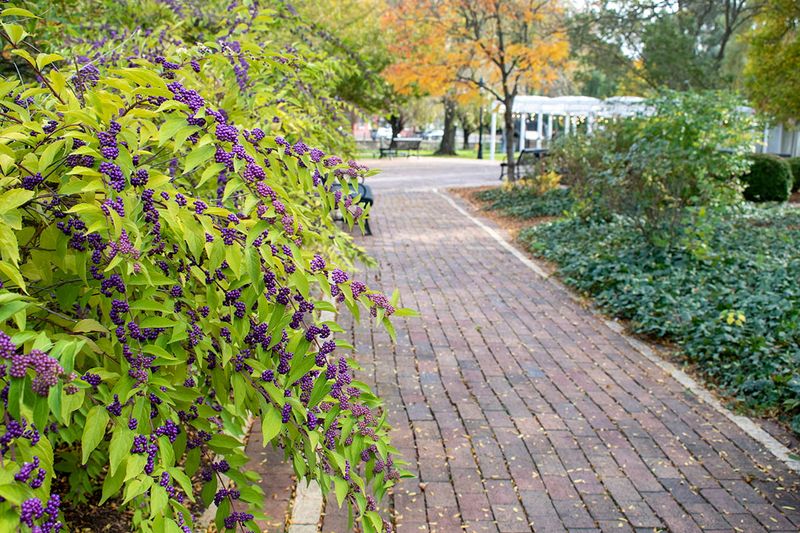
Purple berries stacked around arching stems give this shrub a look few other natives can match. American beautyberry, Callicarpa americana, earns its spot as a wildlife-friendly accent that does not need covering for ordinary North Florida winter cold.
The leaves drop as the season cools, leaving the branch pattern exposed. Berries may linger for a while, but birds and other wildlife often finish them, so do not count on a full purple display all winter.
Use beautyberry along a partly shaded fence, at a woodland edge, or behind lower-growing flowers. It commonly reaches about 4 to 8 feet tall and wide, and its loose shape looks best where it has room to arch.
Sun encourages a fuller plant and heavier fruiting when moisture is adequate. In dry, sandy yards, some afternoon shade and establishment watering can help it settle in.
Flowers and fruit form on new growth, so late-winter pruning is an option if the shrub becomes too large. Leave it alone when the natural shape fits the space; cold hardiness does not require an annual hard cutback.
7. Eastern Red Cedar
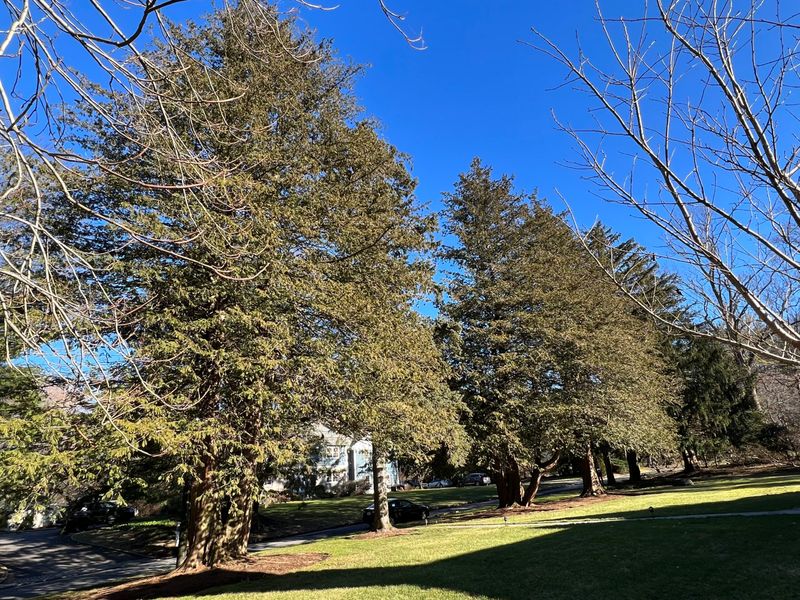
For year-round height, a tough evergreen tree does a job that smaller shrubs cannot. Eastern red cedar, Juniperus virginiana, stands up to North Florida cold while providing screening, bird shelter, and a strong outline in the landscape.
This is a long-term tree choice, not a filler for a small foundation bed. It can grow 40 feet tall or more, so place it where its mature canopy will have room away from buildings and overhead lines.
A sunny site with well-drained soil is the safest fit. Once established, it handles dry conditions well, but newly planted trees still need regular watering while their roots spread into surrounding soil.
Female trees produce blue, berry-like cones that birds eat. Dense branches also provide cover when open garden beds offer little shelter.
Buy from a nursery that can confirm the species and its suitability for your part of North Florida, since coastal sites may call for a different local juniper. For all seven plants, the no-cover promise applies to established, in-ground plants during typical local winter weather, not exposed nursery pots or every record-breaking freeze.