
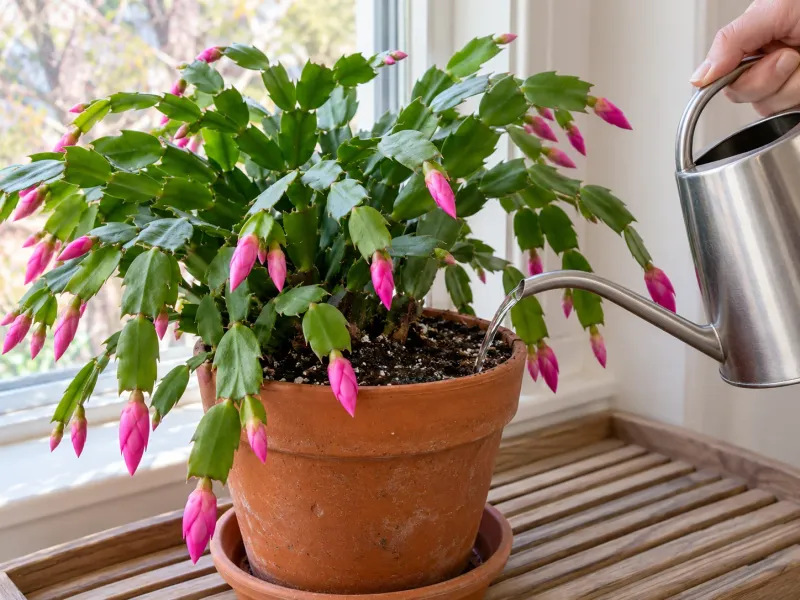
Your holiday cactus finally has buds, and now you want every one of them to open. Watering can help or hurt at this stage, even though it is not the main thing that starts the flowers.
Dry spells, soggy soil, and sudden changes can all make buds fall off. Here is how to keep the moisture steady and give those buds their best shot.
Watering can protect buds, but it cannot set the flower count
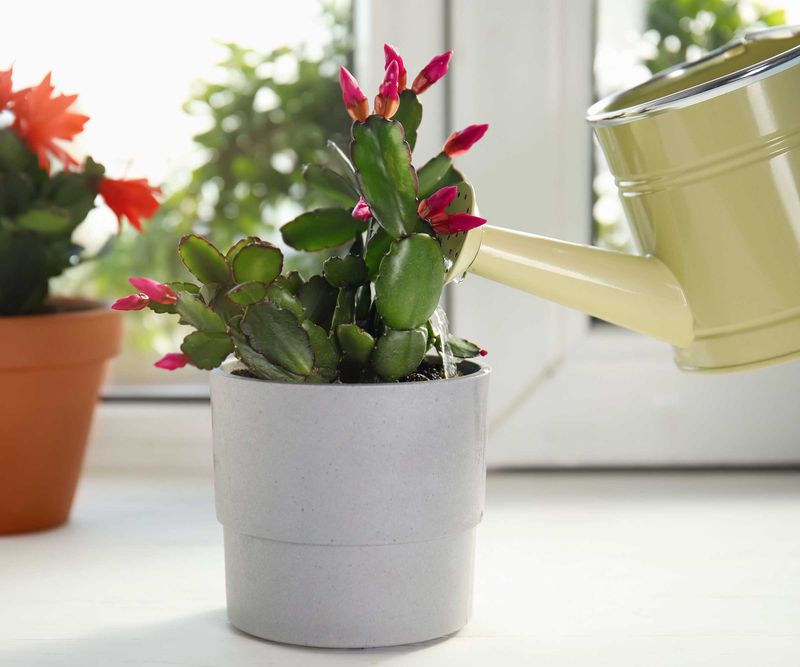
Here is the honest truth: one watering change will not decide how many flowers your plant opens. Flower buds form earlier, in response to seasonal cues, and UF/IFAS guidance points to day length and temperature as the main triggers for flowering.
Once you can see buds, the count is mostly set. What you can still control is how many of them stay on the plant.
Steady, sensible watering may help prevent bud loss, but it cannot reliably create new flowers after buds are already showing.
That is good news in a way. You are not trying to perform a trick.
You are trying to avoid stress, since Iowa State Extension warns that extremes in watering can cause buds to drop. Think of your job right now as protecting what the plant has already made, with no promise of a certain display or a certain date.
Shorter days and cooler temperatures help trigger flowering
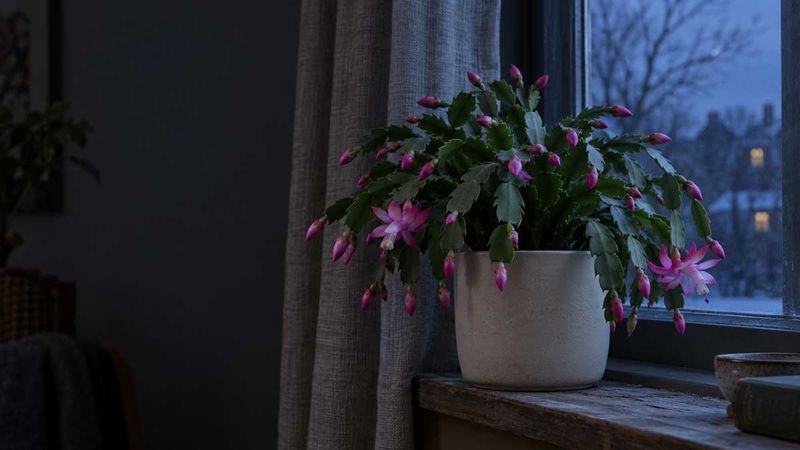
Long before any watering decision matters, the plant is reading the calendar. Shorter days and cooler fall temperatures are the cues that help prompt buds to form, according to Iowa State Extension.
Bright daytime light and long, uninterrupted nights give the plant its best chance.
Artificial light at night can get in the way. A lamp that turns on in the evening or a hallway light shining on the pot may interfere with bud formation.
If your plant sits in a room you use after dark, that is worth a thought.
Exact numbers vary by cultivar and by source, so no single light or temperature recipe fits every home. UF/IFAS also frames these cues as the starting point for flowering.
Water cannot stand in for them.
If buds are already visible, those cues have done their work. From here, the goal shifts to keeping the buds happy.
Once buds appear, avoid both drought and excess water
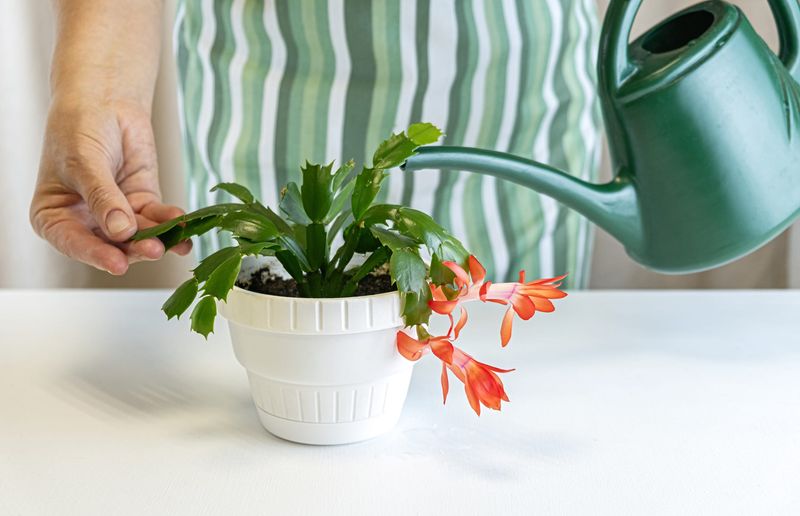
Picture a middle lane. Let the mix get bone dry and buds may shrivel and fall.
Keep it soggy and roots can struggle, which stresses the plant just as much. Clemson Extension advises keeping the growing medium evenly moist after buds set to prevent bud drop.
You may have read something different. Older guidance from Texas A&M’s Bexar County office, published in 2005, suggests cutting back water in August before buds develop, then giving adequate water to maintain bud set.
Those ideas fit together better than they seem. Slightly lighter watering ahead of bud formation is not the same as drought once buds are present.
Iowa State cautions against both overwatering and letting the soil dry out too much.
So skip the idea of starving the plant into bloom. Aim for steady care and avoid abrupt swings in either direction.
Check the mix before deciding to water
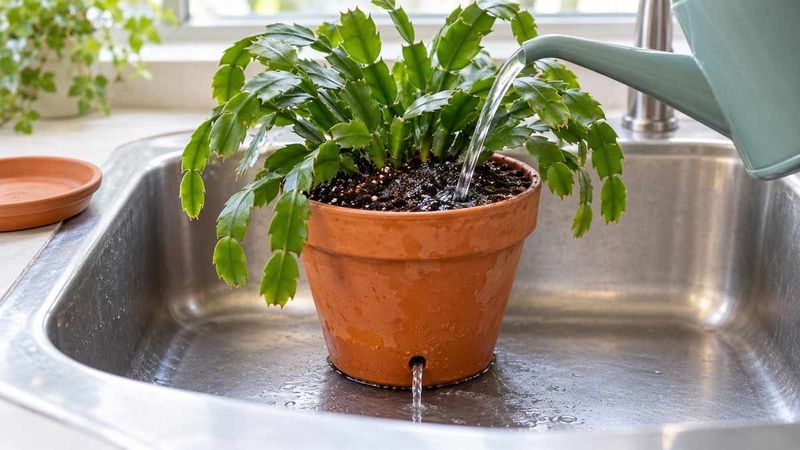
A calendar cannot tell you what is happening inside the pot, but your finger can. UF/IFAS recommends watering when the top inch of the mix feels dry.
Push a finger in and decide from there.
When it is time, soak the mix thoroughly until water runs out of the drainage holes. A light sprinkle only wets the surface and leaves the lower roots dry.
Then empty the saucer so the pot is not sitting in a puddle.
Drainage matters because waterlogged soil can lead to root problems and disease. Lift the pot after watering and check that the water is leaving freely.
If it pools on top or stays soggy for days, the mix or pot may need attention after the blooms are done.
Warm, sunny weeks may call for water sooner, and cloudy, cool ones later. Letting the mix decide keeps you from the extremes that bother buds.
Bud drop does not always mean you watered wrong
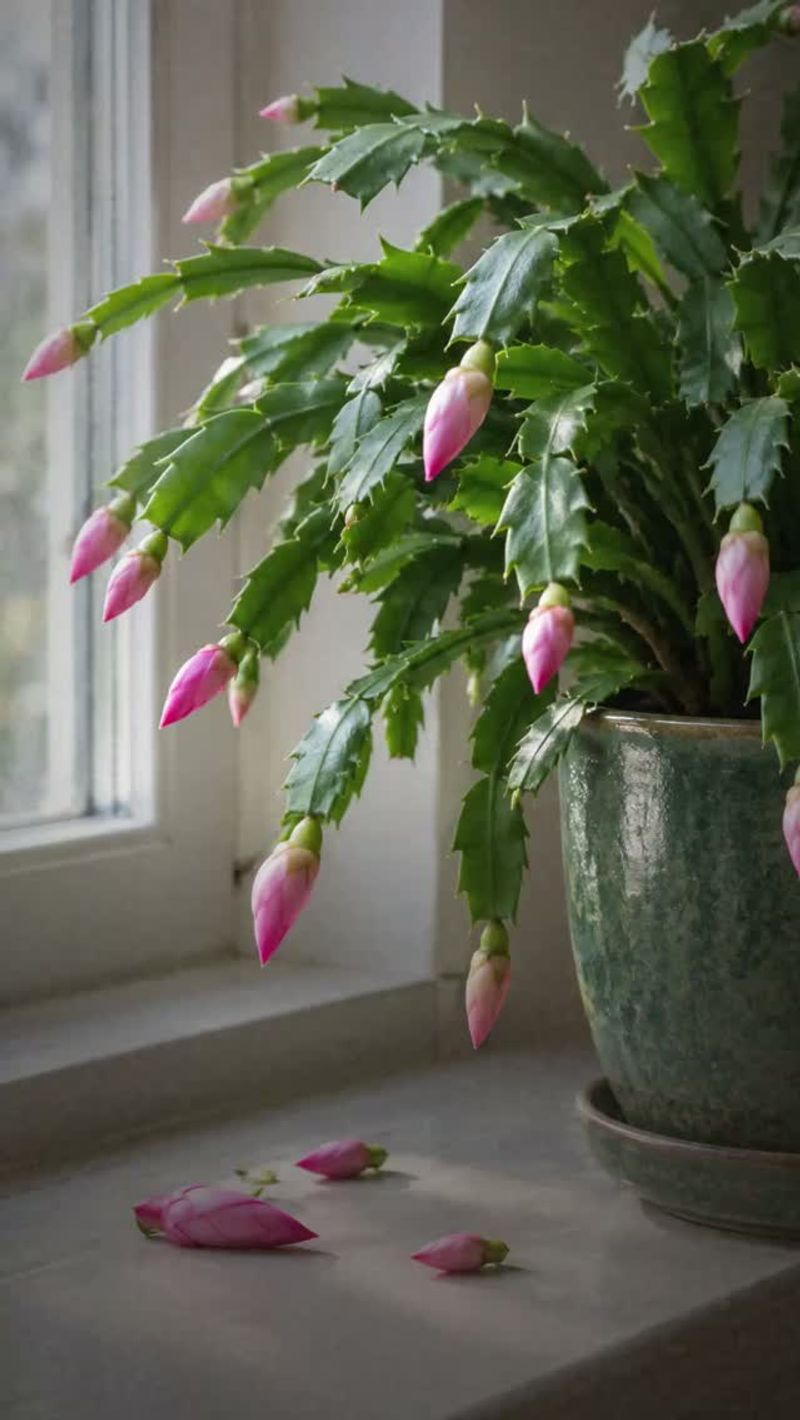
Finding buds on the floor feels like a verdict, but it is not always about the watering can. Sources point to several other possible contributors, including temperature swings, drafts, low humidity, too much or too little light, and other environmental changes.
NC State’s Plant Toolbox lists changes in conditions among the causes.
Take a quick inventory. Did you move the pot recently?
Is it near a heating vent, a cold window, or a door that opens often? Did the room get brighter or darker?
Any one of these may have played a part, and it is hard to say for certain which.
Watering still deserves a look, since Iowa State notes that dryness can cause buds or flowers to drop. Just avoid overcorrecting.
A sudden soaking after a dry stretch, or a big change in routine, can add more stress. Go back to checking the mix and keep the plant’s spot steady.
Protect this season’s buds and plan for the next
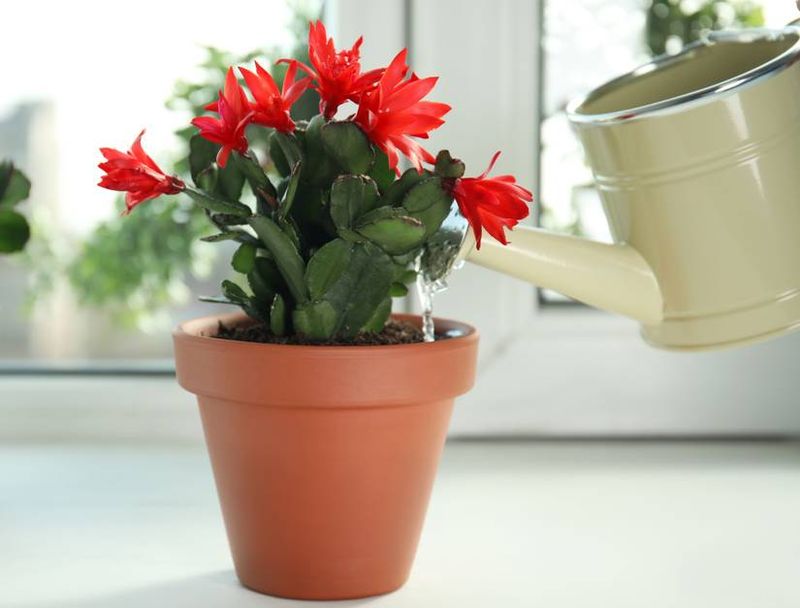
For now, keep things boring in the best way. Water by checking the mix, let excess drain, and leave the plant in a steady spot away from drafts and heat vents.
That gives existing buds a fair chance to open, though no one can promise a flower count or a date.
Timing varies because many plants sold as Christmas cactus are really Thanksgiving cacti or hybrids. Iowa State notes that their usual bloom time may not line up with Christmas.
Yours may open early or late and still be perfectly healthy.
Next year is when pruning comes in. UF/IFAS says late-spring pruning can encourage branching and increase flowering.
It will not change the buds already on your plant, so save the scissors for later.
A plant that is left alone and watered sensibly often rewards the patience.