
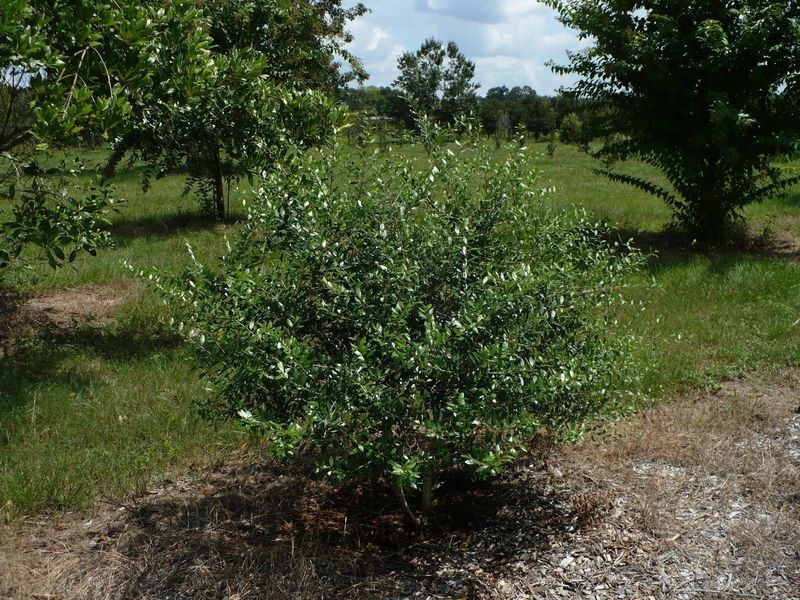
A tidy hedge can send seeds far beyond your property line when birds carry off its fruit. Some Ligustrum species, especially Chinese privet, have spread into Florida woods, where they crowd out native plants.
Not every privet has the same invasive risk, so checking the plant’s scientific name matters. These seven Florida natives offer useful privacy, with choices for sunny sand, shady patios, and coastal yards.
1. Wax Myrtle
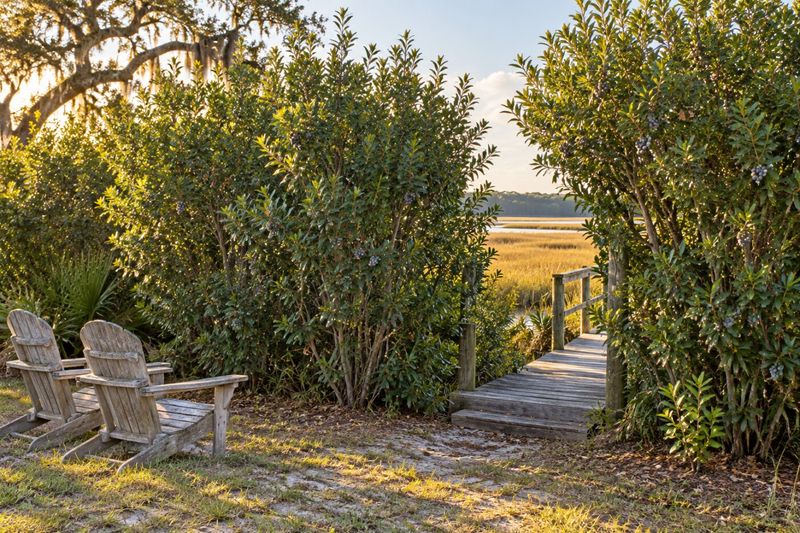
Need to soften a long fence without turning the yard into a clipped green box? Wax myrtle brings a loose, leafy shape that fits naturally beside Florida pines and woodland edges.
Morella cerifera commonly reaches about 10 to 20 feet tall, sometimes taller, and grows quickly when its needs are met. It works across much of Florida in sun or partial shade and handles a useful range of soils, including sandy ground and sites that stay seasonally moist.
Allow roughly 6 to 10 feet between plants for an informal screen, adjusting for the mature width you can accommodate. Give it generous room away from narrow walks, since repeated hard clipping defeats its easygoing shape.
Female plants produce small, waxy fruits when a male plant is nearby, offering food for birds. Ask the nursery about plant sex if fruit matters to you.
Water during establishment, then adjust irrigation to rainfall and soil moisture. Selective pruning keeps the lower growth full, while removing a few overextended branches preserves a softer outline than constant shearing.
2. Yaupon Holly
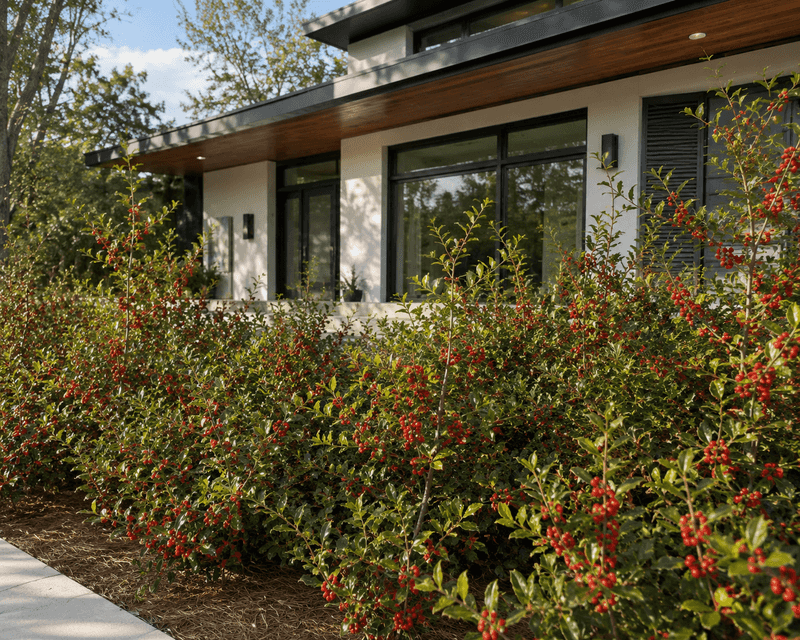
Bright red berries can turn a practical boundary planting into the liveliest corner of a winter yard. A fruiting yaupon holly gives birds a food source while its small evergreen leaves provide year-round cover.
Ilex vomitoria is especially useful in North and Central Florida, where it tolerates heat, pruning, and dry conditions once established. Full-size plants often reach 15 to 20 feet or more, so check the label carefully: dwarf selections will not become a tall privacy screen.
Choose sun for dense growth and heavier fruiting, although partial shade can work. Well-drained sandy soil suits it, and established plants usually need less attention than a thirsty, tightly sheared hedge.
Only female plants bear berries, and a male yaupon must grow nearby for pollination. A nursery can help you select a fruiting female and a suitable pollination partner.
For coverage near the ground, keep plants branched from the base rather than training them into small trees. Prune selectively, and remember that frequent shearing removes flowers and fruiting wood, reducing the berry display that makes this screen special.
3. Simpson’s Stopper
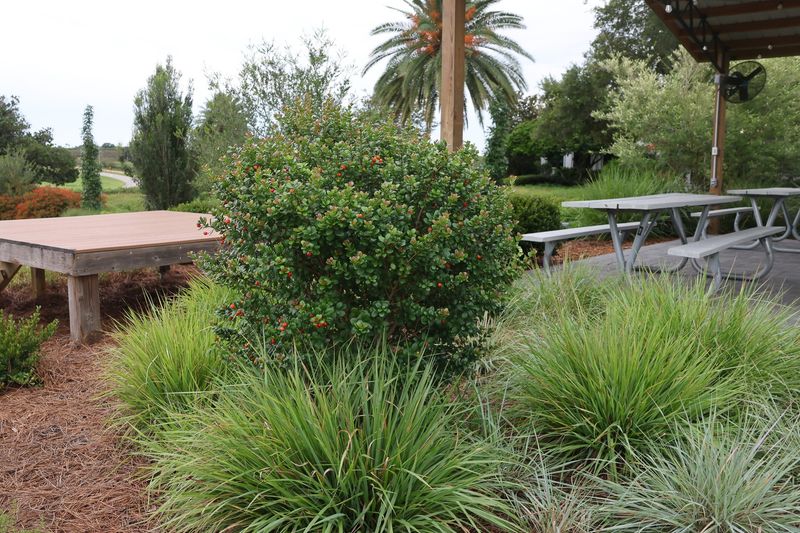
Privacy beside a patio should feel pleasant up close, not just block the neighbor’s windows. Simpson’s stopper earns that spot with fragrant white flowers, attractive foliage, and orange-red fruits that draw birds.
Myrcianthes fragrans is a strong choice for Central and South Florida, especially in warm locations with well-drained soil. It accepts sun or partial shade and can handle the alkaline conditions found in many southern Florida landscapes.
Unrestricted plants can grow into substantial shrubs or small trees, often 10 to 20 feet tall. For a home screen, choose a suitable selection and allow enough width to maintain it with light, selective pruning rather than constant trimming.
Its appeal is in the details: small leaves create a fine texture, and older stems may develop attractive peeling bark. Keep some branches low if your goal is privacy rather than a view beneath a tree canopy.
Provide regular establishment watering and avoid a planting spot that stays soggy. Where freezes are a concern, ask your county Extension office whether your location is suitable before investing in a full row.
4. Walter’s Viburnum
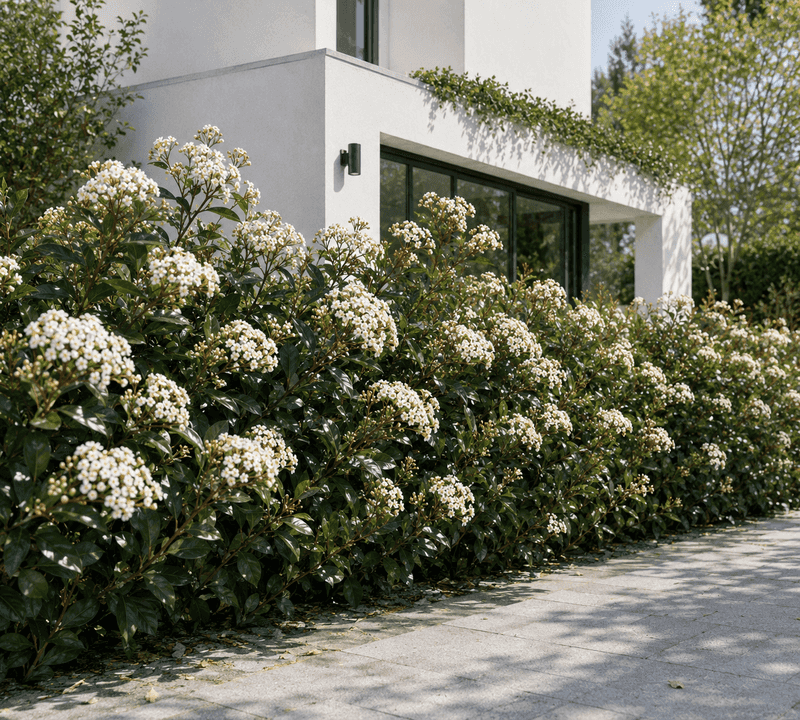
A spring flush of white flowers makes a property-line screen feel like part of the garden instead of a barrier. Walter’s viburnum delivers that seasonal show on a dense framework of small leaves and branching stems.
Viburnum obovatum is particularly useful in North and Central Florida. It naturally occurs in moist habitats, yet established plants can tolerate some dry periods; a site with reasonably steady moisture generally supports fuller growth.
Read nursery labels before buying, because cultivar size varies widely. Some selections stay compact, while the straight species and taller forms can reach 12 to 20 feet or more, making them better candidates for meaningful privacy.
Sun to partial shade works, with flowering and density generally better in brighter conditions. In colder parts of its range, foliage may thin or drop temporarily, so do not promise yourself an equally solid winter wall in every location.
Prune after flowering if shaping is needed, and watch for suckers that can widen the planting. That spreading habit is useful along a broad boundary but less welcome beside a narrow path or small bed.
5. Florida Privet
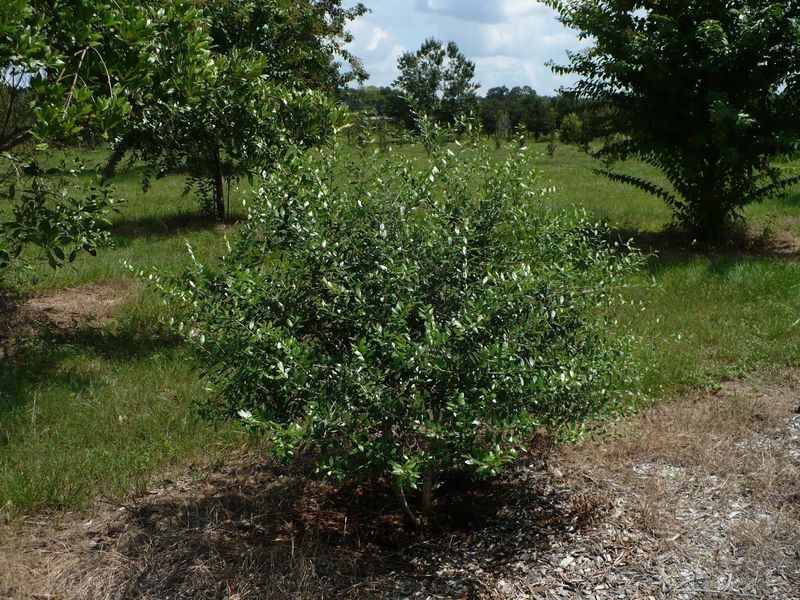
The word privet on a plant label does not always mean Ligustrum. Florida privet, Forestiera segregata, belongs to a different genus and is a native option worth knowing when replacing an escaped exotic hedge.
Its practical strength is tolerance of tough, sunny sites. Once established, it handles drought, alkaline soil, and coastal conditions, making it useful in many Central and South Florida yards where more delicate shrubs struggle.
Expect a large shrub, commonly around 10 to 15 feet tall, with size varying by site and pruning. Give it room to branch outward, and use selective cuts to encourage a leafy screen rather than stripping the bottom into bare trunks.
Small flowers are not the main attraction, but birds use the dark fruit produced by female plants when male plants are nearby. Nursery stock may not be labeled by sex, so ask if fruit production is a priority.
One trade-off deserves attention: cold or drought can cause some leaf loss. Choose it for a resilient, natural-looking boundary in a suitable climate, not as a guarantee of perfectly uniform foliage through every weather swing.
6. Wild Coffee
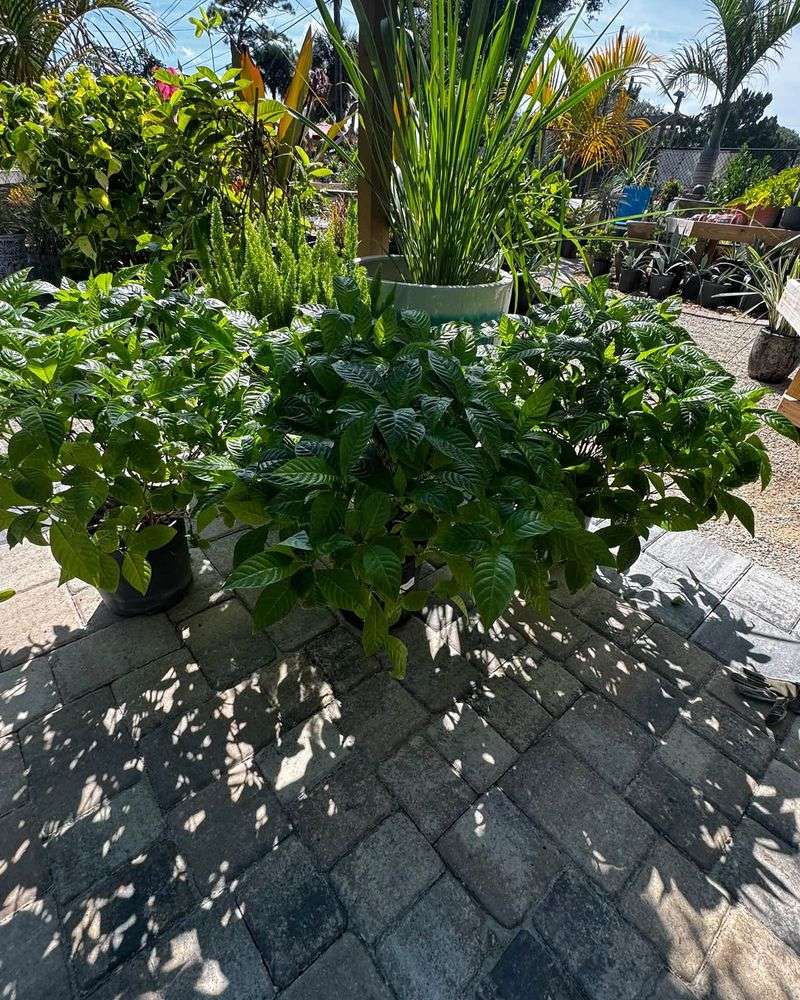
That shaded strip beside the porch needs a different plant than the blazing front fence. Wild coffee can fill the gap with glossy, deeply veined leaves that look rich even without a flower display.
Psychotria nervosa suits warm, sheltered Central and South Florida gardens, especially in partial to full shade. It commonly grows about 4 to 6 feet tall, sometimes taller, so think seated patio privacy or a leafy lower layer rather than a screen for upstairs windows.
Small white flowers attract pollinators, followed by red fruits that birds eat. Despite its common name, it is not the coffee plant used to make your morning drink.
Give wild coffee an organic mulch layer and enough water to establish a healthy root system. Avoid exposed, droughty sites and direct salt spray, which are better assigned to tougher coastal shrubs.
Freezing weather can damage it, so location matters more than a statewide native label might suggest. Under a suitable canopy, group several plants with space for their natural width, then prune lightly to keep the planting full without erasing its layered shape.
7. Cocoplum
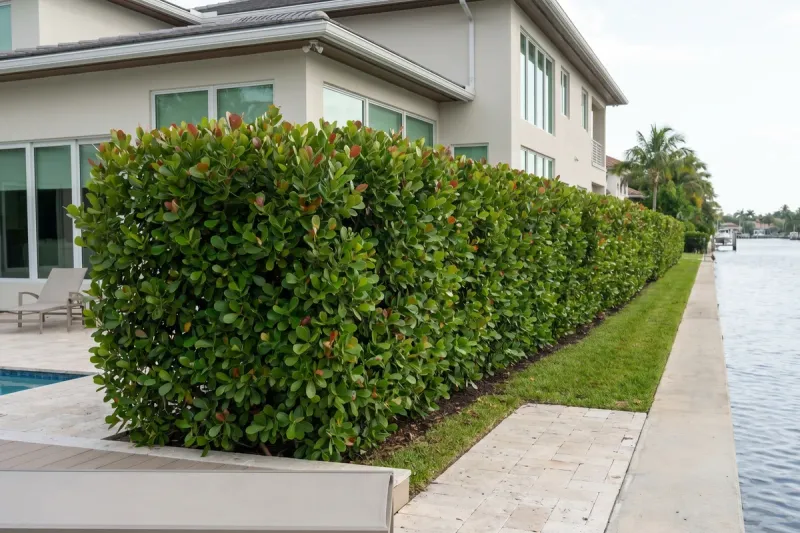
For a bold, leafy boundary in frost-free Florida, rounded cocoplum leaves provide a very different look from narrow-leaved privet. The broad foliage makes a substantial screen that suits tropical-style yards.
Chrysobalanus icaco is best matched to South Florida and other reliably warm locations. Upright forms can reach 10 to 15 feet or more, while low-growing coastal selections serve a different purpose, so confirm the mature height before purchasing.
Full sun encourages dense growth, although light shade is workable. Established plants tolerate drought, and some selections handle coastal exposure well, but salt tolerance varies with the form and its origin.
Red-tip selections add coppery new growth, while the plumlike fruits provide food for wildlife. Leave enough room for the hedge to develop a broad base, and avoid trimming it into a top-heavy shape that shades its lower branches.
When replacing an old Ligustrum row, identify the existing species before removal and plan follow-up checks for seedlings and stump regrowth. Your county UF/IFAS Extension office can help confirm invasive status and suggest removal methods, letting your new native screen start without the old hedge returning underneath it.