
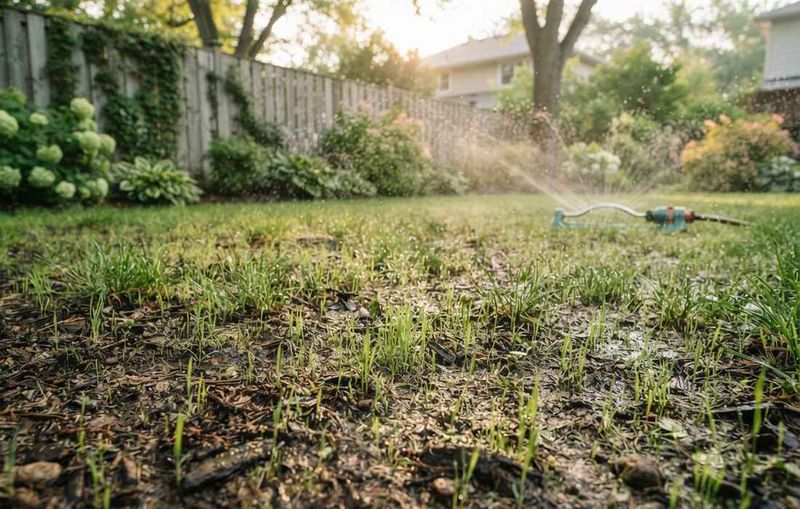
You spread the tall fescue seed, and then the rain stopped. Now the ground is drying out faster than you expected, and every seed in that soil is counting on you.
Fescue seed only gets one good run at sprouting, so a dry fall can waste it fast. Here is a simple watering rhythm that fits North Carolina yards.
How often should you water at first?
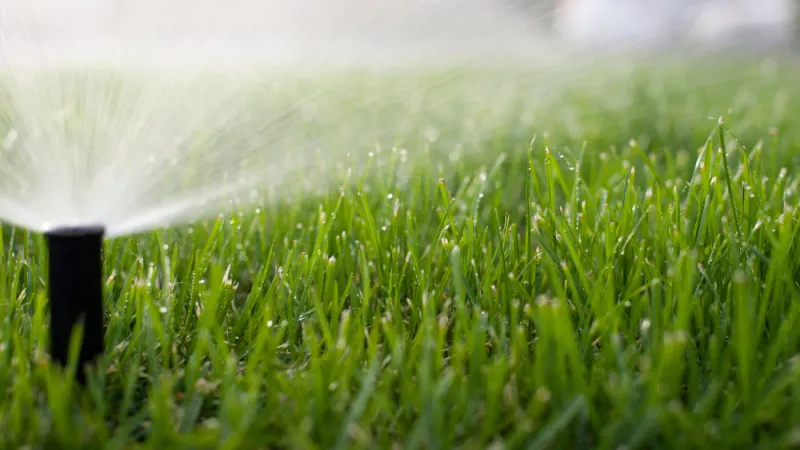
Plan on light watering two or three times a day as a starting point. NC State Extension’s lawn guidance says newly seeded lawns may need this for 7 to 21 days.
The goal is to keep the top 1.5 inches of soil moist, not saturated.
Notice the words “may need.” Two or three waterings a day is a rhythm to begin with, not a rule you must follow to the letter. If the seedbed is still damp at midday, you may not need another round.
If it has dried out, add a light watering.
That 7 to 21 day range is a care window. It is not a promise that your seed will sprout or settle in by a certain day.
Some yards will look green sooner, and others will take longer, depending on weather, soil, and how well the seed was planted.
Short, light sessions work best because seed sits right at the surface. The top layer of soil dries quickly in a dry fall, and seed that dries out after it begins to sprout can fail.
Frequent light watering keeps that thin layer from drying out without drowning it.
Think of it like caring for a damp sponge. You want it moist all the way through the surface, not dripping and not crusty.
Keeping that picture in mind will help you decide what the seedbed needs each day.
Check the seedbed, not the sprinkler clock
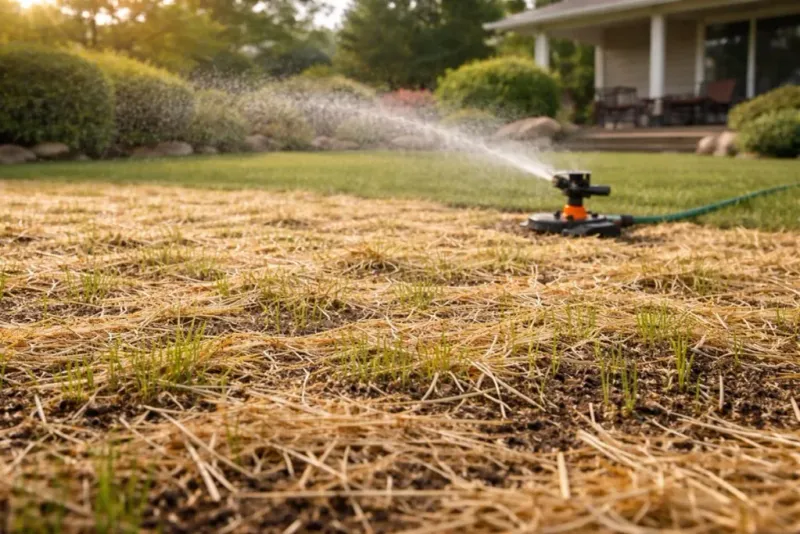
Your fingers are a better tool than a timer. Push a finger or a small trowel into the soil and look at the top inch or so.
If it feels damp and cool, the seedbed is in good shape. If it feels dry or looks pale and crusty, it is time for another light watering.
The target is the upper 1.5 inches, as described in NC State’s guidance. That guidance sets a moisture goal rather than a number of minutes.
How long a sprinkler needs to run depends on the sprinkler, your water pressure, and your soil, so no single runtime fits every yard.
A simple way to learn your own setup is to water briefly, wait a few minutes, and then check how deep the moisture went. Adjust from there.
Gentle applications also protect the seed. Extension guidance such as this University of Missouri lawn watering guide points to moist, not saturated, soil, since too much water can cause runoff and move seed around.
If you see puddles, washed-out lines, or seed collecting in low spots, you are applying too much at once. Cut back the time and use a finer spray.
Let rain and drying conditions guide the next watering
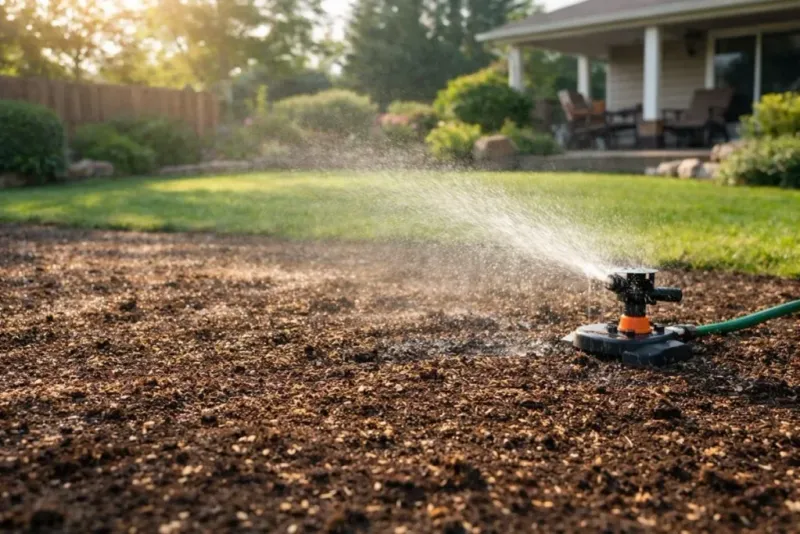
A dry fall does not change the goal. It changes how often you have to act.
When a good rain has soaked the seedbed, you can cut back or skip a watering. When days stay dry, check the soil and add a light application before it dries out.
Extension guidance such as Iowa State’s seeding advice centers on keeping the surface moist and adjusting to conditions. A cloudy, cool, or rainy day usually calls for less irrigation than a bright, breezy one.
Some spots will dry faster than others. Sunny slopes, windy corners, sandy soil, and exposed areas may need checking more often.
That is a practical inference from the moisture advice in sources like this University of Wisconsin watering guide, not a measured statewide rule.
A handy habit is to check your driest corner first. If it is still damp, the rest of the yard is likely fine.
If it is drying, water that area a little more often.
Your own yard is the best guide. Let what you see and feel in the soil set the next step.
Keep watering as seedlings grow, then taper
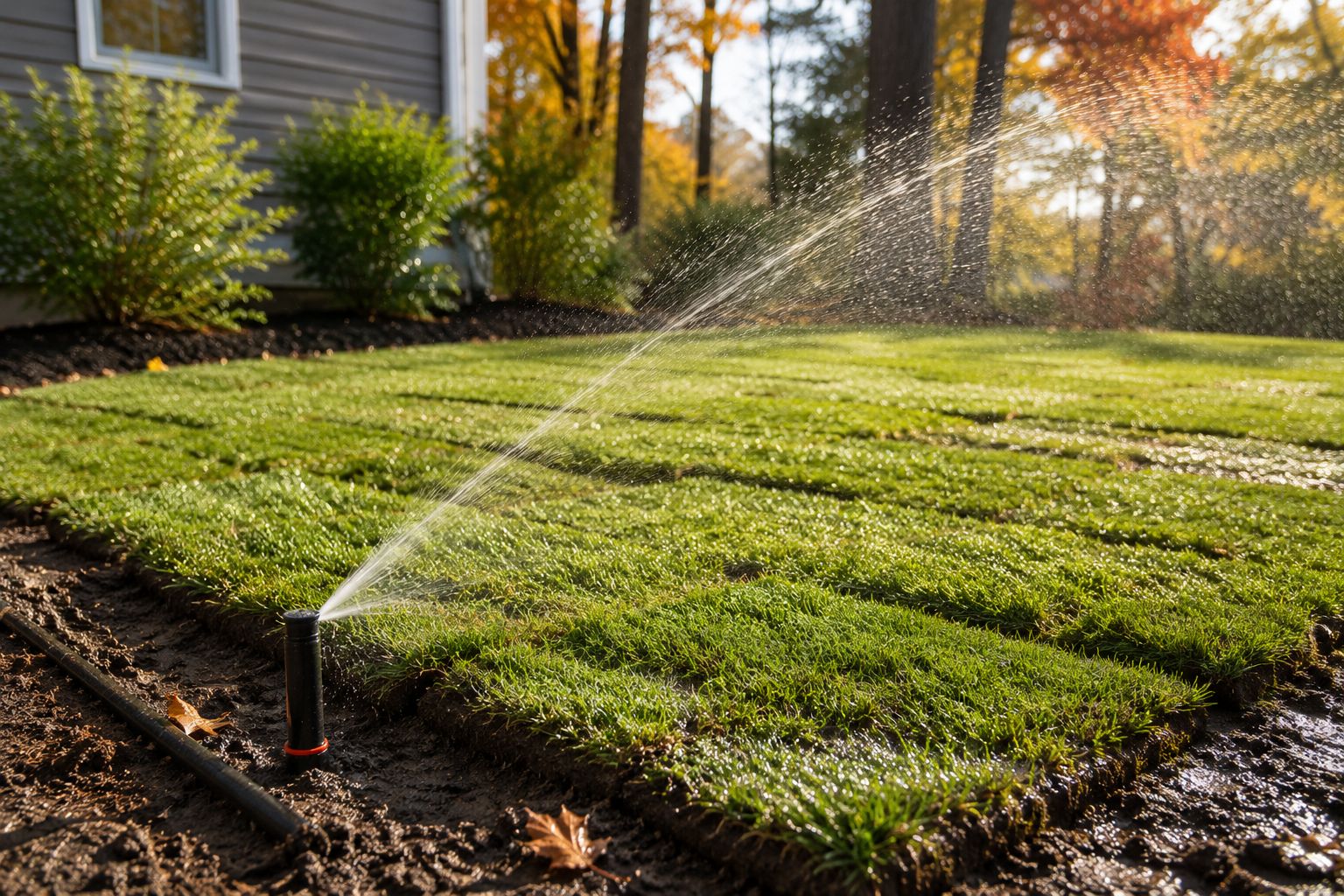
Seeing the first green shoots feels like a finish line, but it is not. Germination means the seed has sprouted.
Establishment means the roots have grown enough for the lawn to handle itself. Those are different milestones, and seedlings with tiny roots can still dry out quickly.
For timing, one University of Tennessee establishment guide estimates about 6 to 12 days for tall fescue to germinate. That is that guide’s estimate, not a North Carolina guarantee, so your lawn may be quicker or slower.
As seedlings grow and root, NC State advises watering less often but for longer periods. In practice, that means stretching the time between waterings and letting each one soak a bit deeper to encourage roots to follow the water down.
If your seed mix includes Kentucky bluegrass, be patient. It germinates later than other cool-season grasses, so cutting back right when the first fescue shoots appear can leave the slower seed without water.
Do not switch to the established-lawn benchmark too soon. The roughly 1 inch per week figure in the NC State tall fescue maintenance calendar is for established turf.
It does not apply during germination, when the surface needs steady light moisture.
North Carolina’s planting window still matters
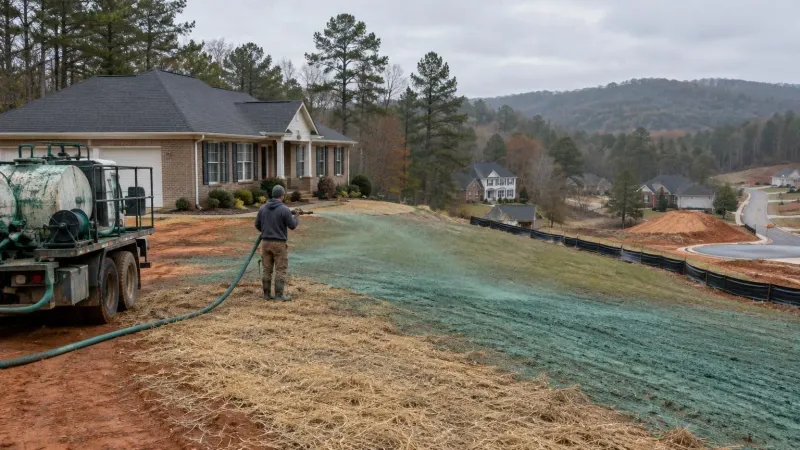
Water helps, but it cannot fix a late start. NC State lists the ideal tall fescue seeding dates as August 15 to September 1 in the mountains, September 1 to 15 in the Piedmont, and September 15 to October 15 in the Coastal Plain.
Those windows line up seed with the mild soil and air temperatures that help fescue get going before winter. Seeding after them raises the risk of failure, and cold conditions are part of the reason.
The NC State organic lawn care guide also warns about this.
If you are inside your region’s window, a steady moisture routine gives the seed its best chance. If you are past it, keep the seedbed moist anyway, but know the odds are tougher, and no watering routine erases that.
Even then, a thin stand is not the end. Tall fescue is a bunch-type grass, so bare or thin spots do not fill in on their own and may need reseeding in the next good window.
Treat these dates as a guide for the best odds, not a guarantee in either direction.
Use moisture—not a fixed clock—as your guide
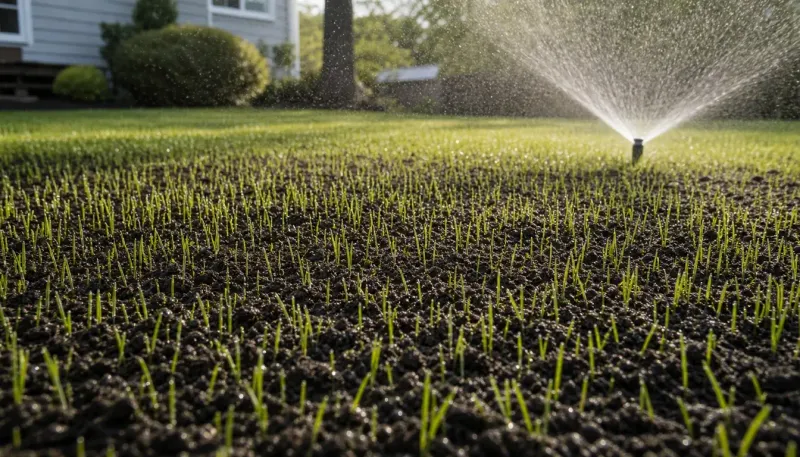
Check the seedbed, water lightly when the top inch or so starts to dry, and ease off after rain. As seedlings grow and root, water less often but for longer, as NC State advises.
This gives you a moisture goal, not an exact schedule or a guarantee.
The soil will tell you what the calendar cannot.