
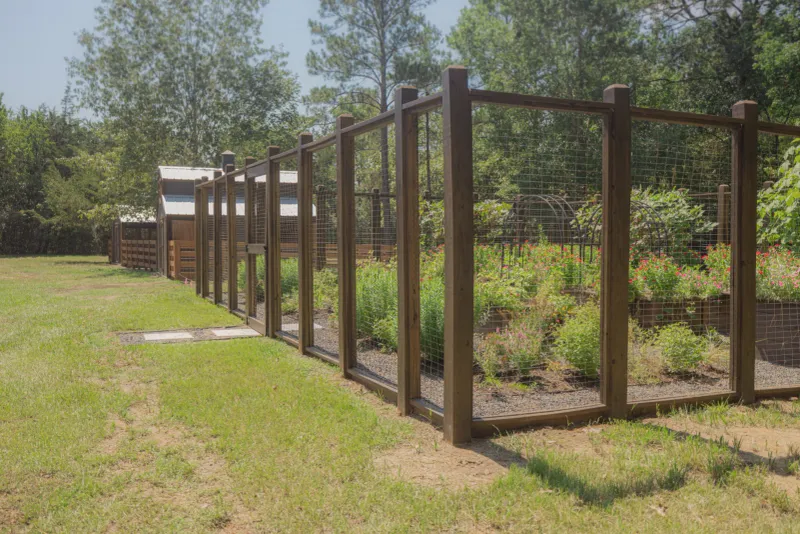
Walk out to your winter bed and find the kale chewed down, and deer are the first suspect. But the idea that deer swarm every Texas and Florida yard once fall arrives is too simple.
Local conditions matter much more than the calendar. Here is what is known about deer and garden beds, plus one documented fence design that may help keep them out.
Fall browsing depends on local forage
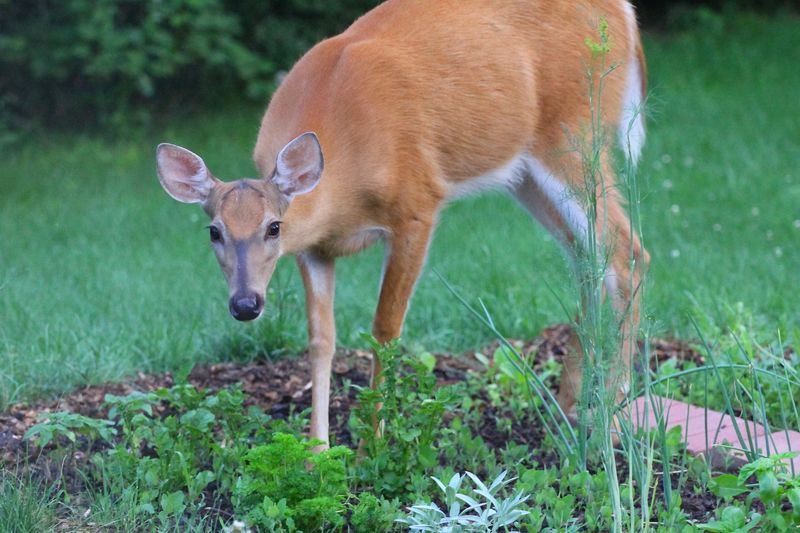
Fall alone does not tell you whether deer will visit your beds. In Texas, Texas Parks and Wildlife guidance notes that fall rains can improve forage quality, while a lack of rain can leave forage poor.
The Cross Timbers region of North Texas has its own seasonal limits, so one statewide pattern does not exist.
Florida deer eat a wide mix of foods. UF/IFAS lists leaves, twigs, flowers, acorns, fruit, and more, and habitat varies a lot from the Panhandle to the Keys.
So where does that leave your garden? Deer pressure is local.
A dry year in one county, a good acorn crop in another, or a new lot cleared next door can change where deer feed. Watch your own beds for tracks, droppings, and ragged, torn leaf edges before you spend money on a barrier.
Deer browse cultivated beds as well as wild plants
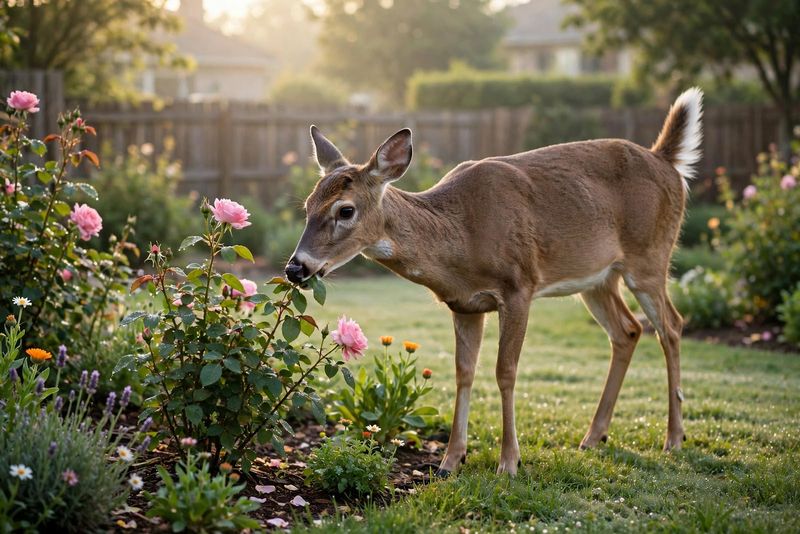
Deer are browsers, and a vegetable bed can look like one more place to eat. Florida’s FWC says deer sometimes damage cultivated crops and landscaping.
That is a general risk, not a prediction for your yard.
Their natural menu is broad, and the range of plants they eat is large. Winter greens are not shown to be a special favorite, and a deer will not always pick your garden over the woods or a neighbor’s shrubs.
Telltale signs help you sort deer from rabbits or insects. Deer have no upper front teeth, so they tear plants and leave rough, ragged edges, often higher off the ground than rabbit bites.
Hoofprints near the bed point to deer too. If you see those clues, a barrier is worth planning.
Two tiers can make a jump harder to judge
Picture a deer sizing up a barrier. Deer can clear tall fences, but they have trouble judging distance.
University of Maryland Extension explains that two parallel tiers are hard for a deer to jump because it cannot tell how far it needs to leap.
That is the idea behind the 3-D fence. It is a specific design with set spacing, not a random pair of short fences placed near each other.
Two passive short fences with no tested spacing are not the same thing.
Maryland Extension also says the inner tier need not be electrified. The outer tier is where deer are trained to stay away.
Even so, treat the setup as a deterrent. Well-designed fences still do not stop every incursion, so check your beds after installation.
The NRCS example specifies an electric design
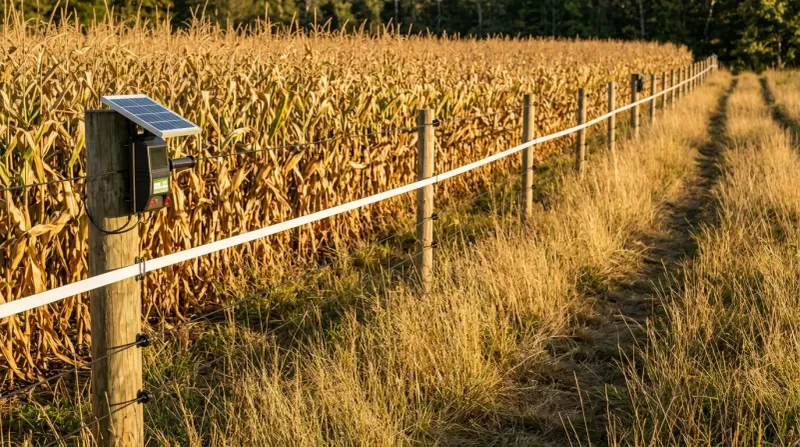
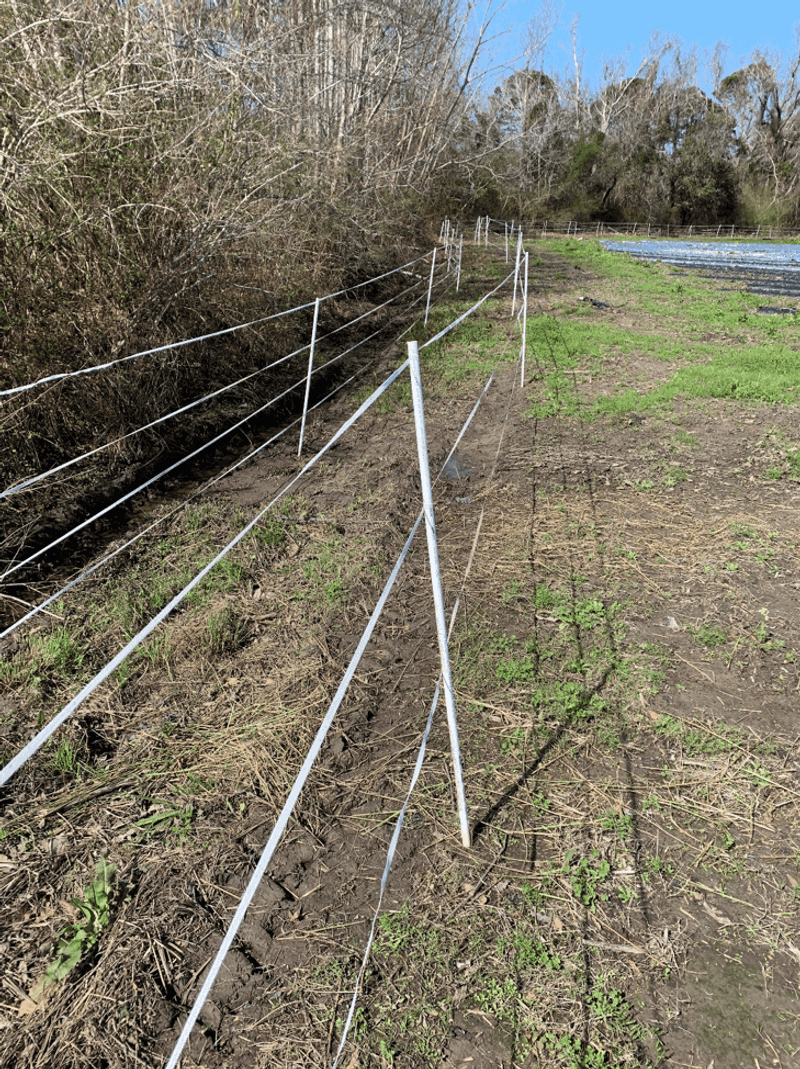
USDA NRCS gives one documented example in its wildlife-friendly fence instructions. It uses two parallel lines of posts set 36 to 38 inches apart, with two wires on each line.
On the inner fence the wires sit at 12 and 28 inches, and on the outer fence at 12 and 24 inches.
The example also calls for a clear approach area outside the fence, so deer meet the barrier in the open instead of finding cover next to it.
These numbers belong to an electric design. Do not copy them onto a plain, unpowered fence, because nothing here shows they work that way.
This is one example, not a rule for every property.
Read the full NRCS instructions before you buy posts and wire. Then follow your energizer maker’s directions for wiring, grounding, and setup.
Electric fencing needs precautions and upkeep
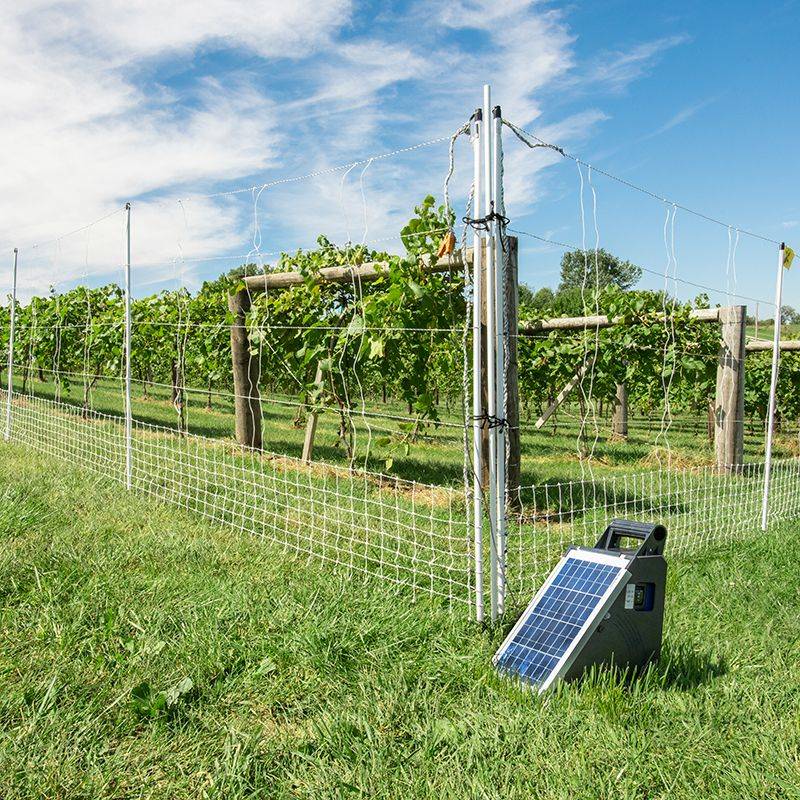
An electric fence is only safe and useful when it is managed. Texas A&M AgriLife advises making electrified fencing visible, posting warning signs, and never climbing through or stepping over it.
Check local rules before you install anything.
Upkeep matters too. Dry soil can impair grounding and make the fence less effective, which is a real concern during Texas droughts and Florida’s dry season.
Test the fence regularly and clear weeds or branches that touch the wires. Electric fencing is not maintenance-free.
Other animals are affected as well. Maryland Extension notes that fences can impede wildlife movement and that marking a fence can reduce collision risk.
Birds, small mammals, and other wildlife share your yard with deer, so flagging the wires helps them too.
Compare the 3-D design with other options
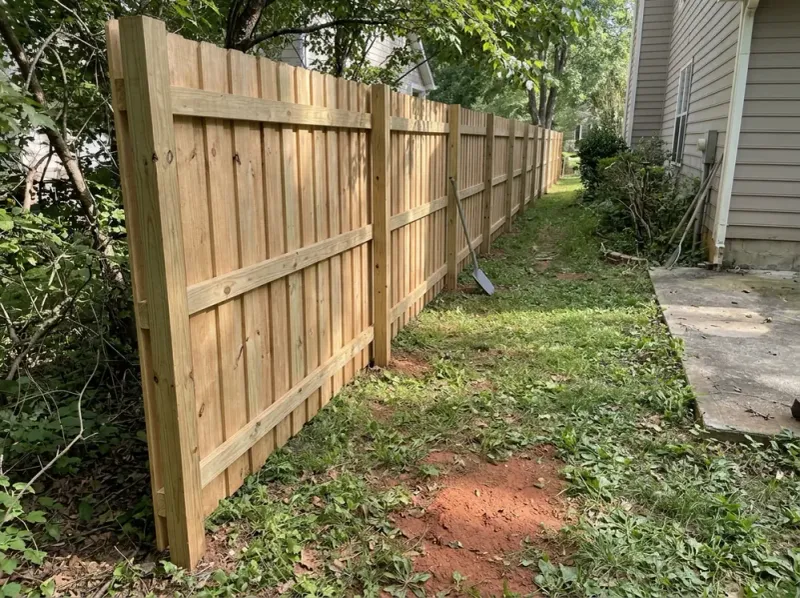
The 3-D fence is not the only route. Florida IFAS recommends a single fence at least 6 feet high for deer exclusion.
That is a separate option, and it does not show that a shorter double fence will work.
Repellents are a weaker choice. IFAS says they rarely eliminate damage completely, so treat them as a partial help at best.
Maryland sources also describe some scare devices as short-lived or variable.
Maryland’s vegetable production recommendations add that double-barrier fencing does not give the same protection as a properly designed, maintained high-tensile electric fence.
Pick based on what you see. Light, occasional nibbling may call for a smaller step than a yard where deer visit nightly.
Whatever you build, plan to maintain it, since a fence is a deterrent and not a promise.