
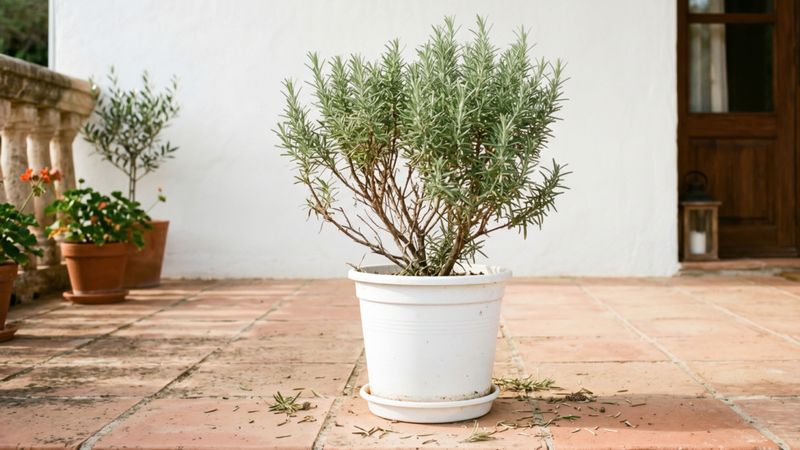
Crispy, brown needles on a potted rosemary can make any gardener panic. Many people blame the cold, but soggy soil is one cause worth checking too.
Dry air, weak light, and too little water can leave similar marks. A few simple checks of the soil and roots can help you figure out what your plant needs.
Brown foliage can have more than one cause
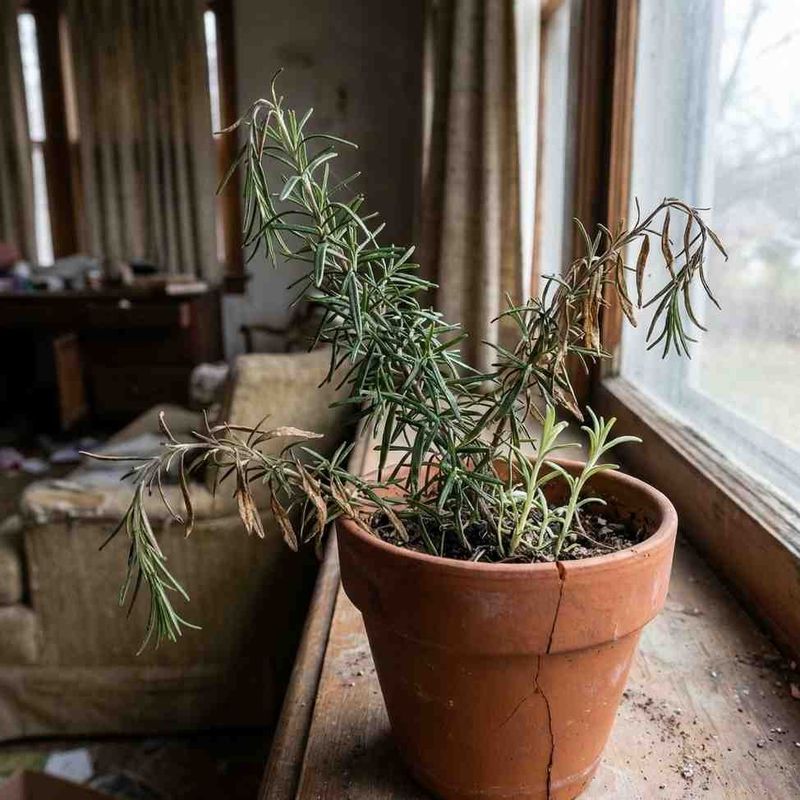
Wet soil is a real threat to rosemary. Rosemary likes well-drained soil, and soil that stays soggy for long stretches can lead to root rot.
But brown needles alone do not prove that overwatering is the problem, even when the browning starts inside the plant.
Dry indoor air is another suspect. Illinois Extension notes that rosemary brought indoors can develop brown tips and dieback from dry conditions, and that adding water to fix those symptoms can actually encourage root rot.
Low light, too little water, and cold exposure can also play a part.
Because several problems can look alike, University of Florida plant disease specialists point gardeners toward the soil and roots rather than the look of the leaves. Houseplant guidance from UC IPM also treats light, temperature, and watering as linked factors.
Treat the browning pattern as a clue, then confirm it with a few checks before you change how you care for the plant.
Check the soil and roots before changing care
Start with your finger. Push it a couple of inches into the potting mix and note whether it feels wet, damp, or dry.
If the mix stays soggy day after day, or the plant wilts even though the soil is wet, it is time to look at the roots.
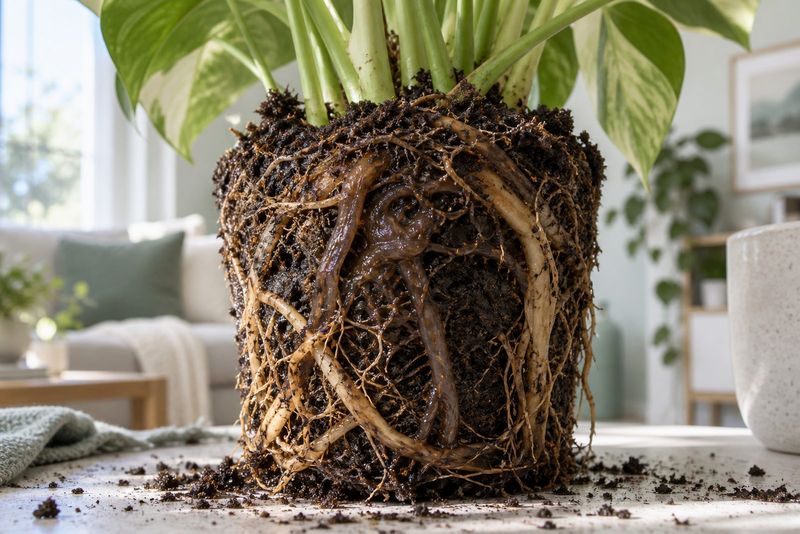
Slide the plant out of the pot and look at what is underneath. University of Florida guidance describes healthy roots as firm and light in color.
Roots that are brown or black and soft are consistent with root rot.
You may also notice a sour smell coming from the pot. That can go along with soil that has stayed waterlogged, but a smell does not tell you which organism is involved.
If the roots look firm and pale and the mix is dry, root rot is less likely, and you can look at air, light, or cold instead.
Let the mix—not the calendar—guide watering
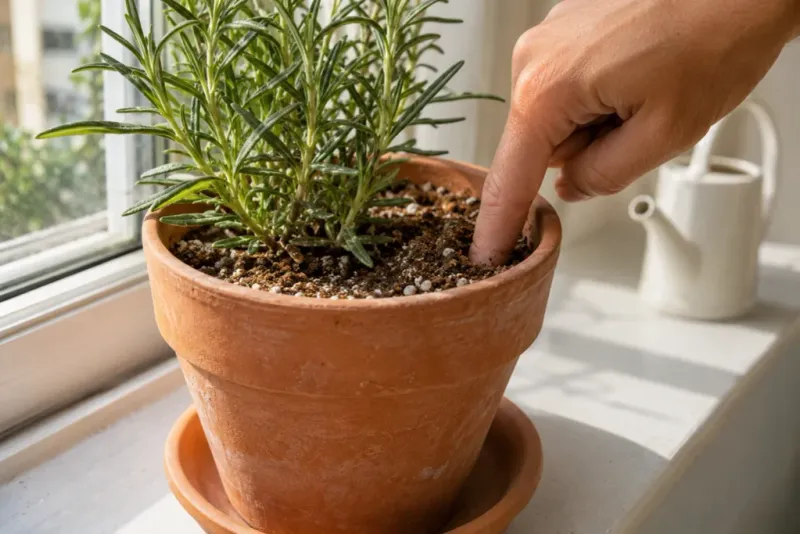
A weekly watering date sounds tidy, but rosemary does not read calendars. A small clay pot near a sunny window can dry in days, while a large glazed pot in a cool room may stay damp much longer.
Light, temperature, pot size, and the mix itself all change how fast water leaves.
Iowa State Extension advises watering when the potting soil feels dry to the touch, before the plant wilts. Rosemary does best when the soil dries somewhat between waterings, so a constantly wet pot is a poor match.
The opposite problem is real too. Resources from the Missouri Botanical Garden and University of Missouri Extension help show that herbs indoors can suffer from both too much and too little water.
When the top of the mix is dry, water thoroughly. When it is still damp, wait and check again.
Give excess water a way out of the pot
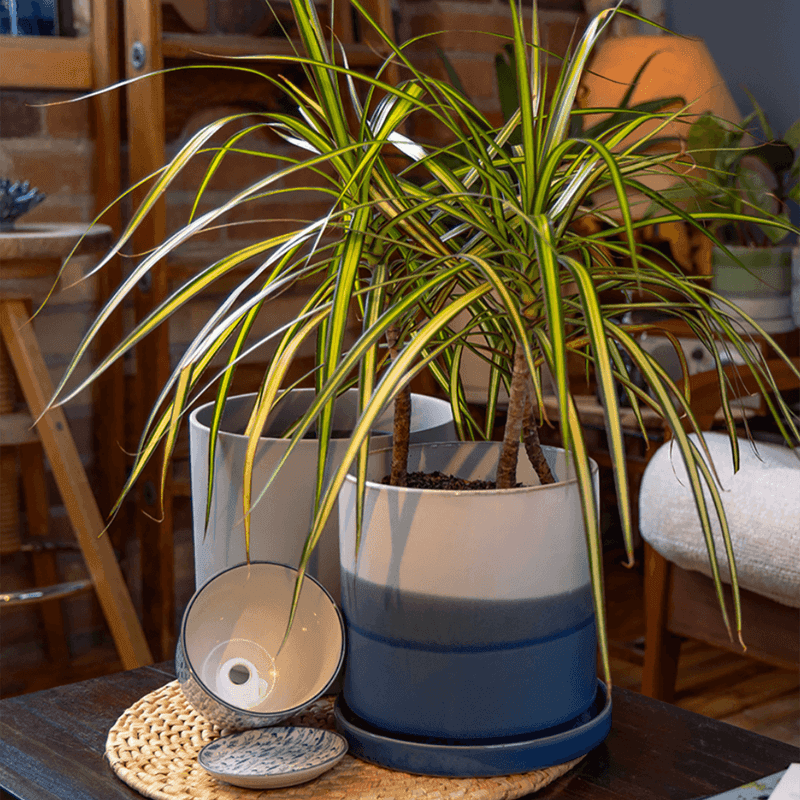
Good watering habits only work if extra water can escape. A pot without drainage holes lets roots sit in a puddle, which is the setup most likely to cause trouble.
NC State Extension explains that drainage holes are needed so roots do not stand in water.
Check what is under the pot, too. A saucer or decorative cachepot can hold runoff for days.
After watering, let the pot drain for a few minutes, then empty whatever caught the water.
You may have heard that a layer of gravel in the bottom of a pot helps drainage. NC State advises against it, so skip that trick.
If your pot is not draining well, a container with holes and a fresh, free-draining potting mix is the better route.
Trim rotten roots without promising recovery
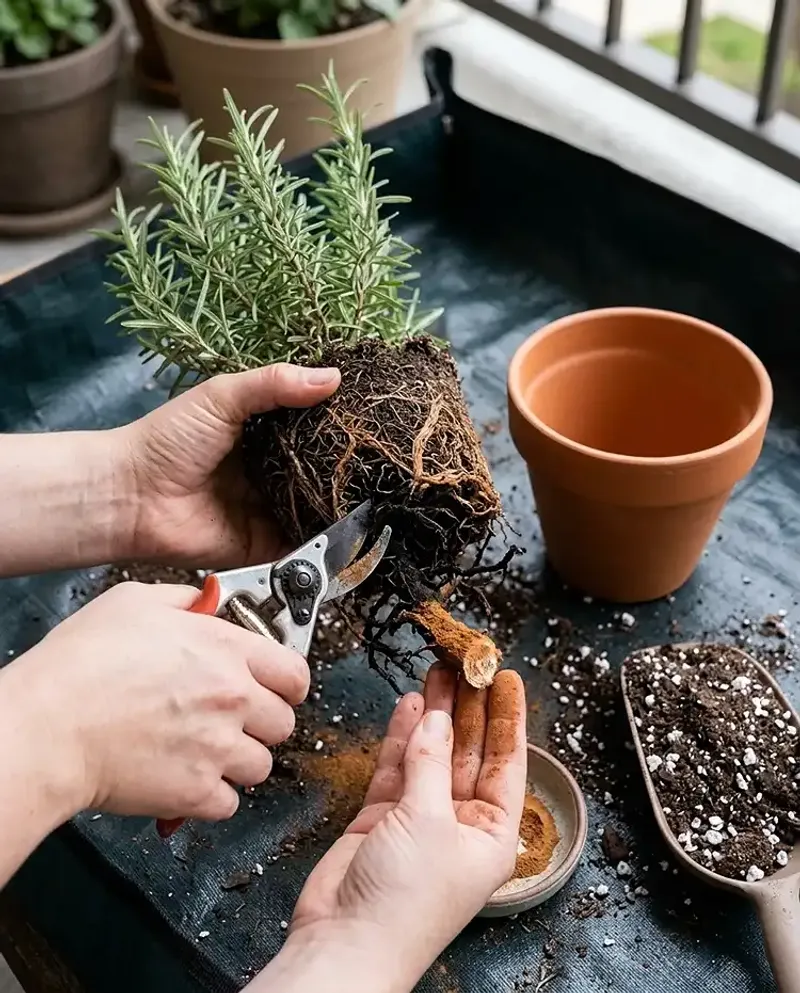
If you find soft, dark roots, a careful rescue is possible, though not guaranteed. University of Maryland Extension suggests removing damaged root portions and replanting what is healthy in fresh, well-drained mix and a clean pot.
Use clean scissors and cut away only what looks rotten. Leave firm, light roots in place.
Then repot into a container with drainage holes, and water only as the new mix calls for it.
Keep in mind that this is general indoor-plant advice, not a rosemary-specific promise. A plant with severe root damage may not recover, even with good care.
If most of the roots are mushy, you may be dealing with a plant that cannot be saved, and taking cuttings from healthy stems is one backup worth considering.
Account for light, cold, and regional conditions
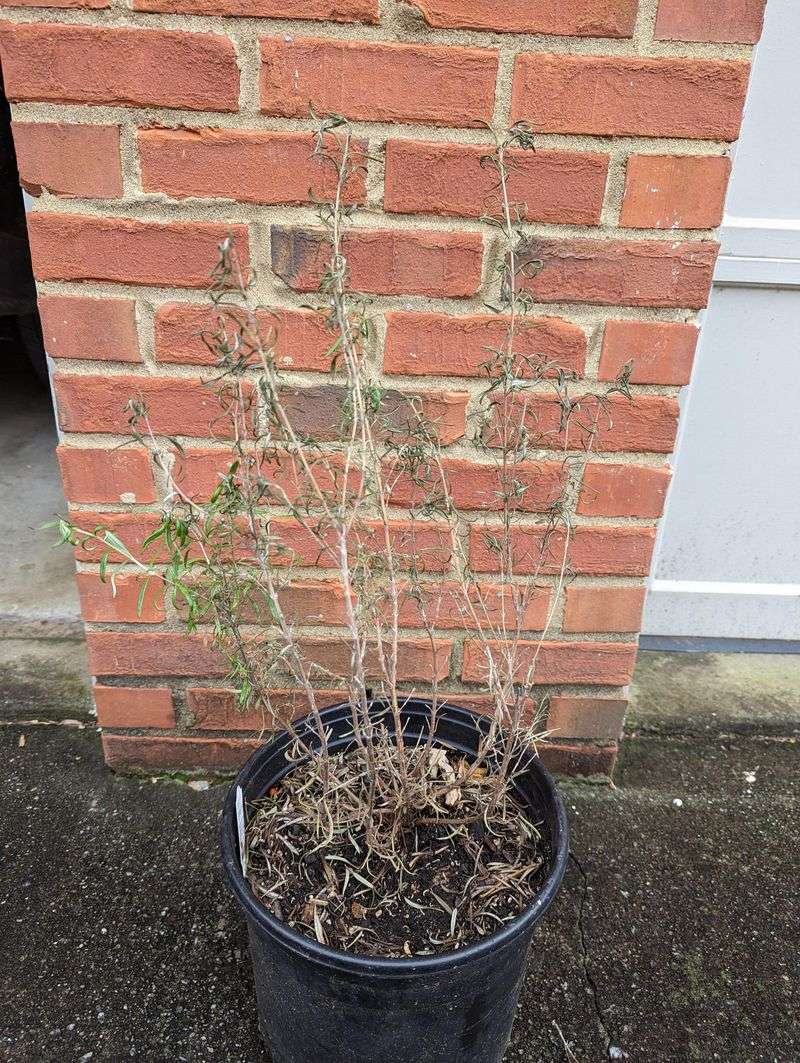
Winter light can be thin, even when the plant sits near a window. Illinois Extension says indoor rosemary needs a bright spot and may benefit from supplemental light during winter.
A pale, leggy plant with browning needles may be asking for more light.
Cold still belongs on the list. Potted roots sit above ground and are more exposed than roots in a garden bed, and Texas A&M AgriLife guidance on frosts and freezes notes that freezes can injure container plants.
Where you live matters. UF/IFAS says rosemary can grow outdoors year-round in Florida, though colder parts of the state may need freeze protection.
In Texas, Texas A&M’s rosemary guide notes watering needs depend on plant size and climate. Not every Southern rosemary needs to come inside.
Rosemary rarely browns for just one reason, so let the soil, roots, light, and forecast tell the story.