
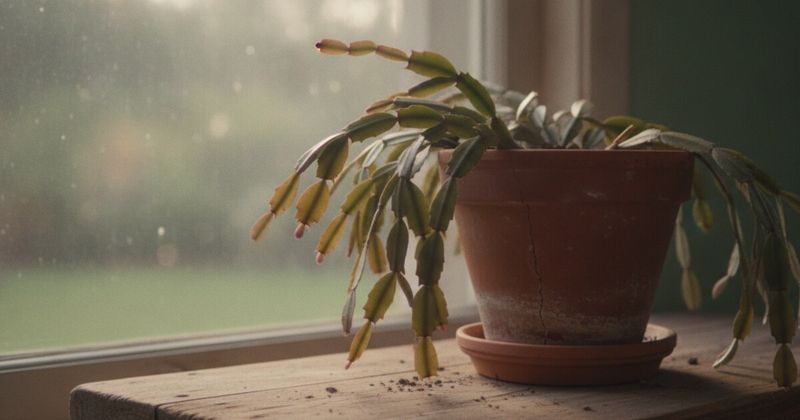
A Christmas cactus that suddenly looks soft and tired can make you want to grab the watering can right away. That quick reaction can help one plant and hurt another.
The plant’s potting mix, drainage, and roots tell a much clearer story than the limp stems do. Here is how to read those clues before buds start to fall.
Limp segments alone do not diagnose thirst
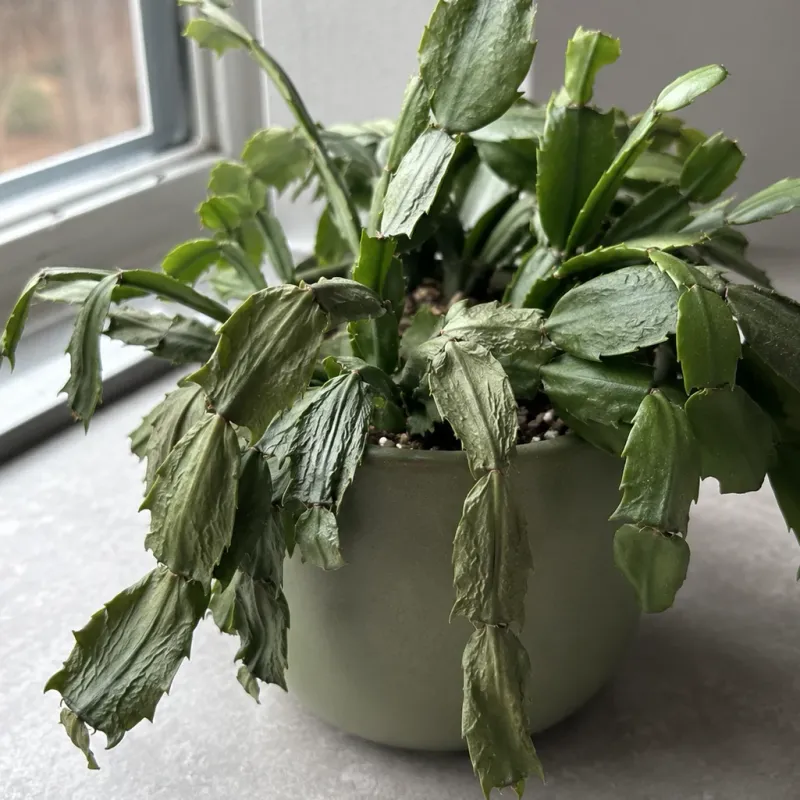
Holiday cacti are built to arc and trail. Their branches grow outward and then bend downward, and on a big plant the weight of those branches can pull them toward the floor.
According to University of Wisconsin Extension, that hanging habit is normal, so shape alone is not a warning sign.
What matters is firmness. Healthy segments feel plump and slightly glossy when you gently squeeze them.
Segments that have lost their firmness, look shriveled, or feel soft and floppy deserve a closer look.
Here is the tricky part. Limpness can show up with too much water or too little.
Iowa State Extension links overwatering with limp growth and root rot, and other extension sources tie shriveling and drooping to underwatering. The stems look similar, but the fixes are opposite.
Many plants sold as Christmas cactus are really Thanksgiving cactus or hybrids, and their care is broadly alike. These are rainforest-origin plants, as noted by N.C.
Cooperative Extension, so they are not true desert cacti that thrive on neglect.
Rather than guessing from the stems, look at the conditions around the plant. Light, room temperature, heating vents, the pot, and the mix are far better clues than where you live.
The next step is simple: touch the soil before you touch the watering can.
Check the mix before you reach for the watering can
Stick a finger about an inch or two into the potting mix. Then lift the pot to judge its weight, and look at the drainage hole and saucer.
These quick checks take under a minute and tell you which direction to go.
If the plant looks wilted but the mix feels wet, hold off on water. University of Minnesota Extension points out that a wilted holiday cactus in wet soil is likely suffering from overwatering and root rot.
Adding more water to that pot can make a bad situation worse.
Start with the drainage. Empty any water sitting in a saucer or decorative cachepot, and make sure the holes in the pot are not blocked.
Holiday cacti do poorly in heavy mix that stays soaked, so let the mix dry out before watering again.
Now picture the opposite case. The mix is dry, pulls away from the pot edge, and the pot feels light.
Water may well be what the plant needs.
Even then, skip the big soak. Give a measured drink, let it drain, and check again later.
A plant that has been dry for a while may not handle a flood well, which the dry-mix section below explains.
If the mix is wet and the plant stays limp for days, move on to the roots. That is the next check.
Wet soil can leave a plant wilted as roots fail
It sounds backwards, but a plant sitting in soggy mix can wilt like a thirsty one. Roots need air as well as water.
When the mix stays wet and drains poorly, roots can be damaged and start to rot, and damaged roots cannot move water up to the stems.
NC State Extension describes overwatering as a cause of root rot and mushy stems in these plants. So a limp plant in a wet pot is a reason to investigate, not proof of rot.
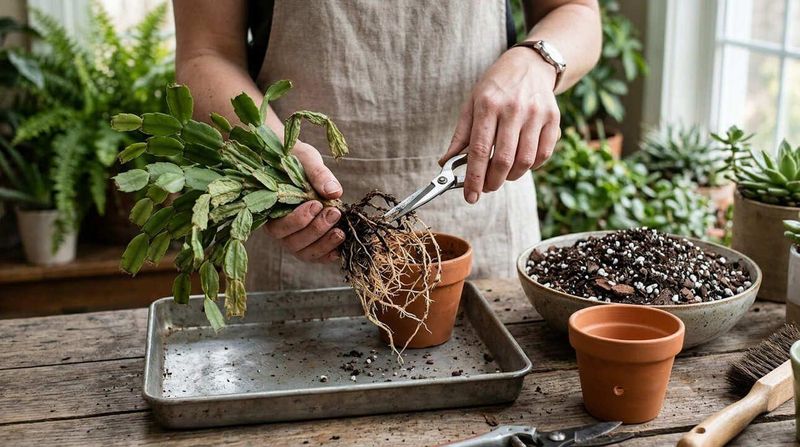
If the wilt lasts while the mix stays wet, slide the plant out of its pot and look. Lay down newspaper first and support the base of the stems as you tip it out.
Healthy roots are firm and light in color. Rotten roots are dark and soft, and they may feel slimy or fall apart when touched.
University of Maryland Extension uses this same firm-versus-soft check when diagnosing indoor plants.
A sour smell from the mix is another clue worth noting. A mix of mostly pale, firm roots with only a few dark ones is a much better sign than a root ball that is mostly brown mush.
If the roots look fine, the problem lies elsewhere, such as dryness, light, or drafts. If they look damaged, the next section covers what to do.
Dry mix calls for measured watering, not a rescue deluge
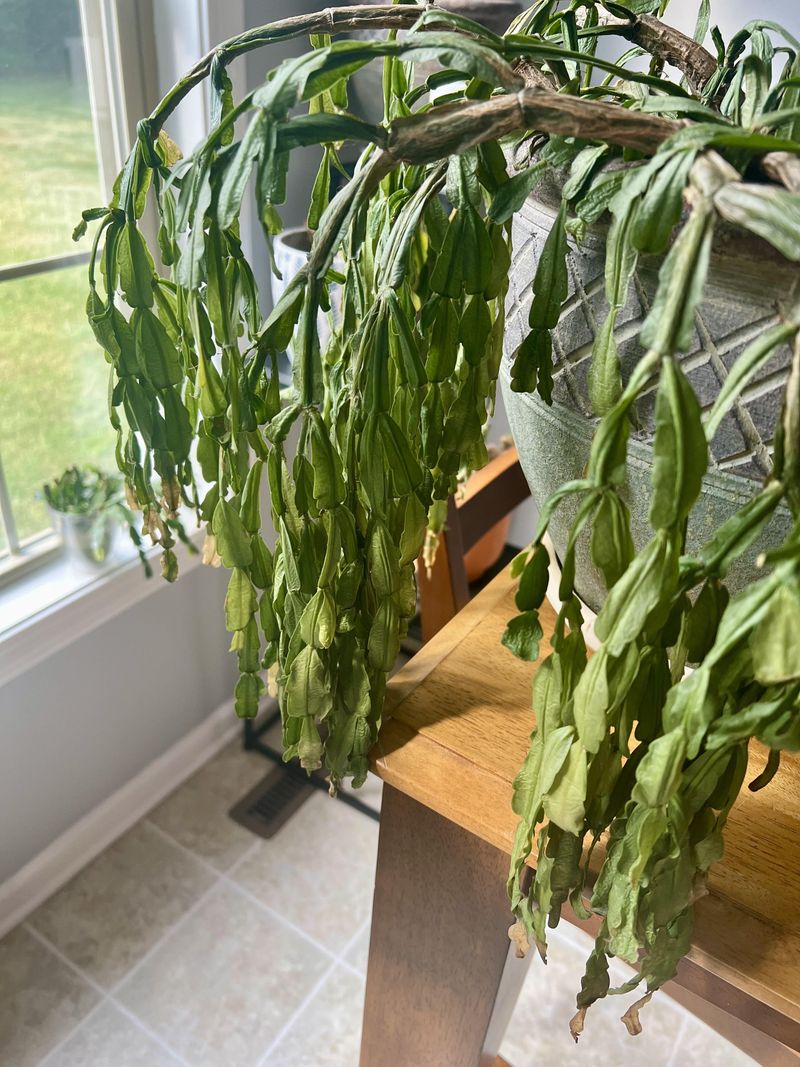
Sometimes the finger test says dry, and the stems look wrinkled or soft. In that case thirst is a believable cause.
The temptation is to drench the pot and hope for a miracle.
UConn Extension cautions against that. Roots damaged by drought may not be able to take up a large amount of water, and the roots that remain can become vulnerable to rot if they sit in a flooded pot.
For an underwatered, wilting plant, UConn’s guidance is smaller, more frequent waterings. Pour a modest amount, let it soak in, and let any excess drain away.
Check again in a day or so and add a little more if the mix is still dry.
Watch the stems over the next several days. Segments that slowly firm up are a good sign that thirst was the issue.
If they stay limp even as the mix turns moist, go back and check the roots.
None of this means the plant should live on the dry side afterward. Once it perks up, return to a steady routine based on how the mix feels.
Holiday cacti are not built for long droughts, especially while they carry buds.
Root damage may require fresh mix—and recovery is not guaranteed
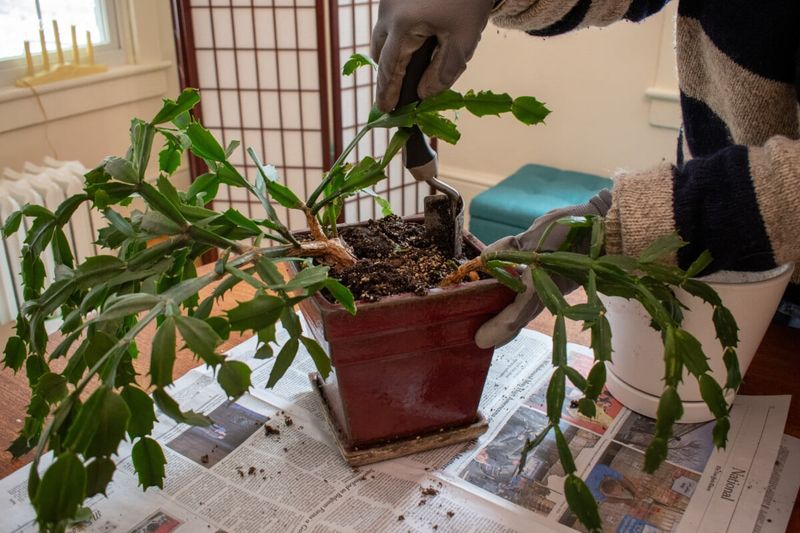
When inspection shows rot, the job shifts from quick triage to repair. Work with clean scissors or pruners, and remove roots that are dark, soft, or dead.
Keep the firm, light-colored ones.
Repot into fresh, well-drained mix rather than reusing the old soggy soil. Choose a pot with open drainage holes, and do not let it stand in water afterward.
University of Minnesota Extension stresses drainage and a light mix for holiday cacti.
Be honest about the odds. University of Maryland Extension notes that badly damaged plants may need to be discarded, and drying the pot or repotting does not guarantee a comeback.
A plant with mostly rotten roots may not survive no matter what you do.
That is why cuttings make good insurance. University of Wisconsin Extension covers propagating holiday cacti from stem pieces.
Take a few healthy segments from firm, unaffected stems, and root them in fresh mix.
After repotting, water lightly and keep the plant in a bright spot without direct hot sun. Give it time and watch for new firm growth, while keeping your cuttings going as a backup.
Buds can drop from stress beyond watering
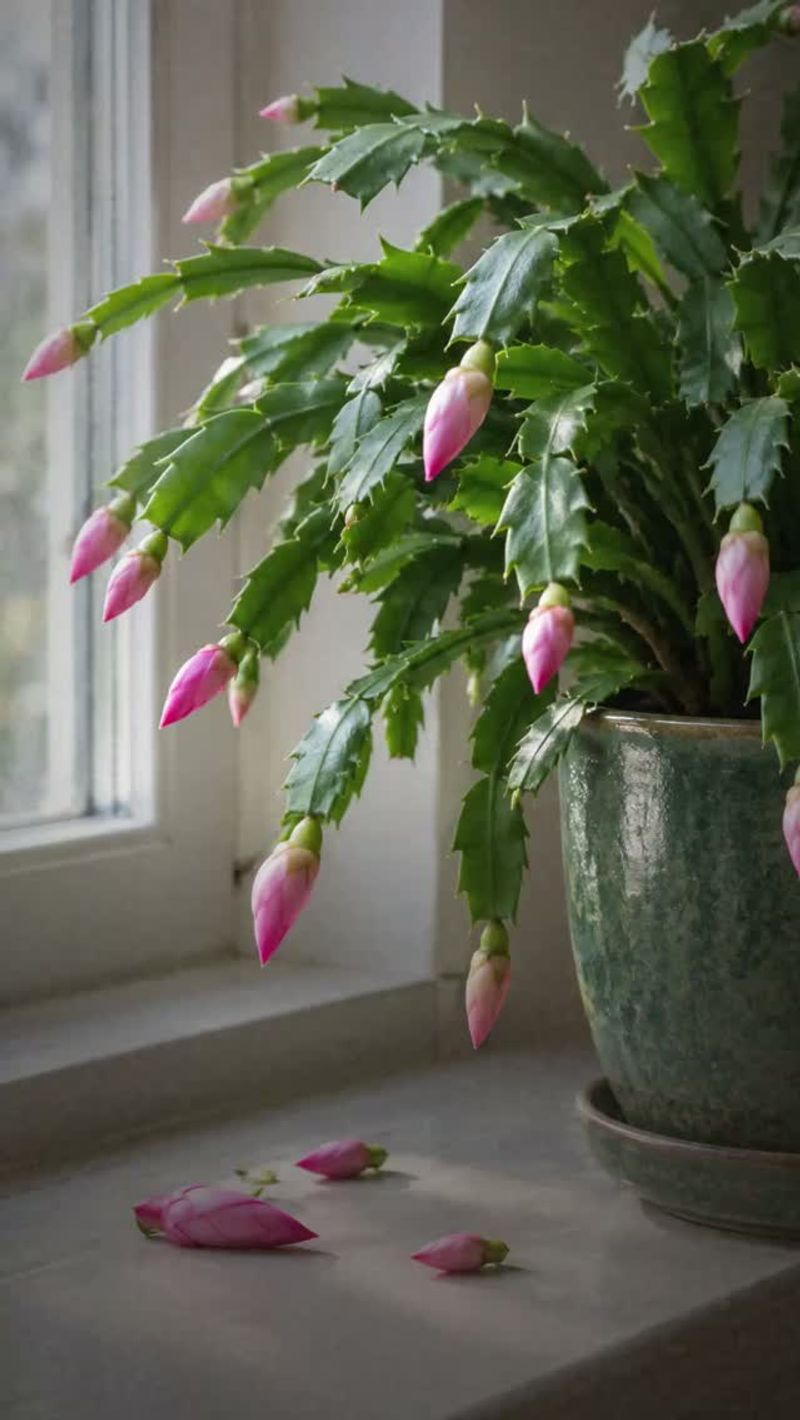
Bud drop is frustrating, and water is only one of several possible causes. According to UF/IFAS, buds can fall when the plant gets too much water or too little, and also when it faces drafts or sudden shifts in temperature or light.
That means fixing the watering may not be enough on its own. A plant in perfect soil moisture can still shed buds if it sits beside a heating vent or a door that opens to cold air.
University of Minnesota Extension also lists environmental stress as a factor, so look at the spot where the plant lives. Walk around it and ask a few questions.
Is there a cold draft from a window or door? Is warm air from a heater or vent blowing on it?
Did you recently move the plant to a brighter or darker room?
Once buds form, try to leave the plant where it is. Moving it around the house to chase the sun can add the sort of sudden change that buds dislike.
Pair a steady location with careful watering, and you give the buds their best chance. There is no guarantee, but you remove the most common stressors you can control indoors.
Let soil dryness—not a calendar—set the next watering
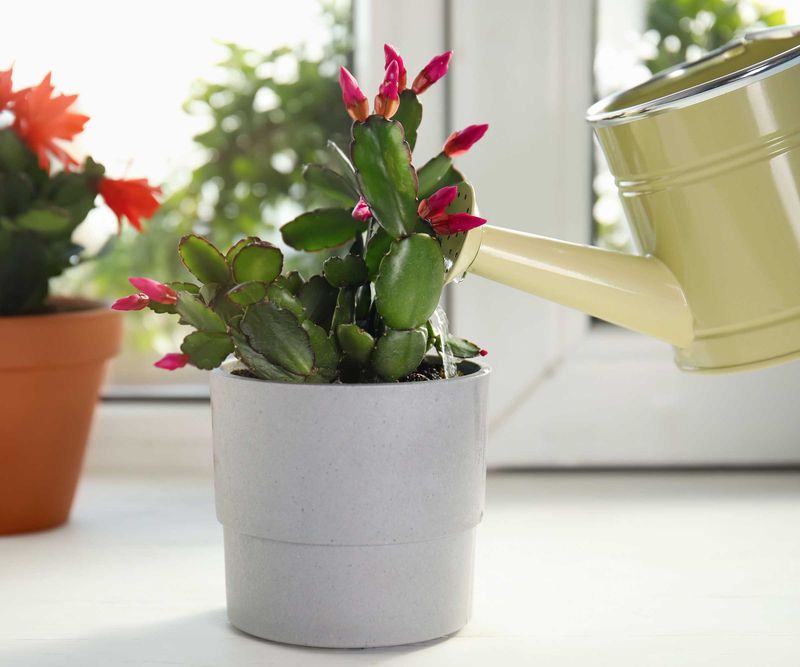
A steady routine beats rescue missions. Check the mix every few days, and water when it is nearly dry or the top inch feels dry.
NC State Extension suggests watering about every one to two weeks, which works as a rough guide, not a rule.
A warm, bright room dries the pot faster than a cool one, so the calendar can mislead you. UF/IFAS recommends watering when the top inch is dry, then letting the excess drain away.
When you water, do it thoroughly enough to moisten the mix, then empty the saucer. Never leave the pot standing in runoff.
During budding and bloom, be careful not to let the mix go bone-dry. Iowa State Extension advises avoiding both extremes at that stage, so keep it lightly moist without letting it become waterlogged.
The decision rule is short: feel the mix first, then decide. A plant that droops under that kind of attention is telling you something worth investigating, not just topping off.
The best watering can is the one you pick up only after your finger has had its say.