
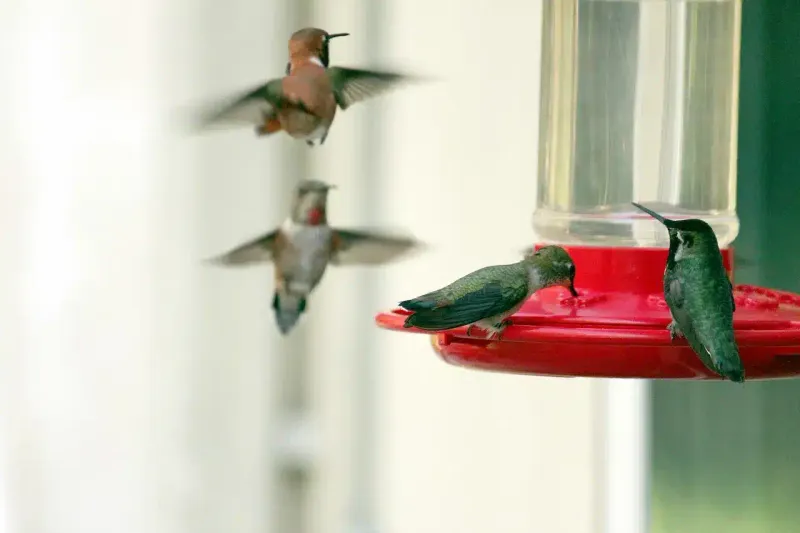
If you have watched a tiny bird zoom at another one near your feeder in January, you are not imagining the drama. Anna’s Hummingbirds stay in many parts of California through winter, and some of them act like the feeder belongs to them.
Not every bird does this, and not every yard sees it. Knowing what you are looking at can help you set up your feeders so more birds get a turn.
Anna’s Hummingbirds stay through winter in many California areas
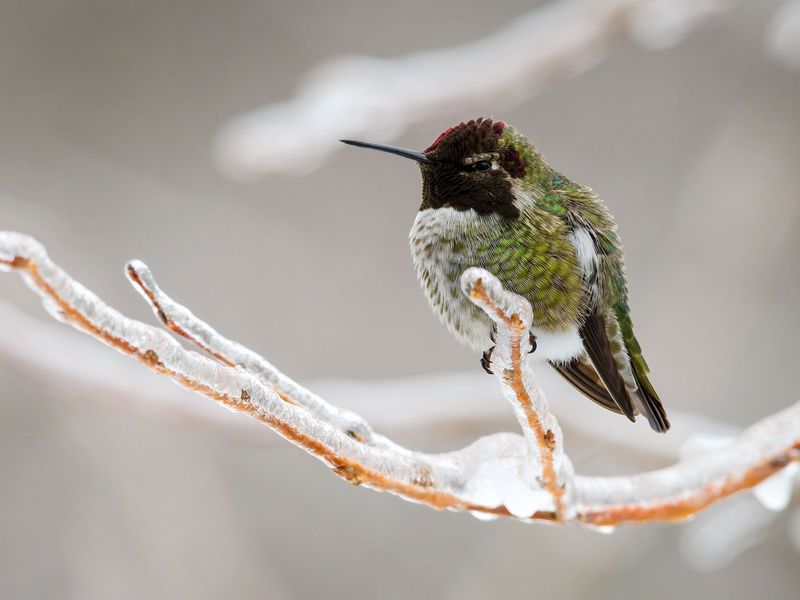
Winter does not empty California backyards of hummingbirds the way it does in much of the country. Audubon’s field guide describes Anna’s Hummingbird as a Pacific Coast resident that stays through the cold months in many areas.
That is why a feeder in Sonoma, San Diego, or the Bay Area may stay busy in January.
Nesting adds to the picture. Audubon notes that some Anna’s Hummingbirds may begin nesting as early as December, and a USDA Forest Service species account for California lists a breeding period running from mid-December to mid-June.
So while much of the country is quiet, some of your local birds may already be setting up for the next generation.
Local conditions still matter a lot. Not every California yard has Anna’s Hummingbirds in winter, and higher, colder inland areas may see far fewer of them.
Even where they are present, individual birds act differently. One may ignore visitors, while another may spend the morning watching your feeder like a lookout.
Think of the winter chasing you see as something some birds may do, not a rule for the whole species. A quiet feeder is not a sign that something is wrong, and a busy one is not a sign of trouble either.
Watching your own yard for a few days will tell you far more than any general statement.
Hummingbirds may defend nectar sources beyond breeding season
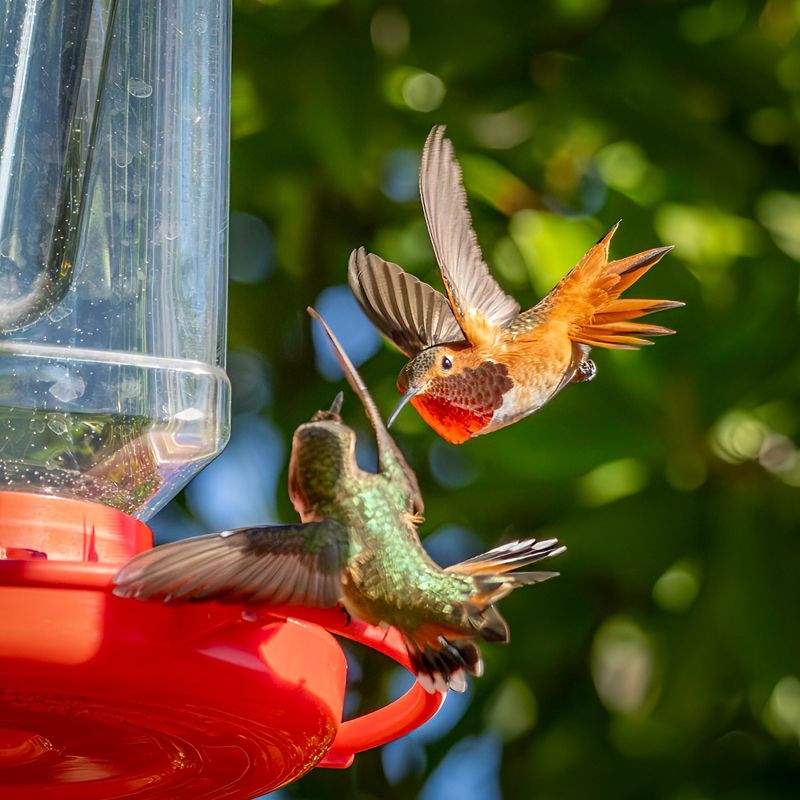
A feeder is a reliable, high-energy meal, and that makes it worth protecting. Audubon explains that hummingbirds defend nectar sources, including feeders, and a bird that controls a good source gets steady fuel on cold mornings.
Breeding is only part of the story. A USDA Forest Service species account points out that Anna’s Hummingbirds defend feeding territories outside the breeding season too.
Defense during nesting may be more intense, but a bird guarding nectar in a quiet stretch of winter is behaving normally.
It is easy to picture a single bossy male, and males are often the most vehement defenders. Yet females, young birds, and even other hummingbird species may also defend food.
If you see a plain green-gray bird chasing a flashy male away, that is not unusual.
Not every bird behaves alike. Some tolerate company, some chase only now and then, and some seem to patrol all day.
When you see a chase at your feeder this winter, treat it as ordinary competition over a valuable resource, and look at how often it happens before deciding you need to change anything.
Use context to tell a territorial chase from a courtship dive
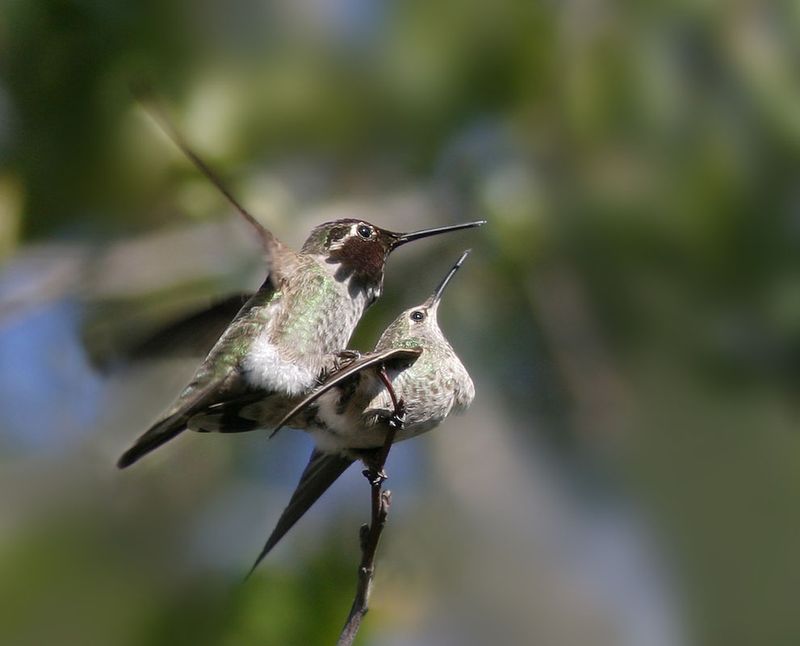
Spend ten minutes watching and you may see something dramatic: a hummingbird shooting straight up, then plunging toward the ground. It looks like an attack, but it may not be one.
Audubon’s field guide notes that the male’s steep dive can be a courtship display.
A chase tied to your feeder looks different. When one bird dashes at another that is approaching or hovering at the nectar ports, that fits territorial defense.
The action starts when a rival gets close to the food and usually ends when the rival leaves.
Ask a few simple questions as you watch. Is another hummingbird nearby, perhaps perched in a shrub, and is the dive aimed at her?
Or is the bird swooping near the feeder at an intruder? Is there a rival near the feeder at all?
Because winter nesting can start early, you may see both behaviors in the same week. Jot down a few notes for several days, then you can tell whether your feeder is a battleground or just a stage.
Place a second feeder outside the first feeder’s sightline
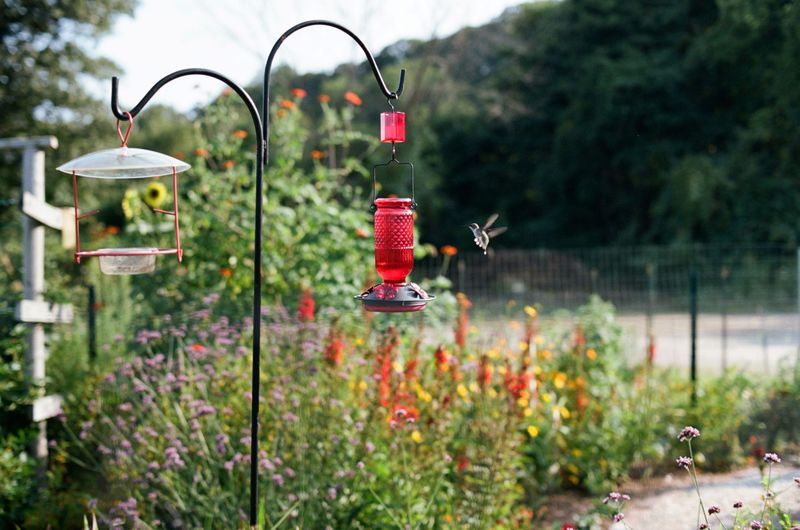
Out of sight, out of mind works surprisingly well with hummingbirds. Audubon suggests hanging another feeder where the dominant bird cannot see the first one, such as around the corner of the house.
A bird that cannot watch both feeders cannot easily guard both.
Visibility is the point, not a measured gap. Audubon also recommends placing multiple feeders far enough apart that birds cannot see one another.
No exact distance works for every yard, so use your own layout. A wall, a tall shrub, a tree trunk, or a house corner can all break the line of sight.
Here is a simple way to try it. Watch where the guarding bird likes to perch, then hang the second feeder somewhere that perch has no view of.
Give it several days, since birds may take a while to find it.
Be realistic about results. A second feeder may improve access and reduce some conflict, but it cannot promise that chasing will stop.
Some birds may keep patrolling and hunting down rivals. Treat it as a practical experiment, and adjust the placement if one spot does not help.
Keep nectar fresh and feeders clean in local weather
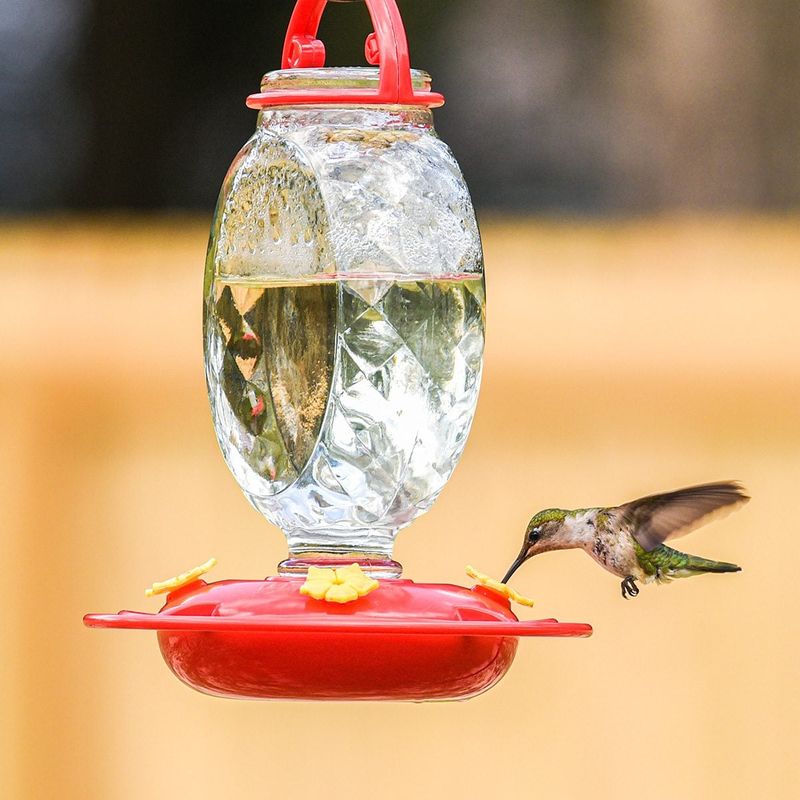
More feeders mean more upkeep, so a simple routine matters. UC Davis advises a nectar mix of one part white sugar to four parts water.
Skip honey, raw sugar, sugar substitutes, and red dye. Red feeder parts already provide plenty of color.
Cleaning depends on the weather. Audubon recommends cleaning every three days in temperate weather, twice a week in cooler weather, and daily or every other day in hot weather.
If you spot mold or any other contamination, clean the feeder sooner.
California winters vary a great deal. A mild coastal yard and a frosty foothill yard are very different places.
Audubon’s FAQ advises making sure nectar does not freeze where nighttime temperatures regularly fall below freezing. If that sounds like your area, check your feeders first thing in the morning.
With two feeders, write the cleaning days on a calendar so neither one gets forgotten. Fresh nectar also helps with the bigger goal.
Birds that find clean, dependable food at either spot are less likely to crowd one place.
Support natural food as well as feeder access
Feeders are a supplement, not a full menu. Hummingbirds also eat insects, which give them protein that sugar water cannot, according to Audubon.
That is one more reason to go easy on pesticides in your yard.
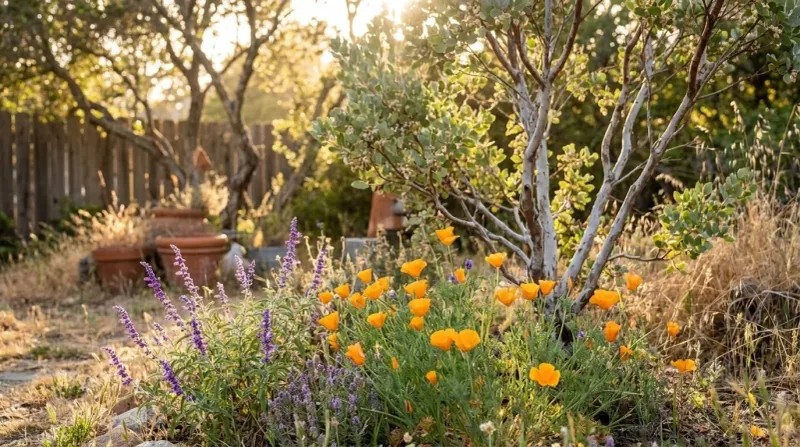
Native flowering plants can widen the food supply. Audubon’s guide to a hummingbird-friendly yard covers plant choices and habitat steps.
In a California garden, choosing native, water-wise bloomers that flower in winter gives birds options beyond the feeder.
Pull the pieces together this way. Watch the behavior to see what is going on, try a second feeder out of the first one’s view, and keep the nectar clean and correctly mixed.
Each step can ease competition a little.
None of it can promise that every bird will eat without being chased. Hummingbirds are feisty by nature.
A yard with more places to feed simply gives the underdogs more chances.