
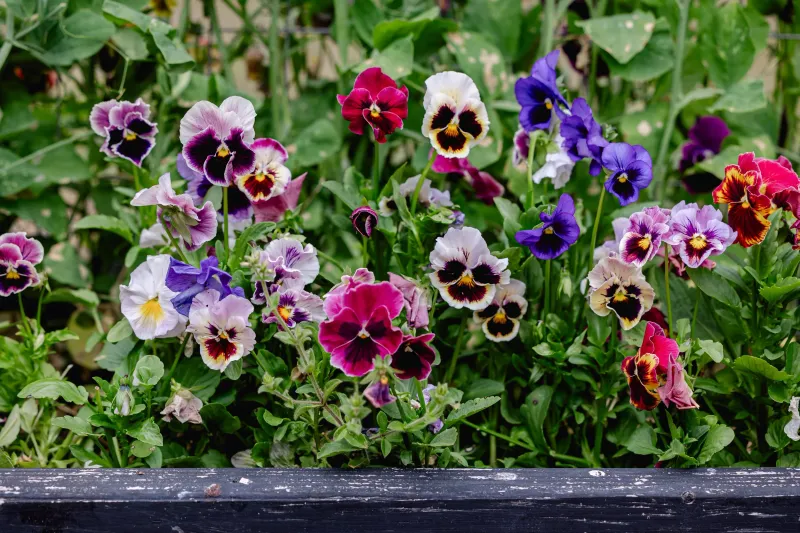
Your winter pansies looked full and bright a few weeks ago. Then a warm stretch hit, and now the stems are long and the flowers are scarce.
It is easy to blame one missed chore, but the real picture has a few parts. Here is how to sort out what is going on and what to do about it.
A warm spell can explain the stretch
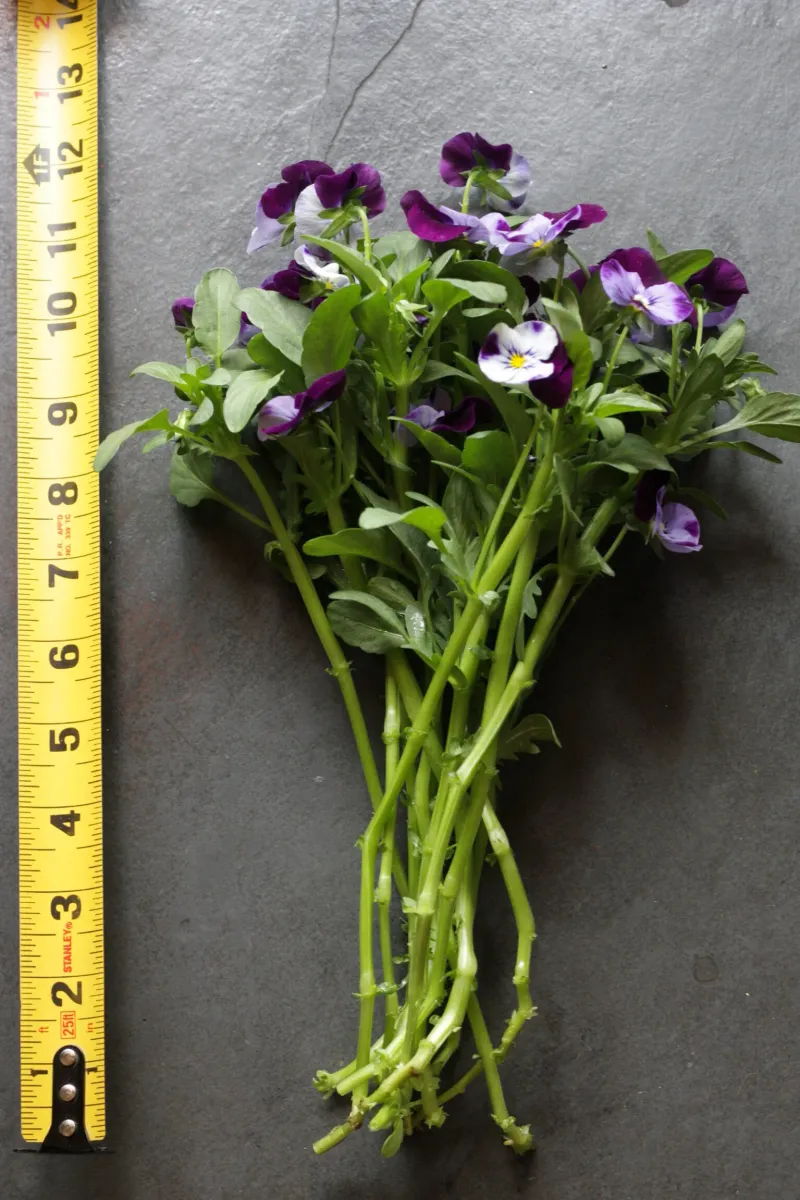
Warm weather alone can change how pansies grow. University of Georgia Extension notes that heat can make pansy stems leggy and leave plants less vibrant.
So a lanky, sparse bed after a warm spell has a clear suspect before you ever think about your pruning habits.
Heat at planting time matters too. UF/IFAS reports that pansies planted while it is still hot can develop elongated stems.
Pansies are cool-season plants, and they stretch and flower less when temperatures climb past what they like.
Skipped deadheading has not been shown to cause this stretching. Deadheading is a separate job with a different purpose, and trimming lanky stems is another.
The next sections cover each one so you can match the task to what you see, without expecting any of them to undo heat stress.
Spent blooms call for deadheading
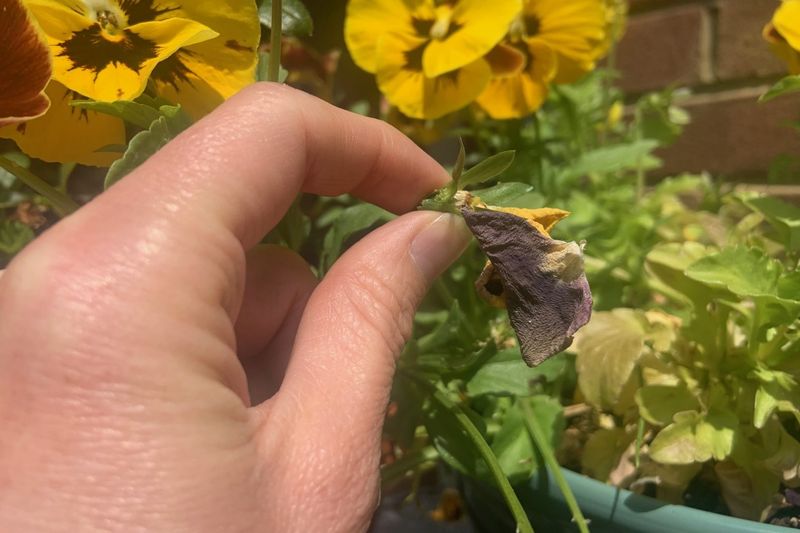
Deadheading means removing faded flowers and developing seedpods before seeds finish forming. UF/IFAS says this can extend the flowering period of pansies.
The reasoning is simple. A plant that makes seed spends energy on it, and that energy could otherwise go toward new flowers.
UGA Extension recommends taking off dead flowers and seedpods and checking plants every week or two.
Follow each faded bloom down to its stem and snip or pinch it off. Look for small green pods too, since they are easy to miss under the leaves.
Treat this as upkeep that may help bloom last longer. It will not fix stems that stretched because of heat, and it cannot bring back flowers the plant is too stressed to make.
Lanky stems need a separate trim
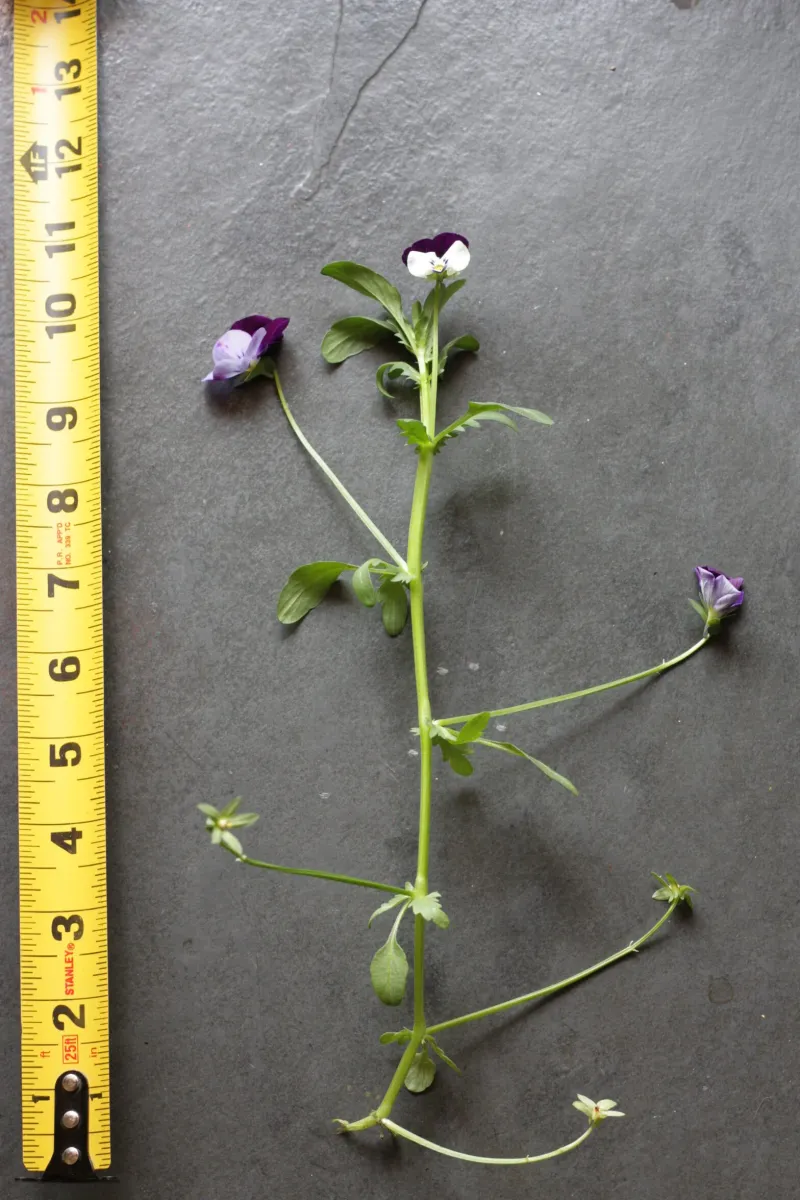
Trimming is about shape, not spent flowers. UF/IFAS advises cutting back lanky branches on established plants from time to time, which can encourage branching and a more compact form.
The UGA winter pansy guide also recommends trimming lanky branches. So while deadheading targets faded blooms and pods, trimming targets long, floppy growth.
Texas A&M offers a useful timing hint. Its seasonal color guidance says pansies may need pinching after planting or after their first flush of bloom.
That is a suggestion, not a rule for every bed.
Take off a modest amount of the longest stems rather than scalping the plant. A trim can improve the look and branching, but it does not reverse heat stress.
Check shade, wet soil, and plant health
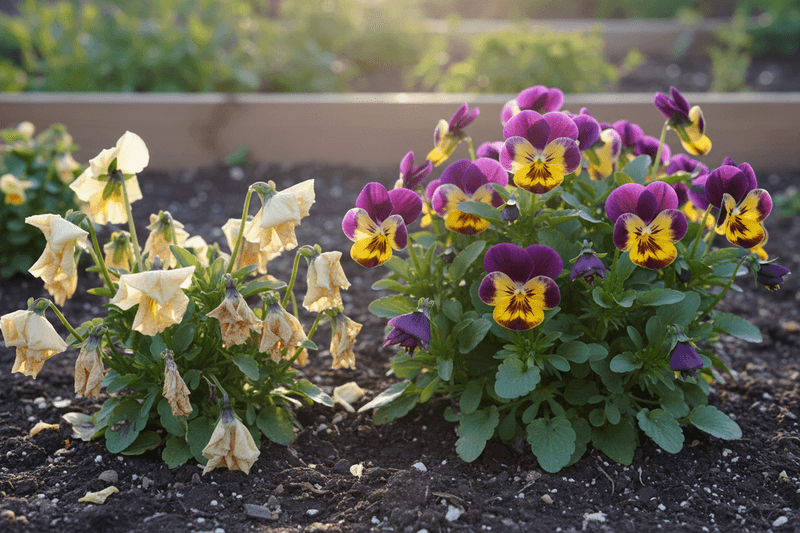
If the bed still looks poor, look beyond heat. Utah State University Extension notes that too much shade can leave pansies spindly with fewer flowers.
Notice how many hours of direct sun the bed gets in winter.
Water is the next clue. UF/IFAS recommends letting soil dry between waterings and notes that warm, wet conditions favor crown and root rot.
Good drainage helps.
Wilting, yellowing, and decline can be signs of root or crown rot, but they are not proof. Other problems can look similar, so one symptom alone is not a diagnosis.
Check the soil with your finger before watering, and see whether water pools after rain. Fixing light and moisture is often a better step than more cutting.
Planting windows differ across Texas and Florida
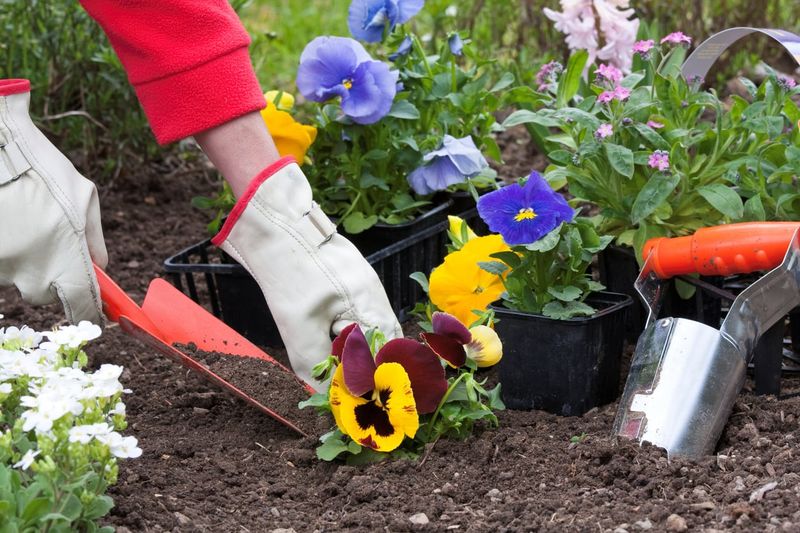
Pansies are cool-season flowers, so timing depends on where you live. For Texas, the Texas A&M seasonal color guide places fall pansy planting in late September through October, when temperatures begin to cool.
That is regional advice, and a Panhandle bed and a Gulf Coast bed will not match.
Florida varies too. UF/IFAS says pansies do well in winter in zones 8 through 11 and should be planted in fall or winter months suited to your region.
For the end of the season, UF/IFAS describes North and Central Florida winter annuals as typically lasting until warm weather arrives in April or May.
Use these as examples, not one schedule for both states. Your local extension office can help narrow the dates.
Pruning cannot make unsuitable heat disappear
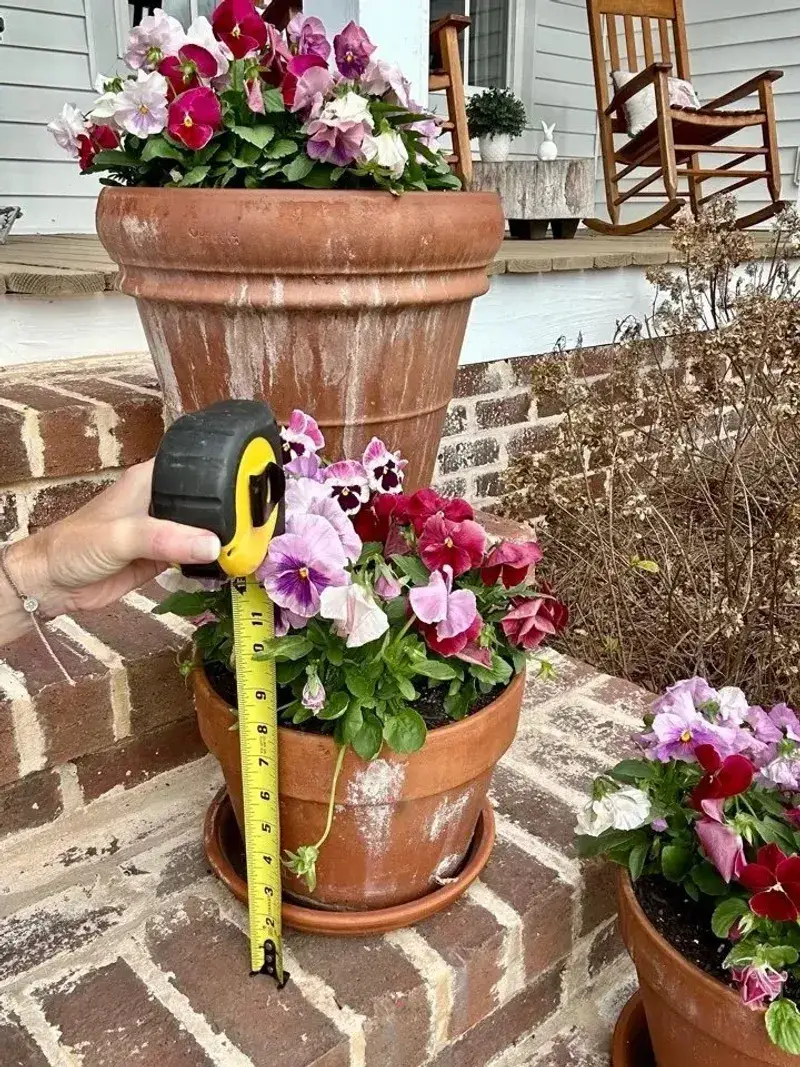
Some disappointment comes from asking pruning to do too much. Heat itself can reduce bloom and stretch stems, and UGA Extension says warm conditions leave pansies leggy and less vibrant.
Deadheading and trimming are tidy-up tools. They may help a healthy plant keep flowering, but they do not guarantee more blooms while conditions stay unfavorable.
The season sets a limit as well. UF/IFAS says pansies are not suitable for Florida summer.
The end date differs by yard, and microclimate, region, and the year’s weather all play a part. When a bed fades in lasting heat, it is usually the plants reaching the end of their season, not a mistake you made.
Planning replacements can be more rewarding than another round of cuts.
Match the fix to the symptom
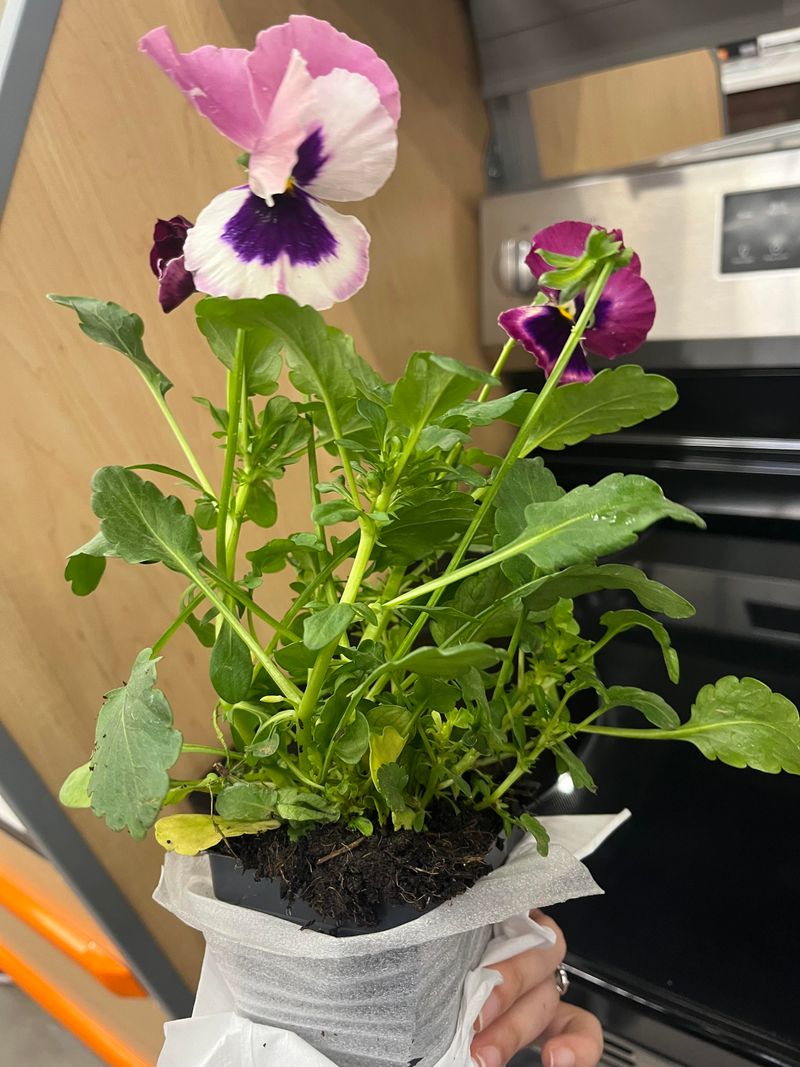
Start with the easy step: remove spent flowers and seedpods, as UF/IFAS suggests, to support continued flowering. Next, trim lanky branches to improve shape.
If the bed still looks poor, check heat, light, drainage, and plant health. Utah State Extension points to shade as one possible cause.
Remember that UGA links heat to leggy stems.
Each step answers a different problem, and no single cut promises blooms. Pansies simply prefer cool days.