
A young citrus tree can lose its leaves to one hard freeze and still grow back, but only if the right part of the trunk makes it through. That spot is the graft union, where the fruiting variety joins the roots.
Protecting it takes a little prep before forecast cold arrives. Here is how to do it, and how to tell when it matters for your yard.
Find the graft union before choosing protection
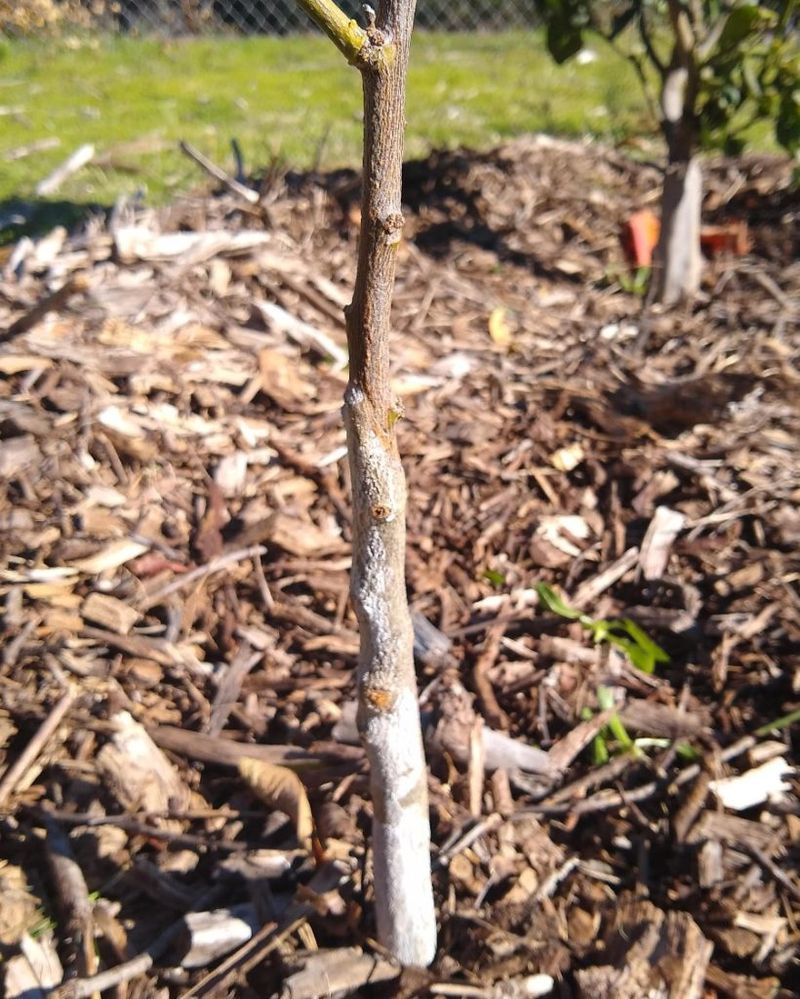
Walk out to your young citrus tree and look low on the trunk. On many nursery trees, the graft union shows up as a slight dogleg bend or a change in bark texture several inches above the soil, according to Texas A&M AgriLife Extension.
Above that point is the variety that gives you the fruit you want. Below it is the rootstock.
Appearance can vary, so run your fingers along the trunk. Look for a faint scar, a small bulge, or a line where the bark color shifts.
If you bought the tree from a nursery, the tag or staff may also tell you where it was grafted.
This job matters most for young grafted trees. Older trees generally handle cold better, as noted by UF/IFAS Extension Okaloosa County, and not every citrus tree needs the same treatment.
Once you know where your union sits, you can pick a protection method that covers it.
Protecting the union can preserve the desired variety
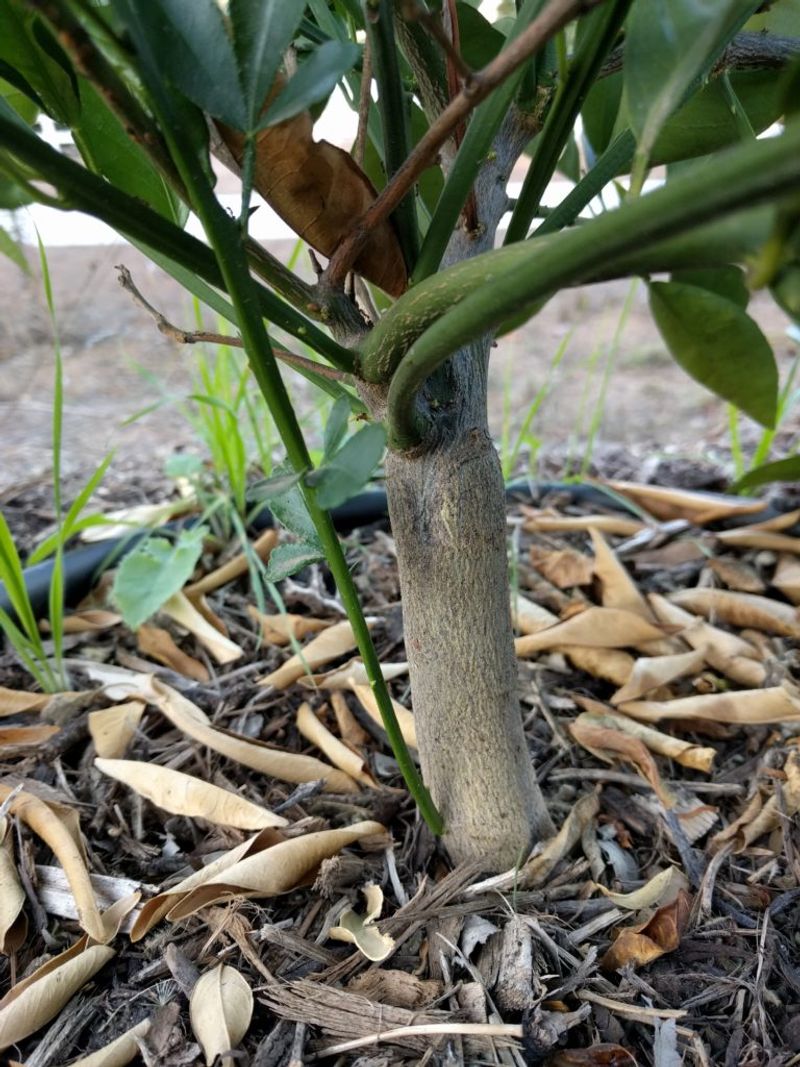
Here is the payoff. If cold kills the canopy but the union survives, the tree may regrow from the variety you chose.
If the tree dies below the union, new shoots can come from the rootstock instead, and those usually produce different fruit, as described by Texas A&M AgriLife Extension.
Think of union protection as a survival plan, not a leaf-saving plan. Leaves, branches, blossoms, and fruit can still be damaged even when the lower trunk is covered well.
A tree can live after its canopy is killed, though UC Statewide IPM notes recovery may take time.
Set your expectations accordingly. Protection may improve the odds that your named variety comes back, but it cannot promise it.
Guidance from UF/IFAS Okaloosa County follows the same idea: protect the part of the tree you cannot easily replace.
Use a soil bank to protect a young tree
Soil banking is a commonly favored homeowner method, and it uses something you already have. Before cold arrives, mound loose soil over at least the graft union and lower trunk, as UF/IFAS Okaloosa County advises.
Texas A&M recommends banking as high as feasible around the trunk and lower scaffold limbs. It suggests this for a young tree’s first two to four winters, according to Texas A&M AgriLife Extension.
Pull the soil in from beyond the root area when you can, and keep it snug against the bark without crushing it.
Once the danger of cold has passed, remove the added soil carefully so you do not nick the trunk. Timing depends on local freeze risk.
In the Okaloosa County region, seasonal banks may come off between late February and mid-March, but your area may differ.
Choose an insulating wrap, not just any covering
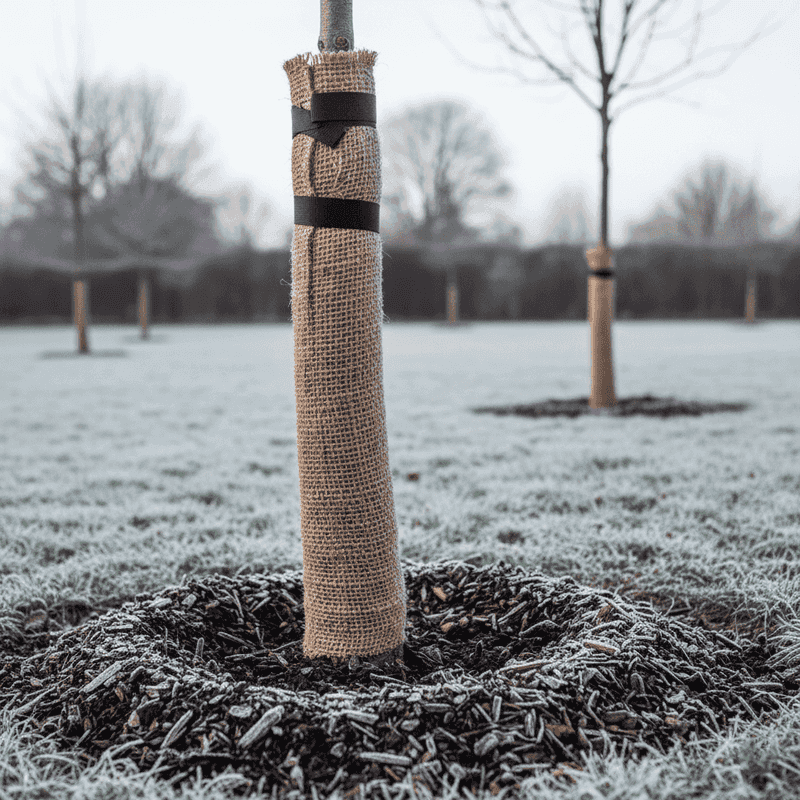
If soil banking is not practical for you, an insulating wrap is an alternative. Pick one made for cold protection, and make sure it covers the graft union.
Effective wraps slow how fast the trunk cools, and UF/IFAS cold protection guidance discusses them mostly for growers.
Material matters a lot. Research summarized in UF/IFAS Citrus Reset Management notes that poorly insulating wraps can perform badly, and that wraps alone give limited protection compared with soil banks in some situations.
A random rag, plastic, or sheet may not do much good.
There is also a heat problem. UF/IFAS Okaloosa County warns that non-soil wrapping materials can overheat the trunk on warmer days.
Check the forecast, and take the wrap off when the cold is over. A wrap protects the trunk, not the whole tree.
Respond to local freeze risk, not a snow forecast
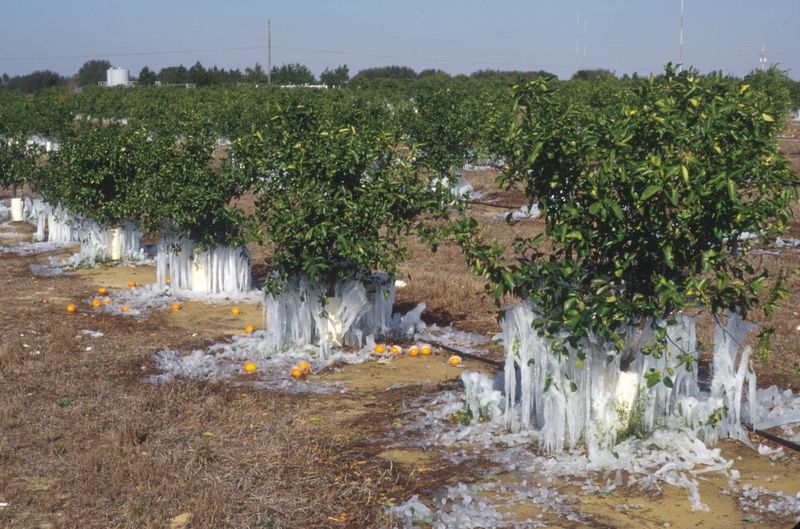
Snow is not the trigger. Damaging freezes can happen with no snow in sight, so watch for forecast cold and your local freeze risk instead.
No single temperature works as a cutoff for every Texas and Florida yard.
Injury depends on several things: how long the cold lasts, how fast temperatures drop, the time of year and how acclimated the tree is, its age, the cultivar, and the rootstock. Clemson Cooperative Extension and University of Georgia Extension both stress these factors.
Your local extension office can help you judge your own risk.
For extra help, keep the soil around the tree bare, and water it several days before a freeze when appropriate. Moist, bare ground can store and release more heat than dry or mulched ground, as Texas A&M and UF/IFAS describe.
Treat this as a bonus, not a guarantee.
Use a canopy cover for a different kind of protection
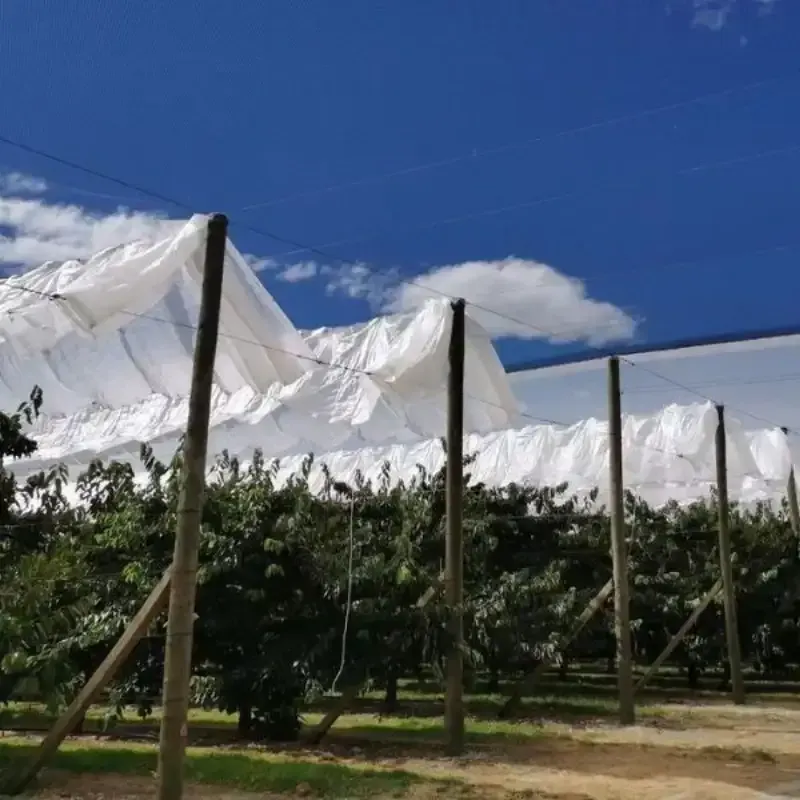
Covering the canopy is a separate job from protecting the trunk. Its goal is to trap heat rising from the soil, so the cloth needs to reach the ground.
A cover tied only around the upper trunk misses that effect, as UF/IFAS Extension explains.
Use breathable cloth, drape it over the whole tree, and secure the edges at the ground. You may need stakes or a frame to keep it from crushing branches.
Think of it as an extra layer, not a replacement for a soil bank or insulating wrap over a vulnerable graft union.
Timing matters on the back end. Covers can heat up in sun, and UF/IFAS Okaloosa County cautions that leaving them on too long can encourage tender growth that a later freeze may hurt.
Take them off once the cold passes.
Wait for new growth before judging freeze damage
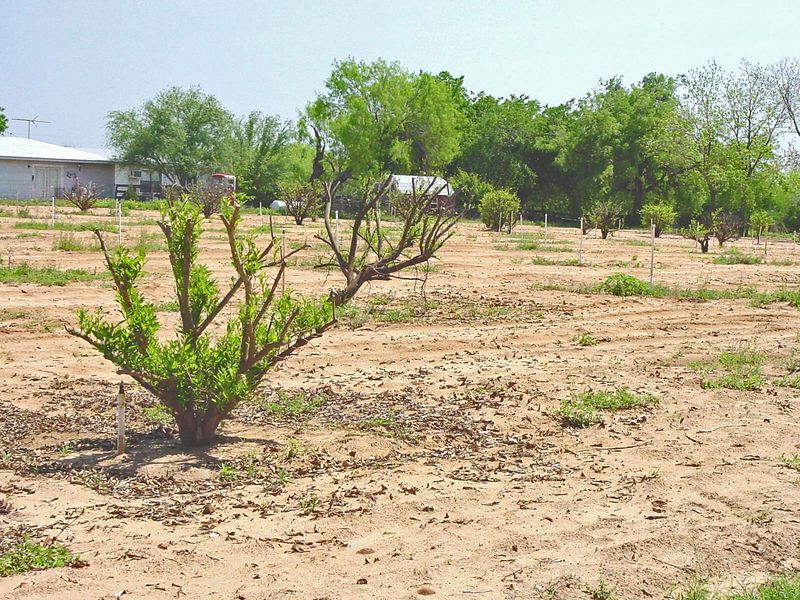
Once the cold danger is over, start by undoing your protection. Take off temporary covers and wraps, and carefully remove seasonal soil banks.
Timing varies by region, so go by your local freeze risk rather than a fixed date.
Then comes the hard part, which is patience. Brown leaves or a bare canopy do not prove the tree is dead.
Texas A&M AgriLife Extension advises waiting for later growth before pruning, since the canopy may be lost while the graft union stays alive.
Hold off on the pruners until you see where new shoots appear. Fresh growth above the union points to your chosen variety.
Growth from below it may be rootstock, as UF/IFAS Okaloosa County notes. Protection can improve recovery odds, but it cannot promise them.
Bare branches in February are often just a tree waiting for spring.