
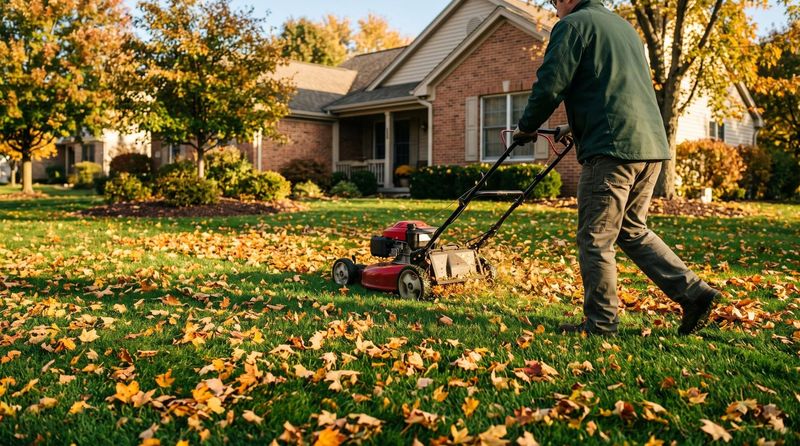
That last pass with the mower before winter feels like a small chore, but it is worth doing with some care. Southern lawns do not follow a single calendar, so the right move depends on your grass and how fast it is still growing.
A good final mow can help your turf head into dormancy in better shape. Here is how to time it, set the height, and avoid the mistakes that stress grass.
The final cut follows growth, not a calendar date
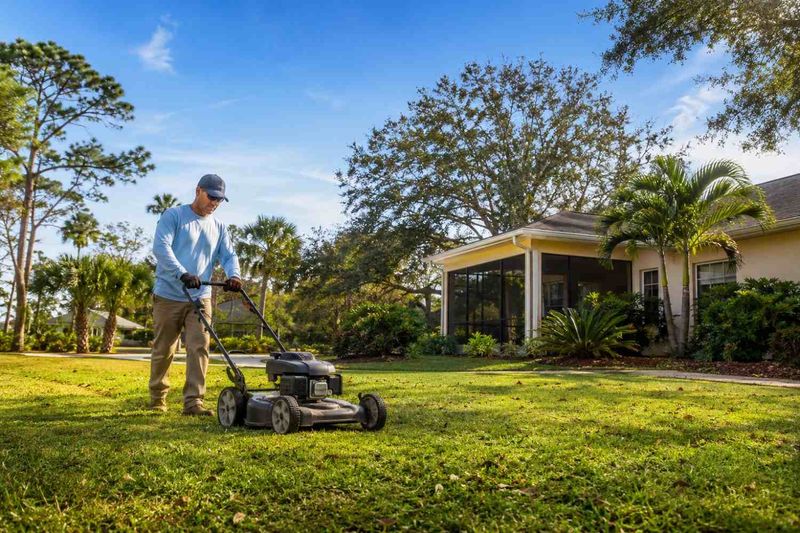
Forget circling a date on the calendar. Warm-season grass tells you when it is done by whether it is still growing.
If blades are getting taller and you need to cut to keep up, keep mowing. Once the lawn is dormant and no longer growing, there is nothing left to trim.
Texas A&M AgriLife notes that mowing is unnecessary for warm-season grasses when they are dormant and not growing. How often you mow depends on grass species, season, weather, and growth rate, so a lawn in Houston may keep going well after one in the Panhandle has quit.
Florida is a good example of the range. UF/IFAS mowing guidance notes that some North Florida lawns may not need mowing in winter, depending on conditions and species.
In warmer parts of the state, growth may only slow down.
Your practical cue is simple. If the grass has grown enough to need a trim, mow it.
If it has stopped, put the mower away.
Your grass type sets the mowing-height target
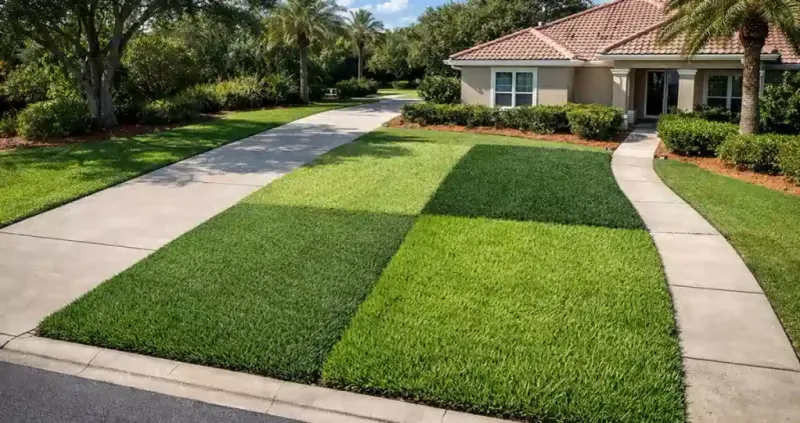
Before you touch the mower deck, figure out what is growing in your yard. Heights that suit one grass can damage another, and bermuda cut at St. Augustine height looks shaggy while the reverse can scalp the lawn.
Florida Extension ranges show how different the targets are. Treat them as regional examples, not rules for every yard:
Bahia: 3 to 4 inches. Bermuda: 0.5 to 1.5 inches.
Centipede: 1.5 to 2 inches. St. Augustine: 2.5 to 4 inches.
Coarse zoysia: 2 to 2.5 inches.
Most St. Augustine cultivars do best at 3.5 to 4 inches, though the dwarf and semi-dwarf cultivars named in that guidance are exceptions. If you are not sure which type you have, take a sample to your county Extension office.
Cultivar, local conditions, and growth rate all matter. Check recommendations for your area and your specific variety before you set the deck.
Raise the fall cut only within the grass’s recommended range
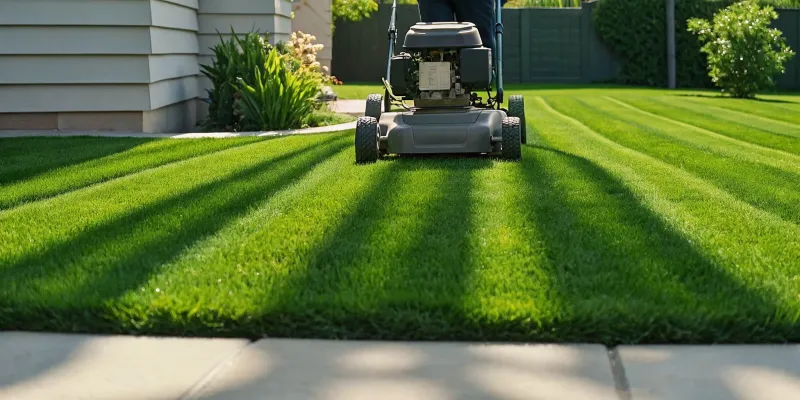
A small bump up in cutting height can help in fall. Texas A&M recommends raising the mowing height in fall so warm-season turf has more leaf area to store energy before dormancy.
The catch is that the new setting must stay inside the range for your grass and cultivar.
Say your bermuda has been cut at one inch. Moving it up a notch within its range is reasonable.
Jumping to four inches is not.
Two extremes cause trouble. Scalping strips away the leaf tissue the plant uses to make energy.
Leaving grass as tall as possible is not the answer either, since excessive height can lead to disease susceptibility and other problems.
Think of it as a nudge, not a leap. Adjust the deck, check how the lawn looks after the next cut, and stay within the recommended range.
The one-third rule helps prevent scalping
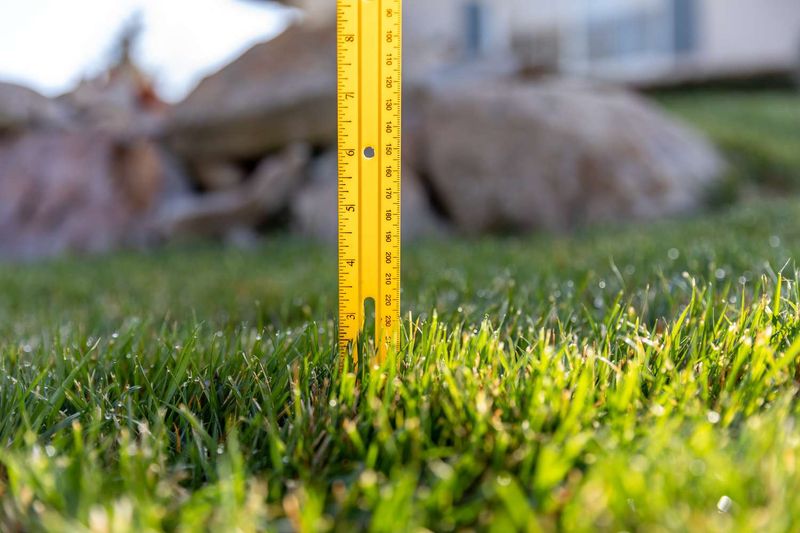
Tall grass tempts people to chop it all down at once. Resist that.
The one-third rule says to remove no more than one-third of the blade in a single mowing.
If the lawn got ahead of you, bring it down in steps. Texas A&M guidance recommends lowering overgrown turf gradually over several cuts.
Wait a few days between passes and drop the deck a little each time.
A few habits make each cut cleaner. Mow when the grass is dry if you can, and keep blades sharp so they slice rather than tear.
Ragged tips can leave the lawn looking frayed.
Cleanup counts too. UF/IFAS recommends sweeping clippings off pavement so they do not wash into storm drains or waterways.
A quick pass with a broom or blower finishes the job.
Winter brown does not always mean the lawn is dead
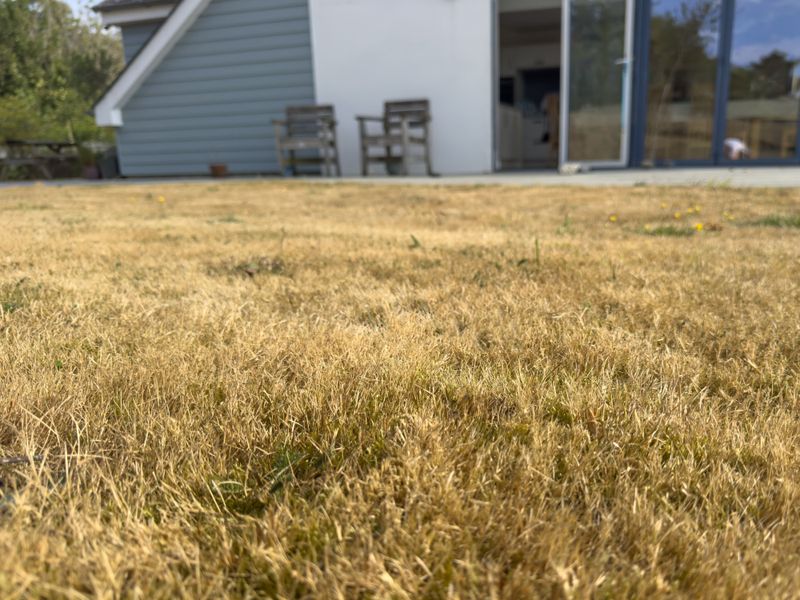
A brown lawn in January can look alarming, but warm-season grasses often turn tan while dormant. UGA Extension notes that warm-season grasses may enter winter dormancy, and color change alone does not mean the turf is dead.
Location matters. In northern Florida, lawns commonly go dormant.
In southern Florida, grasses generally slow down but may not truly go dormant, as UF/IFAS describes.
Some damage looks different from ordinary dormancy. UGA describes cold and freezing events as potential causes of serious injury to warm-season turf.
It also identifies spring dead spot, a disease that damages roots and can leave visible patches during green-up, which UGA Forsyth County also covers.
So wait for spring warmth before judging. Patches that stay bare while the rest greens up deserve a closer look.
Fall mowing can support spring recovery, but it does not decide it

Good mowing is a help, not a guarantee. Texas A&M treats it as one part of overall turf management.
Spring color and thickness also depend on grass type, weather, shade, drought, nutrients, and pests.
Nitrogen is a good example of why advice needs local scoping. UGA advises against late-season nitrogen for the warm-season grasses it covers, since it can delay dormancy and raise cold-injury risk.
In Florida, UF/IFAS says nitrogen applications to dormant turf are not recommended. Timing differs by grass and region, so lean on a soil test and your county Extension office instead of a blanket schedule.
A suitable final cut supports lawn health. It cannot promise how your lawn looks in spring.
Use this final-mow checklist
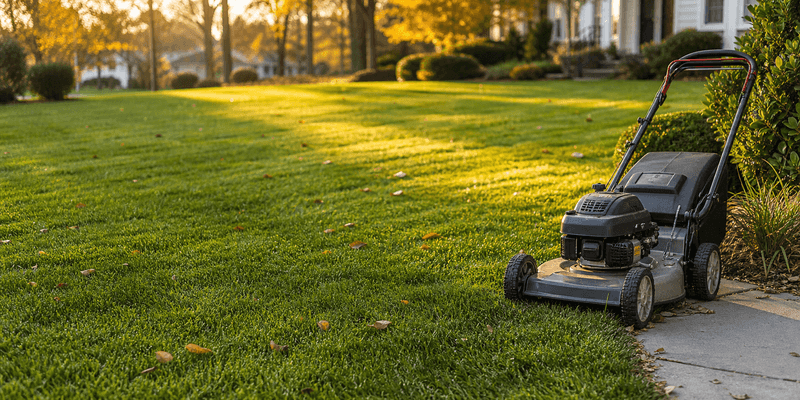
Start by naming your grass and finding its recommended height range. Mow only while the lawn is actively growing, and take off no more than one-third of the blade each time, as Texas A&M advises.
Keep blades sharp, mow dry grass, and sweep clippings off hard surfaces. Once dormancy ends growth, stop.
The routine helps you dodge scalping and overgrowth, and spring will do whatever spring does.