
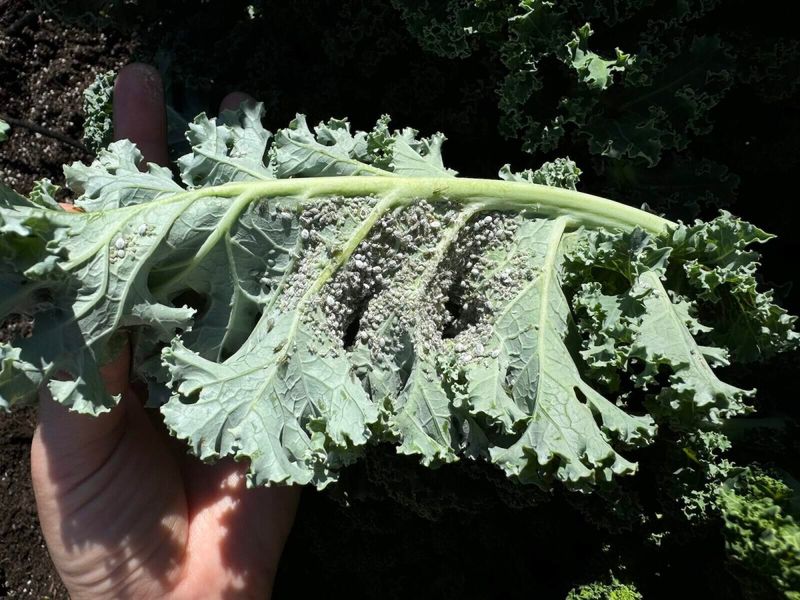
Yellow, curling kale leaves can make a winter bed look like it is losing the fight. Holes in the leaves tell a different story than yellowing does, and mixing up the two clues can lead to the wrong treatment.
Kale is something you eat, so it pays to know what is on the plant before you spray anything. A few minutes of close looking can save you time and keep your harvest safer.
Aphids can yellow kale, but they do not chew holes
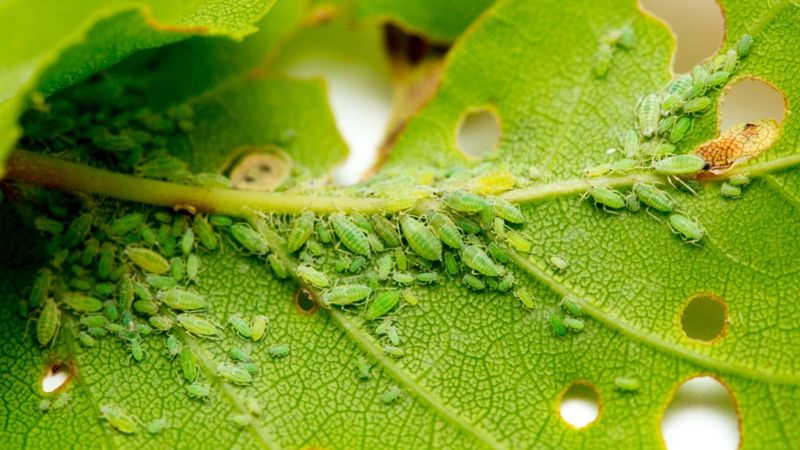
Two kinds of damage often show up on the same kale plant, and they come from different causes. Cabbage aphids feed by sucking sap, and UC IPM guidance on cabbage aphid notes that heavy feeding can lead to yellowing, curling, and stunted growth.
What aphids do not do is chew. Pinholes and ragged edges are chewing damage, so they point to a different pest.
University of Minnesota Extension describes flea beetles making small, rounded holes in brassicas like kale.
Treat yellowing and holes as two separate clues. Yellow leaves can come from aphids, but they can also come from other problems, and Utah State University Extension explains how aphids feed on vegetables.
Before you reach for a spray, look closely at the plant. Finding out what is actually there will guide every step that follows.
Inspect the curled center and leaf undersides
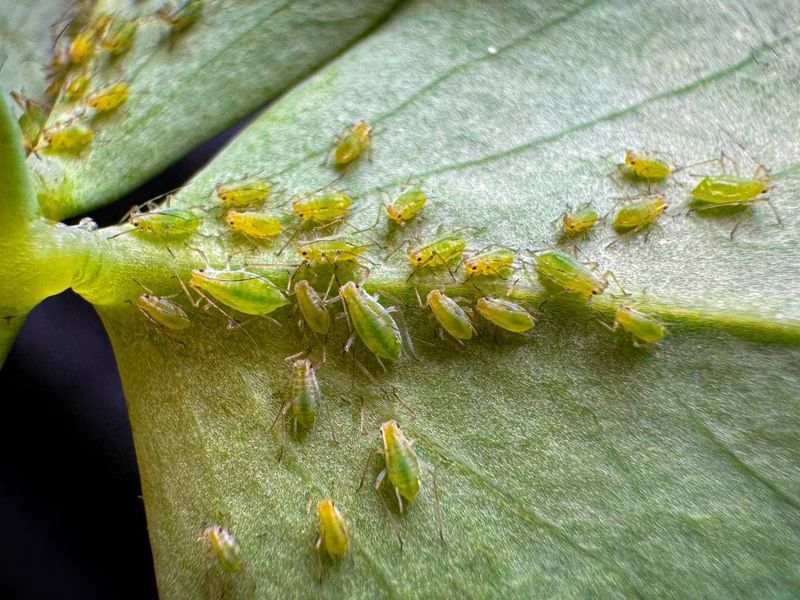
Grab a good light and get close to the plant. Gently open the curled center of the kale, then flip over the young leaves around it, because aphids like tight, sheltered spots.
You are looking for clusters of small, soft-bodied insects. Cabbage aphids wear a waxy coating, which can make them look gray or gray-green, and UC IPM describes dense colonies on the youngest growth.
Sticky honeydew is another clue. This shiny residue on leaves may show up where aphids have been feeding, and UF/IFAS also covers how to recognize this pest.
Finding aphids tells you they are present. It does not prove they caused every yellow leaf, so keep checking other possibilities as you go.
Check for a separate pest behind the holes
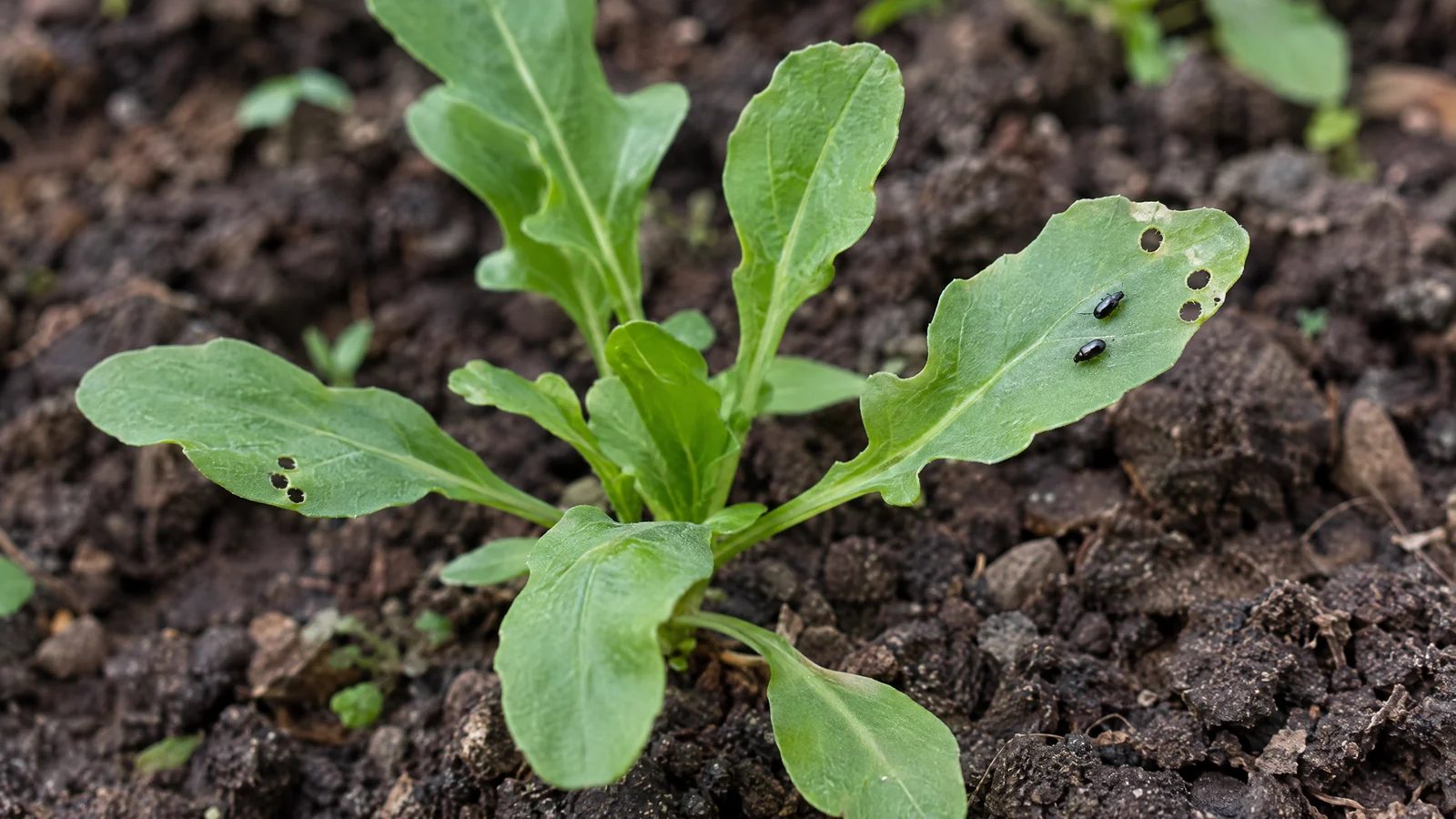
Holes need their own investigation. Small, round, pinprick-sized holes are the classic sign of flea beetles, tiny dark beetles that hop when disturbed.
University of Minnesota Extension explains that adults chew these shot holes in brassica leaves.
Tap a leaf or move your hand near the plant and watch for little jumpers. Checking in the cooler part of the day can make them easier to spot.
Larger or irregular holes suggest something else. Look under leaves and near the center for caterpillars or their droppings, and consider other chewing pests if you find none.
Aphids and a hole-making pest can share the same plant. Utah State University Extension covers cabbage aphids on brassicas, which helps you tell their damage apart from chewing injury.
Do not assume the same aphid pattern across both states
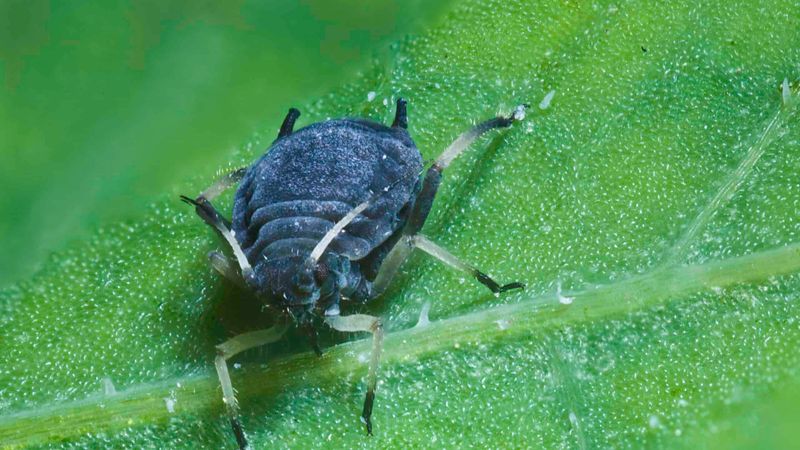
Texas and Florida do not share one winter-kale story. UF/IFAS Gardening Solutions treats kale as a Florida winter crop, but that does not automatically describe every part of Texas.
Even the pest picture is mixed. A UF/IFAS crop profile for cabbage says cabbage aphid is not common in Florida, though other aphid species matter on Florida cabbage.
In Texas, Texas A&M says cabbage aphids are usually not a major pest in South Texas.
So gray aphids on your kale could be a different species than the one in the textbooks. Identify what you actually see, and do not guess based on where you live.
Start by rinsing confirmed aphids with plain water
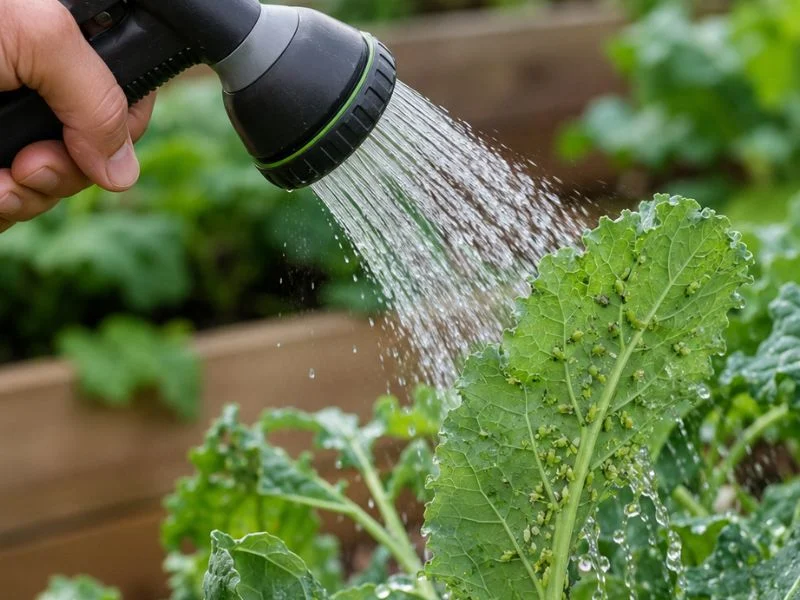
Once you have confirmed aphids, water is the gentlest first move. A forceful stream of plain water can knock them off sturdy plants, as UC IPM describes for aphids in general.
Aim at the visible colonies, including leaf undersides and the crown. Keep the pressure firm but not so strong that it tears the leaves, and take care with small seedlings.
Look again a day or two later. Aphids tucked into curled leaves can escape the spray, and survivors may rebuild their numbers.
This is a plain water rinse, not a soap mix in hard water. UF/IFAS offers kale growing guidance for Florida beds, but no single rinse is a guaranteed fix.
Use labeled insecticidal soap only when aphids remain
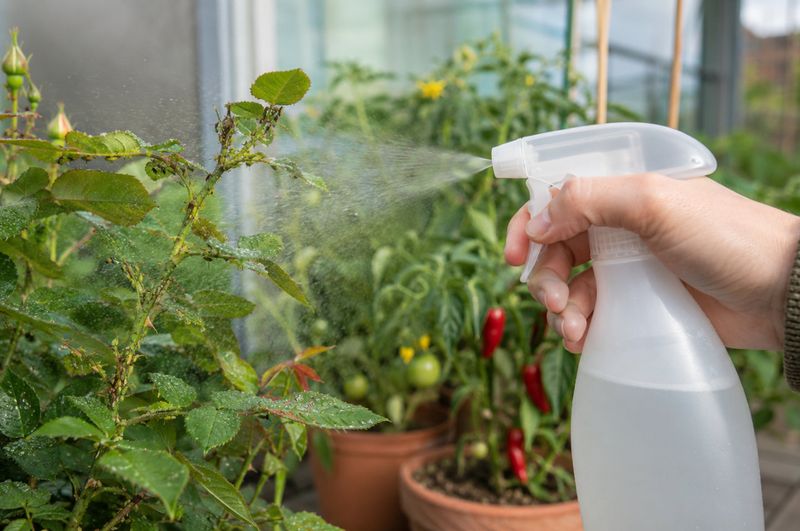
If aphids are still there after rinsing and rechecking, a labeled insecticidal soap may help. It works only on aphids it directly wets, so coverage of leaf undersides and the crown matters, as UConn Extension explains.
Choose a product labeled for kale or other edible crops. Follow its directions for application and harvest timing, and repeat only as often as the label allows.
Soap leaves no lasting protection. It will not kill aphids it misses in curled leaves or those that arrive later, which UC IPM also notes.
Skip dish detergent and homemade mixtures. UF/IFAS explains that household products are not made or tested for plants and can injure foliage.
Even labeled soap can burn stressed plants or plants in hot weather. Test a small area first and follow the label.
Reassess the symptoms before judging the harvest
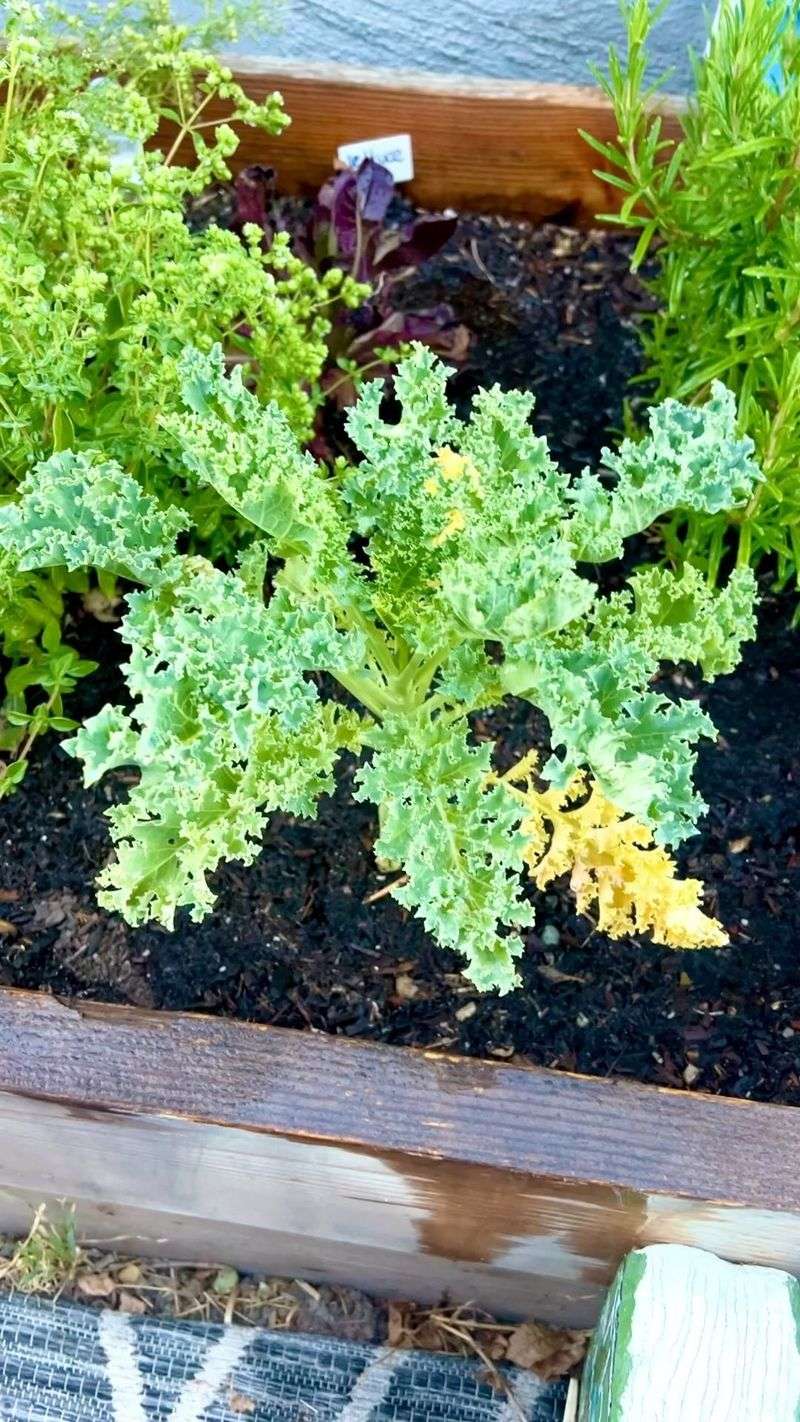
A few days after treating, go back and look again. Check the crown, the undersides, and the leaf edges for aphids, then scan for jumping beetles or caterpillars.
If yellowing continues or no pests turn up, widen the search. University of Maryland Extension lists natural aging, water problems, nutrient deficiencies, and disease among the causes of yellow vegetable leaves.
Results will vary. Hidden aphids and patchy coverage can limit what a rinse or soap does, and UC IPM notes that dense colonies can contaminate harvest leaves.
Its home garden aphid page likewise stresses repeated checking.
Neither step guarantees a saved harvest. The rule is simple: name the pest, match the treatment to it, and follow edible-crop directions.
Kale forgives a lot, but it rewards the gardener who looks before spraying.