
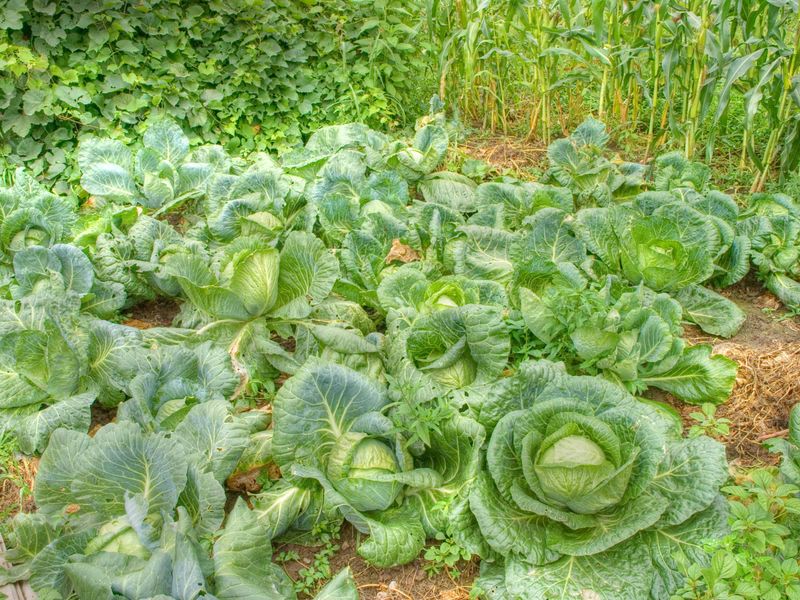
Your cabbage plants look lush and green, but the center stays soft, open, or missing altogether. That mix of healthy leaves and a poor head leaves a lot of Southern gardeners scratching their heads.
Spacing gets blamed a lot, yet it is only one piece of the puzzle. Here is how to tell what is really going on and what to check first.
A leafy cabbage may still be immature
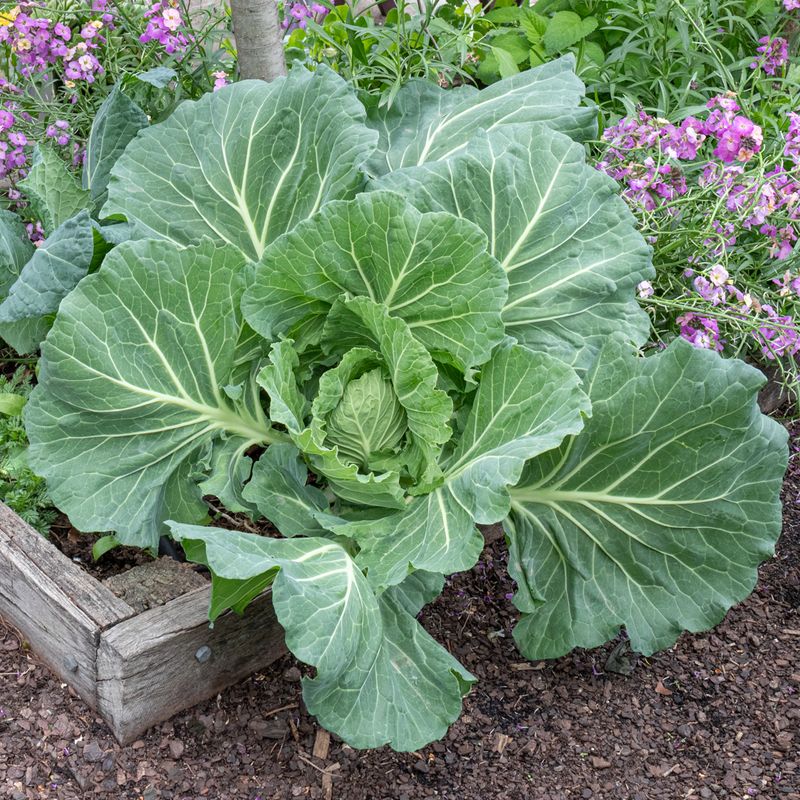
Big, glossy leaves feel like proof that a cabbage is on track, but leaves alone cannot tell you whether a head has matured. A plant can look vigorous while the center is still filling in, or while conditions are keeping it from heading well.
Three situations tend to get lumped together. In the first, the head is forming slowly and simply is not finished yet.
In the second, the head has reached full size but stays loose or puffy. In the third, the plant never forms a real head at all.
Each has different likely causes, so calling all three a spacing problem can send you down the wrong path.
Cultivars matter too. LSU AgCenter guidance notes that some varieties naturally form less dense heads, and a soft head may simply be an immature one.
Texas A&M extension notes point to heat, excess fertilizer, and improper watering as common culprits.
Start by squeezing the head gently and checking your seed packet or plant tag for the expected days to maturity and head type. That one check sorts out which of the three situations you are facing.
Fall heat can disrupt heading
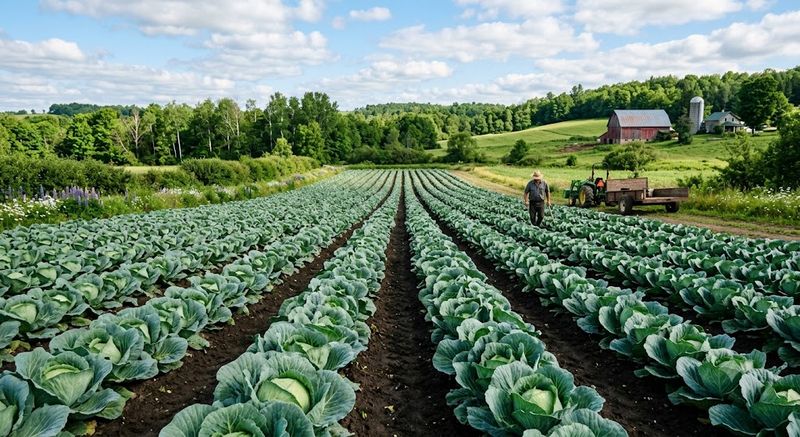
Cabbage is a cool-season crop, and Southern falls often start out hotter than the crop wants. Heading is the stage most affected.
Texas A&M advises that cabbage should head while daytime temperatures stay below about 80°F, and it warns that stress during growth can cause partial or complete crop failure.
Other extension sources agree on the direction. Utah State guidance reports that temperatures above 85°F slow growth and can change head shape.
Treat those numbers as helpful guideposts, not a hard cutoff that guarantees success or failure.
The practical lesson is timing. If your plants began heading during a warm spell, heat is a reasonable suspect for a loose or missing head.
Texas and Florida do not share one calendar. UF/IFAS lists planting windows that differ by region of Florida, and Texas timing varies from the Panhandle to the Gulf Coast.
Check your local county extension office for planting dates, and note when your heads started forming so you can adjust next season.
How much does crowding matter?
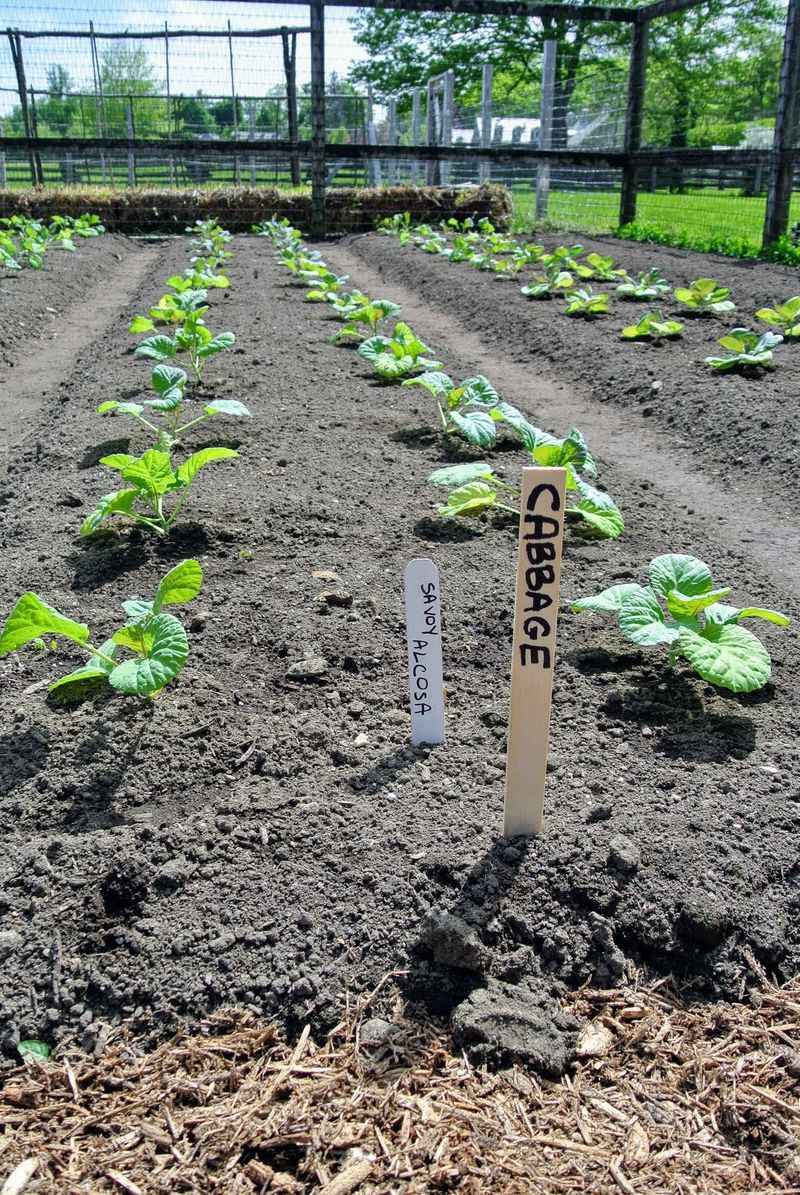
Spacing does have an effect, but it is not the one many people assume. Maryland Extension says plants set about 12 inches apart tend to produce smaller heads, and its general guide gives 15 to 18 inches between plants.
Illinois Extension offers a wider range of 12 to 24 inches depending on variety and desired head size.
Notice what those guides describe: head size. Neither shows that crowding reliably makes heads loose.
A tightly spaced bed can give you small heads, but a loose one usually points back to heat, water, fertility, or cultivar.
For your own beds, let the seed packet or transplant label set the spacing for your variety. Roughly 15 to 18 inches is a sensible reference for larger heads, not a rule for every type.
Florida commercial guides, such as the UF/IFAS cabbage profile, list closer spacings for production fields, and those do not automatically suit a backyard bed.
Timing counts as well. Spacing helps most when you sow or thin young plants.
Widening it late is not shown to firm up a head that has already developed.
Steady moisture supports developing heads
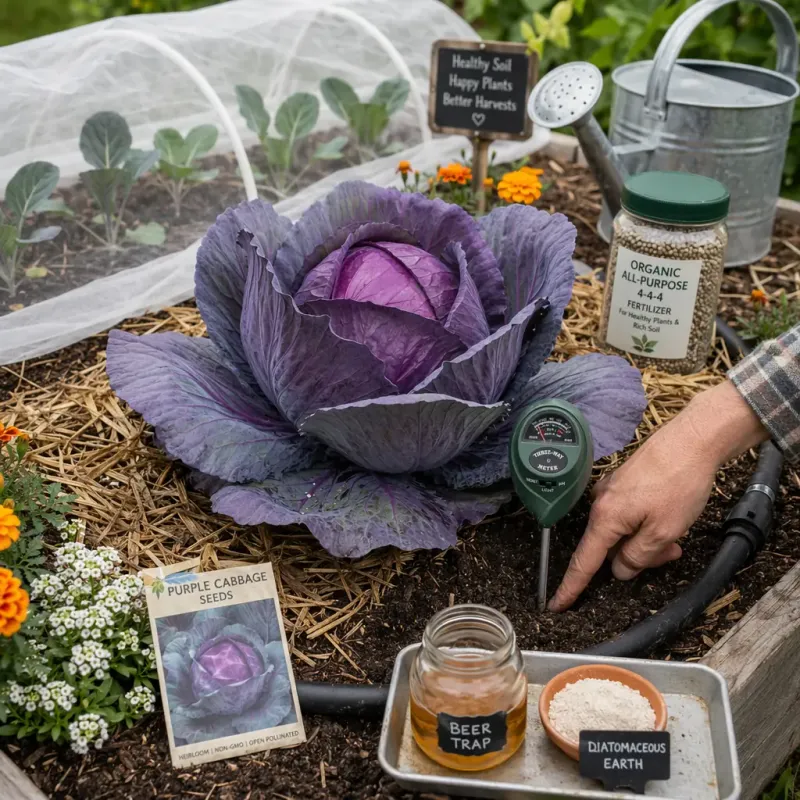
Picture a bed that is bone dry for a week, then soaked by a storm. Cabbage dislikes that roller coaster.
Keeping soil moisture reasonably even while heads develop is one of the more useful things you can control.
Texas A&M lists improper water conditions among the possible contributors to loose heads, and LSU AgCenter mentions water problems alongside puffy, hollow-feeling heads.
Splitting is a different symptom. Utah State advises regular, uniform watering and links moisture swings around maturity to cracked heads.
A split head is firm and burst open, while a loose head is soft and airy, so check which one you have.
Do not assume more water will tighten a loose head. Overwatering can cause its own trouble.
Try mulch to hold moisture, water deeply rather than often, and push a finger two inches into the soil to check before you water. Sandy Florida soils dry fast and heavy Texas clay holds water longer, so adjust to your bed.
Extra nitrogen is not a dependable fix
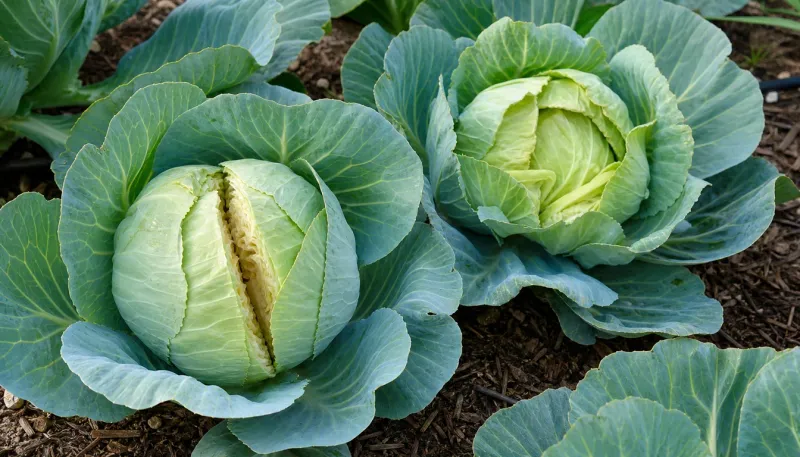
When cabbage looks sluggish, the urge to feed it is strong. With a loose head, though, extra nitrogen may make things worse.
Utah State notes that high nitrogen during head formation can contribute to loose heads and splitting. Lots of leafy growth with a weak center is a classic clue.
That does not mean starving the plants. Young cabbage needs adequate fertility to grow strong frames before heading starts.
Texas A&M recommends basing fertilizer rates on soil-test results rather than guesswork.
A soil test through your county extension office is inexpensive and takes the guessing out. It shows what your bed already holds, which matters in Florida sands that lose nutrients fast and in Texas soils that may already be rich in some nutrients.
If you have already fed heavily, hold off on more. Review how much you applied, and use that record to plan a measured approach next season.
No single dose is a promised cure.
A firm head—not a calendar date—signals harvest
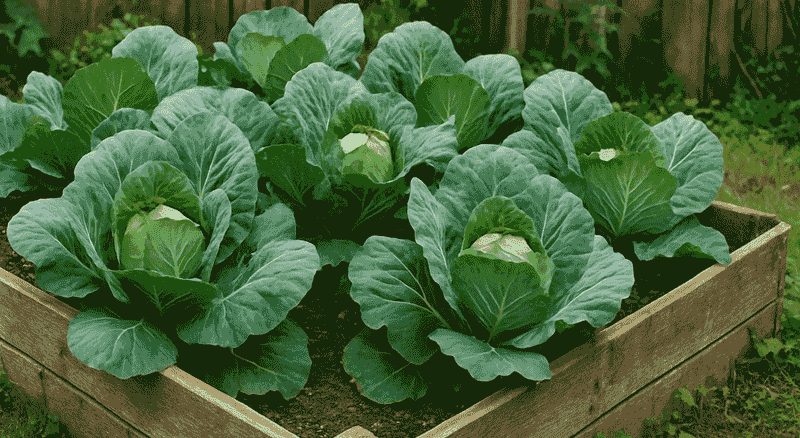
Head size varies with cultivar and growing conditions, so the date on the calendar is a poor guide. Utah State advises harvesting when the head is firm and compact.
Press the top with your palm. If it gives easily, give it more time.
A soft head is not automatically a failure. Mississippi State Extension describes cabbage as ready once heads are solid, and a slow-forming head may simply be immature.
Watch it for another week or two while keeping an eye on the weather, and cut it promptly if it begins to crack or if a hard freeze or heat wave threatens.
Here is a sequence to follow. First, squeeze the heads and compare them with your variety’s expected type.
Next, think back over heat, watering, and feeding during head formation. Then, at your next planting, follow the spacing on the label and thin early if plants were packed in.
A loose cabbage still tells you something. Each one is a clue for next season’s bed.