
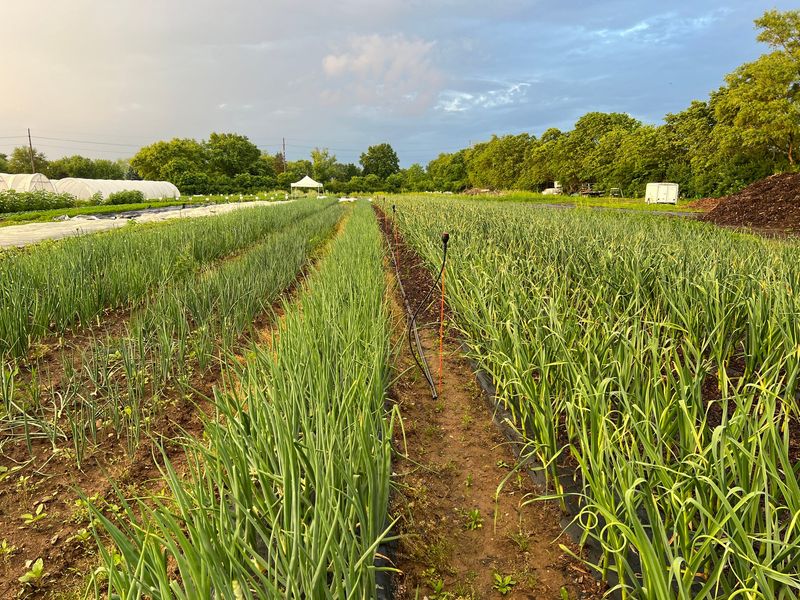
Plant onion transplants in November and you may be a couple of months early for Austin. Fall is the time to sow onion seed, while transplants have their own window in winter.
Getting the timing and the variety right gives your onions a better shot at forming good bulbs. Here is how to sort out the dates and grow onions that are worth harvesting.
November Is for Onion Seed, Not Austin Transplants
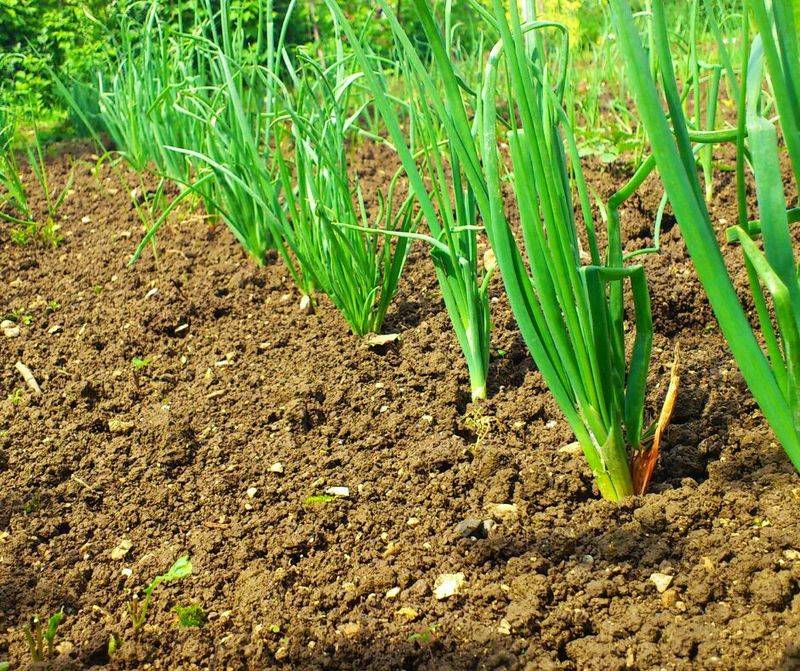
Plenty of gardeners hear “plant onions now” in the fall and assume it means transplants. Seeds and transplants follow different calendars.
Texas A&M’s general growing guide lists October through December for sowing bulb-onion seed, and January through February for setting out transplants.
For Austin and Central Texas, local guidance is more specific. Travis County’s January gardening checklist for Austin notes that onion transplants start showing up in garden centers later in January.
That fits the mid-January target for local transplants.
The statewide window of January through February is a broad range, not a precise schedule for every county. Texas is huge, and a gardener near the Gulf Coast or in the Panhandle will not follow the same calendar as someone in Travis County.
The Texas A&M onion growing guide lays out those planting dates and is a good reference to keep handy.
So if it is November and you have seed, sow it. If you are shopping for transplants, wait until they hit the shelves and aim for mid-January.
When in doubt, call or check your county Extension office for timing that fits your area.
Choose an Onion Variety Suited to Central Texas
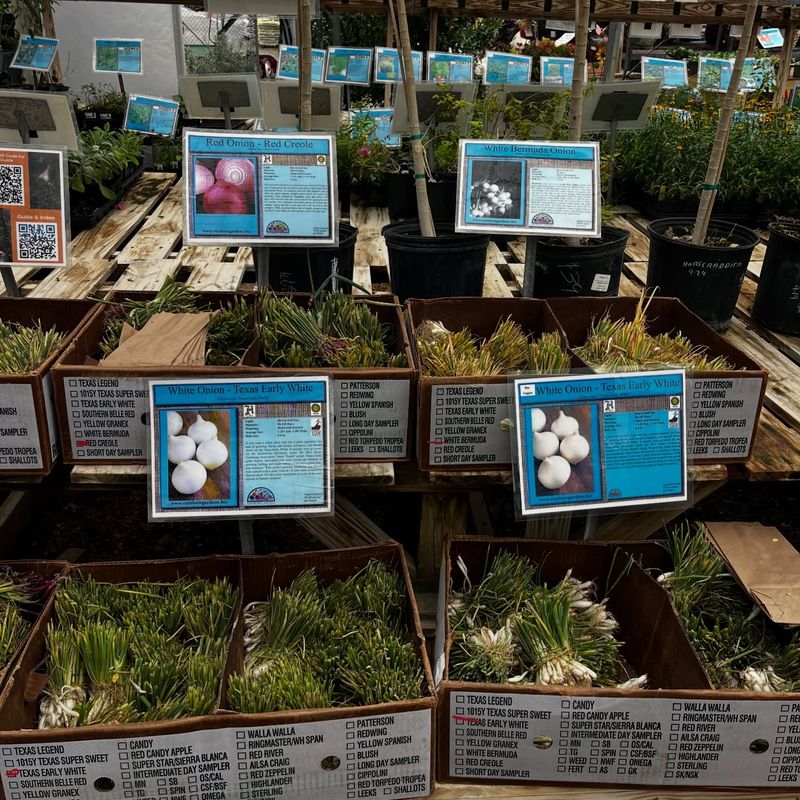
Variety matters as much as the calendar. Onions begin forming bulbs based on day length, and each variety is sold as short-day, intermediate-day, or long-day.
Central Texas gardeners do best with short-day types or suitable intermediate-day types, since the long-day kinds suit northern states.
The Texas A&M onion guide lists short-day choices such as Texas 1015Y, Texas Legend, Granex, and Southern Belle. Travis County’s vegetable variety list for Central Texas names 1015Y Texas Supersweet, Yellow Granex, and Southern Belle Red.
Check the tag or catalog description before you buy. If a bundle of transplants does not say which day-length class it belongs to, ask the seller or pick a named variety from the lists above.
A bundle labeled for northern gardens may start bulbing at the wrong time for Austin.
Local Extension guidance is the best final check, because conditions differ from county to county.
Day Length Triggers Bulbing; Leaves Support Bulb Potential
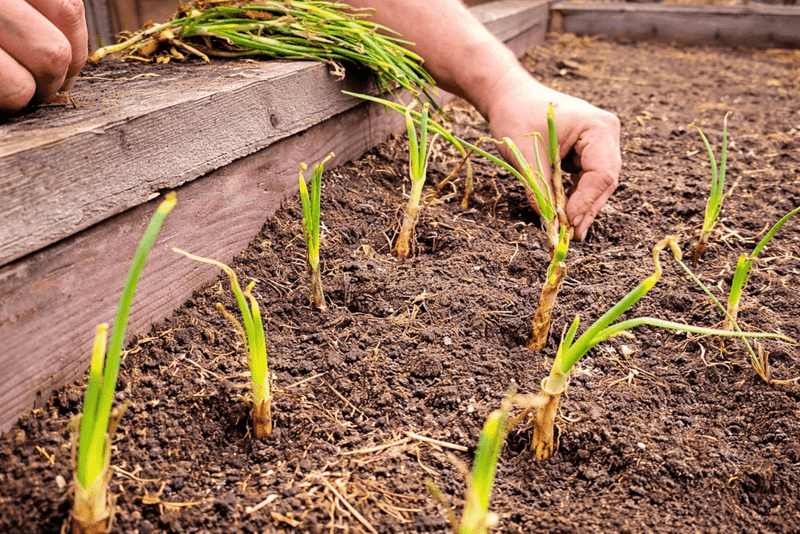
Onions decide when to start bulbing mostly by the length of the day and by temperature. The Texas Vegetable Growers Handbook explains that day length drives this response, which is why short-day varieties suit Texas.
As spring days lengthen and warm up, the plant shifts from making leaves to swelling a bulb.
Leaves still matter. Each leaf above ground corresponds to a ring in the bulb, so a plant with more established, healthy foliage when bulbing starts has more potential for a larger bulb.
Texas A&M’s onion growing guide makes this link between leaves and rings.
But leaf count alone does not set the outcome. An older Texas A&M commercial onion guide cautions that bulbing depends on day length and temperature, not on plant size or age alone.
Because it is a commercial guide, use it to add nuance to home-garden advice rather than replace it.
Here is the practical meaning. Planting at the recommended time gives plants a chance to grow foliage before the days trigger bulbing.
It improves your odds, but it does not promise any particular size.
Plant Transplants Shallowly in the Local Window
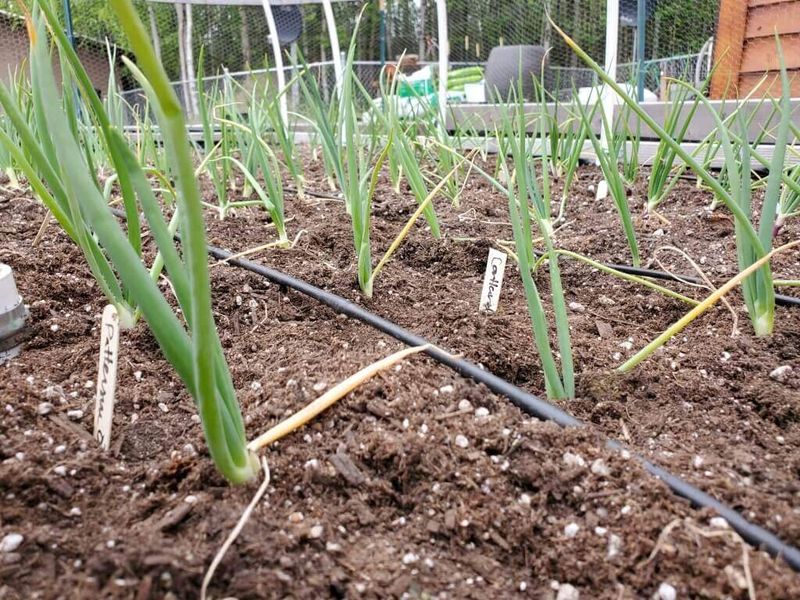
When mid-January arrives and transplants are in stock, pick a spot that gets full sun. Onions also want well-drained soil, so avoid low corners where water collects after winter rains.
Raised beds work well in Central Texas clay.
Planting depth is where many beginners go wrong. The Texas A&M onion guide recommends setting transplants about three-quarters of an inch deep and about 3 inches apart.
Do not bury them more than 1 inch.
Press the soil gently around each plant so it stands upright, then water to settle it in. If the base is buried too deep, the bulb can struggle to swell later.
Remember that these instructions are for transplants. Seed sown in the fall follows its own spacing and thinning rules, so do not mix the two methods.
If your transplants arrive before the ground is ready, keep them cool and plant as soon as you can.
Support Growth with Water, Weed Control, and Thoughtful Fertilizing
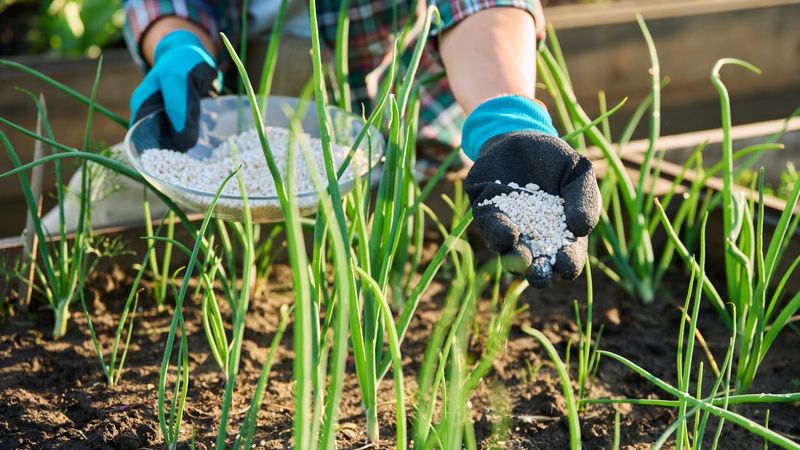
Onions have shallow roots and hate competition. Pull weeds early and often, being careful not to disturb the roots as you work.
A thin layer of mulch can help keep weeds down between plants.
Water slowly and deeply so moisture soaks in rather than running off. Texas A&M says weekly watering is usually enough in spring, and you may need more during dry, windy weather.
A finger pushed into the soil is a good check before you turn on the hose.
Feeding is the next piece. The Texas A&M growing guide recommends a second fertilizer application when plants have five to six leaves, because leaves form the rings of the bulb.
Skip any one-size-fits-all rate. Soils vary, so start with a soil test and follow the directions on the fertilizer you choose.
The Texas Home Vegetable Gardening Guide covers soil and fertilizer basics.
If you treat pests, read the product label and follow its directions and cautions. Healthy, steadily growing leaves give the bulb its best potential, but they are one factor among several.
A Late Start Does Not Guarantee Golf-Ball Bulbs
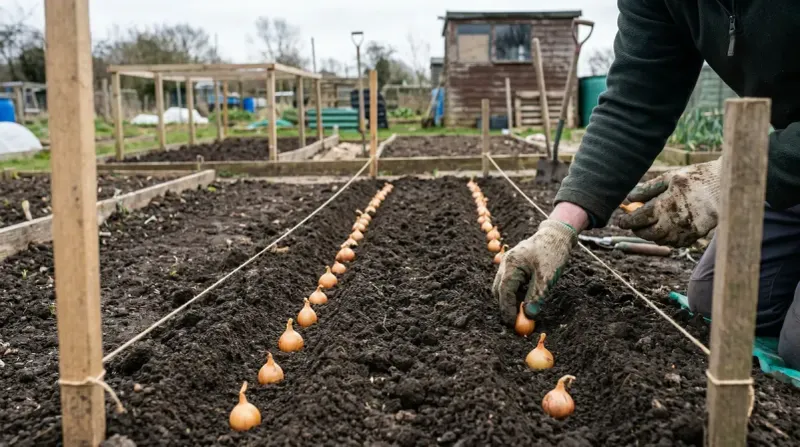
A common claim says that if you miss the planting window, you will harvest golf balls. That is too strong.
Late planting can leave less time for growth before bulbing begins, but the guidance does not set a universal cutoff date or promise a specific bulb size.
Several things shape what you pull from the ground. Variety, temperature, water, fertility, and general growing conditions all play a part.
A well-matched short-day variety that is watered and fed sensibly can still give a useful harvest even if your planting was a bit behind.
If you did plant late, focus on what you can control. Keep the bed weeded, water on a steady schedule, and feed according to a soil test and product directions.
The Texas A&M onion guide is a solid reference for those basics.
Bolting is a different matter from bulb size. It means the plant sends up a flower stalk.
An older commercial onion guide reports higher bolting risk after prolonged exposure to temperatures in the low-to-mid 40s F for pencil-size plants. That does not mean every freeze causes bolting.
Harvest Dry Onions When the Main Stems Fall
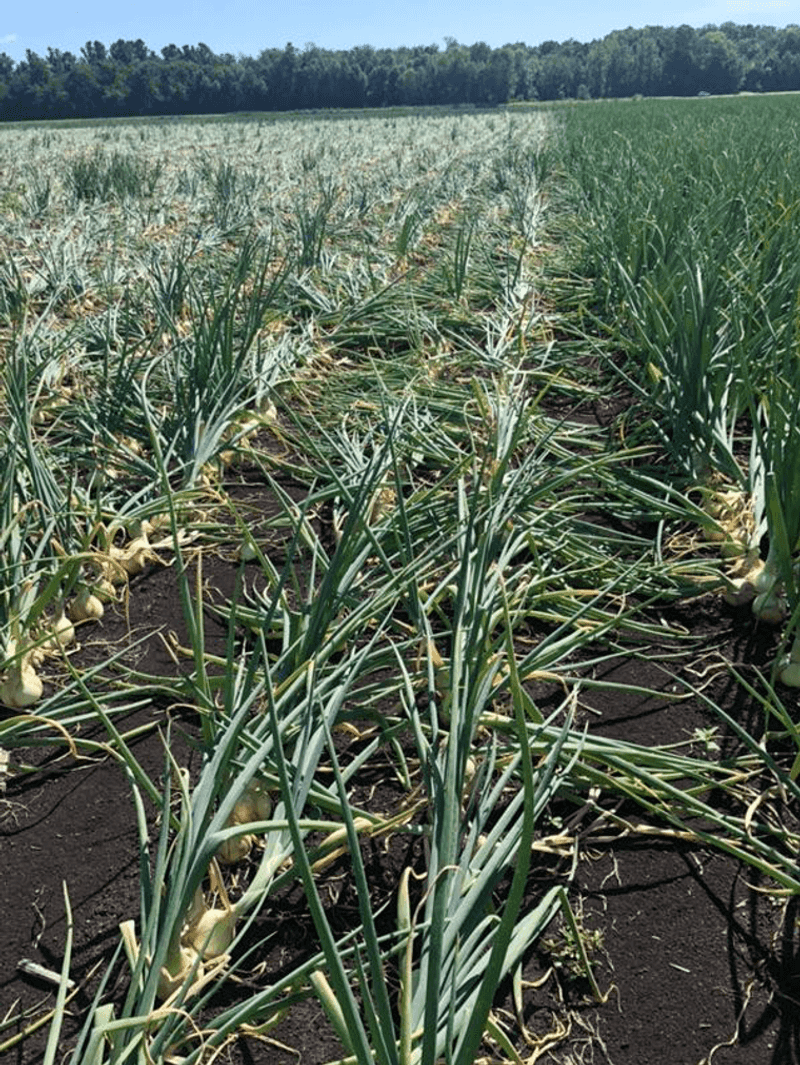
The garden tells you when the season is ending. For dry bulbs, harvest when the main stem weakens and falls over.
The Texas A&M onion guide gives this as the cue for dry onions.
Bulbing onions generally mature between May and July, though timing varies with variety, weather, and when you planted. Treat that range as a general guide, not a fixed harvest date.
Watch the tops rather than the calendar.
Once the stems have flopped, lift the bulbs carefully and handle them gently to avoid bruising. Brush off loose soil and let them dry before storing.
A flattened row of green tops is the sign that months of winter care are paying off.