
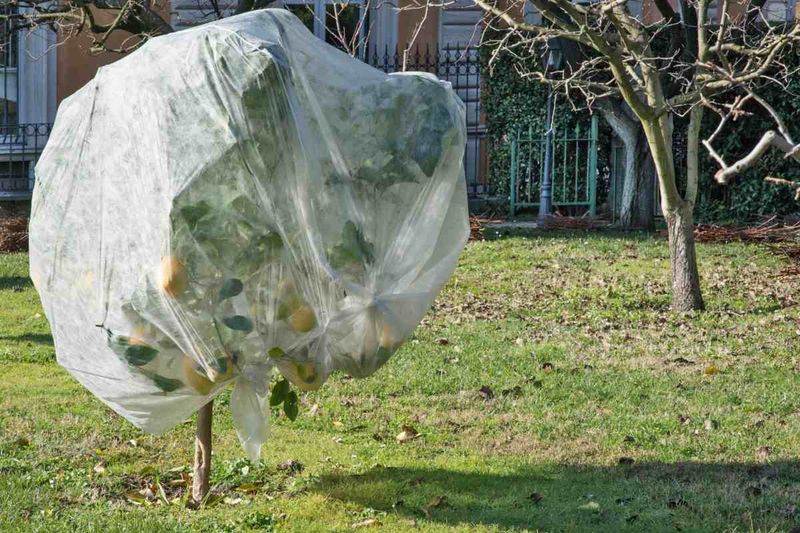
Late fall cold fronts can turn a healthy Meyer lemon into a worry overnight. Covering the tree is one tool, but it is not the right answer for every tree or every freeze.
The best plan depends on the forecast, whether your lemon grows in the ground or a pot, and how long the cold will last. Here is how to match your protection to your tree.
Let the forecast and the tree’s situation guide your plan
Skip the calendar and watch the local forecast. In Austin, the National Weather Service lists November 29 as the average first freeze date for 1991 to 2020.
That is a historical average for any freeze, not a prediction of a hard freeze in a given year, so some years the cold arrives earlier and some years later.
It also helps to know what kind of cold is coming. UC IPM explains that frost means plant tissue can cool to 32°F or below even when the measured air temperature is warmer.
A freeze means the air itself is at or below 32°F. A cover can be quite useful on a frost night, while a severe or long freeze is a much bigger test.
Meyer lemon is among the more cold-tolerant lemons, but it is not freeze-proof. Texas A&M notes that injury depends on how long the cold lasts and how well the tree has acclimated.
Tree age and overall health matter too, and young trees are the most vulnerable. A single number will not tell you a tree is safe.
Clemson’s trial data listed 22.3°F for Meyer lemon, yet every Meyer tree in that experiment died in a 16.5°F event.
Finally, sort your tree into one of two groups. In-ground trees can be prepared and covered where they stand.
Potted trees follow different rules, and Texas A&M’s container guidance is covered in section six.
Prepare in-ground trees and soil before the cold arrives
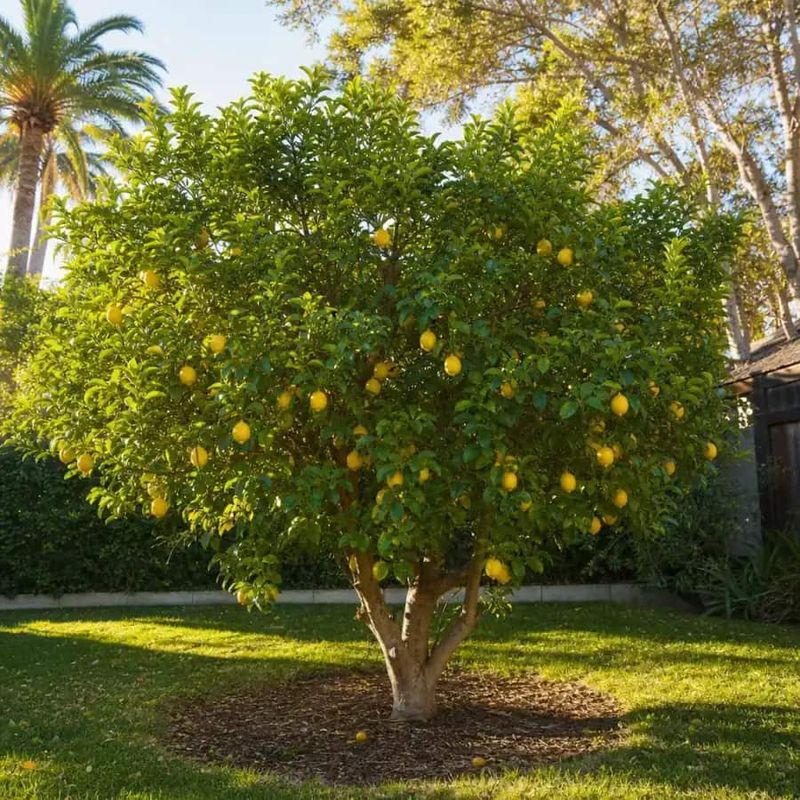
Preparation starts days before any cover goes on. Texas A&M recommends thoroughly irrigating the tree and the surrounding area several days before an anticipated hard freeze.
Think of it as a deep, slow soak with a hose or drip line, finished well ahead of the cold.
That does not mean saturating the soil, and it does not mean turning on sprinklers during the freeze. Overhead sprinkling is a separate, risky technique.
UF/IFAS notes that ordinary home irrigation systems may not deliver the continuous water that method needs and can do more harm than good.
Soil surface matters as well. For citrus, Texas A&M guidance favors bare, firm soil around the tree in winter, because bare, moist soil can store and release more heat than dry or mulched ground.
If you usually mulch your beds, you might pull mulch back from under the canopy for the cold season. This is cold-protection advice specific to citrus, not a rule for every plant in your yard.
Keep this step separate from covering. Watering and soil prep set the stage, and the cover comes later, once you know the forecast calls for real cold.
Choose a cover that stays off the foliage
Frost cloth, a bedsheet, or a blanket can all work as a cover for an in-ground tree. Texas A&M’s citrus guidance lists these kinds of materials as options.
Fabric breathes a bit, which makes it more forgiving than most alternatives.
Heavy blankets can crush branches and press cold against leaves. A simple frame of stakes, PVC hoops, or tomato cages can hold the material up and away from the foliage.
Set the frame before the cold night so you are not wrestling with fabric in the dark.
Plastic needs extra care. Texas A&M cautions that clear plastic touching plants can cause cold injury, and it advises removing plastic covers on sunny days.
If you use it, support it on a frame so it never rests on the leaves, and remove or vent it as temperatures rise the next morning. Trapped sun heat can build quickly under a closed plastic tent.
Keep expectations realistic. Texas A&M’s frost and freeze publication describes protection as limited in extreme cold, and supplemental heat may be needed in freezing conditions.
Heaters, open flames, and outdoor electrical equipment carry fire and shock risks, so they are not simple household fixes.
Extend the cover to the ground before temperatures fall
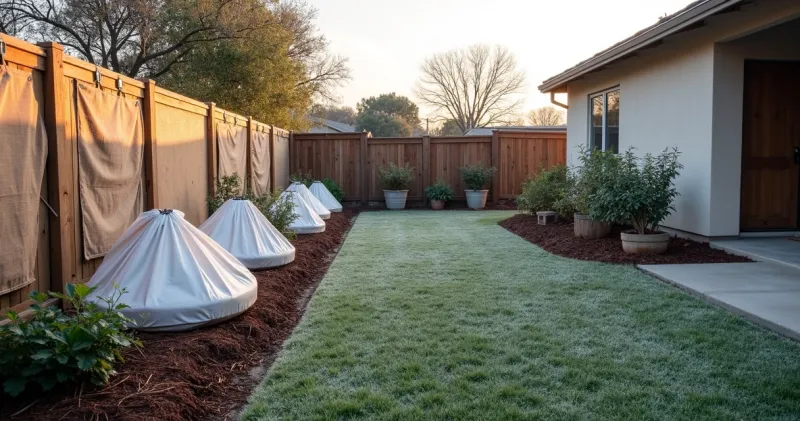
Timing comes first. Put the cover on in the afternoon, before sundown, so it can hold the day’s warmth.
Waiting until the temperature is already dropping gives you less heat to trap.
Next, bring the material all the way down to the soil. UF/IFAS advises extending the cover to the ground so it can trap heat rising from the soil.
A cover that stops mid-canopy lets that warmth escape out the bottom.
Wind is the enemy of a loose cover. Weight the edges with bricks, rocks, or landscape staples, or clip the fabric to the frame.
Do not cinch the cover tightly around the trunk in a lollipop shape, since that leaves the lower tree exposed and defeats the purpose.
Know what this method can do. It can help during frost or milder cold.
UC IPM distinguishes frost from freezing air temperatures, and a cover is more useful for the former. In a hard or prolonged freeze, a cover alone may not protect the whole tree, and Texas A&M notes that duration of cold affects injury.
Uncover when temperatures climb the next day so the tree gets light and air.
Protect young trees and the graft union
Young Meyer lemons have the least cold reserve. Clemson reports that juvenile trees are vulnerable, so they deserve the most attention before a hard freeze.
A canopy cover does not protect the graft union, the knobby spot low on the trunk where the lemon joins its rootstock. Clemson describes soil banking as a way to protect it.
Mound loose soil up around the lower trunk, covering the union, before the cold arrives.
Remove the banked soil in spring. Leaving it in place can cause problems for the trunk over time.
The graft union is worth the effort because it holds the tree’s future. A tree may lose its upper growth but survive if the graft union remains alive, and it can then regrow from that point.
That is a better outcome than losing everything.
Fruit is a separate matter. A Texas AgriLife resource says citrus fruit can be damaged at 28°F, so a canopy cover should not be counted on to keep lemons unharmed.
If a freeze is forecast, consider picking ripe fruit ahead of time.
Texas A&M also stresses that duration and acclimation shape injury, and UC IPM describes how frost can hit tissue even when air readings look milder.
Move or otherwise protect container-grown trees
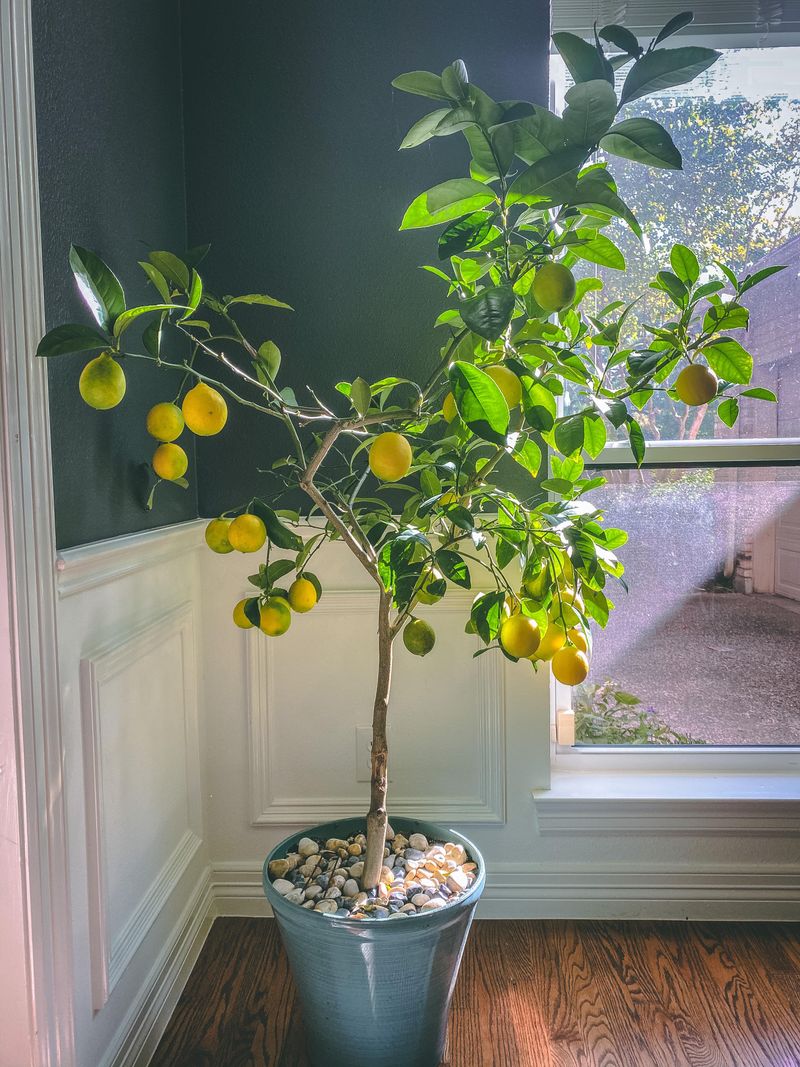
A potted lemon gives you an option that in-ground trees never have: you can move it. Texas A&M recommends moving container-grown citrus indoors or otherwise providing cold protection during freezing weather.
When a freeze is in the forecast, that usually means rolling the pot into a garage, enclosed porch, or bright room.
Wheeled plant caddies make the job easier, especially with a large pot full of damp soil. Move it before dark, and set it where it gets as much light as possible.
Bring it back outside once the cold passes and the forecast settles.
If moving is not possible, protection has to cover more than the leaves. A pot sits above the ground, so its roots are exposed to cold air on every side.
Draping fabric over the canopy alone does not give the same protection as the soil heat an in-ground tree gets, so the container and root zone need attention too. Pushing the pot against a warm house wall, under a covered patio, or grouping pots together can help.
Keep the in-ground steps separate in your mind. Soil banking and extending a cover to the ground are procedures for planted trees.
A pot needs its own plan, made early enough that you are not hauling it around in the cold.
Wait for new growth before pruning freeze damage
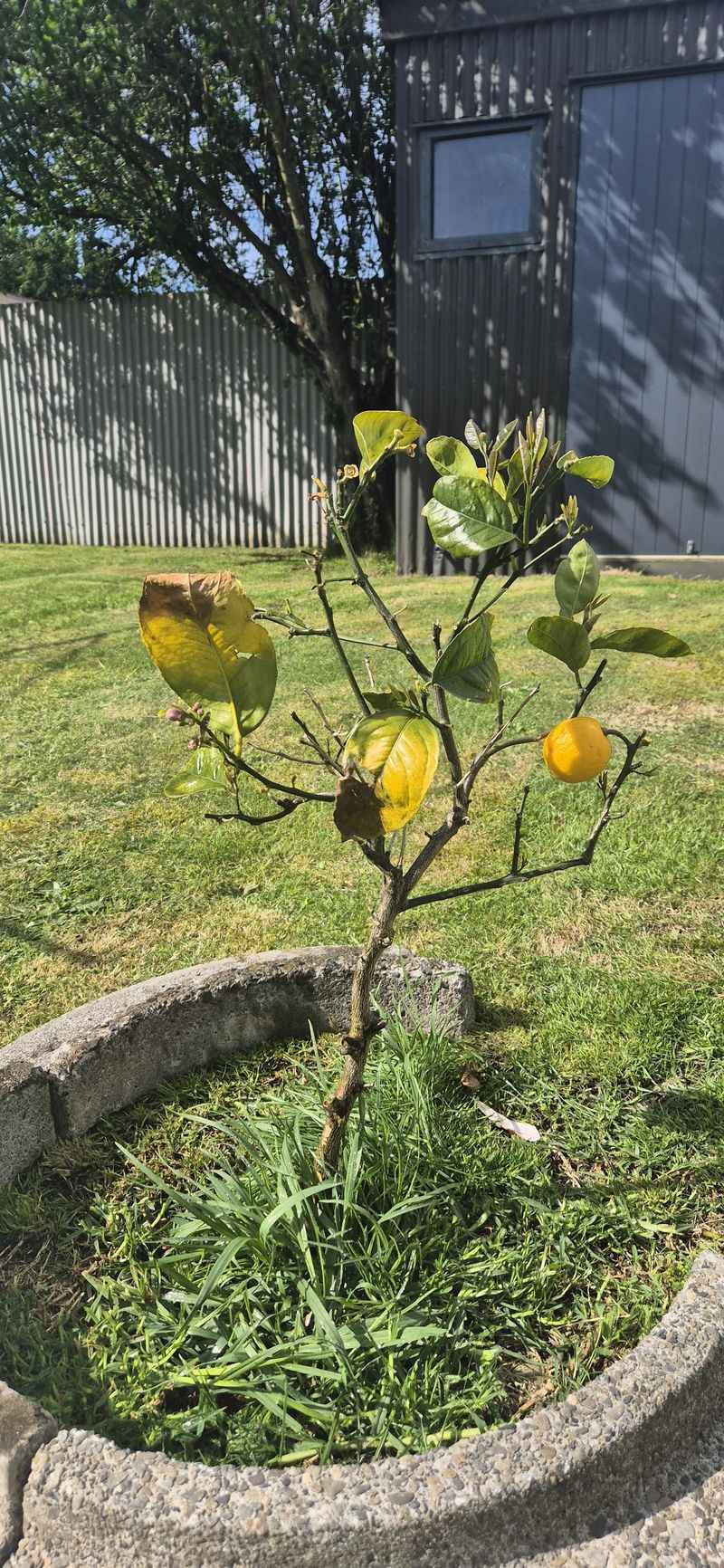
After a freeze, brown leaves can make a tree look finished. Resist the urge to grab the pruners.
The full extent of damage takes time to show, and cutting too early can remove wood that is still alive.
Texas A&M advises delaying pruning of freeze-damaged citrus until May. UC IPM likewise recommends waiting until late spring or summer, when new growth reveals what is dead.
Watch the branches as spring warms up. Green buds and fresh shoots mark living wood, and bare sections with no growth are the ones to cut back.
Prune just above the live growth, and check low on the trunk too, since a living graft union can send up new shoots.
Match your protection to your tree each winter: in-ground or potted, young or established, frost or hard freeze. A cover is one useful tool, and no cover can promise a Meyer lemon will come through severe cold.
Patience in May often saves more of the tree than any rush in December.