

That bare amaryllis pot on your windowsill still has a lot going on inside. The big bulb under the soil is a storage tank, and what you do in the next few months decides how much energy it holds.
With a simple routine, you can give it a real chance to flower again and aim for winter blooms. No routine can promise a bloom on a certain date, but the effort is small and the payoff can be big.
Save the leaves after the flowers fade
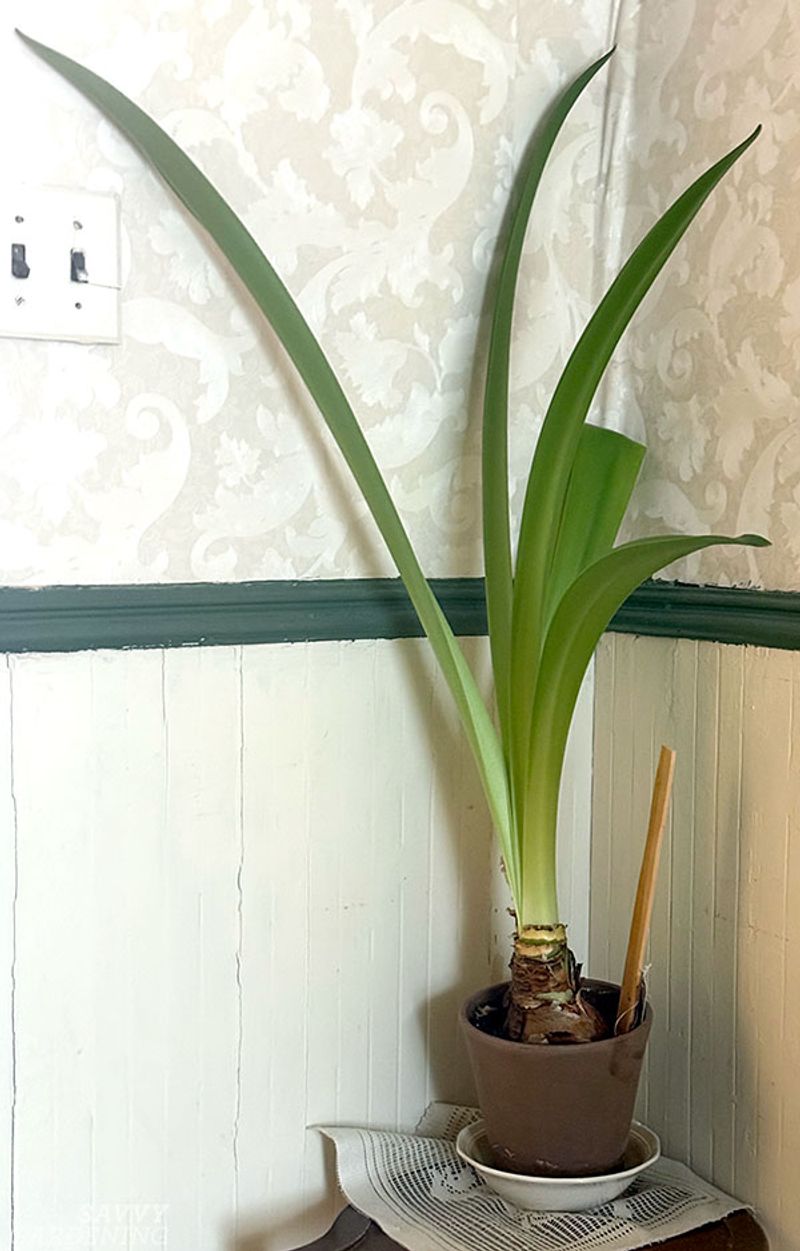
Once the blooms start to wilt, snip them off before they can turn into seed pods. Seed making drains energy that the bulb would rather save for next year’s flowers.
Leave the flower stalk alone while it stays green, since it can still help feed the bulb. Cut it back close to the bulb only when it turns yellow.
The long, strappy leaves are the real engine here. According to University of Minnesota Extension, healthy leaves help the bulb build up the reserves it needs for later flowers.
It can be tempting to trim the plant to look tidy, but cutting green leaves off early may shrink the bulb’s chance of flowering again. Think of the leaves as solar panels that are charging a battery.
University of Illinois Extension gives the same advice to keep the foliage. If a leaf turns brown on its own, you can trim off just that dead part.
Keep the bulb growing in bright light
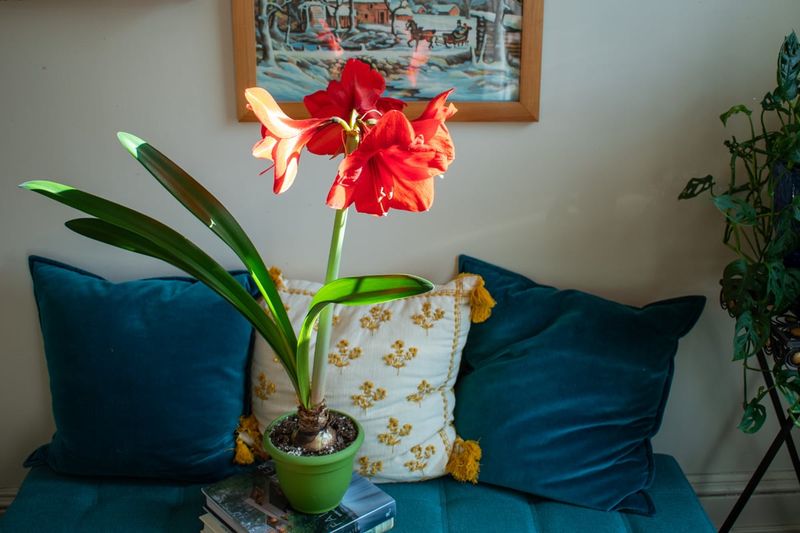
Picture the brightest spot you have, maybe a south-facing window, and park the pot there. More light means sturdier leaves, and sturdier leaves mean a better-fed bulb.
Poke a finger into the mix. When the top couple of inches feel dry, water thoroughly and let the extra drain away.
A pot left sitting in a saucer of water can lead to soggy conditions around the roots, which bulbs dislike. During active growth, feed the plant following the directions on your fertilizer label.
Both Minnesota and Illinois extension guides describe this simple routine.
Steady leaf growth is the goal, because every new leaf adds to the energy stored in the bulb. One safety note: amaryllis is listed by the ASPCA as toxic to dogs, cats, and horses, so set the pot where curious chewers cannot reach it.
Use summer growth to replenish the bulb
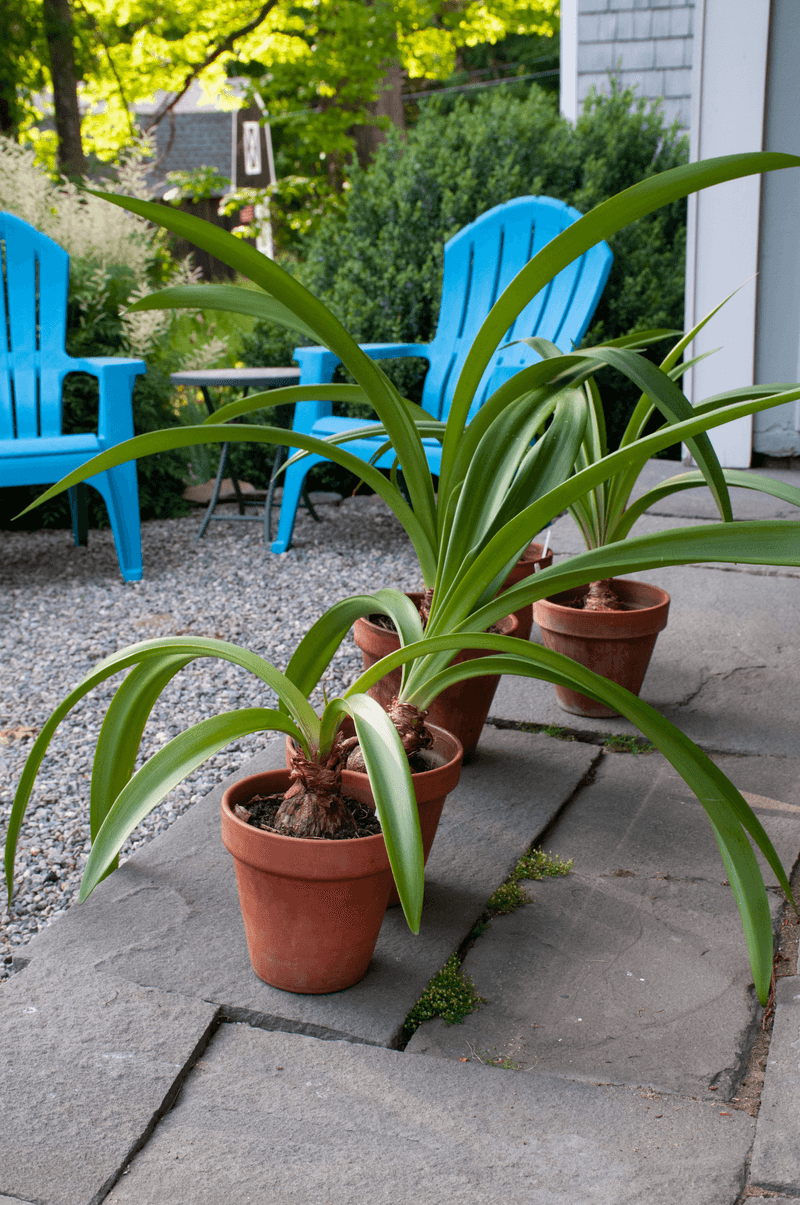
Summer outdoors is a bonus, not a rule. If you want to give the plant extra sunshine, wait until the danger of frost has passed in your area.
Don’t carry it straight into full sun, because tender indoor leaves can scorch. Start in a shaded or partly shaded spot for several days, then move it into brighter light a little at a time.
The target is about six hours of sun a day, a level mentioned in Minnesota Extension guidance.
Keep watering when the top of the mix dries out and continue feeding as the label directs. All those weeks of sun-fed leaf growth can rebuild the bulb’s reserves.
Check the forecast in early fall, and bring the pot indoors before the first frost arrives. If you skip the outdoor stint, a bright indoor window can still do the job, as Illinois Extension notes in its care advice.
Treat dormancy as a scheduling option
Advice on resting the bulb is not all the same, and that is okay. Minnesota Extension and Illinois Extension both say amaryllis do not need dormancy to rebloom, though a rest can help you control when flowers show up.
Iowa State includes a cool period in its rebloom plan. The usual method is a cool, dark, dry rest of roughly 8 to 12 weeks, with watering stopped and the leaves allowed to fade.
Gardeners use it when they want to aim for flowers in winter.
Temperature advice varies too. Penn State Extension points to a different range than some other guides, so treat any number as a rough target rather than a strict rule.
A cool closet, basement, or unheated spot that stays above freezing is the general idea. A rest is a tool for timing, and it will not guarantee a bloom if the bulb is short on stored energy.
Restart growth without setting a holiday deadline
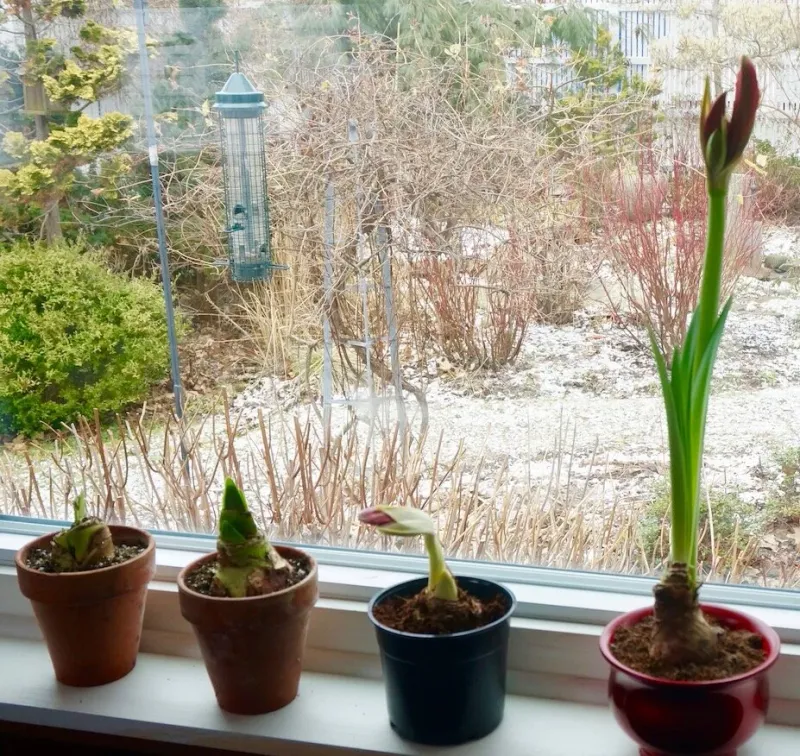
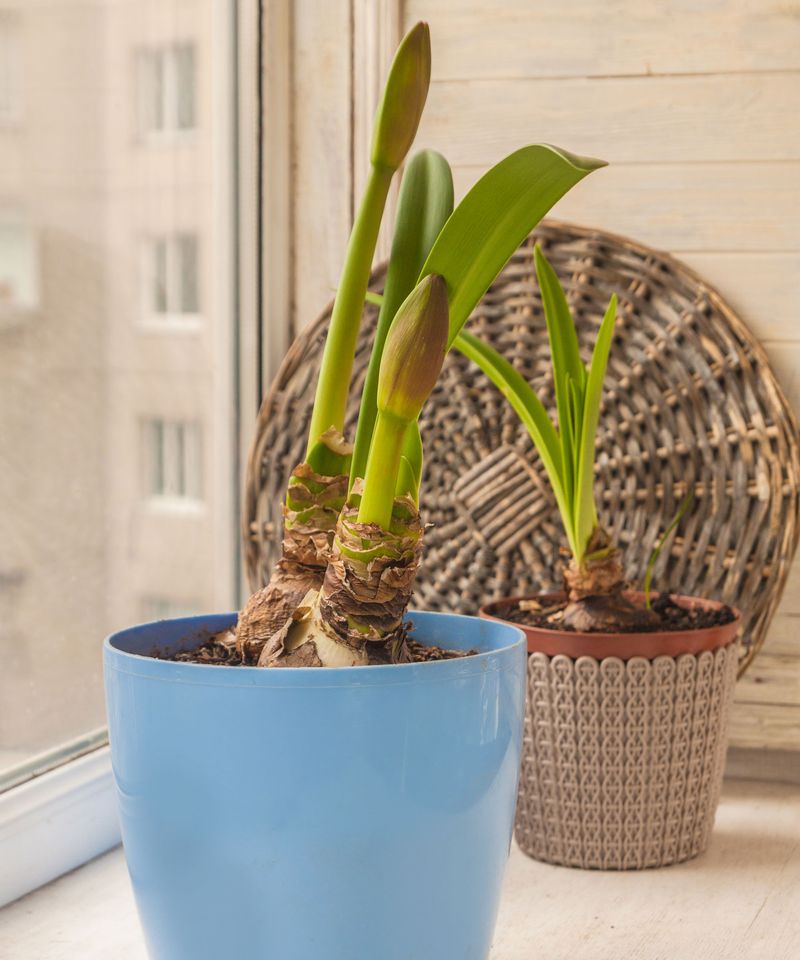
After the rest, bring the pot into a warm, bright room and water it. New growth usually begins as a pointed tip rising from the bulb’s top.
From there, keep the soil lightly moist, drying slightly between waterings, and give the plant plenty of light. Flowers often take about 4 to 6 weeks to develop once growth restarts, according to the extension guides from Minnesota and Illinois.
Treat that as an estimate only.
A calendar can tell you when to start, but the bulb sets the pace. Some bulbs bloom early, some take longer, and a bulb that did not store enough energy may send up leaves and skip the flowers.
If your plant is running late for the holidays, enjoy the leaves and try again next year. Keep notes on the dates you restart, so you can adjust your timing for the next round.
Give a waxed bulb a separate recovery attempt
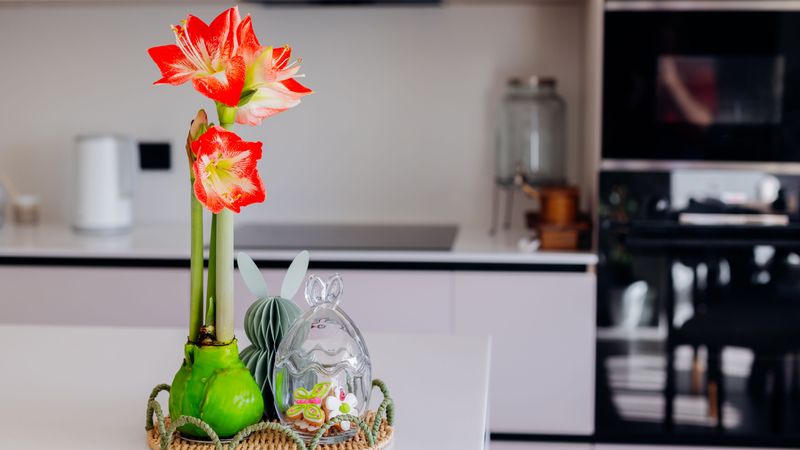
Waxed amaryllis are a different story. Their roots were removed and the bulb was sealed in wax, so the usual post-bloom routine does not apply.
Iowa State Extension says these are typically treated as disposable, but a firm bulb may still be salvageable.
Watering alone will not rescue it. You need to peel off the wax and remove the wire first, then pot the bulb and care for it like a regular amaryllis.
A soft or mushy bulb is a poor candidate.
The University of Delaware describes encouraging roots on a barely damp paper towel before potting. Treat it as an attempt, not a sure fix.
Some bulbs recover and some do not, and a bulb that has been without roots may need a season or more before it flowers. If it grows leaves, you are on the right track.