
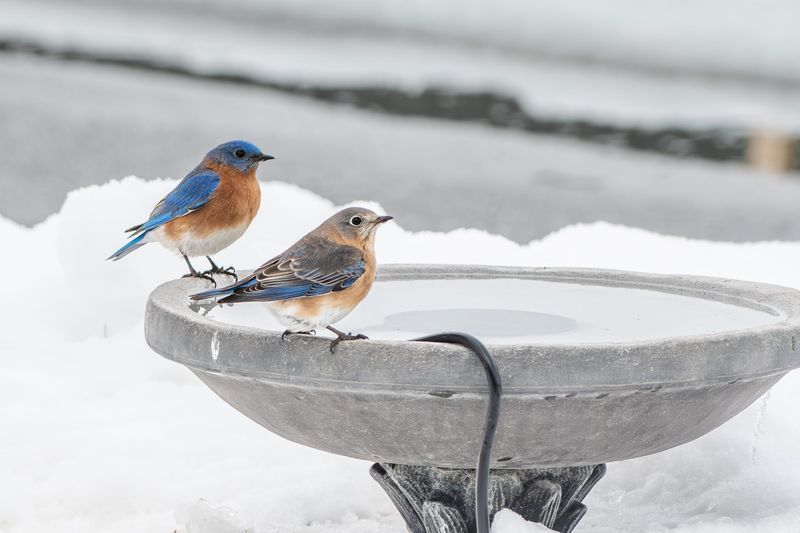
A bowl of water on the porch is one of the easiest things a Central Texas homeowner can do for backyard birds in winter. Bluebirds do use shallow water, but a bath is an extra, not a ticket to spring nesting.
Here is how to set one up safely, what to do when it freezes, and what really matters when you get a nest box ready.
A winter bath is an extra, not a spring reservation
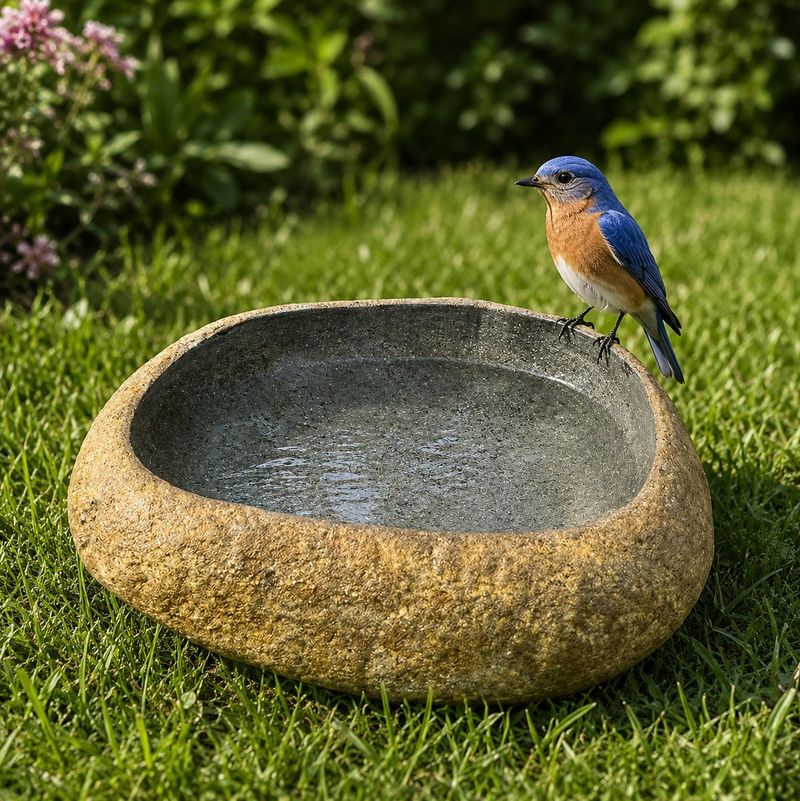
Let’s set expectations first. A bowl of water can give birds one more place to drink or bathe, but nothing reviewed shows it keeps bluebirds nearby or decides where they nest.
Water access and nest-box use are two separate outcomes, and a bath may bring visitors without changing any nesting decision.
Location matters too. Texas Parks and Wildlife says Eastern Bluebirds breed in the eastern half of Texas and shift to the southern end of their range in winter.
That means a Central Texas yard may or may not see bluebirds in January, and not every yard offers the open habitat they nest in.
So think of the bath as a small gift to whatever birds do show up. Cornell Lab of Ornithology offers solid advice on how to run one well, and it is worth following if you decide to put a bowl out.
Cardinals, wrens, sparrows, and chickadees may use it long before a bluebird does.
Nesting is its own project. NestWatch covers box placement and habitat, and later sections here pull those details together.
Keep the two jobs apart in your head: water is a winter courtesy, and a well-placed box is a spring preparation. Neither one is a promise.
Bluebirds use shallow water, but winter water is not always scarce
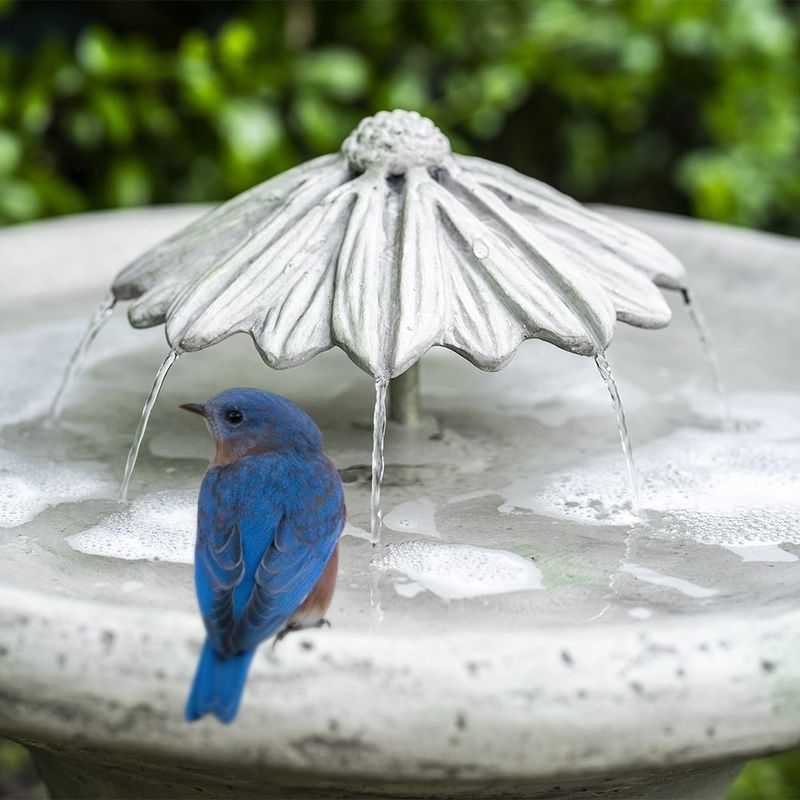
Bluebirds are drawn to shallow water for bathing. Penn State Extension notes they prefer water less than 2 inches deep and are also attracted to dripping water.
During a dry stretch or a hard freeze in your area, a bath gives them and other birds one more option.
Still, the need is not constant. USDA’s Natural Resources Conservation Service says bluebirds generally meet their water needs through the food they eat.
Cornell also says birds can often find winter water in snow or dripping icicles, so keeping a bath ice-free is not critical.
What does that mean on your porch? Watch the weather.
After a week without rain, or during a multi-day freeze when puddles and troughs are locked up, a fresh bowl is more likely to be useful. After a soaking rain, birds probably have plenty of puddles to choose from.
Local conditions vary from one Texas neighborhood to the next, so there is no blanket rule. Treat the bath as optional help you can offer when it makes sense, and skip the guilt if you miss a day.
Make the bowl shallow, stable, and easy to use
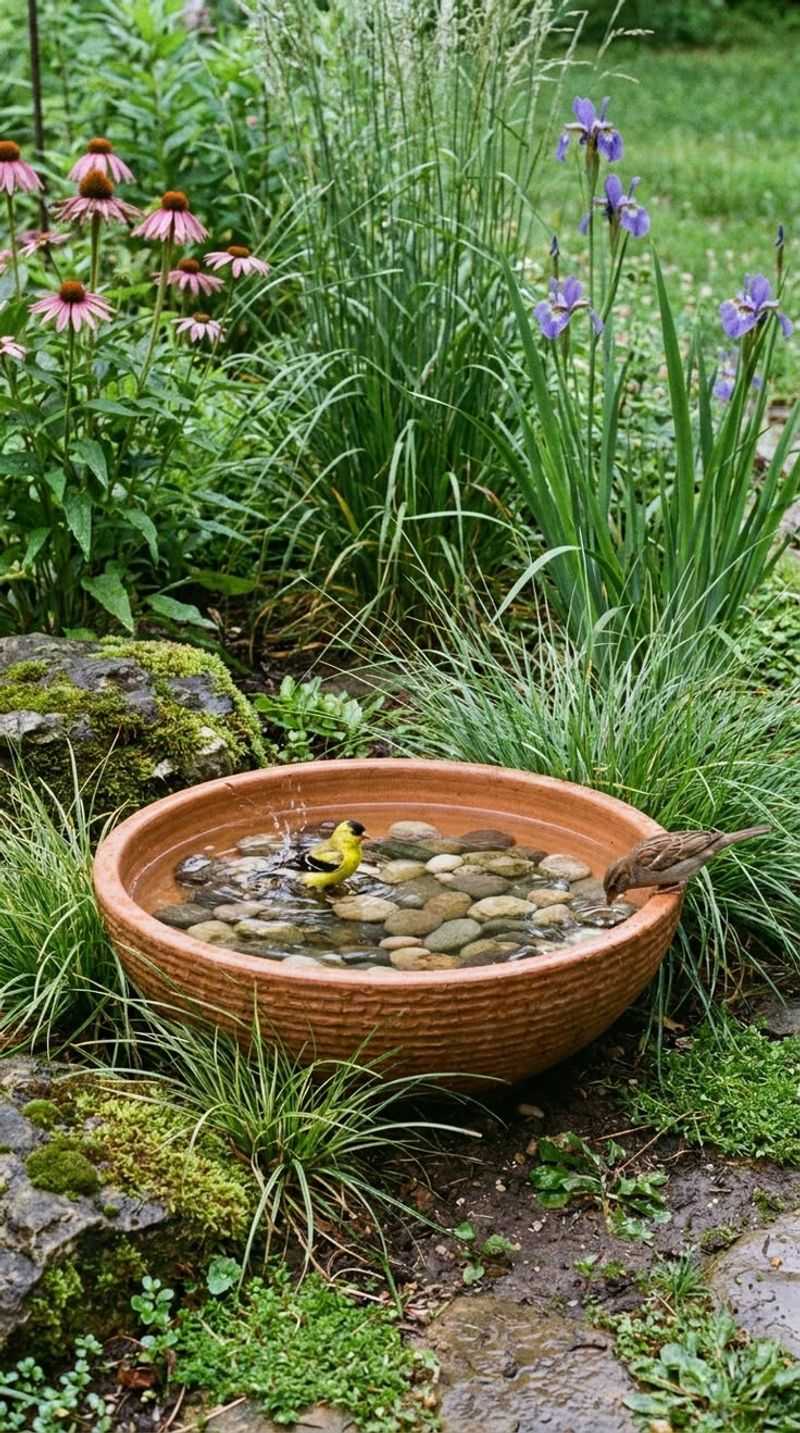
Depth is the first thing to get right. Cornell recommends water no deeper than 1 inch at the edges and 2 inches in the middle, with a gradual slope.
A plant saucer, a pie dish, or a simple plastic bowl can all work.
Bluebirds are small and cautious, and Penn State says they prefer water less than 2 inches deep. If your bowl is deeper than that, fill it with stones until you hit the right level.
Next, give birds something to stand on. Flat rocks or a few small branches let them perch at the edge without soaking themselves.
Make sure the bowl does not wobble, since a tipping dish will scare off visitors fast.
Dripping water is a nice extra, not a requirement. A slow drip from a jug with a tiny hole can catch a bird’s attention, but a still bowl works fine too.
Place the bowl where you can see it from a window, ideally near some shrubs or a tree so birds have a spot to dry off and escape. Keep the focus on usability here.
The goal is a bowl that birds can step into easily and safely.
Fresh water and a clean basin are separate jobs
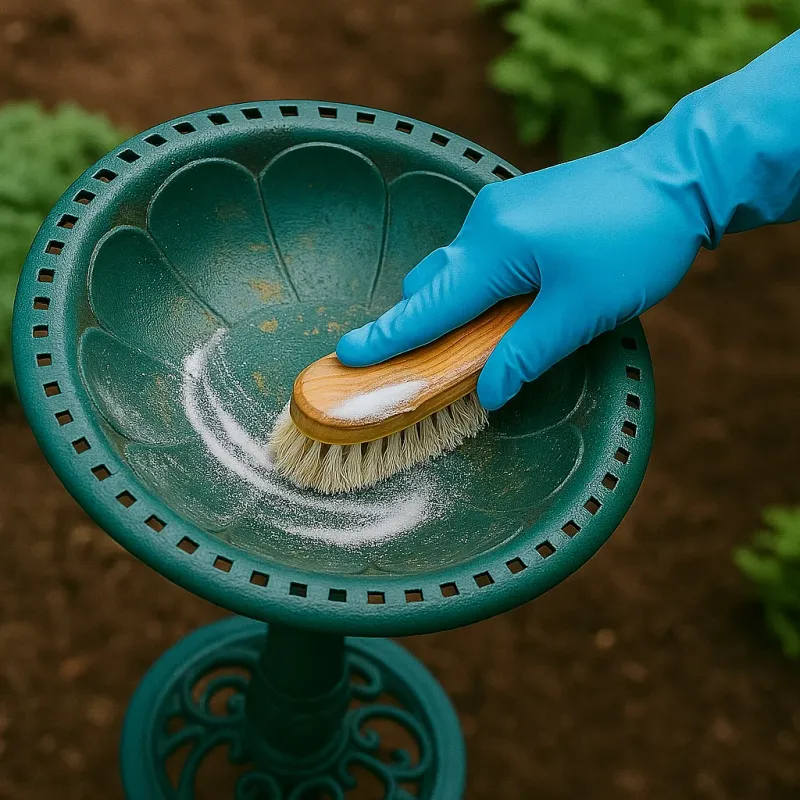
Two chores keep a bath healthy, and they are not the same thing. Cornell suggests changing the water every day or two.
That is a quick dump and refill.
Scrubbing the basin is the bigger job. Bathing birds leave feathers and droppings behind, and Texas Parks and Wildlife recommends regular scrubbing for heavily used baths.
Plan on a thorough cleaning at least weekly, and more often if birds crowd in.
A diagnostic clue helps here: if you see slime, floating debris, or cloudy water, clean it now, whatever the calendar says. A stiff brush and plain water do much of the work, and rinse well before refilling.
There is also a safety limit. California wildlife officials recommend regular cleaning because congregating birds can contaminate water.
They also advise against keeping baths where backyard poultry or other captive birds are present, since shared water can spread illness.
If you keep chickens or a pet bird outdoors, skip the bath. Baths are helpful, but they are not risk-free, and a dirty one can do more harm than good.
When the water freezes, a heater remains optional
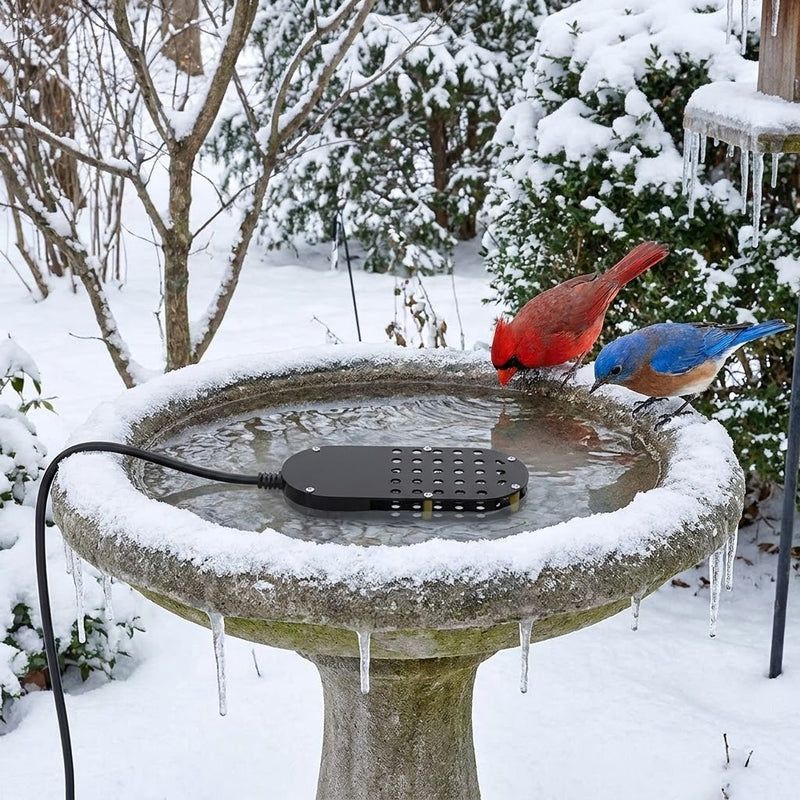
Texas cold snaps can turn a bowl into a block of ice by dawn. The simplest fix needs no gear: set out a plastic bowl at a regular time each morning, then bring it inside when it starts to freeze.
Birds learn the routine and may check in at that hour.
Keep the bigger picture in mind. Cornell says keeping a bath ice-free is not critical, since birds can often find water in snow or dripping icicles.
A frozen bowl is not an emergency, and a heater is a convenience, not a necessity.
If you want one anyway, use a birdbath heater made for the job and plug it into a ground-fault-interrupted circuit, as Cornell advises. Follow the product instructions, and use an extension cord rated for outdoor use.
The U.S. Consumer Product Safety Commission points to shock and fire risks from unsuitable extension cords.
One firm rule: never add antifreeze or glycerin to keep water liquid. Cornell says antifreeze is poisonous, and glycerin can mat feathers and raise the risk of hypothermia.
Plain water only.
Suitable habitat and nest boxes support spring nesting
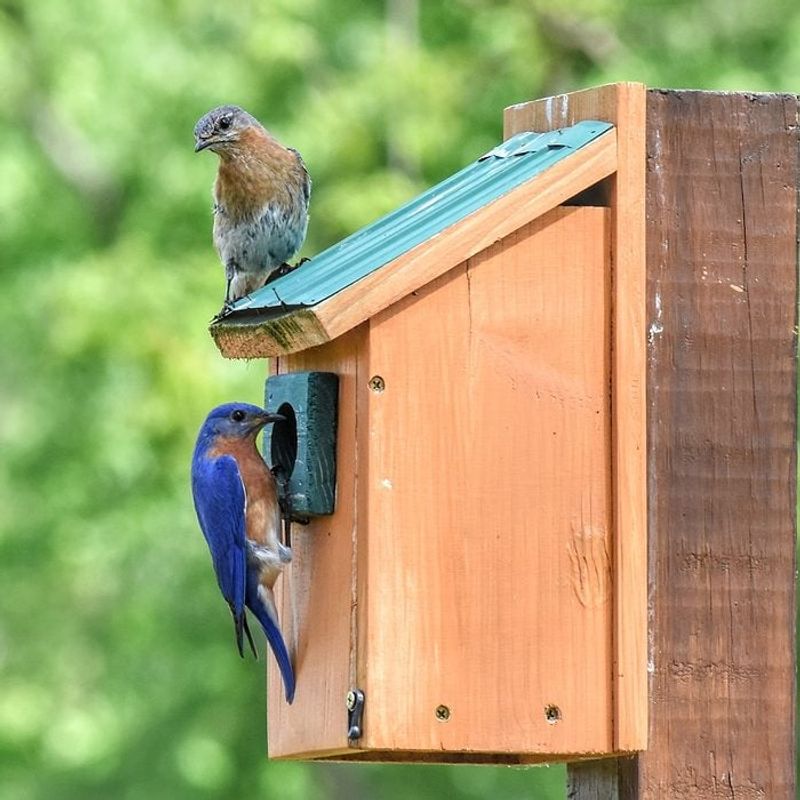
Spring nesting depends on the setting and the box. NestWatch lists open fields or lawns, orchards, and open country with scattered trees as Eastern Bluebird habitat.
If your yard is wooded and shady, or has no open ground, it may simply not suit them.
For the box itself, Texas Parks and Wildlife gives dimensions for common birds and recommends mounting a box at least 5 feet above the ground on a metal pole. A pole helps keep climbing predators from reaching the nest.
Check the TPWD page for the exact box measurements and entrance hole size before you build or buy.
Winter food and cover count as well. USDA NRCS identifies fruit as important when insects are scarce, and describes winter cover such as open fields, woodland edges, and fruit-bearing trees and shrubs.
Native berry-producing plants near the edge of a yard can fit that picture.
Late winter is a good time to get a box mounted, clean out any old nest material, and check that the pole is steady. None of this guarantees a tenant.
Bluebirds choose on their own terms, and these are simply the conditions the guidance links to nesting. They are not ranked against providing water.
Offer water, and prepare suitable nesting habitat
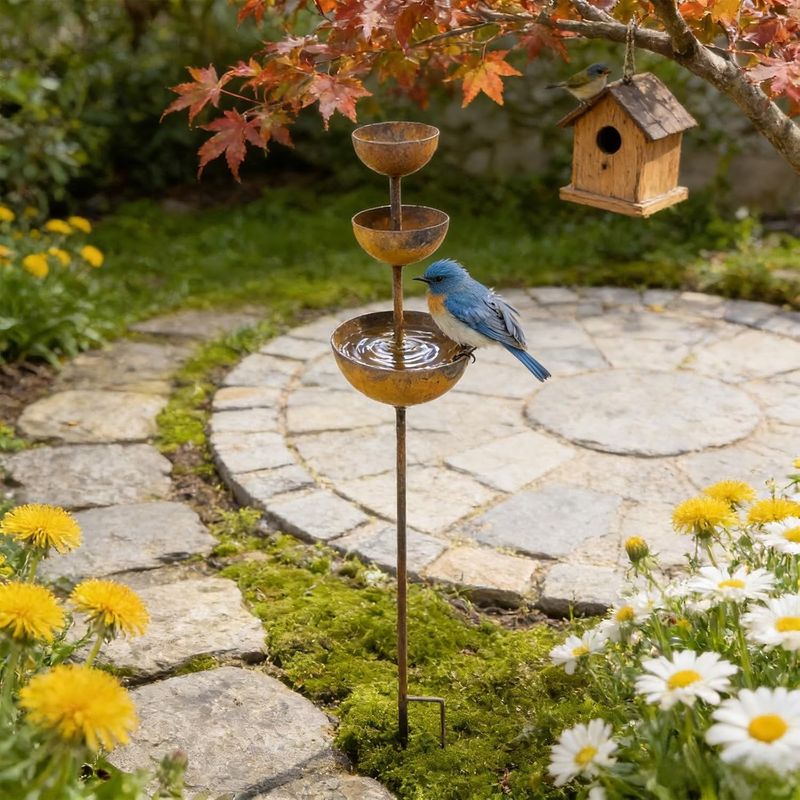
Put out a shallow, clean bowl when a dry or icy spell makes it useful, following Cornell’s upkeep tips. Then, as a separate project, set up a box using TPWD’s guidance.
Water will not promise bluebird visits or nesting nearby.
Either way, you will have a yard that is a little kinder to birds. Whether a bluebird claims the box is up to the bluebird.