
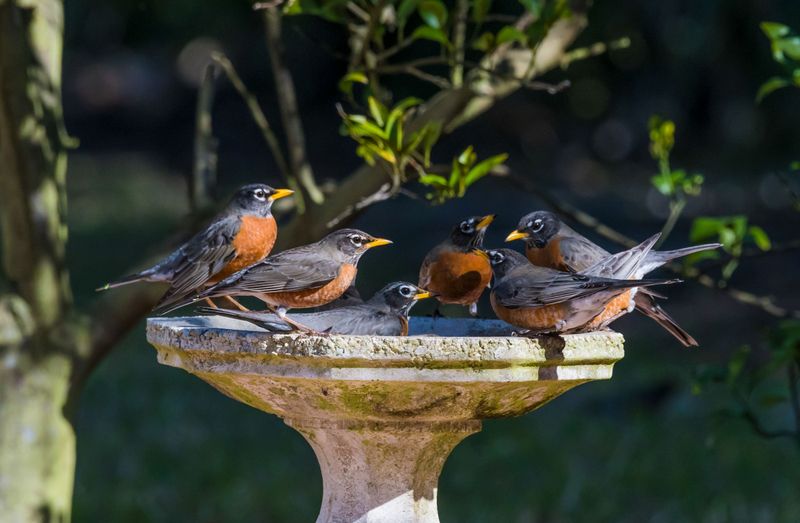
A yard that was quiet last week can suddenly fill with dozens of robins, and it is natural to wonder what changed. Many people assume these birds mean spring is near, but in North Carolina that is usually not the story.
Robin flocks are a common fall and winter sight, and they can tell you a lot about food and habitat in your area. Here is how to read what you are seeing and what you can do for wildlife over time.
A winter robin flock is not an early-spring signal
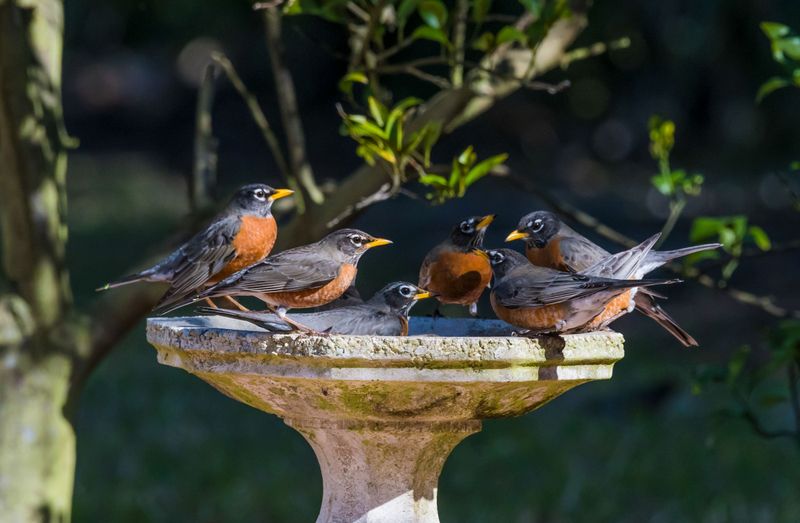
Spotting a crowd of robins in January may feel like a promise that spring is close, but North Carolina does not work that way. Robins gather in loose flocks in fall and winter, and they are easy to notice when dozens land in the same trees or on the same lawn.
According to the Carolina Bird Club’s species account, some robins stay in the Carolinas all year, while others move into or through the state from farther north. So the robins you see in colder months may be a mix of local birds and winter visitors.
That mix matters because not every robin follows the same route or schedule. Some travel a long way, some barely move, and some shift only as far as food takes them.
A robin on your lawn today is also not necessarily one that lives in your yard all year.
If you are wondering whether a flock means warmer weather is on the way, the answer is no. A better question is what the birds are doing and what they are finding nearby, which the next sections walk through.
Food can concentrate flocks temporarily
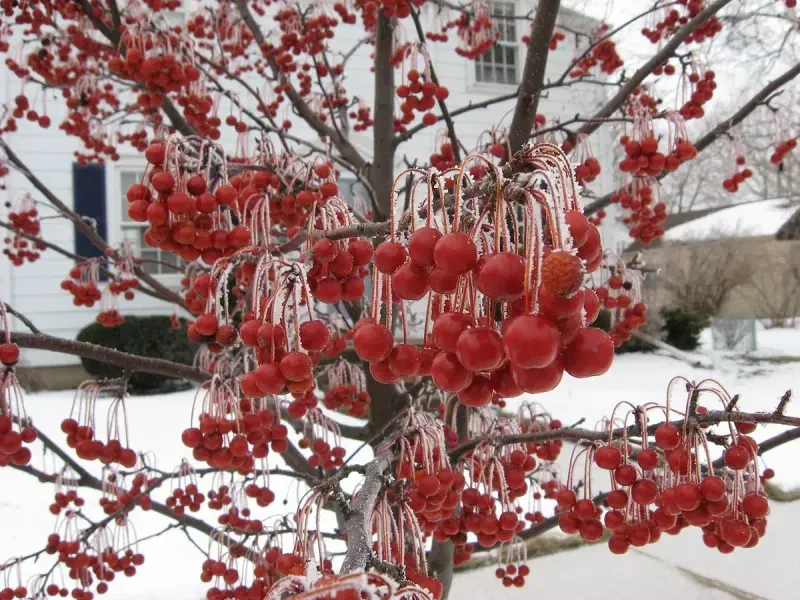
Once cold weather arrives, fruit becomes a bigger part of what robins eat. Berries and small fruits hold up well on branches, which makes them a dependable food when insects and worms are harder to find.
Fruit crops are often patchy, though. As Audubon explains in a piece with bird expert Kenn Kaufman, robins wander in response to variable fruit supplies, and a plentiful crop can pull a flock together for a while.
When the food runs short, the birds may move on.
That means a big flock can reflect a food patch somewhere in the neighborhood, a nearby woodlot, or a stretch of roadside vines. It does not automatically mean your yard is the source.
Your property might be a stop on the way, a place to rest, or a spot to drink.
It also means nobody can say how long a flock will stay. Robins follow food, and food changes from one year and one place to the next.
Enjoy the visit without expecting a schedule.
What a morning visit can—and cannot—tell you
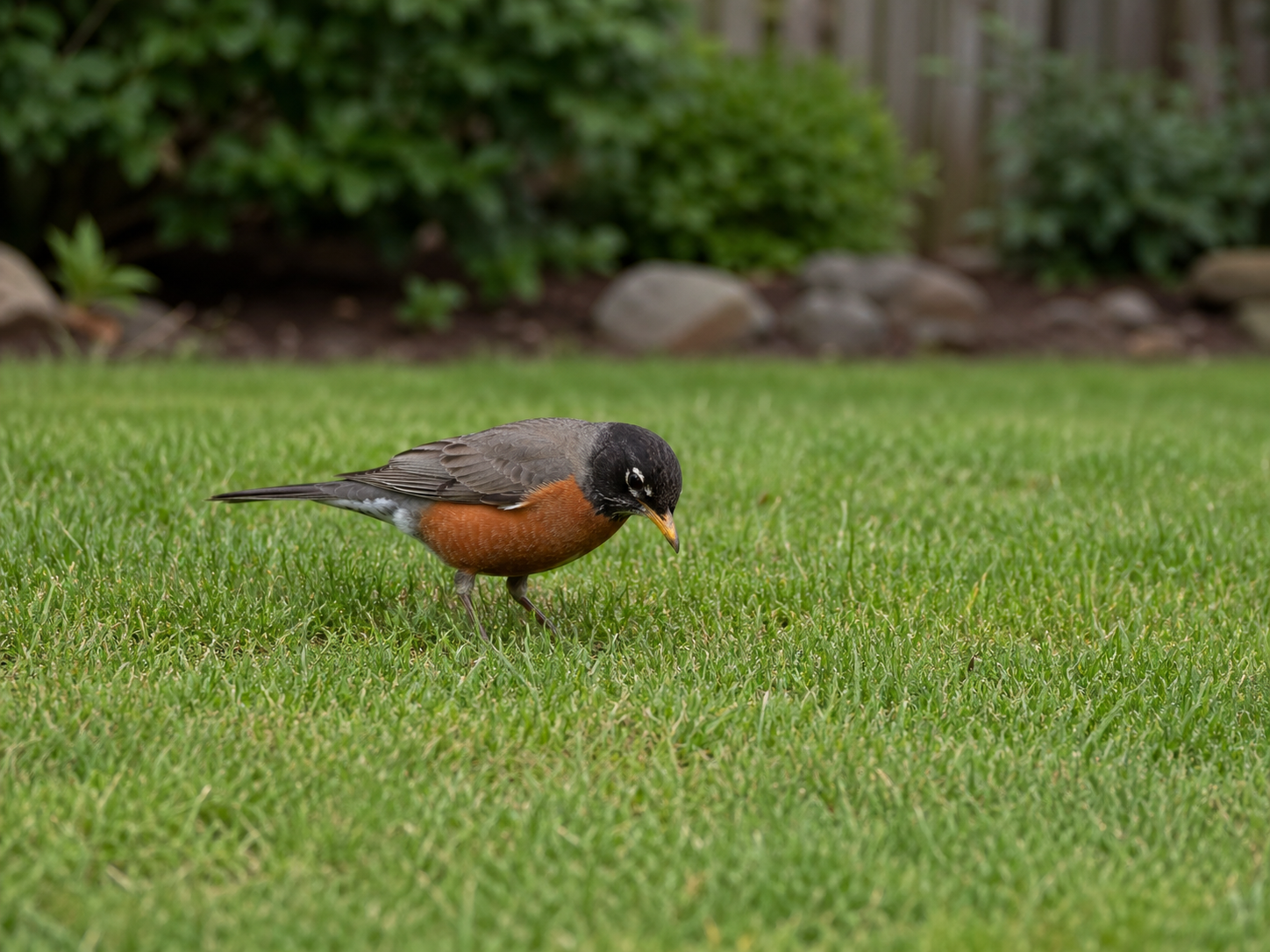
Seeing robins at breakfast time tempts many people to say they must be eating berries. Morning is actually a classic time for worm hunting.
Cornell’s robin guide notes that robins eat more earthworms in the morning and more fruit later in the day.
So the clock is a weak clue. A flock hopping across the grass, pausing, tilting heads, and stabbing at the soil is probably after worms or insects.
A flock moving through a shrub or tree and plucking small fruits is a different story.
Flock size does not settle it either. A large group can feed on a lawn just as easily as in a berry-laden tree.
Also, one or two sightings do not establish a daily routine. If you think the birds return regularly, jot down the date, time, and what they are doing for a week or two.
Those notes will tell you far more than a guess.
Look for feeding before blaming a particular plant
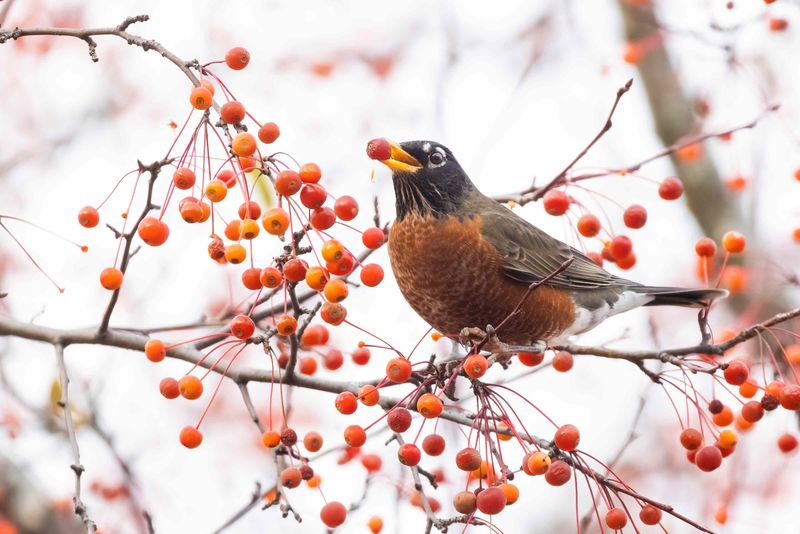
Start with a simple question: are the robins actually eating in your yard? Watch from a window for ten minutes.
Birds that are swallowing berries, reaching for fruit, or returning to the same branch are feeding. Birds that are just sitting in a treetop may be resting or passing through.
If you do see fruit being eaten, look at what is growing nearby. Audubon lists wild grapes, junipers, hawthorns, and winterberry holly as examples of fruit sources where robin flocks may gather, which you can read about in Audubon’s Q&A with Kenn Kaufman.
These are examples, not a diagnosis, and any one flock may be using something else entirely.
Check fence lines, wooded edges, and neighboring properties too. A vine-covered tree two lots over could be the draw.
If the birds show no interest in anything on your property, that is useful information as well. It suggests the flock is responding to food or habitat beyond your boundary, and your yard is simply along their path.
Choose habitat for the seasons, not just today’s flock
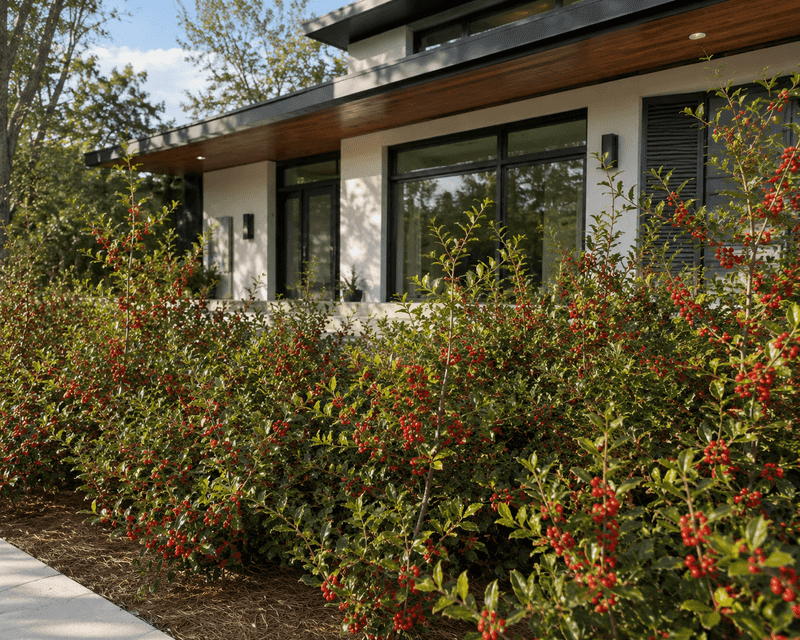
A robin flock can be a nudge to think about your yard across all four seasons. NC State Extension advises using a diverse mix of site-appropriate native plants that supply fruit, seed, and cover at different times of year.
The same publication lists fruit-availability windows for several natives: winterberry from August to December, American holly from September to February, yaupon from September to January, and eastern redcedar from September to February. Those windows describe when fruit is on the plant, not a guarantee that robins will use it at your site.
Planting also will not draw this season’s flock. A new shrub takes time to establish and fruit, so think of it as an investment for future years.
Match each plant to your conditions. NC State notes that native plants differ in their light, soil, and moisture needs, and that wildlife use varies by region.
A wet coastal plain lot, a clay Piedmont slope, and a mountain hillside will each suit different choices.
Stick with natives and skip non-native berry ornamentals, since some can spread and crowd out native plant communities.
You do not need to feed robins to explain a flock
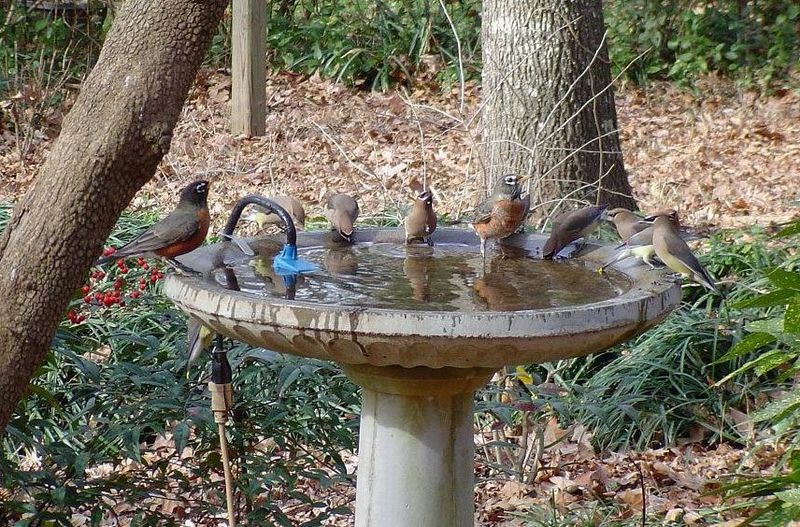
A flock of robins does not mean someone is feeding them. Natural food, from worms to wild fruit, and nearby habitat are enough to explain why birds gather, so there is no need to put out a feeder in response.
If you enjoy feeding birds anyway, follow the practices in NC Wildlife’s guidance on feeding birds responsibly. Clean feeders regularly, keep cats indoors, and pause feeding if disease or predation problems come up.
A feeder will not promise robins will show up or stay. Their movements follow food across a wide area, so no single feeder can hold a flock in place.
If you want to help robins specifically, the habitat approach from the previous section tends to do more than a feeder. Plants, leaf litter, and a bit of unmown cover give birds natural options through the year.
Observe the flock without turning it into a forecast
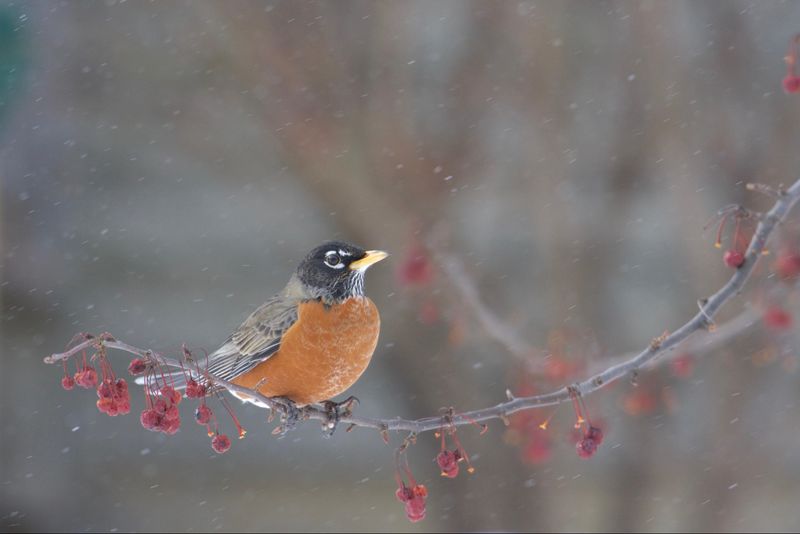
Cold-season robin flocks are normal in North Carolina, as the Carolina Bird Club notes, and they say nothing about spring. A morning visit also does not prove berry eating, since robins often hunt worms early.
Watching what the birds actually take is the clearest clue to what they are using. Build habitat gradually, and let the flock come and go on its own schedule.
A robin flock is a brief visit, so treat it as a chance to look closely.