
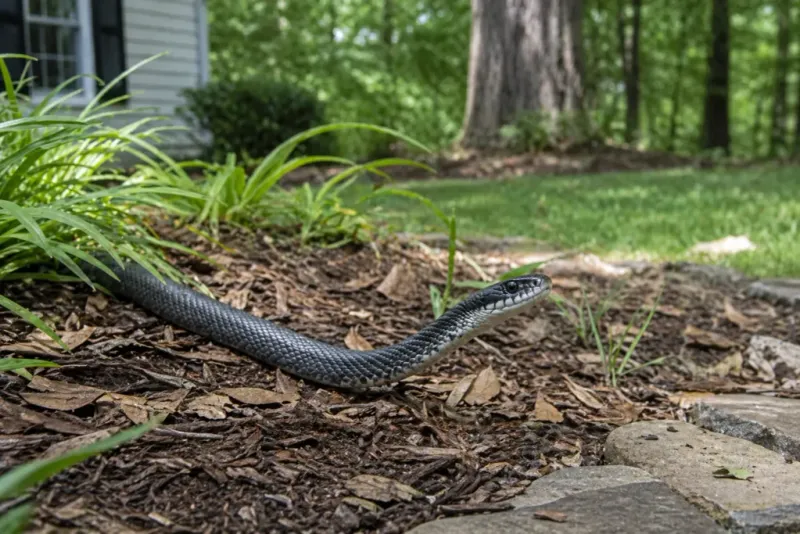
Plenty of Florida homeowners have heard that a deep layer of mulch next to the house invites snakes to the doorstep. The real story is more useful than the scary version.
Hiding places and rodents matter, and you can manage both without ripping out your flower beds. Here is what to do with your mulch, your yard edges, and your trash and feed bins.
A thick bark bed is not proven to lure snakes

Here is the claim in the title, stated plainly: nobody has shown that a deep layer of ordinary bark or pine mulch, all by itself, pulls snakes to a Florida house or door. The university and wildlife guidance reviewed for this article does not make that link.
What the guidance does say is more specific. According to UF/IFAS snake-prevention guidance, heavy vegetation, brush, debris and wood can give snakes places to hide, and rodents can attract some snakes.
It also warns that food-scrap compost or “mulch” bins may draw rodents, which can then draw snakes.
That last point is where the word “mulch” gets confusing. A bin full of kitchen scraps is a food source for mice and rats.
A flower bed topped with bark chips is a landscaping material. They are not the same thing, and the evidence about one does not prove anything about the other.
The Florida Fish and Wildlife Conservation Commission says in its Living with Snakes page that repeated snake sightings near buildings may point to rodents nearby. So the smarter question is not whether your mulch is too thick to look at.
It is whether your yard offers lots of cover close to the house and an easy meal for rodents.
The rest of this article walks through that, from mulch depth to home-edge upkeep to food storage, so your beds can stay tidy and your yard less appealing to mice and rats.
Cover and prey explain the real concern
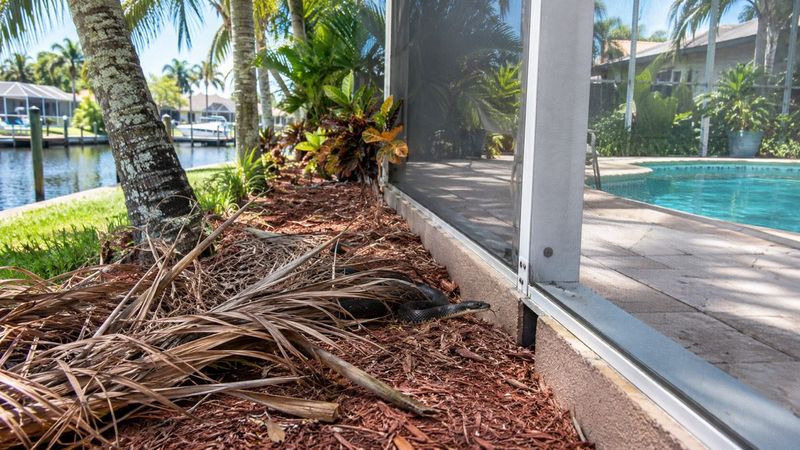
Two separate things sit behind most snake worries around homes: places to hide and things to eat. Heavy vegetation, brush, debris and wood piles offer shelter.
Rodents offer a meal for the snakes that eat them.
Those factors often overlap, since a messy pile of lumber can shelter mice and snakes alike. Still, they are different problems with different fixes, and either one can show up without the other.
UF/IFAS guidance treats both as possible reasons a snake may use an area.
A snake near your porch does not tell you why it came. It might be passing through, following a rodent, or simply crossing open ground.
FWC notes in its snake guidance that most snakes tend to move away from people, so one sighting is not proof of an infestation.
This is why targeted upkeep beats blaming every mulched bed. A rotting stack of boards leaning on the garage wall deserves attention.
A thin, well-kept layer of mulch around your foundation shrubs is a much smaller concern.
Walk your property with that in mind. Look for tangled brush, old lumber, debris heaps and anything rodents could nest in close to the house.
Fix those first, and keep the rest of the garden doing its job.
Keep landscape mulch within recommended depths
Florida gardeners get real benefits from mulch, including weed suppression, water conservation and erosion control. That matters in sandy soil that dries out fast.
The goal is to use it at the right depth, not to give it up.
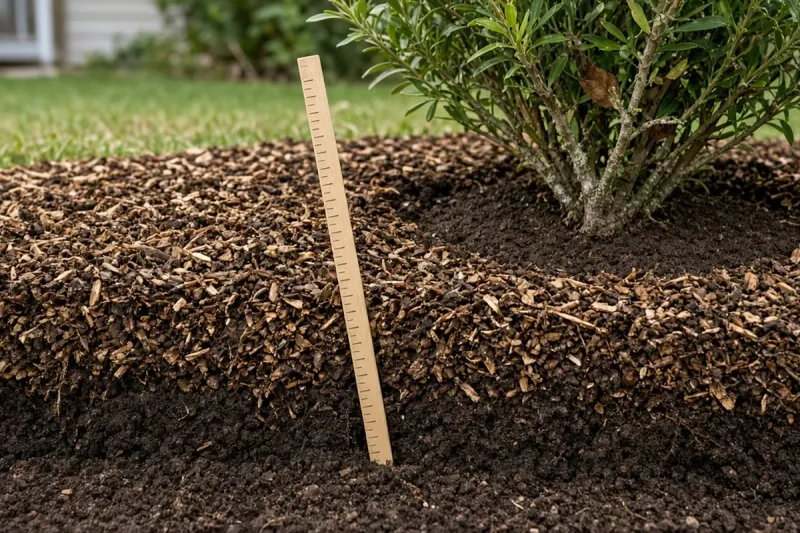
UF/IFAS Gardening Solutions recommends about 3 inches for landscape beds. Small seedlings, vegetables and herbs do better with about 1 inch.
When the layer settles below 2 inches, top it up instead of piling fresh mulch on every season.
Near the house, there is one extra number to know. UF/IFAS home-pest landscaping guidance says mulch should be no more than 2 to 3 inches deep in plantings, and no more than 2 inches deep within 12 inches of the foundation.
The reason is termites. Deeper mulch there can bridge areas treated for termites.
That 12-inch rule is pest-management advice, not a snake barrier, and the sources reviewed give no snake-specific bare strip or spacing.
A simple routine works well. Poke a ruler into the bed, check the depth, and pull mulch back from the wall if it is stacked high.
Keep it a bit away from stems and trunks too, so beds stay tidy and plants stay healthy.
Maintain the space around the house without stripping the yard
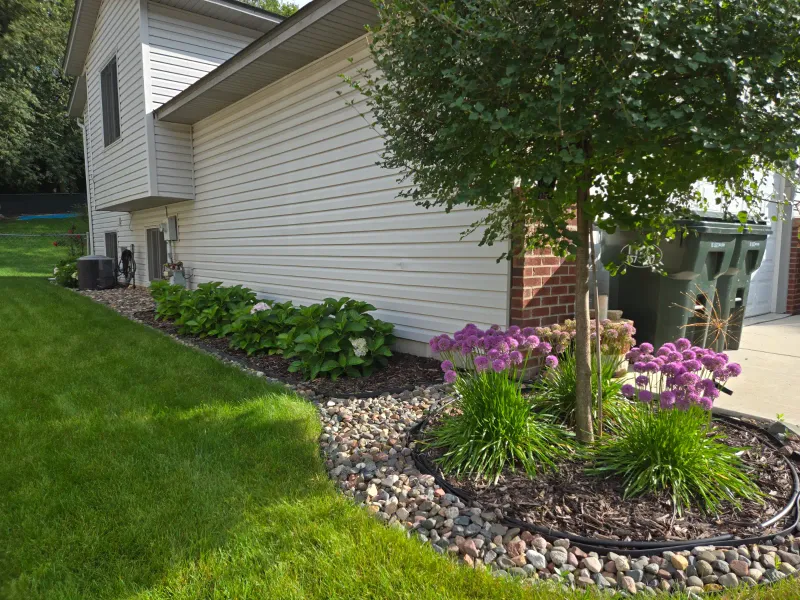
A weekend routine at the home edge goes a long way. Mow the grass near the house, trim shrubs and branches so they do not press against the walls, and move brush piles and firewood away from buildings and children’s play areas.
That advice comes from UF/IFAS snake-prevention guidance, which also cautions against clearing all the brush and vegetation from a yard. Cover is part of a healthy landscape.
The point is to keep dense cover away from buildings and high-use spots, not to scalp your property.
Plant placement helps too. When you choose new shrubs, think about their mature size.
UF/IFAS landscaping guidance says plants that will sit less than 2 feet from the house at maturity are too close for limiting places where nuisance wildlife can shelter.
That is general nuisance-wildlife advice, not a snake-specific spacing rule. It also happens to make walls easier to inspect and paint.
Try a quick monthly loop. Check the base of the wall, trim anything touching siding, and restack firewood off the ground and well away from the house.
Ten minutes of upkeep beats a big cleanup later.
Secure the food sources that can support rodents
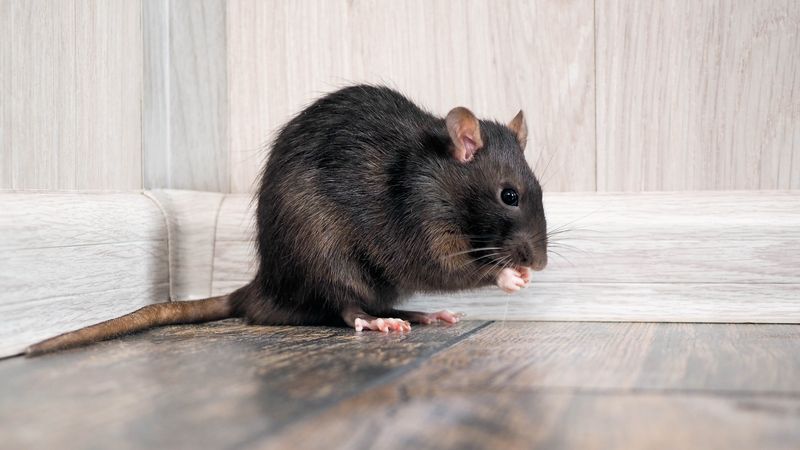
Rodents follow food, and snakes that eat rodents may follow them. So the most practical step is making your yard a poor place to find a free meal.
Start with the compost. UF/IFAS guidance says food-scrap compost or mulch bins should be secured so rodents cannot get into the contents.
A sturdy lid and closed sides make a big difference.
Next, look at the feed. Birdseed and pet food should live in closed containers, not open bags in the garage or bowls left out overnight.
Sweep up spilled seed beneath feeders, too, since mice love it.
Then watch for signs of rodents, such as droppings, gnaw marks, or scratching in walls and sheds. Address them early, with a pest professional if needed, rather than waiting for the problem to grow.
These steps make sense on their own, because mice and rats are a nuisance no matter what. They may also make your yard less appealing to snakes that hunt rodents.
They do not guarantee that no snake will ever pass through, and seeing one does not mean you have an infestation.
Give a snake space if one appears
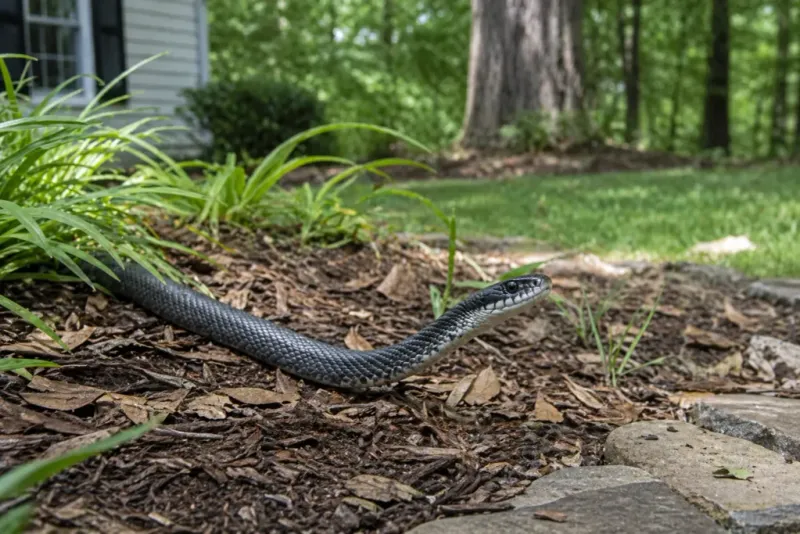
Most of the time, a snake in the yard is a moment to pause, not panic. FWC says in its Living with Snakes page that Florida has 50 native snake species and only six are venomous.
Many help control rodents, and snakes usually flee when given room.
Your first job is distance. Keep people and pets away, bring the dog inside, and let the snake move on.
Do not approach it or try to handle it, especially if it may be venomous or you cannot identify it confidently.
If it stays near a doorway, garage or play area, or you are unsure what it is, call a professional. UF/IFAS guidance says trying to kill snakes raises the chance of being bitten, so leave that out of the plan.
Skip the gimmicks as well. UF/IFAS says advertised snake repellents do not work, and mothballs are not approved for that use.
UF/IFAS mothball guidance says using them as a snake repellent is illegal.
After the snake leaves, glance around for hiding spots and food sources. One visit does not prove your mulch or your yard is the cause.
A tidy bed does not require a bare yard
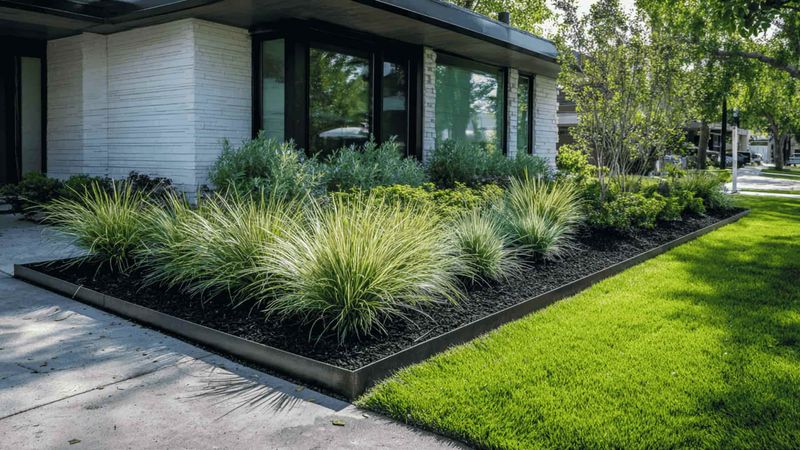
Keep mulch near the recommended depths, about 3 inches in beds, and no more than 2 inches within 12 inches of the foundation, per UF/IFAS home-pest guidance. Trim and tidy the house edge, and seal up the food sources rodents look for.
Those are sensible yard-care habits, not a guarantee against snakes, and a sighting does not prove your mulch was to blame.
A good Florida yard still has layers, shade and living things. Tend the edges, and let the garden keep its character.